We look after your interests

(+34) 93 626 47 75

Torres Sarrià, Carrer de Can Ràbia, 3-5, 4ª Planta BCN 08017

(+34) 91 794 19 82

Pº de la Castellana, 93 2nd floor MADRID 28046

Category: Estrategia

The advantages of investing from Luxembourg

Although we have been writing about it for many years now, it may be worth updating for those who do not know about it, some of the advantages of having our investment portfolios deposited in banks in Luxembourg. For most, the most obvious advantage would be to be able to hold the money while avoiding country risk or the risk of insolvency of Spanish banks, with Luxembourg being the EU Wall Street par excellence, once London ceases to be so due to Brexit. However, there is a much more powerful reason to manage most of our financial wealth from Luxembourg. And that reason is access to any investment fund, private equity, real estate fund, etc. in the world, even if it is not registered for marketing in Spain.

.

This freedom of access is no trifle when one realises that only 10% of the existing funds worldwide have this registration with the CNMV in order to be marketed in Spain. Therefore, investors who do not have adequate advice will never be able to access a 90% of funds, which logically include some of the best managed funds in the world. Furthermore, no bank in Spain, not even to its private banking clients, offers just that 10% registered with the CNMV in its entirety, as the sales catalogues are usually limited to 2, 3 or 5 thousand funds, with the excuse that they belong to different trading platforms, etc. Therefore, the opportunity cost of magnificent investment options that the local investor cannot access is enormous. In fact, this condemnation of mediocre investment is one of the main reasons for the the causes of brick abuse in Spain, although we have already discussed it extensively in other articles.

.

The question many of you will ask is why most funds are not registered in Spain for marketing, or at least why the star funds managed by some of the world's leading managers do not do so. There are several reasons: among them are funds that do not consider marketing in Spain because it is expensive for the small volume they would achieve in our country. We must not forget that marketing in Spain, through the network of financial institutions and platforms that operate here, in many cases involves a cut of more than 50% of the commissions charged by the fund manager. In fact, some fund managers, such as Carmignac, decided at the time to create an ad hoc class in their funds for marketing in Spain, with higher fees than those applied to the rest of their classes, in order to satisfy the voracity of local financial institutions. At Carmignac, these classes were shamefully labelled with the «E» for Spain.

.

However, the marketers' bites are not the only reason that many international fund managers have for not registering their funds for sale in Spain. Another important reason is that the only doors that registration in Spain would open for them is to access Spanish retail clients, since larger or institutional clients can access funds that are not registered in Spain without great difficulty. Investors with a few million and who are well advised already have their own investment vehicles in banks abroad that allow them to access all types of funds beyond the CNMV's list of marketable funds. In other words, fund managers not registered in Spain do not need to register or pay any bribes to attract these Spanish millionaires.

.

There are also other reasons for some managers to disdain the Spanish retail investor market, such as specialisation in institutional clients or geographical remoteness. It is common that some managers from China, Thailand, India, etc., whose investors are essentially Asian, Middle Eastern or North American, do not prioritise attracting Spanish retail clients at all. And they usually focus on marketing in Europe through the British or German market, either for retail or institutional investors, but with higher volumes and lower bites than in Spain.

.

The consequence of all this is that the Spanish retail investor is condemned to a very limited portfolio of funds that have previously agreed to pay juicy commissions to the financial institutions that market them in Spain. And for these investors who do not have tens of millions, the fact of being able to invest much more modest amounts from Luxembourg, with exclusive personal vehicles that open the doors to any fund in the world, means the difference between mediocrity and brilliance of investments in terms of quality and results.

.
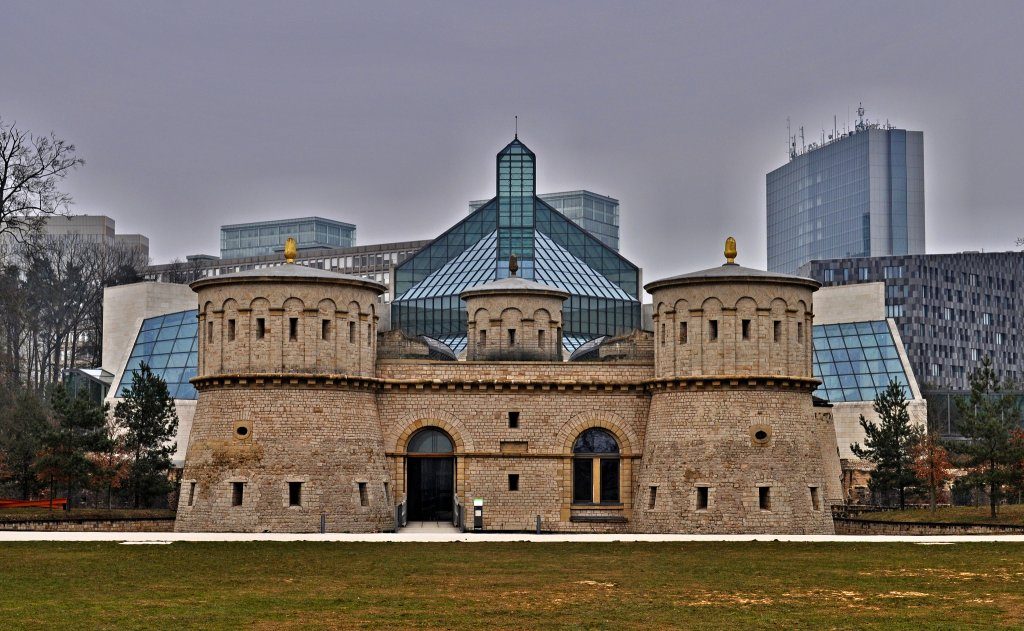
Luxembourg, as a good «EU friendly» financial centre, has various types of investment vehicles that adapt to the needs of each size and type of investor. But for the smaller investor, who is the most disadvantaged by the restricted range of funds to which he has access in Spain, there is a a personal and exclusive Luxembourg vehicle from which you can invest your portfolio with complete flexibility, from as little as 250,000 euros. Obviously not all retail investors have a minimum of 250,000 euros, but it is a huge step for the average investor to be able to put their investments on a par with those of any institutional investor with 10 or 20 million from as little as 1/4 million. And these vehicles not only allow access to any fund in the world, but also to any fund in the world. also allow for the deferral of capital gains generated within these vehicles indefinitely., The tax is only levied on the proportional part of the capital gain when it is decided to redeem part or all of the investment. In other words, once we have this minimum of 250,000 euros in our own investment vehicle, we will be able to buy and sell any fund, share or whatever we want, without paying tax on the capital gains until we need to withdraw all or part of our money. Taxation is exactly the same as when we buy any fund registered in Spain that is sold to us by the bank on the corner, but without the need to jump from one transferable fund to another within the limited list of funds registered with the CNMV, but with total and absolute freedom in the world universe of UCITS, non-UCITS, AIFMD, Private Equity, Real Estate Funds, shares and other financial products. This is why we chose a Luxembourg vehicle, totally «friendly» with the taxation and transparency of EU countries.

.

These vehicles are logically deposited in banks in Luxembourg, although as mere depositaries, it matters little that they are more solvent than Spanish banks, since we will only use them for the safekeeping of the vehicles and the portfolios with the fund units or shares that we are going to buy and sell in them.

.

As for costs, we have been able to fine-tune them over the years due to the growing volume of clients. And currently the total cost of a Luxembourg unit-linked vehicle for a small investor (minimum 250,000 eur) can be around 0,6-0,7% annual, The volume of vehicles in the market is significantly reduced as the volume increases. Furthermore, in certain circumstances, these vehicles also avoid the payment of Wealth Tax, which in some Autonomous Communities does not have a rebate.

.

Obviously, as Luxembourg is the financial centre of choice for the EU - replacing the City of London - any capital to be invested in such vehicles must have a justified origin, be fully declared and transparent, as Luxembourg's tax haven connotation is now completely behind us and definitively buried by the EU's own imperative.

.

In short, in 250,000 can access vehicles that cost less than 0.6-0.7%, that efficiently defer Capital Gains, that can save Wealth Tax, that allow access to investing in the best investment fund managers on the planet rather than just 10% of them, and with the banking and legal security of a world-class financial centre in the heart of the Eurozone. That is nothing, in these times of uncertainty, insolvency and disguised risks.

.

For those who see the remoteness of having their money in Europe as a handicap, I would like to remind you that, in addition to being able to manage it conveniently, swiftly and closely through Spanish advisors and professionals, having a Luxembourg investment vehicle is not exclusive. In other words, most investors combine a (more or less majority) part of their assets in Luxembourg with a part held in banks in Spain, as a temporarily invested treasury, which will be consumed or used over the coming quarters, semesters or even years.

Elite athletes and their money. The simple lesson of Shaquille O'Neal.

In the following video we see a Shaquille O'Neal in his maturity, giving advice that is as simple as it is important to other professional colleagues, i.e. elite sportsmen. Logically, his advice is only useful for sportsmen, artists or any other person who has a sudden fortune (lotteries, technology entrepreneurs, heirs, etc.) large enough to never have to worry about their future or that of their children and grandchildren. Watch the video of this tweet and then we'll give you some thoughts:

Surely following this simple advice, for which every human being is potentially qualified, would have prevented the vast majority of sportsmen and women from going bankrupt in the course of their busy lives. Notice that neither education nor knowledge is necessary to avoid disaster when a certain level of million-dollar contracts is reached. All that is needed is common sense and rigour. Unfortunately, most elite sportsmen and women, uneducated and from humble origins, drunk on fame and money, often lack both virtues.

.

However, most mortals do not reach those income levels, obviously, and need to fine-tune much more than the simple norm of Shaq their wealth progression throughout their lives. Every wealthy life is different. Circumstances in terms of professional income, income from financial and real estate investments, necessary or desired expenses, family burdens and, in short, the lifestyle that each person or family chooses, together with the uncertain future that each human being faces (separations, illnesses, deaths, disabilities, addictions, fraud, accidents, etc.), make each case practically unique. And logically, some tool is needed that allows a glimpse of the wealth projection that can be expected in the face of a more or less prolonged life. This is where everyone can make their own «old-age account», or go to a wealth management professional to get an idea of the progression they may have in the future, and adjust or modify any calculation or lifestyle errors they may be making accordingly. Here is an example of a wealth projection table that we use with some of our clients at Cluster Family Office:


In projections such as those in the image above, we try to incorporate some of the variables that can be intuited from the data and knowledge of our Clients' circumstances. In the projections we make at CFO we handle data such as professional and non-professional income, expected length of working life, present and future income consumption, inflation, financial and real estate yields, personal taxation, taxation of the investment vehicles that each family has in Spain and abroad, etc.

.

However, it is obvious that the further out in time the projection is made, the less reliable the predicted data will be, as deviations multiply over time with a greater effect on the result than compound interest itself. But despite the impossible accuracy, this tool is always a great help in resituating the lifestyle of families and, above all, in opening our eyes to the uncertainty of living a long wealthy life in the ever-changing world we face. And the uncertainty of progression is particularly revealing. when the proportion of real estate is abused in equity or when the era of conservative fixed-income portfolios is more of an asset trap. potential losses from which very few will escape.

.

The evolution over time of an unbalanced estate that makes the wrong decisions, compared to the evolution of a balanced estate of financial, business and real estate assets, with the correct optimisation of each of them, is totally different after 5 years. But if we project the errors with respect to what would be the correct distribution of assets and liabilities and their management, beyond 15 or 20 years, the difference is abysmal. What today may appear to be a minor imbalance or inefficiency, a minor deviation, over time is the key to success or failure in our old age and for the well-being of our children.

Adapting our investments to the new economic era.

It should not escape anyone's notice that the world of finance and investment as we knew it before the debt crisis - a decade ago now - was very different. Back then it was enough to invest in good, well-priced listed companies (equities) for those looking for reasonable returns over the long term. And all the part of the capital that was not tolerant of high volatility could be «parked» in fixed income by sitting on bonds of developed issuers that paid a few percentage points above the price of money, although not always above real inflation. At that time, money had a reasonable price, and therefore everyone who borrowed it had to make very good use of it if they wanted to amortise that cost and not get their fingers caught in inefficient adventures.

.

About 7-8 years ago, after the bursting of the real estate and debt bubble, central banks started to muddle through by showering the world with new money. And free money not only generates its inefficient use, rewarding those who owe more and are less competitive, but also penalising those who have it. It is the jungle where the law of the strongest prevails, and with the debt bubble of 2007 that we are still dragging along, the law that has prevailed is that of the debtor.

.

Unfortunately, most investors - and therefore creditors of the debtor universe - have not realised the radical change in the rules of the game imposed by the central banks with the excuse of «saving the financial system». And they continue to invest their money under the old rules and guidelines of obsolete bankers and advisors: in the stock market the part that withstands volatility and in fixed income the part that does not.

.

As for the stock market, they are not aware that most listed companies have had access to free money for a decade, and that this allows the survival of inefficient companies that should be extinguished under normal money price conditions. This leads them to find an infinite number of companies in bad shape, in very bad shape and trading at high, very high prices. But the unconscious investor continues to buy mediocre equity investment funds (as he always did with acceptable results), mistakenly thinking that the managers of these funds will know how to discriminate the interesting companies from the uninteresting ones. Just as in a fishing contest when the lake is full of fish (good companies in an economic environment with money at a fair price), where both good and not so good fishermen get a decent haul. But what if the fishing contest takes place in a place where the waters are polluted and the fish are scarce? Then the mediocre fishermen will be left in the lurch, and if you want to dine on fish every night, you will have to trust only the best fishermen in the area and make do with more modest catches than in the old days, when the waters were crystal clear and teeming with life.

.

This is the current situation for stock market investors. They will only achieve acceptable returns if they rely on the best managers who know how to select the few good companies at good prices in the polluted waters of expensive stock markets and inefficient and unhealthy companies.

.

If this scenario depresses you, I regret to announce that what is happening with fixed income is even worse. Zero or negative interest rates and the intervention of the world's major central banks, with their quantitative easing as never before seen in human economic history, have turned fixed income into a debt dump from which one can only emerge stinking and wounded. Most of the debt in circulation is insolvent - a direct consequence of free money - and also trades at stratospheric prices, crushing its yield to ridiculously low or even negative levels if there is any solvency in its issuer. There is no way to invest in traditional fixed income without taking a risk of permanent losses, i.e. not recoverable in less than 5-7 years without the help of inflation. As we said in «The Silence of the Conservatives».» last year, investors have traditionally conservatives are taking risks they cannot even imagine. Many have followed the guidelines of managers and advisors who simply do not know of conservative alternatives beyond traditional fixed income. Others, however, knowing the risk of global insolvency, have continued to buy assets subsidised directly or indirectly by central banks for fear of going against the grain, of going against those who have the power to make money. All of them have taken, and are taking, a fundamental risk that combines insolvency with political (in)decisions. It is true that so far the gamble has worked out well for them, as the bonds of insolvent countries and companies have risen in price to aberrant levels. And this has brought them additional profits on top of the coupons, which the central banks have religiously ensured that they can pay. But this investor profile, drifting with the currents of central banks and the market in general, cannot be described as conservative simply because they do not invest in the volatile stock market and have done well so far. The lower volatility of traditional fixed income does not imply lower risk, proving once again that volatility and risk are very different concepts, although much of the financial sector confuses them.

.

It is true that we have been in this situation for several years now and that reckless traditional bond and expensive stock market investors have had reasonable returns and little unpleasantness to date. But we should not confuse bets, which may temporarily be winners, with investments. to grow our assets over the long term, without permanent losses along the way.

.

Adapting our investments to the new era of equities is not easy without the right advice. Investors need to refine more than ever the selection of international investment fund managers and embrace more exotic markets where economic growth still has a long way to go (which is easier said than done). There are some that are marketed in Spain, but not in the bank around the corner, unfortunately, and the range is very limited. On the other hand, adapting our investments in non-equity, i.e. the equivalent of traditional fixed income, is even more complicated: we have to dig into very diverse strategies and hedge funds that are not marketed in Spain, not even in UCITs format in most cases. You have to look for them in international banks and underwrite them from personal investment vehicles. which are only accessible to well-informed, medium-sized or institutional investors. (from 300.ooo or 400.000 eur).

.

This difficulty in adapting the investments of small savers to the new era is an injustice that condemns them to leave their 50 or 100 thousand euros in the bank around the corner, assuming enormous risks in the coming years. In other words, it condemns them to buy the products and funds sold to them by commercial banks, investing in expensive and inefficient companies through mediocre equity fund managers, and investing in bonds and fixed income funds full of expensive and insolvent wet paper such as has never been seen in the history of finance. Regrettable and unfair, but they are inevitable fodder for the permanent losses to come in the years ahead.

Draghi's NIRP, the Reverse Yankees and the DDO

At the end of last week something unheard of happened, something absurd even among the absurdities of this New Normal that Central Banks have put us in: The average yield on junk bonds (the riskiest and most insolvent of corporate bonds) denominated in Euros fell to record lows of 2.77% per annum.

.

Already on 26 April, the absurdity of the ECB's negative yields policy hit a milestone, with yields on the most insolvent debt falling below 3% for the first time in history.

.

Comparatively, the most liquid and safe debt in the world, the 10-year US Treasury bond, yields 2.33% per annum, and the 30-year Treasury yields around 3%.

.

The following chart of the BofA Merrill Lynch Euro High Yield Index shows the madness in the Eurozone:

And it is not that these ridiculously low yields are the result of rampant deflation, despite the alarmism created in the last few months, no. The official annual inflation rate has been at 1.91 PPP3T and, as we can see in the following chart, it does not seem to be going away any time soon. Official annual inflation has been running at 1.9% and as we can see in the graph below, it does not look like it is going to disappear in the short term.

In other words, the real average yield on junk bonds, net of officially recognised inflation, as seen in the two indices above is now only 0.87% per annum! That is the return that bond buyers/investors get for lending their money to companies with junk ratings and manifest insolvencies for years, with risks of defaults (recognised by Fitch, Moody's and S&P) on the horizon more than considerable.

.

Against this backdrop, of course, it is not only European companies that want to raise fresh money. Like flies to honey, American companies are also flocking to the euro in search of euros from unsuspecting European investors in exchange for ridiculous interest rates. These are the so-called «Reverse Yankees», or issues by American companies in euros, eager for almost free credit. But why are European investors offering their money to insolvent debtors in exchange for so little? Have European investors gone mad? I'd better not answer you...

.

The answer lies in Draghi's efforts to implement his now reduced QE of 60 billion euros per year, which includes sovereign bonds, covered bonds, investment grade (IG) bonds and ABS. In addition, Draghi cut rates to negative -0.40%, thus intensifying the rise in debt prices and compressing yields on all debt, both sovereign and corporate (financial repression). What the ECB does not buy directly are junk bonds, but that does not mean that it does not end up with them in its cabinets (balance sheets), as it has bought and will buy paper that has become junk over time. And no one will be able to say that this was a misfortune that no one could have suspected, since much of this debt was already junk before it was bought and was given a rating upgrade by hammer and tongs to fit in with the politically correct requirements of the ECB.

.

As a result of this QE and NIRP (Negative Interest Rate Policy), many corporate bonds are now trading at yields below zero. For example the German 5-year bond is at -0.33%, which subjects investors to a very deep -2.23% after deducting official inflation! Obviously investors who want to achieve positive net (inflation-beating) returns, must either jump into the arms of much more insolvent and risky junk debt. Or they must fly into other currencies, such as USD debt. These are the NIRP Refugees, who «migrate» elsewhere to avoid the devastating effects of their indigenous debt.

.

The million-dollar question is why those affected by NIRP are risking so much for so little. Many are institutional investors who are obliged to buy euro bonds, such as insurance companies and euro fixed income funds. Moreover, with rising US rates, it is no longer even almost free to hedge EUR/USD currencies, as it was a couple of years ago. As a result, these institutional investors are condemned to buy wet paper at exorbitant prices and in exchange for ridiculous yields. Nor should we forget that these institutions are managing other people's money and not their own, what we will call DDO (Other People's Money), making it easier to take on bread for today and hunger for tomorrow, when this debt defaults or its price returns to more reasonable prices and generates huge losses for the unwary investors. The fact is that the managers of these institutions are paid to place these gigantic flows of DDOs, and they do so in line with the rest of the institutions. Because when collapse and losses, They will not be alone, as the rest of the institutions will suffer just like them. DDO that will blow up in everyone's face, in a very distributed and not very inculpatory way.

.

The more debt the ECB buys, the lower yields are in a perfect fish-bite, as well as other damage of incalculable consequences. Flooding the bond market with money is the perfect flight forward, satisfying the yields and capital gains needed by those who bought yesterday or last year. Play the game while the music is still playing, and no institution is going to stop before disaster strikes.

.

In addition to institutional investors, junk bonds are also sold at the price of gold to retail savers, unsuspecting investors who put their money in the «safe» and «guaranteed» funds sold to them by their corseted, sympathetic and trustworthy bankers (sic). And what has happened in the last few years, in which the music has continued to play non-stop, proves them right! Who hasn't made money buying this wet paper (sovereign or corporate) in the last 5 years? Why can't it continue to be like this for the next 5 years? Something like this thought the turkey the day before Christmas...

.

But the reality is that more and more issuers are turning to the European open bar. From runaway Spanish banks to the Mexican oil company Pemex, which placed 4.3 billion euros just a couple of months ago.

.

But bonds are not like shares. Bonds pay off (if you hold them long enough) at par. If you come to maturity, with these compressed rates, you can only make money if you have previously bought them at a discount. But in the current scenario, far from that, bonds are being bought in the secondary market above par! So what is the hope of all holders, traders and hedge funds of overpriced euro bonds? To get them out of the way early enough to gain a few pips before it is too late. But for institutional investors who have to hold them to maturity because their business model demands it, there will be no happy ending. Unless some clever institutionalist passes the hot potato in time to other, less experienced and more innocent hands, in the form of banking products that offer three times as much as a deposit, «with total security».

.

Via wolfstreet.com

It is now official: Eurozone 1 and Eurozone 2

It is now official. In the covers The inevitable news of a death more than foretold by a few, who branded us as quasi-aliens for predicting the break-up of the Eurozone five years ago, has already been published all over Europe. Hollande and Merkel have chosen the pompous Palace of Versailles to announce that the EU of 27 has no future and that the Eurozone of 19 should at least go at two speeds. And so as not to panic the markets in the face of such an official statement, the announcement was staged with two guests of stone. The two guests with the largest - and therefore most dangerous - economies in the Eurozone: Italy and Spain.

.

In this way, the statement manages to give the desired image of North-South coordination. I mean coordination as such, not as an image of unity in any case. After all, it would be strange if the announcement of a two-speed Eurozone were staged exclusively with representatives of the first speed, wouldn't it? Moreover, as if the announcement were not already a hot enough potato in itself, it has been taken up by four presidents, three of whom are in precarious positions at the helm of their countries. Hence the precariousness also of the only apparent control of the situation.

.

Nor is the tone and vocabulary chosen by Hollande in the the interview a chorus of journalists from the media chosen ad hoc to cover the Versailles announcement (Le Monde, The Guardian, La Stampa and Süddeutsche Zeitung). When the journalists asked the French president why he was staging the announcement together with Merkel, Gentiloni and Rajoy, his answer was precisely scripted: «...the French president's answer to the question was: 'I am not a Frenchman, but a Frenchman.«Angela Merkel and I consult each other regularly. Before all European Councils and on all issues. It is in Europe's interest. But it is not an exclusive relationship. With the 60th anniversary of the treaty being celebrated in Rome on 25 March, it seemed logical to us to associate Italy and invite Spain«. In other words, Hollande and Merkel are managing the decisions, and for the staging (to be in the photo) willingly and graciously associate themselves with Italy (as a gesture of respect and recognition of a historical partner of the EU since its creation) and invite generously to Spain. Both as representatives of those of us who do not belong to the hard core of decision-making or to the high-speed economies. A gesture to reassure a periphery that might otherwise reject such a statement outright as totally alien to it if «someone of its own» is not included in the photo.

.

We are undoubtedly facing the official recognition of the opening of a melon that no one is even remotely sure how to handle. But whose staging, with representatives of the two speeds hand in hand and in apparent agreement (as it could not be otherwise), should open the eyes of all of us who seem condemned, due to our bad head/economy, to the 2nd speed. At this point we must insist once again on the warnings (here, here y here) that we have been making to investors in order to avoidance of asset depreciation (both financial and real estate) that such a broken Eurozone and 2nd speed inherently entail.

.

Now that it is no longer taboo or politically incorrect to talk openly about a two- or multi-speed Eurozone, political and financial analysts around the world have begun to publish its possible scenarios. Particularly surgical is the analysis of Wishart, Rojanasakul and Fraher from Bloomberg, in which they present 3 scenarios involving the break-up of the Euro. And 3 other scenarios that would allow maintaining a single Eurozone and a status quo as it is today for some time to come. In any case, we are already in a Europe that is somewhat more realistic and very different from the one that has been simulated for so many years. The 2017 ballot boxes will largely decide when the Eurozone breaks up and the future of today's Europe, which is much better than what happened in the old Europe whose destiny has historically been marked by wars. In the meantime, investors in the south should take safety measures and prepare to live in 2nd gear but enjoying 1st gear assets.


Abróchense los cinturones de seguridad…

Es obvio que la irrupción de Trump en el escenario mundial cambia las reglas de juego en las que bancos centrales y euroburócratas nos habían aletargado. Y su acceso a la presidencia coincide en el tiempo con otros puntos de inflexión que por sí sólos ya merecerían centrar nuestra atención como inversores. Así, Trump potencia y acelera procesos como el Brexit, la subida de tipos del USD y la consiguiente venta de deuda soberana norteamericana, con las consecuencias que ello implica para las reservas monetarias de las mayores potencias mundiales.

.

Y si por si fuera poco, detrás de Trump está Steve Bannon, que deja la vehemencia de Trump a la altura del betún. El cargo creado ad hoc para Bannon, Estratega en Jefe, le confiere un carácter de hombre fuerte, fortísimo en el entorno del Presidente. No en balde inicialmente debía ser nombrado Chief of Staff, el cargo más influyente de la Casa Blanca, pero por presiones del partido republicano se acabó descartando Bannon en favor de Priebus.

.

Pues bien, dicho Steve Bannon, contradiciendo la versión oficial del Vice-Presidente Pence, comentó con el embajador alemán en Washington la necesidad de potenciar la relación bilateral Alemania-USA obviando la interlocución europea. Fuentes de Reuters filtraron el contenido de estas conversaciones y aseguran que Bannon y el embajador alemán hablaron de la UE como una construcción fallida y con muy poco futuro. Huelga decir que esta visión coincide totalmente con la del Ministro de Finanzas alemán, Wolfgang Schauble.

.

Por otra parte, Trump y Bannon potenciarán el Brexit hasta puntos impensables hasta hoy. Y aprovechando la excelente relación del Presidente norteamericano con la familia Real británica, se está planteando incluso la posibilidad de que los USA se unan a la Commonwealth. Un espaldarazo jamás visto a esta unión de Estados que en su mayoría formaron parte del Imperio Británico en el pasado. Y por supuesto, una puntilla para la moribunda UE, que está llevando la pre-negociación del Brexit al terreno de la amenaza y la hostilidad, quizá de manera poco estratégica.

.

Y en medio de este panorama, las subidas de tipos usd en puertas ya están generando ventas masivas de Treasuries por parte de bancos centrales que hasta hoy habían acumulado cantidades ingentes de ellos. Un cambio de escenario radical respecto a la última década. Y de consecuencias imprevisibles, sobre todo si tenemos en cuenta que uno de los mayores tenedores de deuda soberana norteamericana es el China. Sí, el mismo gigante (entre otros muchos) al que Trump pretende declarar una guerra comercial más que temeraria. Sobre todo pensando en que los chinos tienen el poder de abrir o cerrar el grifo de sus masivas reservas de Treasuries según las necesidades estratégicas de tipos de cambio USD/RMB o las amenazas políticas que a buen seguro veremos en los próximos meses.

.

Además, en Mayo puede detonarse otra bomba política nuclear y Le Pen puede llegar al poder. Una probabilidad mucho mayor de la que parecen descontar los mercados más visibles (bolsa y bonos), al menos así lo vaticinan hoy mismo desde Bloomberg: «If tail risks are to be believed, the risk of Frexit is larger than what is currently assumed«. Y sin olvidar que Alemania también va a tener en los próximos meses elecciones imprevisibles. Abróchense los cinturones y tomen medidas de seguridad. Especialmente aquellos inversores que creen que la Eurozona seguirá siendo la Eurozona, y los que confían que los euros de su cuenta corriente seguirán teniendo el mismo valor que los de los alemanes.


Front National: The future monetary policy of France and the EU

Yes, yes, we know that Marine Le Pen's proposals are often extreme and even dangerous, at least as far as the model of society advocated by her party, the Front National, is concerned. But any analyst with two fingers of economics in his or her forehead should recognise that the current EU, with its single monetary policy and its North/South divergences growing beyond the point of return, is a dead end. A real cul-de-sac, in spite of the Europeanist financial denialism suffered by Eurobureaucrats, who by the way increasingly defend the current EU with less and less conviction and monolithism. We would therefore do well to recognise that, as far as monetary policy proposals are concerned, Marine Le Pen seems to be handling the drift of the Eurozone more realistically. Her proposals are thus more transgressive but at the same time more courageous, and time will tell if they are also more beneficial for the French and other EU neighbours. Let's see what he proposes in this article of Bloomberg:

.

Essentially what Le Pen is promising is the takeover of French monetary policy. A return to monetary sovereignty by restoring the powers of the Bank of France and issuing new francs anchored, albeit to a basket of European currencies, as was done for a time with the ECU (European Currency Unit), Do you remember? This basket of currencies set the value of the ECU according to various parameters such as GDP or the weight of the respective countries in European trade. And from its creation in 1979 until the definitive freezing of its value in 1995, various adjustments were made according to the needs of the diverging economies of the member countries. Logical, isn't it? The problem came in 1995, when the intention was to fix this relationship between the ECU and the other currencies immovably (later the real currency, the EURO, was introduced as a 1:1 parity with the ECU). Obviously, since that freeze, the seams of the single currency have only cracked and have been stoned by seas of freshly printed money, suffering all the economic divergences that the North/South reality has shown over the years.

.

So Le Pen's proposal for a return to the Franc (new French Franc) semi-pegged to a basket of European currencies (new ECU) with a margin of fluctuation makes much more economic and financial sense than the current situation, and it is nothing that those of us of a certain age have not seen before. According to Le Pen, the French state would commit itself to maintaining this fluctuation within a band of +/- 20%. In other words, if the other countries were to do the same, the new Deutschmark would naturally appreciate in value against the currencies of other weaker economies. In other words, the currencies of the South would devalue against the stronger economies of the North. In fact, such a scenario would allow more recessionary and deflationary countries to devalue their respective currencies and revive their economies, generating growth and positive inflation. Et voilà!

.

The candidate has not yet proposed a timetable for the rest of the Eurozone countries to also adopt the anchoring of their new currencies to the basket/new ECU, but she does warn that if the rest want to continue with the Euro as we know it today, her government would allow the new Franc to fluctuate freely, without even this 20% limit. Warning to sailors north and south,,,,

.

The Bank of France could issue up to 5% of the money supply annually (similar to the increase that the ECB has been applying proportionally to France, according to Bernard Monot, Le Pen's main economic advisor). About 100 billion new Francs per year, equivalent (just for a start) to 100 billion Euros. This would finance the needs of the French economy and its debt commitments. A sovereign debt that would be redenominated in new French Francs, and which the state would buy back from foreign holders as far as possible.

.

Monot assures that the French risk premium with respect to the German one would increase but not disproportionately. He believes that the yield on the French 10-year bond would be around 2-3%. France would honour its commitments, as would any other eurozone country that followed in its footsteps. It goes without saying that the French candidate's proposal would make much more sense and reliability if it were applied by the entire eurozone in a coordinated, albeit not simultaneous, manner.

.

For all those who still think that Le Pen's proposal is yet another of her extremist follies and that the chances of such a future materialising are slim, I am sorry to contradict them, but in Germany there are more and more voices, and very authoritative ones at that, that are increasingly being heard that call for a break with monetary policy in unison with the French policy. And it is not only the «demonic» Franco-German front, but also the Belgian Guy Verhofstadt, The European Parliament's elected Brexit negotiating representative, no less, also calls for the financial break-up of the Eurozone., at least in two parts. Therefore, investors should not forget that, although today our Euro is worth exactly the same as the German Euro, the golden dream of those of us living in the highly indebted and recessionary periphery, i.e. to have the equivalent of Deutsche Marks in our current accounts, is not likely to last much longer. take appropriate measures to avoid such potential devaluations. of southern currencies and assets relative to those of the north.

Michael Burry, a manager as atypical as he is brilliant.

Our friend Marc Garrigasait, manager of Koala Capital SICAV y Panda Agriculture & Water Fund FI,has posted on his blog Investors Conundrum what is probably the most complete compendium of data and reflections compiled by Dr. Michael J. Burry, famous for his more than brilliant investments against the US mortgage market at the height of the bubble a decade ago. Many will remember him as the main character in the film «The Big Short», an essential film for both professionals and financial neophytes.

.

In his article, Garrigasait comments on very interesting aspects of the character, such as his origins far removed from the financial sector and the overwhelming world of Wall Street, since he abandoned his profession as a neurologist in California to devote himself to managing his own and other people's money. His deeply - not stubbornly - contrarian profile and his conviction that it is not only perfectly possible for the rest of the world to be wrong, but also very likely, make Dr Burry an exceptional manager in every sense of the word. As you will see in the next paragraph, his passion for being right in the long run, against the stupid market consensus, outweighs his eagerness to make money: I might even make an error. Hey, I admit it. But I don't let it kill my returns. I'm just not that stubborn. In the end, investing is neither science nor art - it is a scientific art. Over time, the road of empiric discovery toward interesting stock ideas will lead to rewards and profits that go beyond mere money-”.”

.

Among the notes and commentary in this compendium of Burry's thoughts, you will find reviews of real estate, technology and all types of stocks. Complex conclusions covering company analysis and market valuations. He talks about macroeconomic analysis, market timing, investor behaviour, mistakes, fundamentals and a very long etc. Always with his vehement vision and founded on the basis of value investing and the margin of safety. In short, a privileged mind that has permanently drunk from Graham's fountain, but who is also capable of recognising that value investing is not infallible, and that it only reduces the probabilities of failure in the jungle of the markets.

.

Here you have the complete document in pdf to learn from an exceptional master. It is not to be missed: Learning from Dr. Michael J. Burry's Investment philosophy 2016 10 18


Steinmeier se enfrentará a Merkel en Febrero: Auf Wiedersehen EU

Merkel no ha tenido más remedio que aceptar a Steinmeier como inminente Presidente alemán. La noticia tiene un calado político aún subestimado por muchos. No en balde Frank-Walter Steinmeier es el Ministro de Exteriores que firmó el documento de 9 páginas con su homólogo francés, en el que se sentaban las bases de lo que será el nuevo Superestado Franco-Alemán. Cabe recordar que en dicho documento oficial ya se rompían lo que hasta hace poco eran verdaderos dogmas en el seno de la UE, con frases como: We need to recognise that member states differ in their levels of ambition member state when it comes to the project of European integration”. O la inequívoca y demoledora frase en la que sentencia la ruptura de la política monetaria: The current architecture of the euro is not sufficiently resilient to external shocks or internal imbalances»…»Surplus and deficit countries will have to move, as a one-sided alignment is politically unfeasible”. También el representante de la UE para negociar el Brexit (y ex-primer ministro belga) Guy Verhofstadt, definió 6 puntos sobre los que se debe basar el nuevo Super-Estado Franco-Alemán. A destacar el punto número 4, que dice ni más ni menos: «Set up a central Brussels Treasury», lógicamente independiente del BCE de Frankfurt.  Ahí es nada.

.

Volviendo a Steinmeier, el Ministro de Exteriores que firmó un documento tan inequívocamente «franco-alemán» con su homólogo galo, como decíamos será el nuevo Presidente en contraposición de la canciller europeísta Merkel a partir del 12 de Febrero (dentro de apenas 3 meses). Además, Steinmeier se ha declarado totalmente contrario a la idiosincrasia de Trump, que prefiere hablar con Farage antes que con May, por lo que el cóctel explosivo está servido.

.

A partir de aquí, los posicionamientos políticos internacionales que parecían monolíticos, se han comenzado a parecer más al caos que se apodera de un hormiguero después de pisotearlo: Francia y Alemania aceleran su organización militar (técnicamente aún bajo una cierta supervisión de Bruselas) ante el previsible adelgazamiento de la estructura de la OTAN. Bulgaria elige a un ex-militar como presidente, que se declara inequívocamente tan cercano a Putin como lejano a Bruselas. Porque esta UE ya no seduce ni a los del Norte ni a los del Este, y pareciera que sólo los del Sur seguimos bajo la anestesia suministrada por los euroburócratas y la liquidez infinita del BCE. Gurús del mundo de la inversión recomiendan ya invertir en el nuevo escenario que se abre ante Putin (Steinmeier también está más próximo a Putin que Merkel). Y ojo, porque algunos hedge funds hablan ya abiertamente de sus apuestas en favor de una ruptura de la UE.

.

Por el momento, los precios de los bonos se han comenzado a desinflar, a pesar de que los compresores del BCE siguen insuflando en el Sistema dinero y solvencia a destajo para evitar el fin de su coma inducido. Mientras tanto, los inversores que no preparen sus activos y patrimonios para el escenario de ruptura de la unión monetaria, quedarán a merced del invierno que venimos anunciando desde hace mucho tiempo. Alemania desde luego ya se está preparando para ese nuevo escenario al elegir un Presidente como Steinmeier y a un selecto grupo de países económicamente compatibles como compañeros de viaje en los nuevos Estados Unidos de Europa. Auf Wiedersehen EU.

Democracy Changed the World: More America and less Europe.

In just a few months the world, or at least the Western world, has turned 180 degrees. And it has not been caused by any particular war or cataclysm, but rather by the result of two votes. That is the way it is, whether we like the decisions taken or not, Democracy has changed the world. Indeed, who else would be best placed to change the course of the world's most influential countries? Both votes have set the stage for what will be a turnaround as dizzying as it is unmistakable: More America and less Europe.

.

The first vote was held on 23 June, in which 17,410,742 The British decided to leave the EU, thus breaking all the schemes that up to that moment the Eurobureaucrats still defended tooth and nail, i.e. the Troika and the single currency. Even though it proved to be economically and politically unviable, the slogan of the European leaders was, until that very moment, more Europe, more Union and less sovereignty for the member states. Let's say that Brexit - against the realisation of which the defenders of an impossible EU are still fighting - opened the eyes of many leaders and also the ban on officially saying and planning such things as these o these, without being branded as pariahs or losing their positions. Because regardless of the timing and the traumas of Brexit, the break-up of the EU into at least two sub-unions of states is not only an officially recognised prospect, it is the only viable one. You can read more in «Europe's USA is taking shape«.

.

The second vote took place across the pond the day before yesterday. The reality of the ballot box was, once again, stubborn. Y 59,692,974 of people have voted for Donald Trump despite fierce opposition from virtually the rest of the world. The president-elect is still a melon to be opened, as his racism, homophobia, sexism and other Hitlerian leanings during the campaign may well be moderated to mere vehemence and political heterodoxy during his term in office. The reason is simple: from the very moment he was elected he no longer needs to ask for anyone's vote. And this will lead him to show the real Trump president, which time will tell if he is worse or better than the Trump candidate shown in the campaign. His uncertain policies have even Republicans themselves on edge. And his personal relationships with other presidents such as Enrique Peña, Merkel, May, Putin or Xi Jinping have the whole world on edge. But his nationalist, protectionist and authoritarian idiosyncrasies go in the unmistakable direction of the «More America» or «Make America Great Again» concept. And that is a radical departure from the openness/modernism/globalism of the Obama era.

.

Notice that in both the Brexit referendum and Trump's presidential election the result of the ballot box was against the odds. Curious, isn't it? Perhaps it is not that the polls are so shoddy or that the respondents are lying, but that they are pre-cooked by the establishment: Politicians and Euro-bureaucrats here; and politicians and Democrats (and even part of the Republicans) there. Faced with the risk of groundbreaking results that would annihilate the current (bad, yes, but familiar) course of the developed world, the mobilisation of the media to prevent Trump and Brexit has been enormous. It is clear that this establishment intended at all costs generating opinion among the population and not generate information for the population. But they have failed. And today the world is different on both sides of the Atlantic.

.

A priori, a more inward-looking USA and a more Europe split in two, The two sides do not have to be loser scenarios, nor do they have to be winners. In any case, one winner is indisputable: Democracy. Only time will tell whether those 17 million Britons and 59 million Americans will have led us to a better or worse world. Because their sovereign decision will affect us all, and very much so. That's the thing about influential economies in a globalised world.

Shall we help you search?

Cluster Family Office

We care about transparency both in management and in our own way of working. Leading wealth management and family offices company

Do you need help in capital and wealth management?

How can I avoid the negative effects that my fortune may have on my children?

How and when should I talk to my children about family wealth, and what relationship should they have with money throughout their adolescence?

How can I measure the real risks of my investments and protect my assets adequately?

Do I have sufficient liquidity and stable income to cover my needs on a permanent basis?