Hoy os presentamos una auténtica perla en forma de entrevista. Se trata nada más y nada menos que de la que concedió el mejor gestor de la primera década del siglo XXI, Bruce Berkowitz, a la prestigiosa periodista financiera Consuelo Mack hace tan solo 7 días. Resulta interesantísimo leer los argumentos y convicciones de Berkowitz hoy, precisamente en plena tormenta financiera, cuando su fondo estrella Fairholme ha perdido casi un tercio de su cotización (¿valor?) desde principios de año. Un batacazo en el que muchos ven su declive como gestor, pero en el que algunos ven una grandísima oportunidad. Su entrevistadora, Mack, está considerada por la revista Money Magazine como «the best money TV host», y sus programas gozan de una enorme audiencia. Disfrutad las reflexiones de Berkowitz mientras el mundo financiero se hunde a nuestro alrededor (próximamente colgaremos la traducción íntegra al español): (more…)
Hoy queremos comentar los argumentos que esgrime Nouriel Roubini en su artículo «Cómo prevenir una depresión» de esta semana en el blog de Reuters «The Great Debate«. Recordemos que Roubini es un prestigiosísimo economista que predijo perfectamente la gran crisis financiera de 2008, aunque en aquel momento se le tachó de agorero para arriba, ganándose el calificativo de Dr. Doom (Dr. Catástrofe). Los acontecimientos posteriores han demostrado que dicho calificativo era, lamentablemente, injustificado. (more…)
Yes, but no. This seems to be the direction the EU is taking with its existential doubts. An uncertain course with the pretence of treading water, buying time, hoping that the Eurozone will still be able to breathe, when the sun wants to rise over a horizon that today is still black, very black. (more…)
The announcement by the Swiss National Bank (SNB) (SNB), in which he says he will sell CHF «unlimited» to keep the exchange rate against the Euro below (i.e. above) 1.20 CHF/EUR. That is nothing. A relatively small central bank intends to limit the ability of the all powerful Mr. Market to buy as much CHF as he wants. And it will probably succeed in the short term, as the speculators do not have the capacity to join forces in a coordinated way. But in the long term they will all go bald. And it is just as likely that over time the market (all of us) will exhaust the SNB's forces as it is that the desire to seek refuge in the Swiss currency will simply fade away due to a relaxation or change in the global economic scenario. (more…)
On 7 August we published the first part of this article «The future of the European Union".«The misunderstood Mr. Market«In it, we tried to analyse what was happening to the market from an objective, fundamental and calm point of view. As you will recall, we said that the general price of companies at a global level was excessively pessimistic with respect to their fundamentals. Today, just 11 days later, markets are once again pricing in disproportionate fears about economic fundamentals, but exasperatingly justified fears about political inoperativeness. (more…)
It is clear that, in the current climate, predicting what will happen in the second half of the year is risky, to say the least. But despite this, it remains our duty as wealth advisers – and, ultimately, as a family office. Reading or listening to the macroeconomic views of people such as John Mauldin o Ray Dalio, undoubtedly shed light on this sea of financial darkness. His experience and the fact that he has already fought in almost every bullring also lend weight to his interpretation of the past, present and future of the world of finance and investment. (more…)
That public and private debt in the developed world is colossal and astronomical is something that only the naive and politicians can doubt. But it seems that some have become accustomed to living with more zeros in their debt figures than they are capable of reading, and they overlook a fact that is terrifying despite its simplicity: the higher the debt, the lower the solvency. The following chart shows historical total debt as a percentage of US GDP. (more…)
«The world seems to have gone mad,» a friend remarked to me following the disaster in Japan and NATO’s imminent military intervention in Libya. Indeed, the familiar parameters are turned upside down in every sense: the parameters of the financial system, the concept of risk, ways of preserving wealth, trust, solvency, debt, terrorism, natural disasters, and so on and so forth. But this is not madness; rather, it is a set of new rules, a ‘new normal’ which, for the time being—with no historical cycles to draw upon—seems chaotic to us. (more…)
Following on from our previous article «Heritage Preservation in the New Normal (1)« We will emphasise the fact that this New Normal has changed the world, and with it, the concepts of capital preservation and wealth management in general have also changed. We have long been warning of the over-reliance on and saturation of fixed-income investments over the last five years. And that, today more than ever and despite the volatility this entails, we must seek to preserve wealth in assets closely linked to the real economy. In selecting companies with excellent, global businesses, with their feet firmly on the ground, a strong ability to generate cash flow and virtually no debt.
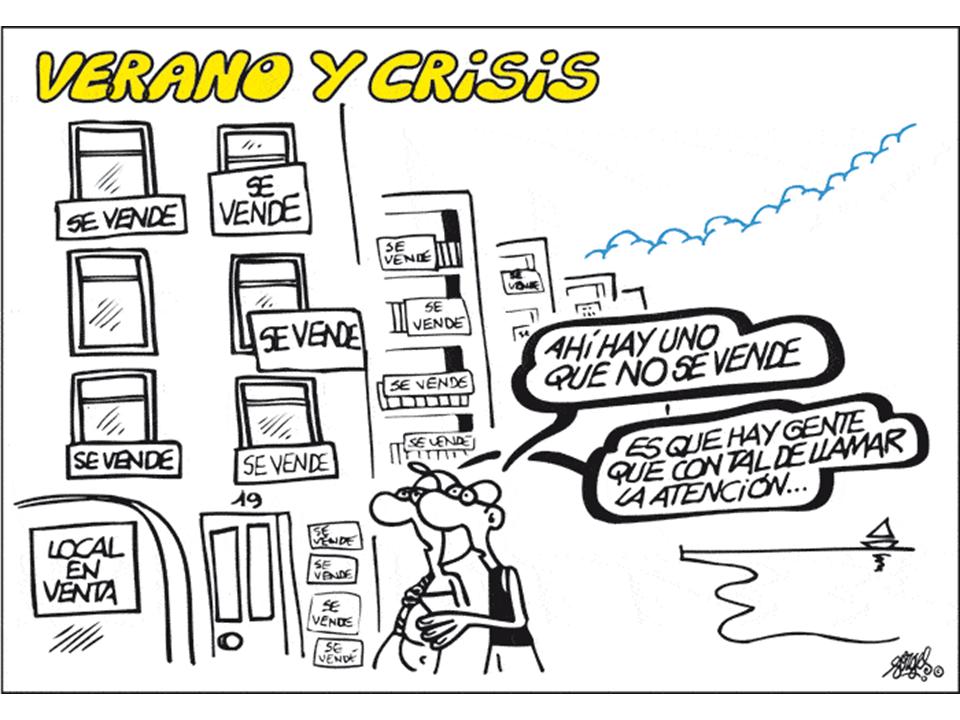
Today we will compare that strategy with the supposed preservation of property assets: News has recently emerged that many investors have long been hoping for: the reopening of the fund Banif Real Estate. But not because of the possibility of being able to access the fund, but rather to address the withheld leave requests since March 2009, when they were forced to close their doors because they were left with nothing but bricks and no money. I don’t need to remind you of the scene that this entailed for the participants, Banco Santander and their respective lawyers. It’s not as if we didn’t warn you nearly four years ago.
It is certainly curious and paradoxical that the property fund closed just as the stock markets began to rebound sharply. Since then, certain prestigious and consistent managers of international equity investment funds have achieved stratospheric returns of over +50%, +100%, +150% and more… However (or perhaps because of this), the property returns of funds as popular as the one mentioned above and Banif Inmobiliario Award Winner has posted a negative return of -22% to date from its all-time highs. This means that investors who invested after 2004 are still losing money today, according to reports Expansion. But if we look at purchasing power or official inflation figures, the losses extend even to investors who came on board after 1999. More than a decade on, and it’s still going on…
It is also worth noting that if, instead of looking at official inflation figures, we were to base our calculations on real inflation (which, let us remember, was severe in the years following the introduction of the euro), the losses would date back even further. This means that investors who entered Banif Inmobiliario (or other similar or even worse property funds) seeking a conservative safe haven and the preservation of their wealth made a grave mistake regarding the future of their assets. The prices paid by the property fund managers, supposedly specialists in property acquisition, were so inflated that they are unlikely to be repeated for many years to come. And it has now been more than 5 or 10 years (or even longer) if we take into account the loss of official purchasing power. But we do not mean to suggest that they were fraudulently inflated by the management team, but rather inflated by the insane market price itself, which many justified with surreal arguments.
We cannot stress enough that the best way to preserve wealth in the long term, given the current situation of overvaluation in developed-country fixed-income markets and the Spanish property bubble, is to invest in assets closely linked to the real economy, purchased at prices below their true value. Historically, and today more than ever, excellent businesses from excellent, debt-free global companies, purchased at low prices, are the best way to preserve wealth in the long term. The only consistent one, I would venture to say, in the current New Normal.
We have produced this simple chart showing how the returns of various relatively well-known investment funds with a proven track record have fared over the last decade, compared with the returns of what is probably the most popular property fund:
As you can see from the chart, all the funds in our selection surpassed their pre-2008 crash highs months ago. Attempting to preserve wealth by investing in property in a bubble-prone market such as Spain’s has proved to be a terribly damaging decision, as is clearly evident from the chart above. The opportunity cost over the past 11 years or so of having invested in property in Spain rather than in sound global companies at a good price, even after a stock market crash like the one in 2008 is huge. But it would have been the case even if the Banif property fund had continued its linear and unsustainable upward trend!
Something that most investors seem to forget or overlook is that, by buying shares in good companies, they also become co-owners of the corresponding share of the property held by those multinationals. And therefore they also benefit from increases in the value of those properties in their respective international property markets, as this will be reflected in their balance sheets and, sooner or later, in their share prices too. Comparisons, whichever way you look at them, are odious, and we won’t even get into the liquidity (and headaches) of one option or the other. Just ask the shareholders of Banif Inmobiliario or any property owner in Spain.
If we also compare it (in the chart below) with the results of top-performing hedge funds, the scale used makes the huge differences in the chart above between those equity/mixed funds and Banif Real Estate virtually imperceptible, reducing them to an indistinguishable line at the bottom. S-p-e-c-t-a-c-u-l-a-r, isn’t it?
Ultimately, preserving wealth in the long term under the New Normal almost inevitably involves investing in high-quality assets whose value far exceeds their price. The versatility, liquidity, global reach and diversity offered by the equity investments made by the world’s best fund managers are impossible to achieve through more specific investments that are removed from the real economy, such as saturated sovereign (and corporate) debt or property investment in expensive markets. And we could say something similar about trying to preserve long-term investment in equities by buying shares in indebted, sub-par, non-global and overpriced companies. But beware: investing in company shares under the guidance of mediocre managers is suicidal, because the longer the time horizon, the more losses we stand to accumulate. Only by being able to invest and consistently outperform the market (indices) over the long term will we adequately preserve our wealth in this new and exciting normality that we began to experience four years ago. Achieving this is the key to our future and that of our heirs.
The long-term preservation of assets is a major concern for all wealth holders, particularly those with medium and moderate levels of wealth. In this first article, we will discuss the role that a particular equity investment can play today in comparison with other types of financial assets. (more…)
We have been made aware of phishing and spoofing attempts involving fraudulent email addresses and domains that closely resemble our official company communications. These unauthorized communications are not sent by our company and may falsely impersonate our employees or representatives.
Our company is not responsible for communications, requests, or transactions originating from fraudulent or unauthorized email addresses or domains. Please verify that all communications originate from our official email domain before responding or sharing any information.
If you receive a suspicious email claiming to be from our company, please do not respond, click any links, or provide any information. Contact us directly using the contact information published on this website to verify its authenticity.
 Hoy os presentamos una auténtica perla en forma de entrevista. Se trata nada más y nada menos que de la que concedió el mejor gestor de la primera década del siglo XXI, Bruce Berkowitz, a la prestigiosa periodista financiera Consuelo Mack hace tan solo 7 días. Resulta interesantísimo leer los argumentos y convicciones de Berkowitz hoy, precisamente en plena tormenta financiera, cuando su fondo estrella Fairholme ha perdido casi un tercio de su cotización (¿valor?) desde principios de año. Un batacazo en el que muchos ven su declive como gestor, pero en el que algunos ven una grandísima oportunidad. Su entrevistadora, Mack, está considerada por la revista Money Magazine como «the best money TV host», y sus programas gozan de una enorme audiencia. Disfrutad las reflexiones de Berkowitz mientras el mundo financiero se hunde a nuestro alrededor (próximamente colgaremos la traducción íntegra al español): (more…)
 Yes, but no. This seems to be the direction the EU is taking with its existential doubts. An uncertain course with the pretence of treading water, buying time, hoping that the Eurozone will still be able to breathe, when the sun wants to rise over a horizon that today is still black, very black.
  The announcement by the Swiss National Bank (SNB) (
 On 7 August we published the first part of this article «The future of the European Union".«
 «The world seems to have gone mad,» a friend remarked to me following the disaster in Japan and NATO’s imminent military intervention in Libya. Indeed, the familiar parameters are turned upside down in every sense: the parameters of the financial system, the concept of risk, ways of preserving wealth, trust, solvency, debt, terrorism, natural disasters, and so on and so forth. But this is not madness; rather, it is a set of new rules, a ‘new normal’ which, for the time being—with no historical cycles to draw upon—seems chaotic to us.
  Following on from our previous article «