We look after your interests

(+34) 93 626 47 75

Torres Sarrià, Carrer de Can Ràbia, 3-5, 4ª Planta BCN 08017

(+34) 91 794 19 82

Pº de la Castellana, 93 2nd floor MADRID 28046

Category: wAsesoramiento Mult-Family Office

Can I send my children to study at a university in the USA?


SEE ALL THE COSTS AND DETAILS OF THE PROCESS HERE

.

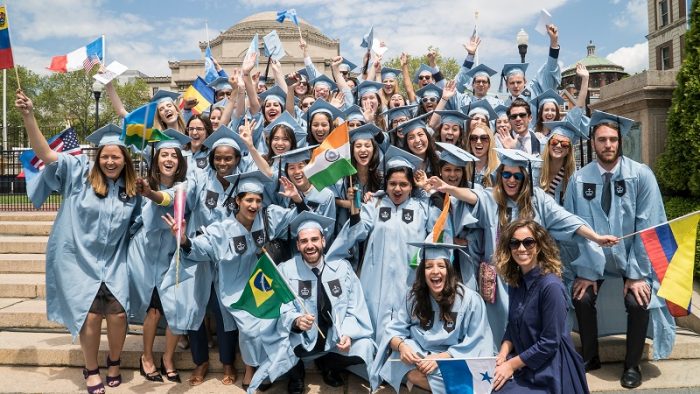
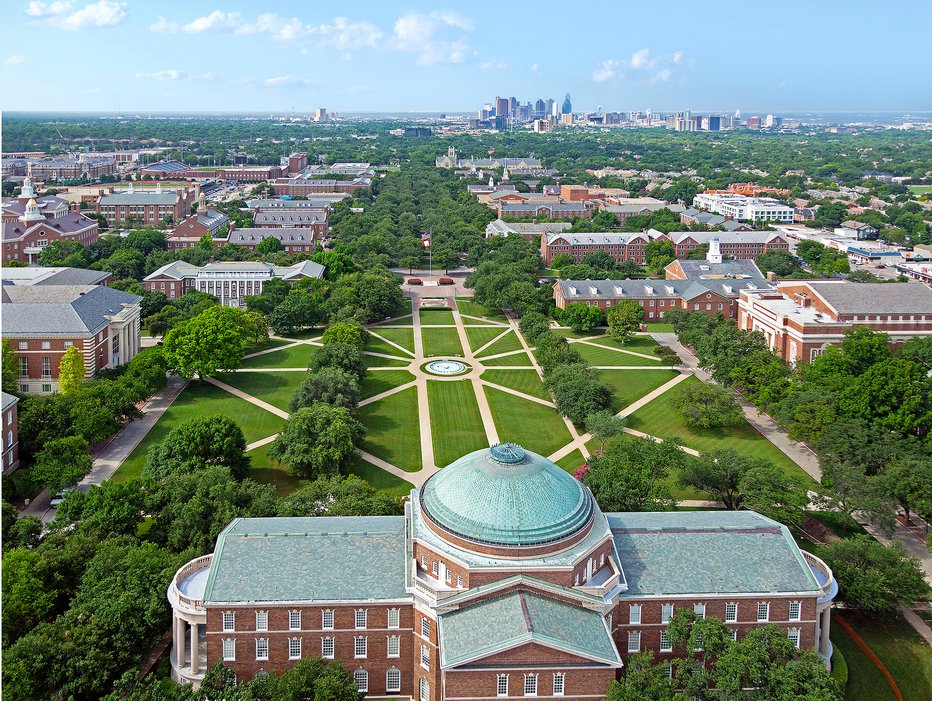
Every year it is becoming more and more common for Spanish families to consider sending their children to study at American universities. Despite this, many still have the misconception that it is a luxury reserved for an elite of millionaires and/or gifted eggheads. However, study at a university in the USA is not difficult at all, and the reasons for sending our children to universities in the USA are multiple and justified. For example, the international prestige of a degree from a university there is far superior to that of comparable alternatives in Spain. It should also be borne in mind that the likelihood of finding more and better jobs upon return, either in the USA itself or in any other country in the world, is much higher with a US degree. As for personal experience, no doubt, living inside of a university that is like a real city in its own right, with its own flats, restaurants, cinemas, concert halls, sports stadiums, shops, gyms, libraries, banks or police, has no comparison with simply attend classes at a Spanish university.

.SEE ALL THE COSTS AND DETAILS OF THE PROCESS HERE
The renowned economist Gay de Liébana he said last week in one of his lectures to an audience essentially made up of parents of teenagers: Families who are able to send their children to study at prestigious universities in talent-receiving countries will be doing them a huge favour, as they will have many more tools and contacts to shine in their professional future. On the other hand, the talents that remain in the Spanish university system will, unfortunately, have a much more difficult time and will probably fade away, becoming part of the multitude of young people who end up doing jobs that are much lower than what they would be entitled to for their extremely well-rounded university degrees. The Spanish economy and its university system and labour market cannot cope. His slogan was clear, parents who can materially push their children to fly through universities in countries like the US, where R&D budgets are infinitely higher than in Spain, will do the right thing.. As a significant fact, he explained that a single company such as Amazon spends more than twice as much money annually on R&D as the whole of Spain. Gay de Liébana himself has a son who trained and lives in Los Angeles, and his father could not be more satisfied with the effort made. Let us now turn to money and then we will explain accessibility for Spanish families of different purchasing power.

.

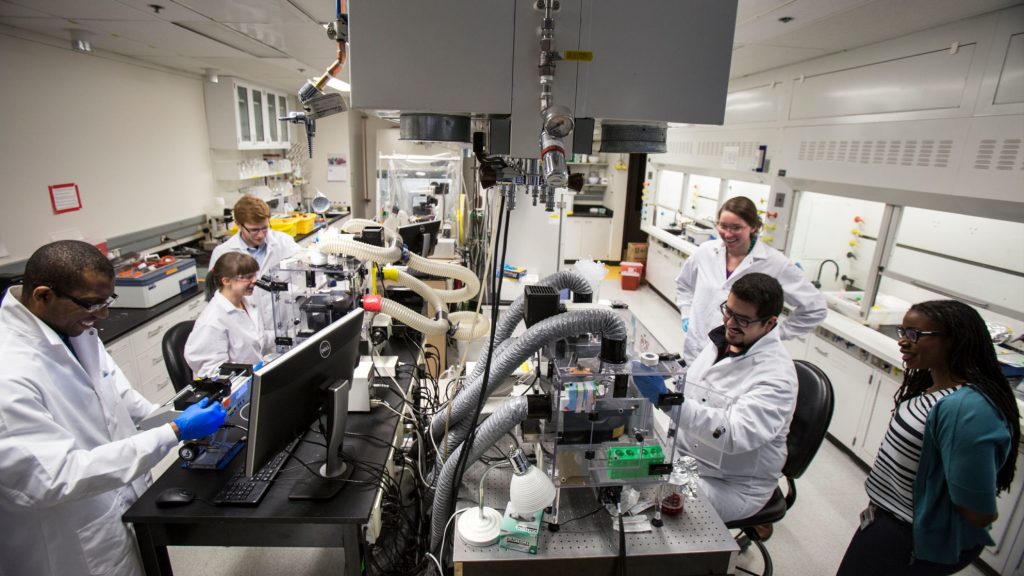
The budgets that American universities manage for facilities, research, faculty, student government and other internal operations are light years ahead of what is possible in our universities. There, it is very common for former students who have made a fortune over the years as entrepreneurs, in gratitude to the university that trained them academically and personally (their alma mater), donate millions of dollars. Thus, in addition to the income that universities receive from tuition fees, room rentals, maintenance and public subsidies, they also receive astronomical donations that allow them to provide specific scholarships or to build entire buildings to house all kinds of resources that donors want for their students. Because of all these abundant sources of income, most American universities are constantly expanding, improving their facilities, faculty and services year after year, because compete fiercely with each other to attract more and better students.


The million-dollar question in the title of this article is: Can I really send my children to a university in the USA? Most families would think that only an elite group with extremely bright sons or daughters can get enough scholarships to study there, unless the parents are millionaires and can afford to pay huge sums. But they are wrong. The flexibility of the American university system allows foreign families to access academic scholarships that are relatively suitable for any good student.. This is a true policy of attracting universal talent. Let's say that with a remarkably high average of the last 4 years of studies in Spain, that is, from 3rd ESO to 2nd Bachillerato, with grades between 7 and 9 out of 10, you can find scholarships that cover a very substantial part of the cost of tuition fees. Obviously there is also the cost of room and board for the student, but this is comparable to the cost of any student from here attending a university in a Spanish city other than their own, which would require them to pay for a student flat and daily meals.

.

Another way to access scholarships at American universities is for our son or daughter to have a good level in any sport, to have played it for some years and to be federated. In other words, they must have a demonstrable track record in sport, having competed in a local amateur league and, logically, have a certain ability that makes them stand out from the crowd. In addition, both scholarships are compatible, so you can have access to sports scholarships and also academic scholarships, thus greatly reducing the cost of tuition.

.

As mentioned above, there is total flexibility, i.e. there are universities for all tastes and academic levels. For example, a family with a child who has a grade point average in the lower range of the above mentioned can choose to go to a less prestigious university with a higher scholarship, to a higher level university with a small scholarship, or to a top university without a scholarship. The same applies to sports scholarships: If the student's level in his or her sporting discipline is very high, he or she can opt for a less prestigious university practically free of charge or for a more prestigious university paying most of the cost out of pocket. Depending on the circumstances of each student and the willingness and financial capacity of the family, a tailor-made option will be chosen. And of course there are also options for those students who simply pass the baccalaureate with averages of 5-6 out of 10 and do not excel in any sport, but without scholarships, which will force parents to cover the full cost. In fact, studying at a university in the USA is an extraordinary opportunity for the brightest, for simply good students and even for less bright students, who would not be able to reach the cut-off mark to be able to study at a Spanish university the degree they like the most, but could do so at various American universities, thanks to the aforementioned flexibility.

.

Advice and accompaniment throughout the process of preparation, selection and application to American universities is an essential part of the process. service that we have been offering since Cluster Family Office for several years now, not only to clients of our multi-family office, but also to our a any family interested. For this purpose we have two specialists (one of them American) who graduated from universities in the USA, who know the secrets of the whole process from start to finish. For families who decide to start their children's path to American universities, we provide them with access to exclusive software that we use together with them as we complete the necessary stages and tasks. And we also maintain throughout the entire process (which can last between 9 and 18 months) constant meetings via skype and/or face-to-face meetings in our offices in Madrid or Barcelona.. They are assisted in the selection process of the universities that best suit them, both in terms of price and scholarships, size, diversity profile, geographical area, climate, rankings in their speciality, etc. Also in the preparation of the dreaded «best fit" lists.«essays«The cost of the service will depend on the needs of each case, but to give you an idea, it can range between 8,750 and 11,250 euros for a complete process, that is to say, between 8,750 and 11,250 euros for a complete process. The cost of the service will depend on the needs of each case, but to give you an idea it can range between 8,750 and 11,250 euros for a complete process, that is to say less than one tenth of what is usually available in academic or sporting scholarships. A cost that also makes the difference between carrying out a practical, resolute process that guarantees receiving at least a couple of letters of acceptance, or throwing oneself into a process that can be very stressful, labyrinthine and doomed to failure, and with the consequent frustration of having dedicated a great deal of effort, time and enthusiasm to a project that will end up with a pile of rejection letters.  

.

This whole process of preparation requires a lot of advance notice. In fact, American students start preparing for their university entrance two and three years in advance, although the families Spanish can have sufficient if lo make duly advised during on course from  o including from baccalaureate (if starting in 2nd year, access to university may not take place in the autumn of the same year as the end of the baccalaureate, but in January of the following year). During all this time the student must demonstrate a sufficient level of English by achieving a minimum grade of TOEFL, The level of the English language proficiency level should be higher or lower, depending on the level of demand of the university to which the student wishes to apply. Students with an insufficient level of English are usually enrolled in adaptation courses, so that they can reach the necessary level within a few months and become acclimatised to university life in the USA. SAT, This is a kind of selectividad exam whose minimum grade required will also depend on the level of demand of the universities to which you wish to apply for admission. Logically, families and students will be helped, trained and accompanied in all these processes.

.

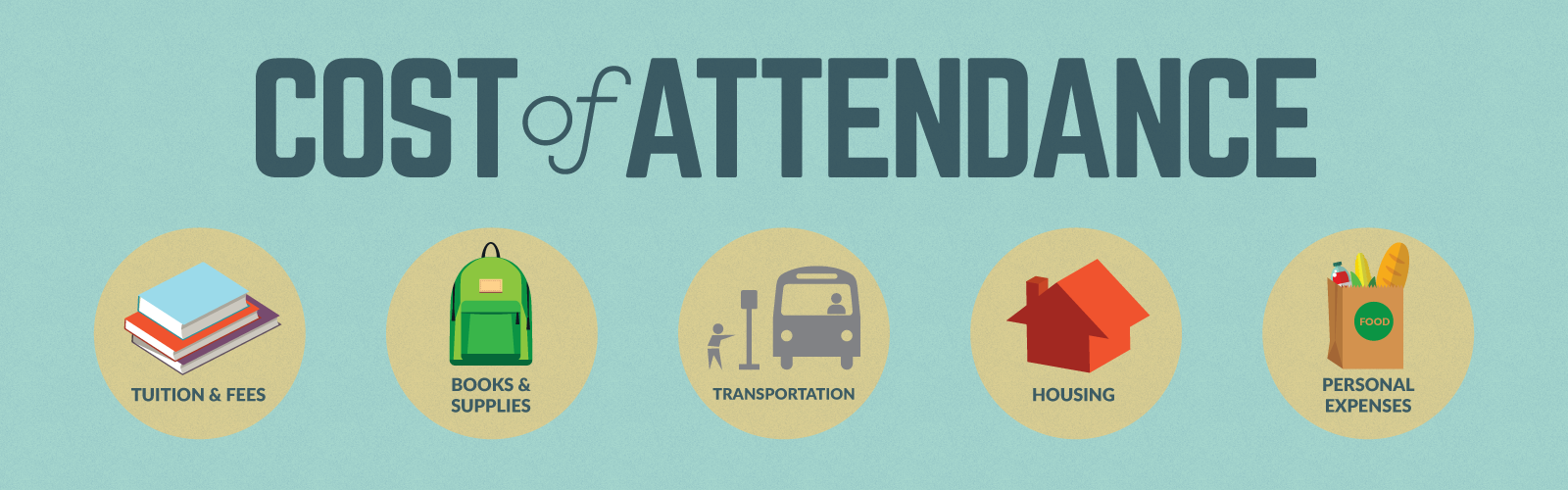
In order for readers to get a practical idea of the costs without grants The approximate costs that a Spanish student who decides to go to the USA to obtain a degree can assume, here are a few figures per year, The programme is based on a standard academic load, from mid-August to the beginning of May, with 24-30 credits per year and a 4-4.5 year expectation to graduate:

.

  • Tuition fees:
    • Between €10,000 and €55,000 depending on the prestige and quality of the university.
  • Cost of room and board:
    • Between 8 and 10 thousand euros
  • Books, materials, travel and miscellaneous expenses:
    • Between 2 and 3 thousand euros
  • Health insurance for international students:
    • Between €1,000 and €2,000

Therefore, if you want to send your child to an American university, you have to calculate logistical costs of between 11 and 15 thousand € per year, plus the annual tuition that depends entirely on the prestige and quality of the university, and all of this could come with a scholarship to a greater or lesser extent as we have already said. As you can see, the costs of room and board are the same as what it would cost to send our children to study in any city in Spain. And the annual tuition fees can be perfectly equivalent to the tuition fees in some private Spanish universities, even without access to any scholarship. SEE ALL THE COSTS AND DETAILS OF THE PROCESS HERE

.
Here you will find a example of housing where students from Arizona State University live. It is obvious that the atmosphere and quality of life is light years away from the student flats that university students usually rent during their studies in any city in Spain.

.

We have already seen in the price table above that with some scholarships, and even without any, the costs of sending our children to universities in the USA are affordable for many more families than we might think. However, it is undoubtedly an effort and financial sacrifice on the part of the family towards their children. But there is no better inheritance than to give them the best possible education during their lifetime so that they can defend themselves before the world with the best weapons and the most prestigious qualifications. Wouldn't it be infinitely more useful and profitable for them that we have paid for their studies at the best universities on the planet than to have left them a handful more money in our will? From our experience in the formation of heirs and the relationship of the new generations with the family heritage, we can assure you that this is the case. If our children are to make their way in the difficult world they will have to face, it will be of little use to them if we leave them only a basket full of fish as an inheritance. We must provide them with the best fishing rod, the best equipment and the best fishing instructors. And their training must enable them to find the most fish-filled international waters and to move in them with complete ease. That will be our greatest legacy.

.
One of the most important benefits of the whole application process is that, during the months of preparation, the pupils will give a huge qualitative leap in maturity and motivation. Their personality will mature due to the process of internal reflection that the pupils will go through as they work on their Essays with our coaches. They will have to explain in essays of only 500 to 600 words who they are and why the university should choose them over other candidates. What personal merits they have accumulated in their short life and what they want to make of it in their future. They will become aware of the high level of competition for admission to the university of their dreams (don't worry, the final list of universities to which they will apply will include options accessible to the student and no one will ever be left without at least one letter of admission). This whole process will make them appreciate much more and much better the financial effort made by their parents for them. For the first time in their lives, they will have to analyse who they are and present their best version of themselves to the world in order to be worthy of the prize of receiving an admission letter. Here we leave you a few videos with some of the emotional reactions of students when they receive the news that they have been admitted to the university of their choice. These videos which abound on YouTube, will give you an idea of what it means, for the teenagers who choose the American university path and for the whole family, to be rewarded at the end of the whole process of effort. You will not tire of watching them. When that time comes, we can guarantee that your children will have grown a great deal personally compared to when they started their journey 9, 12 or 18 months ago.

.

Applying to American universities is the best personal growth process they can undergo, and it will come at the best time in their lives (between the ages of 15 and 18) to make the leap in maturity they need.

.

Finally, we leave you with the links to some of the universities where we have had the pleasure of placing boys and girls thanks to our advice service for graduating in the USA. Taking a look at their websites may be a good start for you to see the difference between the American university path and the domestic one: Brown University, Penn State University, Wesleyan University, Barrett Honors College at Arizona State University, Clark University, Tufts University, Northeastern University, Georgia Tech, Columbia University, UCLA, etc.

.

Request HERE the cost breakdown and your chances of admission.

Why do they call it Risk when they mean Volatility? The fable of the 3 neighbours.

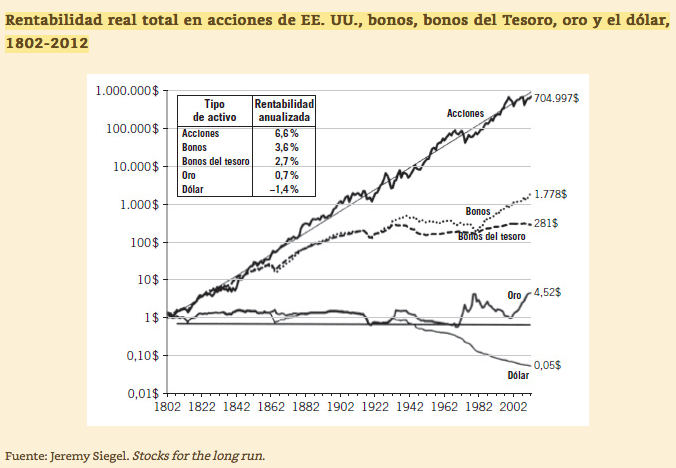
For the investor, the definition of risk linked to volatility is not only misleading but also totally counterproductive. However, a large part of the financial sector and practically the entire banking sector determine - legally and in practice - the risk of investments through their volatility: The higher the volatility, the higher the risk (sic) and vice versa. But the worst thing is that this is how they qualify the risk profile of their clients, a profile that will determine the assets in which they will be able to invest, according to this volatility. As a result, we find aberrations such as considering an insolvent and expensive fixed income portfolio as a proposal suitable for conservative profiles. And we see how many investors are deprived of buying stocks simply because valuations are volatile in the short or medium term. And it does not matter to them that over the medium to long term the certainty of stock market returns is much, much higher than the likelihood that the bonds in the insolvent and expensive fixed income portfolio will return principal and interest without any credit event (unless bailouts with public money, which we will pay back in the future in the form of taxes, avoid permanent losses, as we have seen in the last decade).


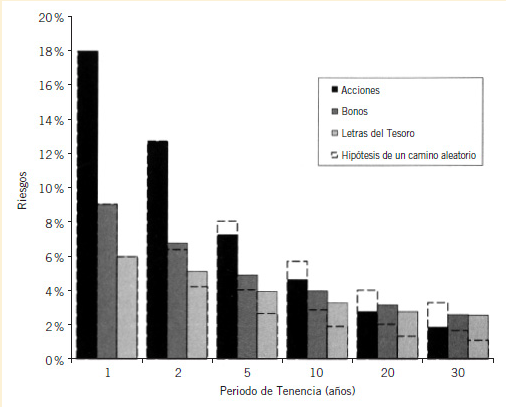
Francisco García Paramés explains it perfectly in his book «...".«Investing for the long term«From it we have extracted the graphs, which are devastating in terms of the fallacies instilled in investors by a large part of the banking and financial sector. As you can see in the graph above, the risk of long-term stock market losses is nil, while the risk of permanent losses in fixed income persists. Moreover, even volatility is lower over the long term in equities! In other words, by investing passively in listed equities, we will not only achieve higher returns over the long term, but we will do so with lower volatility and no downside risk. If we also do so actively through managers of bright backgrounds that outperform benchmarks on a consistent and sustained basis over time, we conclude that this is our best option as investors who want to preserve and grow our investments over the long term.

.

This is and should be the investment criterion: to preserve and increase our financial capital while avoiding permanent losses. What is a permanent loss? It is a loss from which we will not be able to recover before the opportunity cost, currency devaluation and inflation eat us to death.. In other words, a loss that will reduce the progression of our wealth so decisively that only inflation, devaluation and the passage of many years will allow us to recover it in nominal terms, but which will have crippled our purchasing power over a large part of our investment life. For example, a permanent loss is a credit event on a bond or debt asset, or the purchase of a property or share in the middle of a price bubble. In other words, paying far more for an asset than it is worth and will be worth for many years to come. Although obvious, it is worth remembering that a permanent loss is not a temporary short-term loss. Short-term temporary loss is simply volatility that affects us momentarily in an apparently negative way, but which will be recovered with greater or lesser speed depending on the intrinsic value of the asset relative to the fall in price.. And we say «apparently negative» because, as we shall see below, such a permanent loss provides us with golden opportunities.

Here are a few examples of the difference in risk that the same volatility can have, taken from the reflections of Didier Darcet about it. Let's say three neighbouring homeowners in the same neighbourhood, with three identical houses, suffer a major fire in the neighbourhood that completely destroys their properties. They thus have the same initial volatility, since their assets have depreciated identically in value and time:

.

  1. The former has no insurance to compensate him for the losses, so he will suffer them permanently. It is true that over time inflation and the devaluation of your currency can make your empty plot of land worth nominally the same as your house was worth before the fire. But that inflation/devaluation and the opportunity cost squandered over a good part of his investment life will mean that his losses will have been permanent despite recovering the same nominal amount of money over time. For this first neighbour, suffering a fire was a real risk. And after the trauma he will probably decide to sell his plot of land unthinkingly or out of necessity, to move to another cheaper neighbourhood or to a rented house, where he believes he is safer from future risks.
  2. The second neighbour does have fire insurance equivalent to the cost of building the house, so, say in the medium term, he can replace the asset and recover the loss suffered in the short term. Therefore, although he has the same short and medium-term volatility as the first neighbour, his risk would be virtually nullified by insurance. Some would say that he is a homeowner with no medium/long-term risk, but with undeniable volatility if a loss occurs. Would such a homeowner consider that he is at risk of losing part of his equity? In the short term yes, but no one in their right mind should consider them to be a risky owner or risk taker, if they are insured and will be recoverable with full certainty in the medium to long term.
  3. The third owner also has insurance that covers the cost of construction and will allow him to replace his house. But he will also want and be able to take advantage of the current circumstances, and will buy his uninsured neighbour's plot at a good price, taking advantage of the need and/or fear that the latter may have because of the fire (temporary loss or volatility) suffered in the neighbourhood. Therefore, he will convert his temporary loss into a higher profit in the medium and long term. And the most curious thing is that the volatility of this third case will be even higher in the short and medium term than that of the two previous cases, while maintaining practically zero risk. In the case of a financial investor, buying the neighbour's house would be the equivalent of buying back more shares of good Value funds or shares of extraordinarily cheap companies, i.e. taking advantage of the fear and/or need of others to buy assets with high Value at a low price.

Here it is worth remembering that the first graph is based on investors (owners) as the second neighbour, i.e. they will recover their temporary losses in the medium and long term. But imagine now what this same graph would look like if the investor is also able to take advantage of moments of volatility (of fire) to invest more and additionally buy assets at unusually low prices. Obviously, recoveries from temporary losses would be much faster, dramatically shortening short-term loss periods and very substantially increasing long-term returns. This is easy to say but difficult to do, as the natural primitive impulse is to flee from loss-making assets, like the first neighbour flees the neighbourhood where there has been a fire.

.

Readers should therefore consider their financial investments in the same way as the third neighbour, provided they are able to invest in actively managed funds that consistently and permanently outperform indices. If they do so, their volatility and returns will be high, while maintaining zero risk of permanent losses. And if investors are unable to find such funds, they can always emulate the second neighbour through passively managed funds, assuming short to medium-term volatility in exchange for zero risk of permanent losses.

.

Fortunately for neighbours like the third, most behave like the first. Without these obfuscated and/or needy investors there would not be a massive supply that would plummet prices after the fires. That is why the big managers pray and put candles to Saint Volatility, so that Mr. Market's schizophrenia will bring them opportunities. The higher the short-term volatility (fires), the more investment opportunities will occur and the higher the long-term returns with less risk of permanent losses, which are the only losses investors should care about. These are concepts that are radically opposed to the slogans of most professionals in the sector, who remain obstinate in placing their more conservative clients in assets with low volatility and, paradoxically, a greater real risk of permanent losses. Perhaps this is because for banks, as for politicians, the long term is science fiction. Some with the end of the legislature, and others with the collection of the variable or the obligatory sales figure at the end of the year, but both with a galloping myopia. And because when they talk about risk, they are referring to the risk they themselves have of losing their clients as soon as their portfolios, without the fire insurance of a good Value stock market fund, start to smoke.


Elite athletes and their money. The simple lesson of Shaquille O'Neal.

In the following video we see a Shaquille O'Neal in his maturity, giving advice that is as simple as it is important to other professional colleagues, i.e. elite sportsmen. Logically, his advice is only useful for sportsmen, artists or any other person who has a sudden fortune (lotteries, technology entrepreneurs, heirs, etc.) large enough to never have to worry about their future or that of their children and grandchildren. Watch the video of this tweet and then we'll give you some thoughts:

Surely following this simple advice, for which every human being is potentially qualified, would have prevented the vast majority of sportsmen and women from going bankrupt in the course of their busy lives. Notice that neither education nor knowledge is necessary to avoid disaster when a certain level of million-dollar contracts is reached. All that is needed is common sense and rigour. Unfortunately, most elite sportsmen and women, uneducated and from humble origins, drunk on fame and money, often lack both virtues.

.

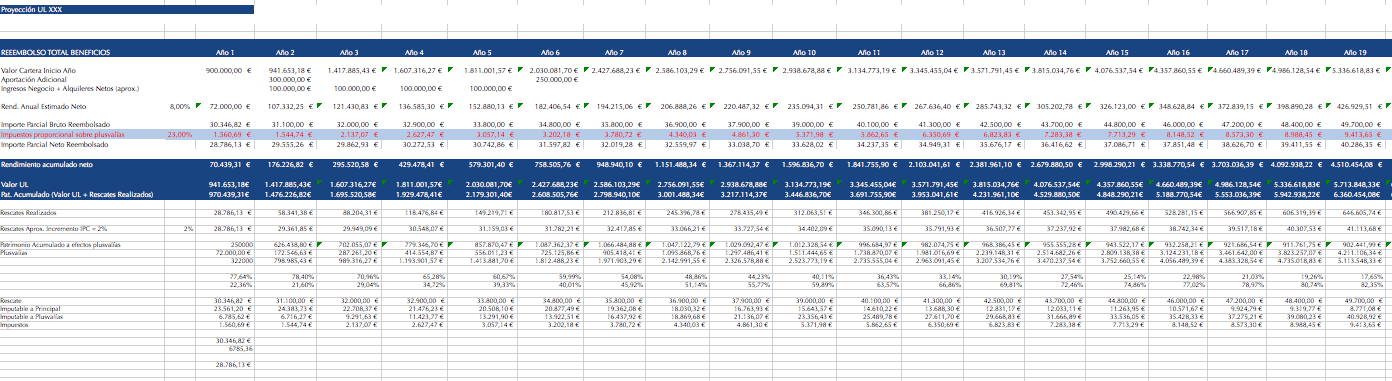
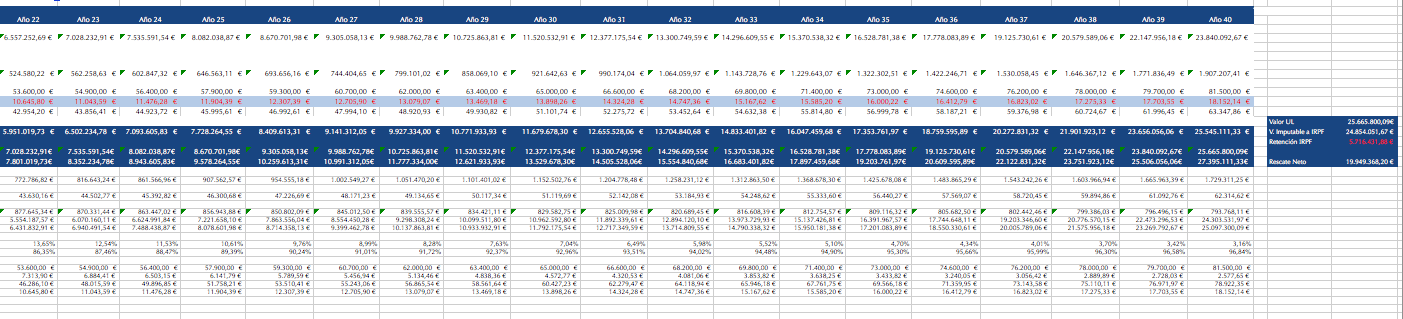
However, most mortals do not reach those income levels, obviously, and need to fine-tune much more than the simple norm of Shaq their wealth progression throughout their lives. Every wealthy life is different. Circumstances in terms of professional income, income from financial and real estate investments, necessary or desired expenses, family burdens and, in short, the lifestyle that each person or family chooses, together with the uncertain future that each human being faces (separations, illnesses, deaths, disabilities, addictions, fraud, accidents, etc.), make each case practically unique. And logically, some tool is needed that allows a glimpse of the wealth projection that can be expected in the face of a more or less prolonged life. This is where everyone can make their own «old-age account», or go to a wealth management professional to get an idea of the progression they may have in the future, and adjust or modify any calculation or lifestyle errors they may be making accordingly. Here is an example of a wealth projection table that we use with some of our clients at Cluster Family Office:


In projections such as those in the image above, we try to incorporate some of the variables that can be intuited from the data and knowledge of our Clients' circumstances. In the projections we make at CFO we handle data such as professional and non-professional income, expected length of working life, present and future income consumption, inflation, financial and real estate yields, personal taxation, taxation of the investment vehicles that each family has in Spain and abroad, etc.

.

However, it is obvious that the further out in time the projection is made, the less reliable the predicted data will be, as deviations multiply over time with a greater effect on the result than compound interest itself. But despite the impossible accuracy, this tool is always a great help in resituating the lifestyle of families and, above all, in opening our eyes to the uncertainty of living a long wealthy life in the ever-changing world we face. And the uncertainty of progression is particularly revealing. when the proportion of real estate is abused in equity or when the era of conservative fixed-income portfolios is more of an asset trap. potential losses from which very few will escape.

.

The evolution over time of an unbalanced estate that makes the wrong decisions, compared to the evolution of a balanced estate of financial, business and real estate assets, with the correct optimisation of each of them, is totally different after 5 years. But if we project the errors with respect to what would be the correct distribution of assets and liabilities and their management, beyond 15 or 20 years, the difference is abysmal. What today may appear to be a minor imbalance or inefficiency, a minor deviation, over time is the key to success or failure in our old age and for the well-being of our children.

Year 2007: An olive tree plus one...

It is almost 10 years since we left the age of financial innocence. That time when indebtedness was not, as it is today, a vital necessity to avoid bankruptcy, but an abused tool to grow and make money out of nothing recklessly. The mirage of bonanza began to fade as early as 2007, although for most mortals the collapse was not evident until the stock markets crashed in 2008. Thinking back to that pre-crash era, a real estate deal we came across in 2007, shortly before the systemic disaster, came to mind. Of course, when we look back at the transaction we are now recalling, we could not have ended up in any other way than plunging into the financial abyss:
.
The real estate transaction in question was a plot of land to be developed in Andalusia, of very considerable size and price: 58 million €. The negotiation was already focused on the mere interest to be paid for the 50% of the agreed 3-year deferred payment. Up to this point, everything was normal and the previous contacts between buyer and seller were made with the intermediary on duty, an expert professional, one of those who, if you are careless, sells you the Palacio de Versailles as chateau and with a discount for early payment. However, at a certain point in the negotiation, we were able to deal directly with the sole owner of the land, whom we did not yet know: A middle-aged man with a rustic and prudent appearance. But when we started to get down to business, he told us very seriously that the deferred €29 million had to be paid «...".«at the same interest rate as the bank, olive tree plus one«.
.
We must admit that although we have fought in many bullrings (I would say in almost all of them), it took us a few seconds to react. This was not irony or a joke, or even a metaphor. I was reluctant to believe that someone who confuses the Euro interbank offered rate (Euribor) with the oil yield plus a unit of something I don't even want to imagine, is going to become overnight the owner of 58 million euros: 29 million euros in cash and 29 million euros in 3 years with their corresponding e very interesting olive trees plus one. Comical as well as alarming and scandalous, although many of us envy him from our modest backgrounds.
.
What will have become of this man and his family after 10 years? Unfortunately we were not able to keep in touch, as his banker-friend (sic) took over, at least for a while. Based on our experiences as asset advisors, I don't think they were any happier than they had been up to the time of the sale. Especially now, after 10 years of covering the mistakes with money that was apparently never going to run out. During these years they will have been manipulated, robbed, swindled, flattered, and squandered in the broadest sense of the word. They will have been the fodder of all those around them, whether they are part of the family or not. Cross hatreds that, with their poor training, have possibly ended or will end tragically. The best thing that could have happened to them was to sell land worth no more than a few million euros. In this way they would have tasted the sweetness of abundance but with fewer enemies, and probably in a few years everything would have returned to «normal», at most some residual and usable property for their children. I hope they have been able to realise their dreams, at least temporarily. But paradoxically They will not have had an easy life after the sale, unless they were just robbed by an honest law firm that took pity on their limitations and cleverly insulated them from their fortune.
.
At that time (spring 2007) we wrote the following: «It is an aberration that a farming family's land, which has served to feed their ancestors with more than dignity, should overnight be turned into a fortune for which no one has ever prepared them. Perhaps this is an aberration comparable to that which the purchasers of the houses to be built on this land will have to suffer, with mortgages that their children will inherit if they are not repossessed. In the case of the farmer it seems to me to be a creation of wealth against all the laws of capitalist economics. And in the case of the buyers of these flats it is a creation of poverty, curiously enough at the same interest rate: olive tree plus one».
.
Unfortunately, the financial system could no longer withstand such aberrations, and the nouveau riche rural nouveau riche, the new owners of flats, the construction companies and the banks that financed that nonsense, were caught flat-footed. And the worst thing is that, seen in a decade's perspective, the jungle of the markets and the economy of that time seems like child's play compared to the scenario we face today. Because the collateral effects of dynamiting the price of money to save the unsalvageable have only just begun.

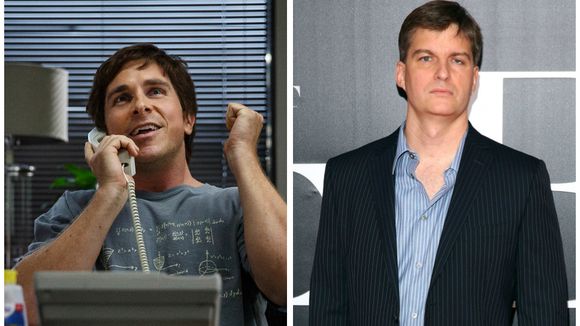
Michael Burry, a manager as atypical as he is brilliant.

Our friend Marc Garrigasait, manager of Koala Capital SICAV y Panda Agriculture & Water Fund FI,has posted on his blog Investors Conundrum what is probably the most complete compendium of data and reflections compiled by Dr. Michael J. Burry, famous for his more than brilliant investments against the US mortgage market at the height of the bubble a decade ago. Many will remember him as the main character in the film «The Big Short», an essential film for both professionals and financial neophytes.

.

In his article, Garrigasait comments on very interesting aspects of the character, such as his origins far removed from the financial sector and the overwhelming world of Wall Street, since he abandoned his profession as a neurologist in California to devote himself to managing his own and other people's money. His deeply - not stubbornly - contrarian profile and his conviction that it is not only perfectly possible for the rest of the world to be wrong, but also very likely, make Dr Burry an exceptional manager in every sense of the word. As you will see in the next paragraph, his passion for being right in the long run, against the stupid market consensus, outweighs his eagerness to make money: I might even make an error. Hey, I admit it. But I don't let it kill my returns. I'm just not that stubborn. In the end, investing is neither science nor art - it is a scientific art. Over time, the road of empiric discovery toward interesting stock ideas will lead to rewards and profits that go beyond mere money-”.”

.

Among the notes and commentary in this compendium of Burry's thoughts, you will find reviews of real estate, technology and all types of stocks. Complex conclusions covering company analysis and market valuations. He talks about macroeconomic analysis, market timing, investor behaviour, mistakes, fundamentals and a very long etc. Always with his vehement vision and founded on the basis of value investing and the margin of safety. In short, a privileged mind that has permanently drunk from Graham's fountain, but who is also capable of recognising that value investing is not infallible, and that it only reduces the probabilities of failure in the jungle of the markets.

.

Here you have the complete document in pdf to learn from an exceptional master. It is not to be missed: Learning from Dr. Michael J. Burry's Investment philosophy 2016 10 18


The two-speed EU is here.

To put us in perspective, it is worth re-reading the article entitled «The secret Franco-German Super-State project«, in which we highlight the radical change of plans that the leaders at the heart of the Union (sic) have planned for those states that cannot keep up with the economic pace of the more advanced EU countries (read periphery and centre). You can also read the devastating document This was the original text drafted by the French and German foreign ministers last June, in reaction to Brexit, which was leaked very discreetly to some second-tier media outlets. (more…)

Negative interests and Darwin.


The essence of our economic and market system is efficiency and competitiveness driven by profit. It seems a somewhat convoluted phrase, but it assumes that the System is based on concepts as logical and simple as the fact that all the agents that make up the Market and the global Economy want to make money. For this obvious - and at the same time necessary - reason, we try to progress in our jobs, either as employees or as entrepreneurs. We all want to achieve greater well-being, and to do so, we need to progress and our work must be not only well done, but better done than that of our competitors. This is the only way to improve our salary or our company profits, and thus also our ability to enjoy that money, i.e. our present and future well-being.
(more…)

The secret project of the Franco-German Superstate.

frenchgerman1

The foreign ministers of France (Jean-Marc Ayrault) and Germany (Frank-Walter Steinmeier) have bilaterally agreed on a series of proposals that radically contradict the model of the European Union that Euro-bureaucrats have been selling us for decades. The million-dollar question is to whom they are proposing this new Europe, and whether this declaration of intent is just that or rather a full-blown announcement of the new path that the hard core of European countries, starting with the Franco-German axis and adding Benelux and Italy (more for its founding history than its current economic state, obviously), will embark on. (more…)

Bill Gross, a slap in the face of realism.

bill-gross-zumaglobal265446-1940x1293

Bill Gross, former star manager of PIMCO and now of JANUS, is the voice of experience in the debt markets. It is true that his published views have not always been right, but perhaps his unpublished reflections have been mostly right. In fact, for us, Gross has been a great communicator of self-interested views. That is to say that at any given moment it has suited him that the markets/investors/clients have reacted to his published opinions in a certain way. Let us not forget that Gross is a veteran and influential voice like few others. (more…)

All bets are off.

The medium to long term horizon for investors is very dark. A report by McKinsey Global Institute (download here) hits the nail on the head in concluding that investment returns in general over the next two decades (at least) will be very low. Historically well below what the markets have offered over the last 30 years, and I would add, well below what has been achieved on average over the whole of the 20th century, Great Depression included. There are plenty of reasons for this if you open your eyes and look at the numbers. Let's see. (more…)

Shall we help you search?

Cluster Family Office

We care about transparency both in management and in our own way of working. Leading wealth management and family offices company

Do you need help in capital and wealth management?

How can I avoid the negative effects that my fortune may have on my children?

How and when should I talk to my children about family wealth, and what relationship should they have with money throughout their adolescence?

How can I measure the real risks of my investments and protect my assets adequately?

Do I have sufficient liquidity and stable income to cover my needs on a permanent basis?