We look after your interests

(+34) 93 626 47 75

Torres Sarrià, Carrer de Can Ràbia, 3-5, 4ª Planta BCN 08017

(+34) 91 794 19 82

Pº de la Castellana, 93 2nd floor MADRID 28046

Category: Asesoramiento patrimonial para deportistas y artistas

Those who most need to invest in the stock market do not.

According to a recent study published by ValueWalk, Those families who would most need the long-term returns generated by investing in the stock market are the most reluctant to invest in it. In contrast, those with the highest wealth and income are precisely those who have the highest proportion of company shares in their portfolios. And those additional returns that the wealthier generate over the long term through the stock market further widen the gap between the rich and the poor over the years. The conclusion is that the poorest have an even worse financial outlook in retirement, not only because of their low lifetime earnings, but also because of their aversion to the stock market.

.

But not only the poorest invest less in the stock market. According to the data from this survey of the US population, also less educated citizens are more fearful of investing in company shares. As many of you already know, the culture of investing for the long term in an equity portfolio is widespread in the US. And it is common for employees to give up a portion of their salary so that their employers can deposit it in investment portfolios on their behalf (the famous 401(k)). Most American retirement plans are based on equity portfolios in which both the owners of the portfolios and their employers on behalf of their employees add to them over the course of their working lives, thus leaving the financial future of retirees with a less precarious working life in the hands of the growth of corporate profits rather than the state.
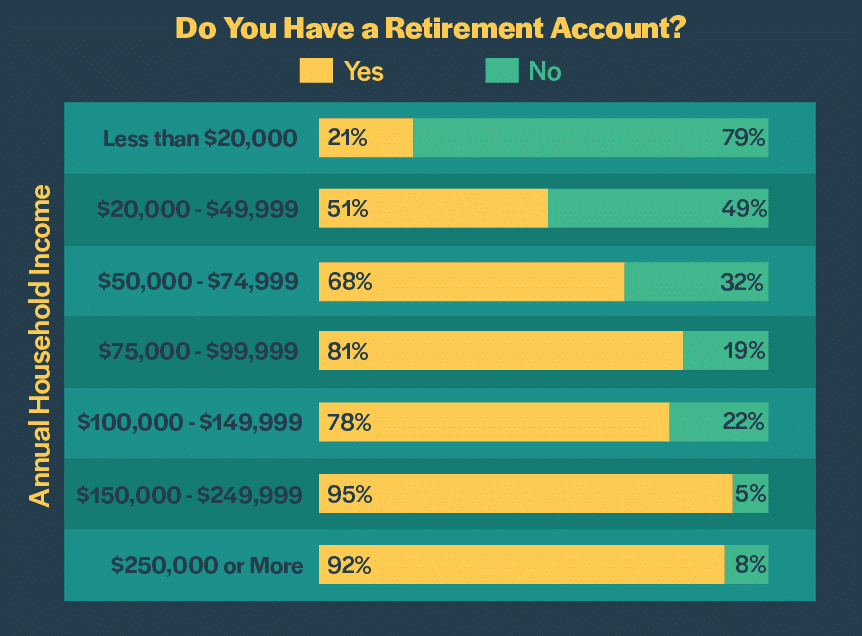
In the graph above we see the percentage of US workers who have a retirement plan and therefore a growing equity portfolio over their working lives, according to their income level. As you can see, it would seem that the difference between rich and poor is absolutely determined by their ability to invest to secure their future. But in the graph below we see that not only economic capacity is a differential factor but also academic training, influencing the decision to sacrifice current consumption in exchange for future consumption or financial security in old age.
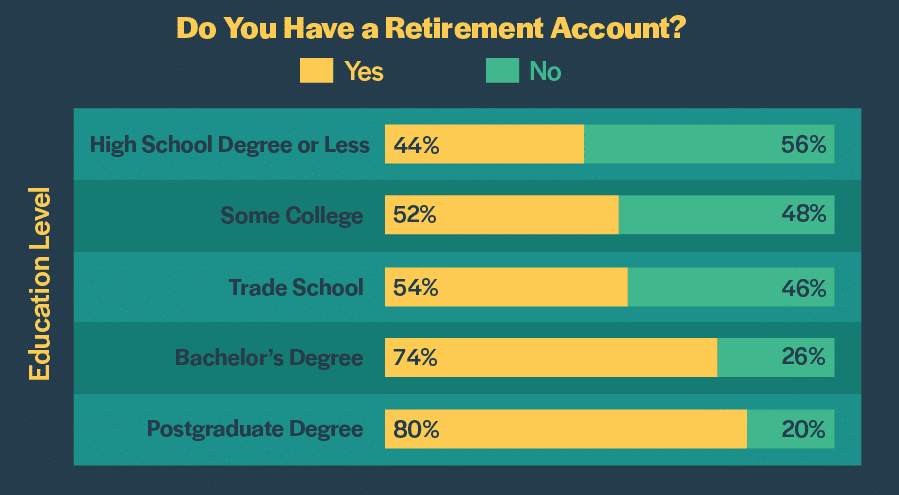
Thus, the higher the education, the higher the percentage of the population that invests in companies and does so in the long term. It is also true that the more educated we are, the more likely we are to earn a higher income, and therefore the easier it is for us to invest part of our money. But the perception that stock markets favour the richest and therefore cannot improve the lives of the poorest also suffers from a clear bias between different income levels, as we can see in the following graph. 66% of those earning less than $20,000 per year think that stock markets are unfair because they favour the rich and insiders.. In contrast, only 32% of those earning $250,000 or more per year are of the same opinion.

.

This is a particularly damaging bias, since investing in company shares should be a long-term income levelling practice. Yet the stock market aversion of people with lower incomes and educational backgrounds condemns them to dependence on failing states and a precarious retirement.

Another interesting insight is people's perception of the money they will need to retire comfortably. As you can see below, those earning less than $50,000 a year think they will have enough with an investment portfolio worth between half a million and a million dollars when they retire. On the other hand, those earning between 50 and 250,000 a year think they will need between 1 and 2 million to retire comfortably. And for those accustomed to incomes in excess of $250,000 per annum, the figure already rises to between $2 million and $4 million.
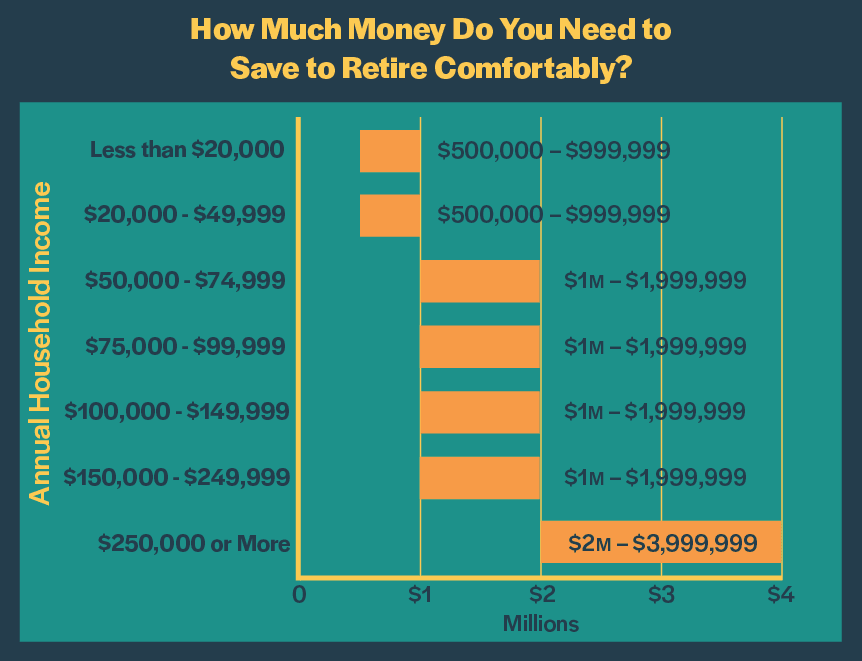
The conclusions we can draw are therefore, among others, that investment in company shares over the years of our working lives is determined not only by our level of income but also by our level of education and financial training. And that less educated citizens regard stock market investments not as their lifeline but as a practice for the wealthy elite. Financial literacy is therefore more necessary than ever, especially for those on the lowest incomes. Imagine how the incomes of the poorest people would improve if they were to take advantage of moments like this and continue to do so for decades (Incidentally, since last March when we wrote these articles recommending that we put all our eggs in the basket, the markets have risen by 25-30%, which is an understatement to say the least).
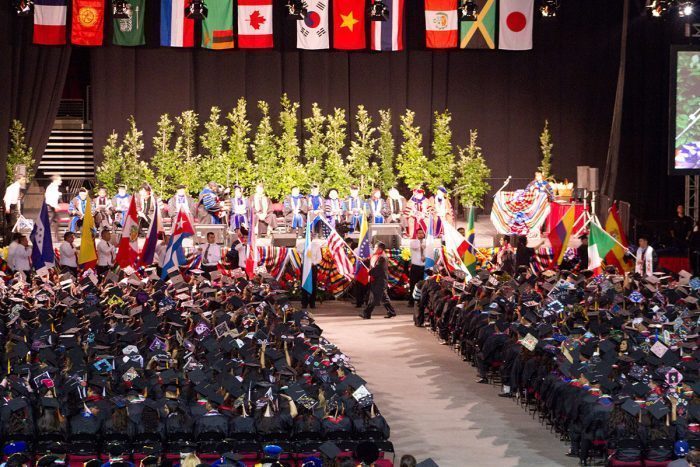

Flight of Spanish athletes and brains to US universities.

Recently the newspaper Public has interviewed several Spanish sportsmen and women who decided to study at universities in the USA to perfect their careers, both academic and sporting. This drain of talent is not only being suffered by our country at a sporting level but also at an academic level, as any student of medium or medium-high level has a place in the American university system.

.

Let's look at the motivations that lead sportsmen and women and «simple» students to pursue their careers at American universities. For sportsmen and sportswomen, the fact of studying there means obtaining a university degree that they would most probably not get here, as it would be very difficult for them to combine their sporting career, training and tournaments with classes and exams. The result is that very few Spanish athletes have a university degree when they finish their more or less successful sporting careers. In the USA, sporting success is not only compatible with, but necessarily goes hand in hand with the university world. The compatibility of training and competitions that will lead them to professional sport with classes, studies and exams is total and absolute. In addition, the facilities, sporting level and quality of coaches in the sports areas of the university system in the USA is a dream, as their budgets are light years ahead of those of any sports club in Spain, unfortunately.

.

In short, a 16-18 year old athlete who decides to stay in Spain has only one card at stake for his or her future: whether to be sufficiently successful as a sports professional or to be relegated to being, for example, a mere coach without a university degree. In the best case scenario, they will have to retrain academically when they throw in the towel on their professional career, late and badly, in order to get a job. On the other hand, an athlete who goes to an American university, even if he or she is not successful enough as a professional, will at least have a university degree (often linked to the world of sport) that will allow him or her to make his or her way in the post-sport world with the same possibilities as any other graduate. In addition, you can even obtain your masters or postgraduate degrees while continuing your sporting career.

.

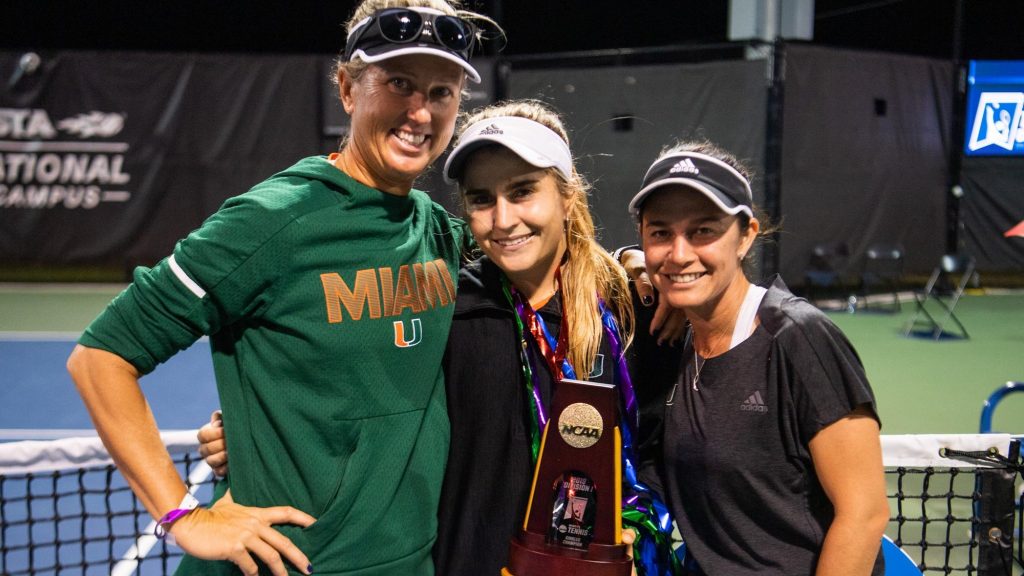
Estela Pérez-Somarriba from Madrid, a student at the University of Miami, and NCAA champion (the most competitive college tennis league in the world), explains it perfectly in the interview:

.

“I was right to look at the long term. I wanted to play tennis professionally, it had always been my dream and it still is. But when I finished high school, I started to weigh up the academic, tennis, economic and personal aspects. I didn't know if I wanted to live in Madrid all my life, I needed to mature, I couldn't afford to travel and pay a coach to take the professional leap, and in the United States I could combine sport with a career”.

Estela is studying Economics and Sports Management, and she couldn't be happier with her decision. Her goal now is to jump to the women's professional circuit (WTA) as soon as she graduates, which she will also do on a scholarship from start to finish by the university itself:

“The physical and medical resources, the facilities, the advisors and teachers help you a lot. My day-to-day life is tough, but we are top-level athletes and if you want to be the best in your sport and get a degree, it is always going to be a challenge. But here I have a lot of facilities that I didn't have before.

But it is not only athletes who have their way open to the university world in the USA. Every day, more and more students who do not play any sport are studying at the more than 2,000 universities across the country. And the fact is that prices are not so abusive as a priori many families might think. Nor do they the academic standards required are so high. Any student of average level has a place in an American university. The prices do not have to be higher than the costs of a private Spanish university. And living expenses, i.e. flat and meals, within the university campus itself cost the same as sending our children to study in Madrid, Barcelona, Seville, Bilbao or any other Spanish city. You can see the details of the costs and price ranges in our article: «Can I send my children to study at a university in the USA?«

.

Furthermore, let's not fool ourselves, a degree from an American university will open more professional and employment opportunities for our children than a Spanish degree. Whether they return to Spain to look for work, stay in the USA or go to live in any country in the world, having a university degree from any American university under their arm will make a difference for life. What better inheritance can we leave them than that?

.

Although it may come as a surprise to many, the process of preparing for admission to an American university must be done at least one and a half years in advance. and appropriate expert advice. In other words, as we have already explained here, The time to start the process is between the end of the 4th year of ESO and the first half of the 1st year of Bachillerato.

In this Público article you can find other stories of Spanish sportsmen and women who cleverly decided to develop their careers in the USA.

.

In short, families with children aged 15-17, whether or not they are athletes, whether or not they are bright students, explore the academic and scholarship possibilities offered by the American university world. It will make a difference in their lives, and yours.

Funds that make inaccessible funds accessible

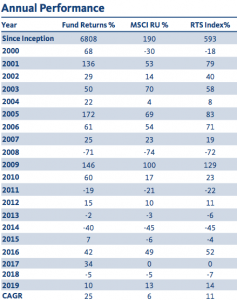
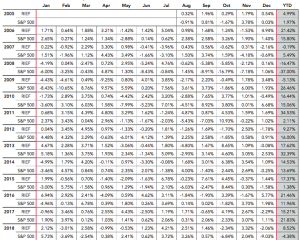
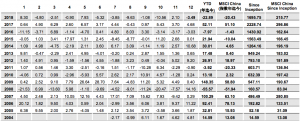
Can you imagine being able to invest in the best institutional funds on the planet, where the strongest hands in the financial world invest, with only 125,000 euros? We are talking about being able to invest in funds and hedge funds with entry barriers of 500,000, one million or five million euros minimum investment. Funds that, although they are still open (for the moment), have prohibitive minimums for portfolios that do not reach at least 10 million, if you want an adequate diversification of managers and geographical areas. Funds that, due to the brilliance of their historical returns, are light years ahead of the catalogue of funds sold by the Spanish banks, as we explained in «Institutional funds and hedge funds, the league in which retail investors cannot play».». We are talking about managers of the stature of Branis, Jiang or Simons of the legendary Medallion, who have demonstrated for decades that they are above the rest, achieving enormous alphas such as those shown in the following tables.

<

Well, some funds of funds group together large fund managers and institutional hedge funds in their portfolios and «chop up» these prohibitive investment minimums into tickets of as little as 125,000, as we said at the beginning of the article. Logically, this facilitation of access for smaller investors requires an exhaustive analysis and a prior selection of funds that is not free. All these funds of funds charge an additional fee on top of the fees already charged by the underlying funds. In other words, you are paying commission on top of commission. But if the underlying fund of funds portfolio is sufficiently strong in net returns, and the fund of funds fees are moderate, the result will be funds of funds that will continue to outperform their respective benchmarks in a very juicy way.

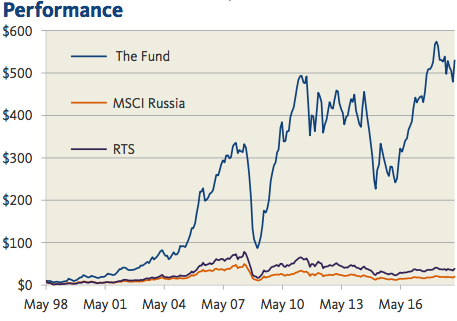
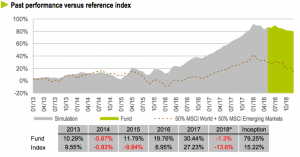
The graph above shows the performance of one of these funds of funds, domiciled in Luxembourg, The fund's performance is based on the three managers mentioned above and half a dozen other leading names in institutional value fund management. As you will see, the fund is benchmarked against an index composed of 50% MSCI World and 50% MSCI EM, which sets the bar very high, because if you look at most benchmark indices used by funds, they tend to be AR (absolute return) or other less understandable definitions. These nomenclatures of most indices or benchmarks «cap» the returns of the index in question against the stock market index of the respective country in order for the fund to visually outperform it more comfortably. This often leads to false alphas, The fund of funds' performance is very poor, which is misleading for investors, as in many cases these funds either do not outperform their pure benchmarks at all or do so very poorly, which does not justify their active management costs. In contrast, in this fund of funds, the comparison is a bare-bones comparison with the MSCI World and Emerging Markets, which is very welcome and speaks volumes about the strength of the underlying funds, as they have been outperforming them by a wide margin.

.

As you can see, although the fund was launched in May 2018 and most of the performance is a simulation of the performance of all these underlying funds over the last five years, already in actual 2018 returns it is more than paying back its fees on commissions.

.

What is the bad news? Well, most of these funds of funds, like the underlying institutional funds, are not marketed in Spain either. And therefore, at present, the only way to access them is to open an account in a Luxembourg bank that accepts smaller clients (a more difficult task than it seems without the proper reference) and subscribe to it from there with a minimum of 125,000 euros.

.

Compare the returns in the tables with those of any passive investment fund and you will see that, despite the general mediocrity of active management, some managers more than earn their fees. It is difficult to find them, but it is even more difficult to access them with smaller amounts. Although, as we always say, there are some, as explained on the Cobas blog.

.

Disclaimer: This article does not represent an investment recommendation for the products mentioned. The funds referred to in the article are not registered for marketing in Spain and are only suitable for qualified investors, with minimums ranging from €125,000 to €5,000,000.

Elite athletes and their money. The simple lesson of Shaquille O'Neal.

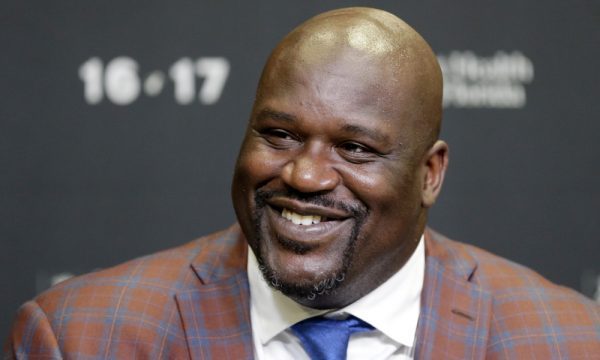
In the following video we see a Shaquille O'Neal in his maturity, giving advice that is as simple as it is important to other professional colleagues, i.e. elite sportsmen. Logically, his advice is only useful for sportsmen, artists or any other person who has a sudden fortune (lotteries, technology entrepreneurs, heirs, etc.) large enough to never have to worry about their future or that of their children and grandchildren. Watch the video of this tweet and then we'll give you some thoughts:

Surely following this simple advice, for which every human being is potentially qualified, would have prevented the vast majority of sportsmen and women from going bankrupt in the course of their busy lives. Notice that neither education nor knowledge is necessary to avoid disaster when a certain level of million-dollar contracts is reached. All that is needed is common sense and rigour. Unfortunately, most elite sportsmen and women, uneducated and from humble origins, drunk on fame and money, often lack both virtues.

.

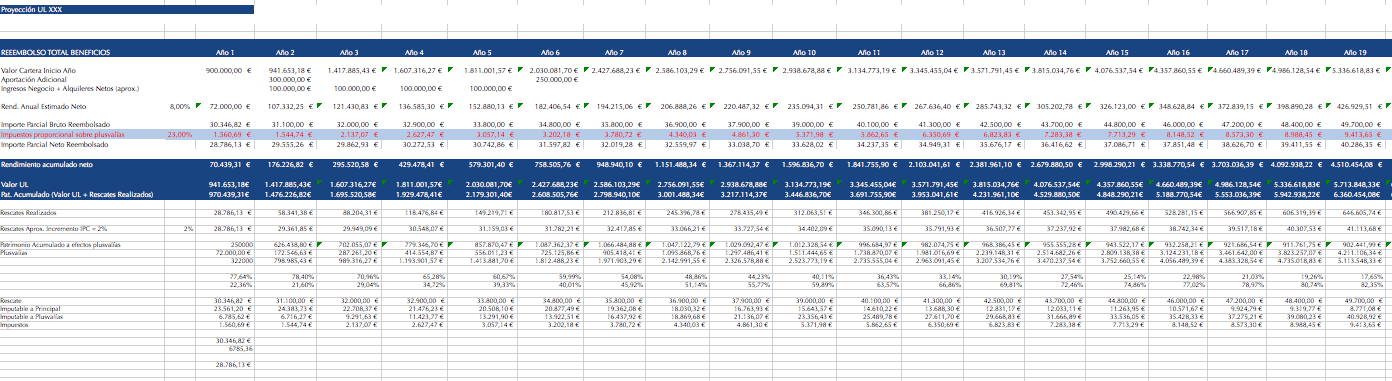
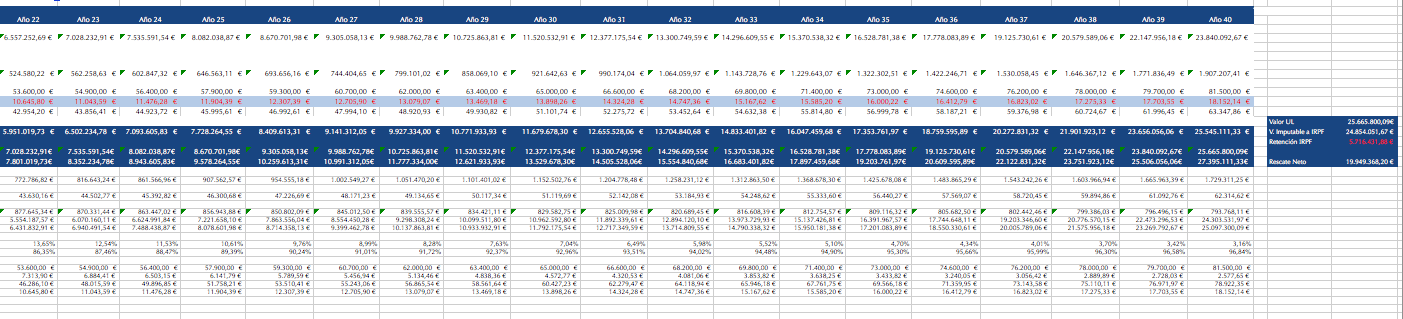
However, most mortals do not reach those income levels, obviously, and need to fine-tune much more than the simple norm of Shaq their wealth progression throughout their lives. Every wealthy life is different. Circumstances in terms of professional income, income from financial and real estate investments, necessary or desired expenses, family burdens and, in short, the lifestyle that each person or family chooses, together with the uncertain future that each human being faces (separations, illnesses, deaths, disabilities, addictions, fraud, accidents, etc.), make each case practically unique. And logically, some tool is needed that allows a glimpse of the wealth projection that can be expected in the face of a more or less prolonged life. This is where everyone can make their own «old-age account», or go to a wealth management professional to get an idea of the progression they may have in the future, and adjust or modify any calculation or lifestyle errors they may be making accordingly. Here is an example of a wealth projection table that we use with some of our clients at Cluster Family Office:


In projections such as those in the image above, we try to incorporate some of the variables that can be intuited from the data and knowledge of our Clients' circumstances. In the projections we make at CFO we handle data such as professional and non-professional income, expected length of working life, present and future income consumption, inflation, financial and real estate yields, personal taxation, taxation of the investment vehicles that each family has in Spain and abroad, etc.

.

However, it is obvious that the further out in time the projection is made, the less reliable the predicted data will be, as deviations multiply over time with a greater effect on the result than compound interest itself. But despite the impossible accuracy, this tool is always a great help in resituating the lifestyle of families and, above all, in opening our eyes to the uncertainty of living a long wealthy life in the ever-changing world we face. And the uncertainty of progression is particularly revealing. when the proportion of real estate is abused in equity or when the era of conservative fixed-income portfolios is more of an asset trap. potential losses from which very few will escape.

.

The evolution over time of an unbalanced estate that makes the wrong decisions, compared to the evolution of a balanced estate of financial, business and real estate assets, with the correct optimisation of each of them, is totally different after 5 years. But if we project the errors with respect to what would be the correct distribution of assets and liabilities and their management, beyond 15 or 20 years, the difference is abysmal. What today may appear to be a minor imbalance or inefficiency, a minor deviation, over time is the key to success or failure in our old age and for the well-being of our children.

Banco Popular: In extremis.

Once again, the disaster has come close to happening. And at the last minute, unspeakable pressure from the government has succeeded in getting Banco Santander to take over the huge hole in Banco Popular. Before it got this far, of course, capital was raised with money from unsuspecting new shareholders, bondholders and any other naïve people who believed in the image of security and solvency of characters such as those used by advertisers.

.

https://youtu.be/xD_4thIw1FQ

.

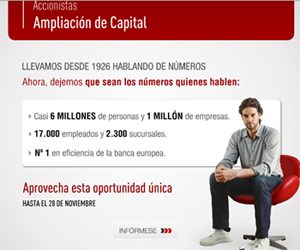
Most sports personalities, accustomed to selling their image for publicity, do so to the highest bidder without giving a damn whether they are selling more trainers or helping to wipe out the savings of humble families who believe that what Pau Gasol tells them can be trusted. It is difficult to apportion blame fairly: who is more to blame for small savers losing their money in these bank rescue operations: the bank manager, who is increasing capital or going public (Bankia) knowing full well that the investors he is deceiving are going to lose a large part of their savings? The regulator (BdE) who allows it, also knowing the critical situation of these balance sheets? The person who sells his image of credibility to convince those who without it would not trust that entity with their money? The bank employee who lies vilely to all the prey who sit at his table during the aggressive campaign to attract investment? The investor himself with his explosive cocktail of ignorance and greed? As the saying goes, between all of us the scammed and she alone is ruined...

.

In order not to be hypocritical, it is worth reflecting on another point. If the final destination of a failed bank is a bail-in, in other words, more debt that will have to be paid for with increases in our present and future taxes, every euro from a private investor that the bank captures - in collusion with the CEO, regulator, employee or publicist - will be one euro less that those of us who have not been duped by the whole gang will have to contribute. Therefore, leaving ethics aside, if other naive people plug the hole a little with their savings, the rest of us will have to pay less with our taxes. A vomitous political-financial jungle in every sense of the word, of course.

.

In the case of B. Popular, the disaster has been close to the crossbar and has only affected a priori the investors who trusted the institution as shareholders and the subordinated and preferred bondholders, while the depositors and the rest of taxpayers, for once, seem to have been spared another bank bail-in. But the million-dollar question is, in exchange for what? What has the government promised the Botín family to make them swallow such a toad? We will probably never know and it will remain, like the rest of the bail-outs and bank «reorganisations», indecipherably diluted in the tax returns that our children, grandchildren and great-grandchildren will pay for the rest of their lives.

.

The corporate rescue of Popular is nothing more than another symptom of the coming winter. This time the explosion has been controlled and concealed under the carpet at Santander, which today is at least 7 billion euros less solvent. But the persistent zero rates can already engrave another notch in its hilt of underground financial institutions. The problem is that when Germany can't take any more inflation and decides to raise rates, we in the south will need another central bank to keep them at zero. Then our banks and our prices will be able to lift their heads timidly, but our current accounts and assets in the south will be priced at a lower value than those in the north.

The secret project of the Franco-German Superstate.

frenchgerman1

The foreign ministers of France (Jean-Marc Ayrault) and Germany (Frank-Walter Steinmeier) have bilaterally agreed on a series of proposals that radically contradict the model of the European Union that Euro-bureaucrats have been selling us for decades. The million-dollar question is to whom they are proposing this new Europe, and whether this declaration of intent is just that or rather a full-blown announcement of the new path that the hard core of European countries, starting with the Franco-German axis and adding Benelux and Italy (more for its founding history than its current economic state, obviously), will embark on. (more…)

The US law that will prioritise the Client's interest

Putting their clients' interests first. Something so obvious but at the same time so difficult to find among financial advisors and bankers is what a new law promoted by the US Department of Labor is going to regulate, for the time being only advisors who specifically recommend investments for their clients' old age (retirement investments and 401k). Perhaps in time this law will also be extended to all other non-specific advice for old age or retirement, although it seems unlikely that one day we will see something similar for all other advisors/bankers/real estate salesmen, home insurance, etc. (more…)

Have you won the lottery jackpot? The first 5 decisions you need to make.

Most lucky lottery winners end up losing their entire fortune within a few years. This is a quasi-universal law that affects the vast majority of lottery winners, as bad decisions start as early as the first minute after the draw. Let's see how bad decisions can be avoided in the first days or weeks after being chosen by the goddess Fortune. We will summarise them in 5 essential decisions and present them to you in the usual chronological order in which they should be taken.

The first The golden rule would be maximum discretion. The fewer people who know that we have won the jackpot or any other lottery, euromillions, etc., the better, much better. Not only for security reasons, but also to avoid, as far as possible, becoming a tempting lure for fraudsters, tricksters and unscrupulous and unscrupulous investment hunters. And bankers should also be included in this bag, as they will immediately be on the lookout for their prey as soon as they smell the blood of the nouveau riche and its irresistible liquidity. However, some bankers will have to be told, since the winning tenth or tenths must be deposited in a bank for collection and the corresponding 20% withholding, in other words, the first tax bite from the State. But be careful, (more…)

Generating income in a scenario of expensive bonds and rising rates.

Generating income when rates can only go up, and doing so in an environment of recession or anaemic growth, is at best a pipe dream. The fact is that there comes a point at which trying to scrape a tenth of a yield by adding risk (and we are not talking about mere volatility but the dreaded insolvency) is not only reckless but also increasingly difficult to achieve. A few examples to illustrate this point: The Spanish 10-year sovereign bond, with government indebtedness of 100% of GDP and its persistent public deficit of -7%, offers an incredible yield of 1.96% per annum. Or the high yield corporate debt of companies in the developed world, as over-indebted as the countries, with yields that are less and less «high» and which will be mercilessly crushed by the rise in interest rates. And what can we say about Greece itself, the paradigm of insolvency and the impossible rescue by states also in need of a bailout, offering a ridiculous 7.79% for 10 years. In other words, the investor receives 7.79 per annum in exchange for Greece being able to pay back its euros intact in 2024... Insane. The sovereign debt that many investors have in their portfolios (ignoring the fact that there is life beyond traditional listed fixed income), which has risen as much as the Spanish risk premium has fallen in the last two years, reminds me a lot of the turkey sentiment before Christmas... (more…)

Analysis of the turkey the day before Christmas.

The turkey paradox is the story in which one of these animals is fattened and cared for throughout its life by its owner, with the intention of eating it on Christmas Day. The paradox comes from the turkey's own subjective view of events, who is pampered, fed and cared for excellently throughout its existence. And nothing makes him think - if turkeys could think - on Christmas Eve that this magnificent owner is going to cut his throat and eat him the next day, after a lifetime of attention from the best friend. I say friend, the best father! Many of you are already familiar with this turkey paradox, but it will be interesting to think about the options for analysing the turkey's situation if we use it as a metaphor that can be extrapolated to any investor, with Christmas Day being the metaphor equivalent to the fall in share prices in the investor's portfolio. (more…)

Shall we help you search?

Cluster Family Office

We care about transparency both in management and in our own way of working. Leading wealth management and family offices company

Do you need help in capital and wealth management?

How can I avoid the negative effects that my fortune may have on my children?

How and when should I talk to my children about family wealth, and what relationship should they have with money throughout their adolescence?

How can I measure the real risks of my investments and protect my assets adequately?

Do I have sufficient liquidity and stable income to cover my needs on a permanent basis?