We look after your interests

(+34) 93 626 47 75

Torres Sarrià, Carrer de Can Ràbia, 3-5, 4ª Planta BCN 08017

(+34) 91 794 19 82

Pº de la Castellana, 93 2nd floor MADRID 28046

Category: gestion financiera

Accounting traps to inflate GDP.

Accounting creativity« is nothing more than a euphemism for falsehood, for cheating in accounting so that it reflects a distorted reality, to suit the interests of those in power. And today those in power are an EU that at all costs needs to simulate solvency and growth in the countries of its periphery, so that investors do not flee those economies. If they did, there would not be enough money - or will - in northern Europe to avoid bankruptcy and the collapse of Eurozone unity.

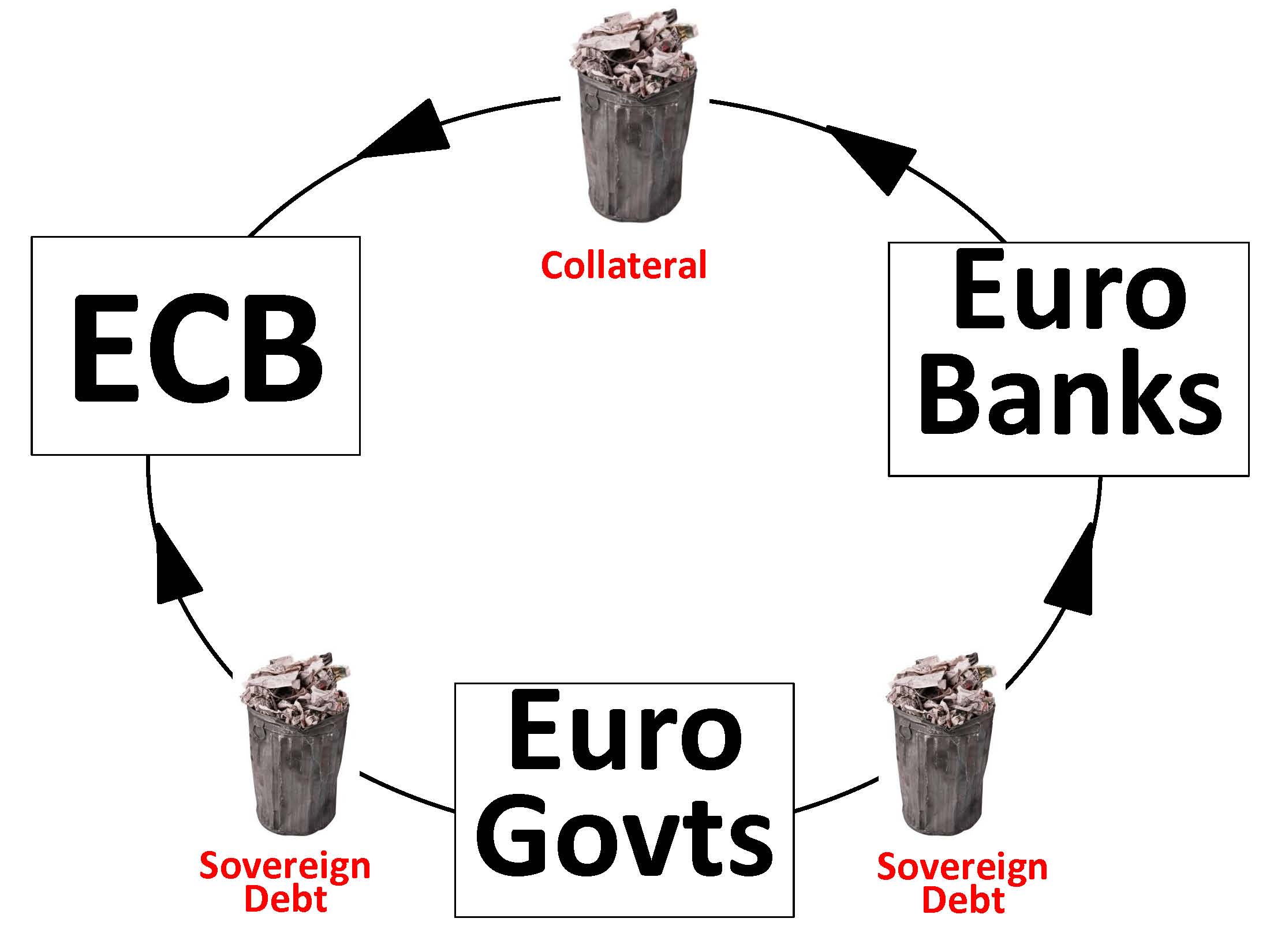
It seems, therefore, that it is in nobody's interest that the reality of the economic miseries of the PIGS (Portugal, Italy, Greece and Spain... and some others such as France...) becomes evident and scares away national and international investors. That is why the ECB keeps the risk premium at floor level through all kinds of quantitative and pseudo-covert facilities to banks and states. It is also in charge of keeping alive the profits of banks that have their warehouses full of rotting real estate on the basis of free liquidity bars. And European and Spanish regulators look the other way when financial institutions value these properties above their market price on their balance sheets to avoid obvious bankruptcy. Anything goes to feign stability, for the good of all (sic). Accounting engineering or creativity« is also being used in Spain. when it comes to handling unemployment and other macro figures, on the demand of electoral needs and balancing with the impositions overseen by the Troika. (more…)

Analysis of the turkey the day before Christmas.

The turkey paradox is the story in which one of these animals is fattened and cared for throughout its life by its owner, with the intention of eating it on Christmas Day. The paradox comes from the turkey's own subjective view of events, who is pampered, fed and cared for excellently throughout its existence. And nothing makes him think - if turkeys could think - on Christmas Eve that this magnificent owner is going to cut his throat and eat him the next day, after a lifetime of attention from the best friend. I say friend, the best father! Many of you are already familiar with this turkey paradox, but it will be interesting to think about the options for analysing the turkey's situation if we use it as a metaphor that can be extrapolated to any investor, with Christmas Day being the metaphor equivalent to the fall in share prices in the investor's portfolio. (more…)

What is really happening in Iraq?

In recent days, the news has been reporting that the Iraqi government is fighting within its own borders against an enemy that espouses the bloodiest form of jihadism: The Islamic State of Iraq and the Levant (ISIL). In other words, the violent, radical shift of the Salafism which is backed by the Saudi government, a country which, for its part, advocates the most literal and puritanical interpretation of Islam. ISIL, which is gaining ground day by day in Iraq and is also fighting against Bashar al-Assad in Syria (hence the addition of the word «Levant» to its acronym), is so bloodthirsty that even its former ally, al-Qaeda, has ceased to support it, at least directly.

It would therefore be an oversimplification to draw a direct link between the Saudi Arabian government and the jihadism of ISIL, which is attempting to seize power across the whole of Iraq. But if we add to this equation the fact that, ethnically speaking, both the Saudi leaders and the ISIL militants are Sunnis, and have been long-standing enemies of the Shia community that has governed Iraq since the withdrawal of American troops, the pieces begin to fall into place a little more clearly. To put it very simply, the Shia people throughout the Middle East have long been the poor population living around the oil fields that are under Sunni control – that is, owned by the emirates and countries such as Saudi Arabia, Bahrain, etc. And in the face of the radicalisation of Sunni jihadists, the West is now inclined to support the Shia community, which governs Iraq. (more…)

When bets pay better than investments... (temporarily)

Every day we see examples of exultant bettors who think they are seasoned investors, just because their bets have been winning for a few months, even a few years. They confuse investment criteria with the criterion of the winning bet. And they believe that making money in the short term on the stock market or in government bonds is synonymous with being a good investor. I regret to tell them that nothing could be further from the truth.

The fall will be hard, very hard. With permanent losses, meaning that they will not be able to recover until decades from now, when inflation has eaten away the lost value and therefore they will settle for a false recovery. But there are the bettors, buying Spanish bonds more expensive than the very same Norwegian bonds (you can see a quick and illustrative comparison of the fundamentals in this Gurusblog article); American stock markets trading at more than 20 times earnings, or the brand new holders of subordinated debt or mortgage bonds of pseudo-rescued banks on the brink of disaster. It seems that for these gamblers anything goes as long as the result is positive. It doesn't matter that they are buying assets at prices that only the aberrant manipulation of central banks can generate. It doesn't matter how far their price is from the real intrinsic value of the asset, be it profits and annual business growth in the case of the stock market, or the macroeconomic fundamentals of the state in the case of sovereign bonds. All for the sake of the winning bet. (more…)

How to invest when equities are highly variable and bonds are no longer fixed.

We are already seeing evidence of a new paradigm in the world of finance. The New Normal of which so much we have spoken at repeatedly It is here and it is here to stay. So we have a very uncertain outlook ahead of us. With an influence of central banks that has never been seen before and that distorts everything, but be careful: an intervention that tends to be reduced in the USA and increased in Europe.

Let's take it one step at a time. As far as equities are concerned, it should not escape anyone's notice that stock prices in the US and even in many Eurozone countries are expensive. It is true that the influence of exceptional measures by the respective central banks can keep company prices well above their fair value for a long time. And that this is a desire that every ruler usually embraces, as it improves, at least in appearance, the financial state of the population and its consequent consumption, optimism, voting, etc. But we should not forget that QE in the US is on its way to drying up and that rates are close to a rationalisation in the form of a rally. Therefore, the US stock market has anything but fundamental appeal. And the universal law of the market is implacable, so investments in expensive stocks relative to the fundamentals of these businesses will only lead to disappointment - permanent losses - in the medium to long term. (more…)

Losing as an investor what you have gained as an entrepreneur.

Being successful as an entrepreneur does not mean that you are also skilled at investing the money generated in the company. Neither in the management of surplus cash within the company itself, nor in the management of money already extracted outside the company. In fact, from our knowledge of many entrepreneurial families, we can assure you that usually the most brilliant entrepreneurs are terrible investors. (more…)

Peripheral bubble: The perfect storm.

Philippe Legrain is the author of several books, such as «Open World: The truth about globalisation«He has also been and is a very influential person in EU economic policy. Not for nothing has he been a senior advisor and head of the analyst team of the Bureau of European Policy Advisers for the President of the European Commission José Manuel Durao Barroso. And as such, has led the team that has directly advised the EU's strategic economic policy.

Well, from his privileged perspective, Legrain has recently published an article in the Financial Times entitled «.«Investors are ignoring eurozone risks«This is in line with our opinion, which we have reiterated in several articles about the mirage of bonanza that the markets are quoting with respect to the European peripheral economies: «...the European Union's peripheral economies are in a state of crisis.«Mátrix and the green shoots«, «The double standards of bubbles«and many others.

Below is a free translation and commentary of Legrain's article:

Peripheral bond yields are reaching bubble proportions. Markets awash with liquidity both camouflage and exacerbate long-term economic problems and insolvency. Investors and policymakers should have learned that lesson in the pre-crisis bubble years. Yet they have gone from hysterical panic to short-sighted complacency in less than two years. (more…)

Where wisdom is a duty, ignorance is a crime.

Muchos empleados de banca asean sus consciencias de lo ocurrido con las preferentes y demás productos tóxicos, proclamando su ignorancia respecto a los peligros intrínsecos que conllevaban esas inversiones que colocaron a diestro y siniestro. También muchos se escudan diciendo que la responsabilidad era de sus jefes, y que ellos eran sólo unos mandados que cumplían órdenes de vender indiscriminadamente productos cuyos riesgos se ocultaron o se ignoraban. Y la excusa de la ignorancia de los riesgos que esos productos tenían, la esgrimen en mayor o menor medida en toda la escala jerárquica de la banca, desde el gestor de banca privada hasta el empleado de banca comercial, pasando por el director de oficina. Pero ni la jerarquía en la responsabilidad ni la ignorancia eximen de culpa a ninguno de ellos, como veremos más adelante. (more…)

The double standards of bubbles

We all shudder (or should shudder) when we contemplate the possibility that our money is invested in assets whose prices are at what is known as a «bubble», i.e. at levels far higher than their real intrinsic value, the result of unfounded speculation. Investing in bubbles is the mistake we all want to avoid at all costs, because if they burst, the losses will be irrecoverable or, at best, it will take decades to recover the value lost. Because, if the capacity of those assets to generate Value does not increase considerably, those prices at which we buy wildly will not occur again without the help of a new bubble on that same asset, which may never happen or take more years than our own investment life. Therefore, the losses we risk are permanent and not temporary. And the time it takes for our investments to recover from temporary price declines (which can occur in virtually any asset). is inversely proportional to the intrinsic value of those assets. Y is the big difference between investing well and investing badly.

(more…)

Russia's motives

A través de la siempre recomendable newsletter de John Mauldin, hemos tenido acceso a un análisis, a nuestro juicio muy interesante y revelador, que realiza Louis-Vincent Gave, de Gavekal Research, sobre los motivos que han llevado a Rusia a actuar como lo está haciendo en el conflicto de Crimea. Y también nos ayuda a comprender las claves que pueden determinar la evolución de este conflicto y la geoestrategia general que de él se derive. Vamos a tratar de resumiros los principales argumentos de este análisis, así como haceros algunas reflexiones sobre ellos: (more…)

Shall we help you search?

Cluster Family Office

We care about transparency both in management and in our own way of working. Leading wealth management and family offices company

Do you need help in capital and wealth management?

How can I avoid the negative effects that my fortune may have on my children?

How and when should I talk to my children about family wealth, and what relationship should they have with money throughout their adolescence?

How can I measure the real risks of my investments and protect my assets adequately?

Do I have sufficient liquidity and stable income to cover my needs on a permanent basis?

Security Notice

We have been made aware of phishing and spoofing attempts involving fraudulent email addresses and domains that closely resemble our official company communications. These unauthorized communications are not sent by our company and may falsely impersonate our employees or representatives.

Our company is not responsible for communications, requests, or transactions originating from fraudulent or unauthorized email addresses or domains. Please verify that all communications originate from our official email domain before responding or sharing any information.

If you receive a suspicious email claiming to be from our company, please do not respond, click any links, or provide any information. Contact us directly using the contact information published on this website to verify its authenticity.