 Veteran Bloomberg analyst Mark Gilbert wrote a prescient and excellent book in 2010 titled «Complicit: How greed and collusion made the credit crisis unstoppable«. Today he performs an analysis which could well be another of his clairvoyant premonitions: Russia could revolutionise classic bond issuance due to the interest generated by its low indebtedness, but above all due to the fact that it is under Western-imposed sanctions that prevent banks from operating with that country normally. (more…)

 About four years ago, the state of the European economies was so divergent that the markets were pricing in defaults across almost the entire periphery. Risk premiums were pushing half of Europe towards insolvency, and Germany was refusing to allow Draghi to flood the south of the continent with cash. The countdown to the break-up of the EU was underway, and
  History shows us that, when faced with a problem, the option that is ultimately adopted is the one that causes the least pain to the majority in the short term, even if it is not the best, simplest or most rational solution. Conversely, options that are detrimental and more painful for the majority – even if they are the best or only solutions – rarely end up being implemented. For this reason, a more than likely outcome to the dead end into which the central banks have – or rather, have forced us into – with their endless creation of money and debt, could well be a massive and unprecedented

 Banco Madrid is the first bank that the state and its regulators have let fall in this galloping debt crisis. In fact, technically speaking, it has not been allowed to fall, i.e. it has not fallen due to the absence of a bailout with state funds, as other insolvent institutions have been rescued in recent years, but rather, forceful measures have been taken to liquidate it due to its -still- alleged money laundering. What is paradoxical is therefore that the reason for the intervention and the swift liquidation of the institution is not, at least originally, due to the feared insolvency but to criminal practices of great significance.
 Perhaps for those of us who are professionally engaged in it, the answer may seem obvious. Especially for those of us who have suffered for decades in our own flesh the miseries and shortcomings of private banking. It is no coincidence that, in addition to being advisors, we were, are and will continue to be essentially investors, and as such, our interests are still, unfortunately, at the antipodes of those of the banks and their misnamed advice. Having said that, let us now analyse the transcendental decisions that every investor should take to advise on the correct management of their assets.
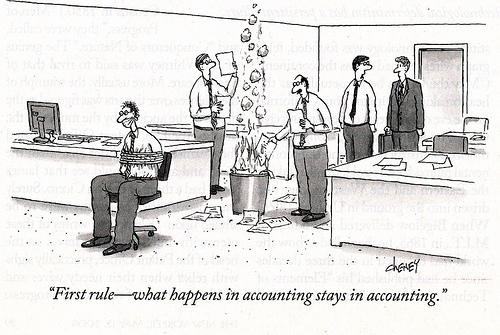 With central banks and their QE, the debt situation in the developed world has reached a surrealistic level worthy of study. Not only because of the unprecedented size of the balance sheets of the FED, ECB, BoE, BoJ, SNB, etc., but above all because of the manipulation of accounts, which has become a macabre and dangerous norm.
