
 Many would do well to tinker again with the typical interactive pages, such as the one offered by the NYT («Is it better to rent or to buy».»), to try to find out whether it would be more interesting today to buy or rent a property. As you can see if you do this exercise, the key is in the variables of the evolution of the price and rent of real estate, but above all of the income that we are able to obtain from the money in the coming years. We can also fine-tune by introducing a multitude of variables such as inflation expectations, taxes on the purchase and sale of the property, maintenance and community expenses, real estate agent's commissions, etc. Logically, the structure of this interactive website is based on the costs and format of the North American Real Estate market, but you can adapt it approximately to our real estate market.
It is difficult to foresee where real estate prices will go in Spain 5 to 10 years down the road. But even more difficult to gauge is the inflation - or deflation - to which central banks will lead us in the medium to long term, even they have no idea. And to complicate matters further, we must be aware that, depending on inflation and the price of money, financial repression (the effects of which we explained in detail in 2013) will last, penalising rentiers and other investors, or will give way to an increase in investment returns in general. And as we said, this is perhaps the most important variable in the decision to rent or buy a property at the moment. But beware, because many poorly advised investors, faced with their inability to achieve financial returns, are throwing themselves into the arms of a real estate market that still has a downward path in the medium and long term, despite the much-vaunted rebound in the short term. Especially if the national economy remains in the ICU with a galloping deficit and growing debt. Because both evils are the enemies of sustainable economic growth and hinder job creation and wage increases, which are so necessary to turn around the current downward real estate cycle that began almost a decade ago. In this New Normal, reality is very stubborn and the future is even more uncertain.
 According to


 Banco Madrid is the first bank that the state and its regulators have let fall in this galloping debt crisis. In fact, technically speaking, it has not been allowed to fall, i.e. it has not fallen due to the absence of a bailout with state funds, as other insolvent institutions have been rescued in recent years, but rather, forceful measures have been taken to liquidate it due to its -still- alleged money laundering. What is paradoxical is therefore that the reason for the intervention and the swift liquidation of the institution is not, at least originally, due to the feared insolvency but to criminal practices of great significance.
 Perhaps for those of us who are professionally engaged in it, the answer may seem obvious. Especially for those of us who have suffered for decades in our own flesh the miseries and shortcomings of private banking. It is no coincidence that, in addition to being advisors, we were, are and will continue to be essentially investors, and as such, our interests are still, unfortunately, at the antipodes of those of the banks and their misnamed advice. Having said that, let us now analyse the transcendental decisions that every investor should take to advise on the correct management of their assets.
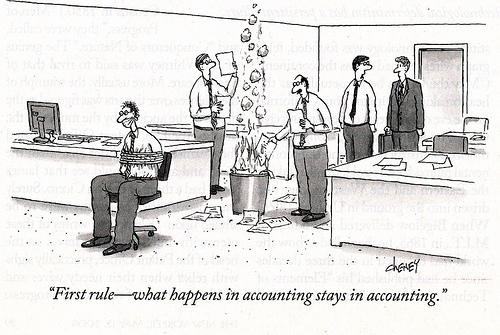 With central banks and their QE, the debt situation in the developed world has reached a surrealistic level worthy of study. Not only because of the unprecedented size of the balance sheets of the FED, ECB, BoE, BoJ, SNB, etc., but above all because of the manipulation of accounts, which has become a macabre and dangerous norm.
