
We look after your interests

(+34) 93 626 47 75

Torres Sarrià, Carrer de Can Ràbia, 3-5, 4ª Planta BCN 08017

(+34) 91 794 19 82

Pº de la Castellana, 93 2nd floor MADRID 28046

Cluster Family Office Blog

Bitcoin (BTC) and other forms of sudden wealth. The new fortunes of cryptocurrencies and their challenges.

After the rally and subsequent fall in the price of cryptocurrencies in the last 2 or 3 months, at Cluster Family Office we have received several potential clients who have generated very considerable sudden fortunes thanks to holding and/or trading all kinds of tokens: Bitcoin (BTC), Bitcoin Cash (BCH), Litecoin (LTC), Ether (ETH), Ripple (XRP), Cardano (ADA), NEO, Dash and many others that most of us mortals did not even know about. And most of them started from a modest financial situation, so they are facing totally new situations for themselves and their families.

.

The needs faced by these new millionaires are delicate, since the way to declare these enormous realised and potential profits to the tax authorities is still confusing even for Montoro himself. The fact is that the scarce information generated by most foreign online platforms through which transactions are carried out, together with the large number of operations and cryptocurrency crosses included in each movement, make the figures that must be presented to the Treasury a maze of spreadsheets that are difficult to defend against the voracity of a future requirement or inspection. In addition, it should be borne in mind that the holding of currency accounts (not cryptocurrencies, for the moment...) exceeding 50,000 euros must be included in the famous form 720.

.

Thank goodness that the profile of most of the cryptocurrencies« nouveau riche come from the tech world, and our tax professionals get this profile of Clients to provide them with this puzzle of necessary information quite thoroughly and diligently. However, there are many crypto-millionaires out there who are being much more careless and chaotic when it comes to compiling their trading trail. And their carelessness will cause them to incur serious tax problems in the near future, i.e. less than 4 years, before the statute of limitations expires in the tax year where they concentrate a large part of the crypto »buck".

.

But it is not just taxation they face that is difficult to defend. The million-dollar question these new cryptocurrency millionaires must ask themselves is, obviously, what to do with their fortune and how it will inevitably change their lives. Most of them want to keep a portion of their tokens or cryptocurrencies invested in anticipation of new highs and thus higher profits, but they have already made sales worth millions with which they must make decisions they have never had to face before. Not only that, but they are beginning to experience the harassment that banks, real estate companies and other predators are subjecting them to as soon as they smell fresh blood.

.

Our recommendation is similar to that of any profile of sudden fortune (tech entrepreneur who sells his company, lucky prize winners, etc.). lottery or chance, athletes elite or artists, heirs, etc.), i.e. they should postpone hasty decisions and design and implement, together with professionals, a balanced and tax-efficient distribution of their wealth. To this end, we propose a final picture of what their personal fortune should look like in a couple of years' time. For their part, they express their preferences in terms of the goals or dreams that they will now be able to realise. And they will do so with the help of a team that, above all, we are there to prevent them from making mistakes that they would regret in the future, costing them money and displeasure. The world is full of examples of sudden fortunes that have shattered the lives and happiness of their protagonists - and their descendants. And the envy-stricken circles of these crypto-millionaires may be eager to see how they squander their fortunes, and thus not feel so bad about not having been able to participate in the technological boom.

.

Some of the new millionaires may wonder when is the right time to sell Bitcoins or whatever crypto. The question is unfortunately not an easy one to answer as it will depend on the degree of greed, the volume achieved and the previous and present family and asset situation. But a good starting point to find that answer would be to «set aside» and conveniently diversify enough money to ensure a comfortable life for their families for the rest of their lives through sound financial and real estate income. Thereafter, any substantial increase or loss of cryptocurrencies still held in their wallets or purses will be seen in a different light.

.

There is no fortune more ephemeral and problematic than sudden fortune without proper advice. And as an anonymous sage once said:

«We don't learn to be sons until we are parents. We don't learn to be parents until we are grandparents. It seems that we don't learn to live until life is gone... So, obviously, we don't learn to be wealthy until we have lost most of our money.»
What to expect when you are waiting for... the QE blackout.

After more than a decade of monetary stimulus and financial repression where the tide of central banks around the world has flooded global debt with liquidity and demand, the music is beginning to stop playing. It is the chronicle of a death foretold but still astonishingly incredulous.

.

But despite the end of the road to QE, the vast majority of more conservative investors continue to complain about the poor performance of their fixed income portfolios, oblivious to the risk they have been taking for years and also to the scenario their assets will face in the new era of normalisation of rates and stimulus.

.

Paul Read, The co-manager of the Invesco Pan European High Income bond fund, Invesco Pan European High Income, warns in a surprisingly clear way, as his salary depends on investors continuing to trust the bonds he buys. «There is too much complacency in the bond market. Prices are rising steadily and yields are reaching ever lower lows. On the basis of clearly worsening yields, the euro high yield (or junk bond) market is currently yielding less than 2%. Circumstances are making it very difficult for us.»

.

And the most curious thing is that despite the fact that the shepherds themselves - at least the more honest ones - warn their sheep that the wolf is coming, the flock continues to demand that the shepherd offer them juicy pastures in which to continue frolicking, as they have done for as long as they have had the use of (no) reason. As Read rightly says, with the European QE tap being turned off: «...the European QE tap will be turned off.«Things become even more complicated considering how expensive fixed income markets are. With yields so low, the risk is much higher (...) Although neither bonds nor equities currently offer investors the best entry point, at current rates, equities have a very easy time beating bonds, both in terms of both appreciation and dividends.»

.

Indeed, the real disaster looming over conservative portfolios is not just that returns are low but that losses are beginning to take hold of assets that their owners, whether better or worse advised, bought precisely to avoid swings and negative returns. Because the fixed income funds that even today are still nonchalantly yielding precious points are doing so on the back of a wind of demand, trading and favourable interest rates whose days are numbered.

.

However, rates are not in a position to go up happily either, even in the US. dovish than was to be expected from his latest move at the helm of the Fed. Nor does it seem that economic growth is going to be the one that will pull the developed world out of the debt hole into which it has got itself - we have got ourselves - in exchange for postponing the hunger of insolvency and having hard bread for today.

.

In the following graphics from the presentation by Jeffrey Gundlach of DoubleLine Capital (via Gurusblog), you can see how the FED has already stopped increasing its balance sheet, the BoJ has softened its growth and the ECB has announced its brake for 2018.

If the forecasts come true, 2019 will not only see the end of money printing but also the beginning of the shrinking of central banks' balance sheets. And most of the developed world's fixed income portfolios are not prepared for that without suffering massive losses from write-downs, insolvencies and potential illiquidity. The relationship between the rise and fall of central bank asset purchases and their direct correlation with bond and equity prices can be clearly seen in the chart below. Imagine now this correlation with a closing of the taps that have watered with huge flows, the likes of which have never been seen before in all of history.

The million-dollar question is: Are there assets that are de-correlated from the end of the QE party and therefore «guarantee» positive returns in this tidal wave pullback scenario? The answer is yes. Unfortunately, however, these are alternative management strategies that are difficult to access for Spanish retail investors, who are condemned to buy the fish, fixed or variable, sold by Spanish banks. The reasons why it is so difficult to access good alternative multi-strategy funds from Spain, in addition to the lack of interest of Spanish banks in offering third-party products that do not share juicy commissions with their main trading platforms, are also regulatory. The liquidity of these multi-strategy funds is not usually daily or weekly, but monthly or even quarterly, which prevents them from being funds that qualify under the UCITS directive, which seems to be the only one that the CNMV considers suitable for Spanish retail investors. This, together with the fact that the transposition in Spain of the AIFMD (Alternative Investment Fund Managers Directive) is still conspicuous by its absence, condemns the poorly advised investor to an obsolete and reckless portfolio distribution based essentially on fixed income and equities.

.

Alternative management handles a wide range of investment strategies, from bonds linked to meteorological catastrophes, buying and selling mortgages, life insurance, etc., etc. And the right combination of these strategies ensures that the non-stock part of the portfolios gain a few points of return while remaining completely unaffected by the falls that stocks and bonds may suffer in the coming years.

.

But it is not enough to open an account abroad for an international bank to agree to buy good alternative funds from us and accept their relative illiquidity. It should be borne in mind that most multi-strategy alternative funds are designed for institutional investors and require minimum investment amounts prohibitive for retail investors, with figures of €500,000, €1,000,000 or even more. In addition, Spanish taxation penalises funds not marketed in Spain (purely for the protection of the sector and not the investor), while those registered with the CNMV are rewarded through the deferral of capital gains and the transferability that every investor would like to see. Here it is worth remembering the need to have a personal investment vehicle such as the Luxembourg, The investment is suitable for investors starting from as little as 250,000 or 300,000 euros, thanks to which we obtain the deferral and transferability of any fund in the world, whether or not it is alternative or not, and whether or not it is registered in Spain for marketing.

.

All this means that in many cases, even within the Luxembourg vehicle itself, we have to resort to funds of funds of alternative management, which in exchange for their corresponding commission fee allow us access to a diversified portfolio of strategies, truly decorrelated from the financial markets, with amounts of 125,000 euros. A real treasure in these current and future times.

The advantages of investing from Luxembourg

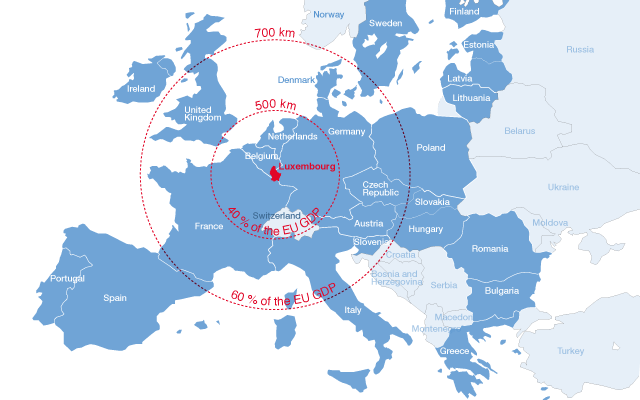
Although we have been writing about it for many years now, it may be worth updating for those who do not know about it, some of the advantages of having our investment portfolios deposited in banks in Luxembourg. For most, the most obvious advantage would be to be able to hold the money while avoiding country risk or the risk of insolvency of Spanish banks, with Luxembourg being the EU Wall Street par excellence, once London ceases to be so due to Brexit. However, there is a much more powerful reason to manage most of our financial wealth from Luxembourg. And that reason is access to any investment fund, private equity, real estate fund, etc. in the world, even if it is not registered for marketing in Spain.

.

This freedom of access is no trifle when one realises that only 10% of the existing funds worldwide have this registration with the CNMV in order to be marketed in Spain. Therefore, investors who do not have adequate advice will never be able to access a 90% of funds, which logically include some of the best managed funds in the world. Furthermore, no bank in Spain, not even to its private banking clients, offers just that 10% registered with the CNMV in its entirety, as the sales catalogues are usually limited to 2, 3 or 5 thousand funds, with the excuse that they belong to different trading platforms, etc. Therefore, the opportunity cost of magnificent investment options that the local investor cannot access is enormous. In fact, this condemnation of mediocre investment is one of the main reasons for the the causes of brick abuse in Spain, although we have already discussed it extensively in other articles.

.

The question many of you will ask is why most funds are not registered in Spain for marketing, or at least why the star funds managed by some of the world's leading managers do not do so. There are several reasons: among them are funds that do not consider marketing in Spain because it is expensive for the small volume they would achieve in our country. We must not forget that marketing in Spain, through the network of financial institutions and platforms that operate here, in many cases involves a cut of more than 50% of the commissions charged by the fund manager. In fact, some fund managers, such as Carmignac, decided at the time to create an ad hoc class in their funds for marketing in Spain, with higher fees than those applied to the rest of their classes, in order to satisfy the voracity of local financial institutions. At Carmignac, these classes were shamefully labelled with the «E» for Spain.

.

However, the marketers' bites are not the only reason that many international fund managers have for not registering their funds for sale in Spain. Another important reason is that the only doors that registration in Spain would open for them is to access Spanish retail clients, since larger or institutional clients can access funds that are not registered in Spain without great difficulty. Investors with a few million and who are well advised already have their own investment vehicles in banks abroad that allow them to access all types of funds beyond the CNMV's list of marketable funds. In other words, fund managers not registered in Spain do not need to register or pay any bribes to attract these Spanish millionaires.

.

There are also other reasons for some managers to disdain the Spanish retail investor market, such as specialisation in institutional clients or geographical remoteness. It is common that some managers from China, Thailand, India, etc., whose investors are essentially Asian, Middle Eastern or North American, do not prioritise attracting Spanish retail clients at all. And they usually focus on marketing in Europe through the British or German market, either for retail or institutional investors, but with higher volumes and lower bites than in Spain.

.

The consequence of all this is that the Spanish retail investor is condemned to a very limited portfolio of funds that have previously agreed to pay juicy commissions to the financial institutions that market them in Spain. And for these investors who do not have tens of millions, the fact of being able to invest much more modest amounts from Luxembourg, with exclusive personal vehicles that open the doors to any fund in the world, means the difference between mediocrity and brilliance of investments in terms of quality and results.

.

Luxembourg, as a good «EU friendly» financial centre, has various types of investment vehicles that adapt to the needs of each size and type of investor. But for the smaller investor, who is the most disadvantaged by the restricted range of funds to which he has access in Spain, there is a a personal and exclusive Luxembourg vehicle from which you can invest your portfolio with complete flexibility, from as little as 250,000 euros. Obviously not all retail investors have a minimum of 250,000 euros, but it is a huge step for the average investor to be able to put their investments on a par with those of any institutional investor with 10 or 20 million from as little as 1/4 million. And these vehicles not only allow access to any fund in the world, but also to any fund in the world. also allow for the deferral of capital gains generated within these vehicles indefinitely., The tax is only levied on the proportional part of the capital gain when it is decided to redeem part or all of the investment. In other words, once we have this minimum of 250,000 euros in our own investment vehicle, we will be able to buy and sell any fund, share or whatever we want, without paying tax on the capital gains until we need to withdraw all or part of our money. Taxation is exactly the same as when we buy any fund registered in Spain that is sold to us by the bank on the corner, but without the need to jump from one transferable fund to another within the limited list of funds registered with the CNMV, but with total and absolute freedom in the world universe of UCITS, non-UCITS, AIFMD, Private Equity, Real Estate Funds, shares and other financial products. This is why we chose a Luxembourg vehicle, totally «friendly» with the taxation and transparency of EU countries.

.

These vehicles are logically deposited in banks in Luxembourg, although as mere depositaries, it matters little that they are more solvent than Spanish banks, since we will only use them for the safekeeping of the vehicles and the portfolios with the fund units or shares that we are going to buy and sell in them.

.

As for costs, we have been able to fine-tune them over the years due to the growing volume of clients. And currently the total cost of a Luxembourg unit-linked vehicle for a small investor (minimum 250,000 eur) can be around 0,6-0,7% annual, The volume of vehicles in the market is significantly reduced as the volume increases. Furthermore, in certain circumstances, these vehicles also avoid the payment of Wealth Tax, which in some Autonomous Communities does not have a rebate.

.

Obviously, as Luxembourg is the financial centre of choice for the EU - replacing the City of London - any capital to be invested in such vehicles must have a justified origin, be fully declared and transparent, as Luxembourg's tax haven connotation is now completely behind us and definitively buried by the EU's own imperative.

.

In short, in 250,000 can access vehicles that cost less than 0.6-0.7%, that efficiently defer Capital Gains, that can save Wealth Tax, that allow access to investing in the best investment fund managers on the planet rather than just 10% of them, and with the banking and legal security of a world-class financial centre in the heart of the Eurozone. That is nothing, in these times of uncertainty, insolvency and disguised risks.

.

For those who see the remoteness of having their money in Europe as a handicap, I would like to remind you that, in addition to being able to manage it conveniently, swiftly and closely through Spanish advisors and professionals, having a Luxembourg investment vehicle is not exclusive. In other words, most investors combine a (more or less majority) part of their assets in Luxembourg with a part held in banks in Spain, as a temporarily invested treasury, which will be consumed or used over the coming quarters, semesters or even years.

Elite athletes and their money. The simple lesson of Shaquille O'Neal.

In the following video we see a Shaquille O'Neal in his maturity, giving advice that is as simple as it is important to other professional colleagues, i.e. elite sportsmen. Logically, his advice is only useful for sportsmen, artists or any other person who has a sudden fortune (lotteries, technology entrepreneurs, heirs, etc.) large enough to never have to worry about their future or that of their children and grandchildren. Watch the video of this tweet and then we'll give you some thoughts:

Surely following this simple advice, for which every human being is potentially qualified, would have prevented the vast majority of sportsmen and women from going bankrupt in the course of their busy lives. Notice that neither education nor knowledge is necessary to avoid disaster when a certain level of million-dollar contracts is reached. All that is needed is common sense and rigour. Unfortunately, most elite sportsmen and women, uneducated and from humble origins, drunk on fame and money, often lack both virtues.

.

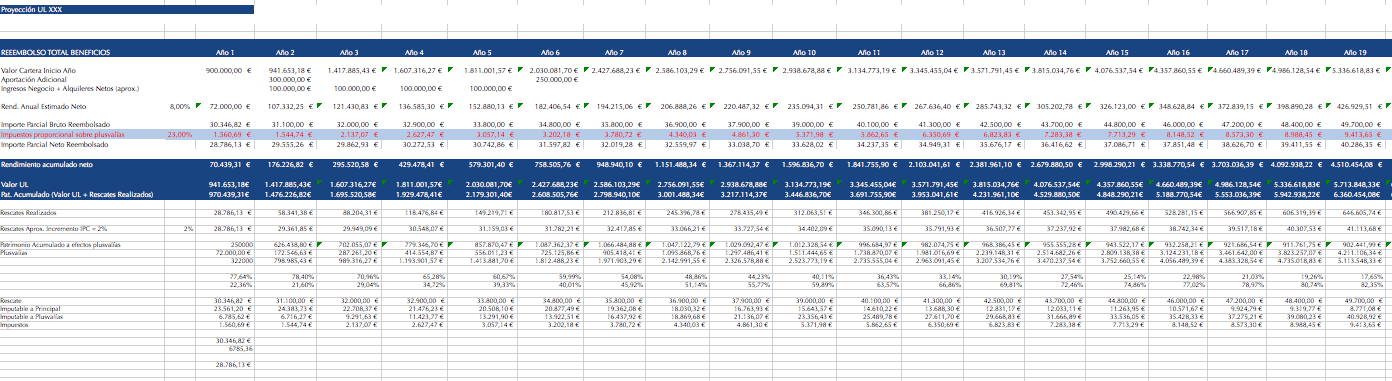
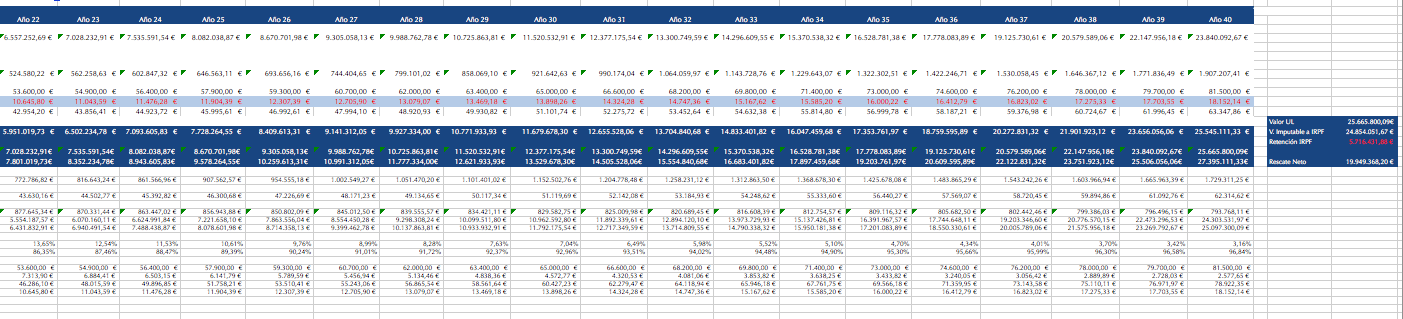
However, most mortals do not reach those income levels, obviously, and need to fine-tune much more than the simple norm of Shaq their wealth progression throughout their lives. Every wealthy life is different. Circumstances in terms of professional income, income from financial and real estate investments, necessary or desired expenses, family burdens and, in short, the lifestyle that each person or family chooses, together with the uncertain future that each human being faces (separations, illnesses, deaths, disabilities, addictions, fraud, accidents, etc.), make each case practically unique. And logically, some tool is needed that allows a glimpse of the wealth projection that can be expected in the face of a more or less prolonged life. This is where everyone can make their own «old-age account», or go to a wealth management professional to get an idea of the progression they may have in the future, and adjust or modify any calculation or lifestyle errors they may be making accordingly. Here is an example of a wealth projection table that we use with some of our clients at Cluster Family Office:


In projections such as those in the image above, we try to incorporate some of the variables that can be intuited from the data and knowledge of our Clients' circumstances. In the projections we make at CFO we handle data such as professional and non-professional income, expected length of working life, present and future income consumption, inflation, financial and real estate yields, personal taxation, taxation of the investment vehicles that each family has in Spain and abroad, etc.

.

However, it is obvious that the further out in time the projection is made, the less reliable the predicted data will be, as deviations multiply over time with a greater effect on the result than compound interest itself. But despite the impossible accuracy, this tool is always a great help in resituating the lifestyle of families and, above all, in opening our eyes to the uncertainty of living a long wealthy life in the ever-changing world we face. And the uncertainty of progression is particularly revealing. when the proportion of real estate is abused in equity or when the era of conservative fixed-income portfolios is more of an asset trap. potential losses from which very few will escape.

.

The evolution over time of an unbalanced estate that makes the wrong decisions, compared to the evolution of a balanced estate of financial, business and real estate assets, with the correct optimisation of each of them, is totally different after 5 years. But if we project the errors with respect to what would be the correct distribution of assets and liabilities and their management, beyond 15 or 20 years, the difference is abysmal. What today may appear to be a minor imbalance or inefficiency, a minor deviation, over time is the key to success or failure in our old age and for the well-being of our children.

The abuse of bricks and mortar in Spanish wealth

It is very curious to see how in Spain there is a very different mentality regarding the allocation of household assets to that of American households. As you can see in the interesting chart published by Inbestia and reproduced below, approx. 80% of Spaniards' assets are allocated to real estate, i.e. the main residence and additional real estate. Therefore, less than 20% are allocated to financial assets, such as shares (listed or unlisted), investment funds, pension funds, life insurance, deposits, etc.

.

If we compare the allocation between Americans and Spaniards, we will see that the preference for companies in the world's leading economy is much greater than in Spain and most other countries (although it would be interesting to know the figures for the north of the EU, which we suspect must be closer to those of the US). The entrepreneurial culture of North Americans is much greater, and half of their assets are invested in both listed and unlisted shares (mostly in their own businesses or with partners), investment funds, pensions and life insurance.

Why are Americans more inclined to allocate their wealth and savings to companies in general? Do we in the rest of the world not like our money to work for ourselves? Haven't the real estate bubbles affected Americans as much or more than Spaniards? The answers are not simple, but rather an accumulation of factors that make up the difference between one financial allocation and the other. Let's look at some of these reasons:

.

The financial culture in which American society is growing up has an entrepreneurial tradition and the majority of the population is clear that the only engine that moves the country and that can lead them to well-being is to participate in one way or another in the creation of wealth achieved by companies. Either as employees seeking hierarchical job progression or as small entrepreneurs (franchisees or with small personal businesses). They expect little more financially from their state. By contrast, in Spain and much of the rest of the Western world, there is less of an entrepreneurial culture, and more reliance on state-dependent labour activities, which are generally a little less liberal and a little more interventionist than in the USA.

.

Another aspect that makes Spaniards more inclined to accumulate our wealth in real estate than Americans is precisely the unpleasantness that the financial sector has been giving us in recent decades. For our banks, even today, volatility is the demon from which they recommend their clients to flee. To this end, they offer them all kinds of products and structured products with the obsession to reduce volatility, a concept that they mistakenly consider to be synonymous with risk. And of course, when volatility is confused with risk, it is much easier for the banking sector to sell low-volatility products than high-volatility ones. What customer will not try to avoid a high-volatility product if they are told about high risk?

.

Therefore, the general opinion of Spanish savers is that it is much riskier to invest in the stock market than in less volatile banking products or in real estate. And here we come to the second derivative: How have the low-volatility banking products sold by banks in recent years been performing? Well, in the best of cases they have been mediocre, and in the worst of cases they have been abused or have been directly sentenced to court, as in the case of the preference shares. This unhappy end to many of the low volatility products has exacerbated Spanish investors' appetite for real estate, reaching the extremes in Spain that we have seen in the graph: almost 90% in real estate and assets of their own personal business, such as self-employment, etc.

.

The right balance of wealth should moderate real estate and boost financial investment to levels similar to those seen in the USA (not for nothing is it the society with the leading wealth and GDP per capita on the planet). Families should enjoy financial investments that work to generate wealth for their old age, as the state pension is not going to do this sufficiently (and even less so in Spain). In addition, the US regulator limits more and better the access of retail investors to structured products and other nonsense that Spanish banks sell with impunity to any retiree without financial knowledge. This limitation on the sale of complex products to retail clients in the USA also channels a good part of these small savers to ordinary equity funds, which are less afraid of volatility and more inclined to buy the idea of investing in companies.

.

And what about real estate - does it not also guarantee the generation of income for our old age? The answer is yes, but with some additional risks that need to be highlighted: By massively concentrating our assets in real estate, we will be at the mercy of geographical risk, local economic risk or country risk, and the risk that the real estate cycle will no longer be favourable to us when its growth becomes saturated. Not to mention the risk of non-payment, maintenance and rising taxes on property owners. The diversification and freedom of movement that comes from acquiring shares in good companies all over the world, creating wealth in the most diverse sectors and countries on the planet, is hard to achieve with real estate investment. And the capacity of the business world to adapt and overcome whatever the future circumstances of the economy may be in the coming decades will never be able to be achieved by the inert brick.

.

Finally, the common characteristic of new clients who come to Cluster Family Office has always been the overload of properties in their portfolio. A lack of diversification that many paid dearly for with the bursting of the real estate bubble after 2007. And one of the first things we do for new Clients is to replace real estate and rentals with financial investments through versatile and fiscally efficient vehicles. They should make their money work for the family, either by generating alternative income to rents by buying good alternative funds or by seeking to grow portfolios by buying good equity funds from around the world. The volatility - not risk - that can be assumed by each family and professional circumstance in the financial portfolio should determine the proportion of investments in company shares or in alternative strategies that generate more stable income.

Stop-loss in actively managed funds?

As Machado said, only a fool confuses value and price. From the point of view of the long-term investor, who buys shares in good companies at attractive prices relative to their present and future earnings multiples, it would already be absurd and foolhardy to buy and sell these shares in the short term without associating these decisions with the value of the respective businesses. But it would be even more absurd to do so. short term trading in a portfolio of actively managed mutual funds, The investor can also set up tempting automatic buy and stop-loss (sic) orders, with portfolios at the free will of their respective managers.

.

That is what ING offers to their clients, with the consequent benefit to the bank for this service, obviously. But as it is not as simple operationally to automatically buy and sell a fund at a pre-established price as it is for a share, what they offer their clients is a «warning» service when the fund's price reaches the marked price. It is then that the client will decide whether or not to sign a buy-sell-transfer order for these funds, which will usually take a couple of days to execute. Oh, and of course, this «service» is only available for ING brand funds, which means that everything stays at home.

.

In a review of the practice of share trading (including stop-loss), we have to say that it is the usual modus operandi of savers who are less qualified as investors. In other words, those who move away from long term investment by buying businesses whose good value/price ratio they know, and instead approach the mere bet on any ticker listed, regardless of the good or bad performance of the listed company's business. They are even oblivious to whether there are prospects and an adjusted valuation of a company's business, a commodity, an index or any derivative behind that ticker. For most of them, it is enough to have a ticker or a changing price to bet on more or less frantically, conveniently dressing up this practice with all kinds of trading courses, technical analysis and macros that disguise their gambling with a patina of expert investment.

.

However, generally speaking, an investor who knows the value of the companies in his portfolio will be more interested in buying them the more the price of their shares falls. Conversely, the more expensive the shares are in relation to the value of the company, the more interested he/she will be in selling them. In contrast, short-term stock trading is associated with completely ignoring the real value of the company. This is why technical analysis and other trading methods usually recommend buying stocks when prices are rising and selling them when they are falling. (Here we could make the exception of the very few quantitative hedge funds that have been making money for decades, but they would be the exception that proves the rule and would only be the exception that proves the rule. accessible to well-informed investors and with capital in excess of 300.000′- euro).

.

As we said, ING is now tempting its clients to carry out this trading practice also in their portfolios of actively managed funds. Active management is so called because the manager of each fund actively makes decisions by buying and selling stocks or bonds. From there, the net asset value of the fund will be the -usually- daily quotation of the entire portfolio at market price, after deducting the commissions and expenses of the active management itself and of the fund (on active and passive management you will be interested in the article that Cluster Family Office recently published on the website of COBAS AM, the manager of Francisco García Paramés: «Passive Management, Active Management»). Therefore, it makes even less sense for the saver to make decisions to buy or sell the fund when, not only does he not know the value of the businesses bought, he does not even know which businesses he has bought and sold. The manager of such a fund or the liquidity it accumulates on a daily basis. It would also not allow you to benefit from one of the key investment drivers that every value manager strives to achieve: co buy low and sell high, since such trading and stop-losses would completely detract from good active management.. Moreover, as fund trading is an absurd and rare practice, the saver would not even have the possibility to benefit from the self-fulfilling prophecy that technical analysis sometimes offers.

.

In short, yet another brainstorming strategy of the Machiavellian marketing department on duty, whose priority has never been and never will be the customer's benefit, but that of the financial institution itself. More wood to keep savers away from the right investment path.


Cluster Family Office collaboration with the Cobas AM blog.

Tenemos el placer de anunciaros que hemos iniciado una colaboración con la gestora Cobas AM, del archiconocido Francisco García Paramés, para contribuir con nuestros artículos a su blog. Recientemente hemos publicado en dicho blog de Cobas AM el post que copiamos a continuación, titulado «Gestión pasiva, gestión activa«.

.

Aquí tenéis también el enlace original del artículo en la web de Cobas.

.

.

Sabemos que cada día fluye más dinero hacia ETFs, gestiones pasivas y cuantitativas (con o sin AI) de carteras. Ese incremento del volumen en la gestión pasiva reduce la eficiencia de los mercados, lo cual permite a los Inversores (en mayúsculas) aprovecharse de esas ineficiencias y encontrar valor a buen precio. Es decir, afortunadamente, la mayoría de los que compran y venden en los Mercados no buscan valor sino beneficios (sic), que suelen encontrar de manera cíclica y temeraria entre pérdida y pérdida. No buscan buenos negocios que comprar, sino tickers ganadores a los que apostar. Y para ello utilizan efímeras bolas de cristal que desechan una tras otra en cuanto el futuro las va dejando en evidencia.

.

Además, las gestiones activas no consiguen superar a los Mercados en más de 8 de cada 10 casos. Y dicha nefasta estadística empeora aún más en cuanto alargamos el periodo de inversión. Todo ello contribuye a aumentar las ineficiencias en los mercados, de las que un buen gestor “value” (haberlos haylos) se aprovecha a lo largo del tiempo. La clave para el inversor es obvia, saber elegir ese escaso porcentaje de gestores activos que superan a sus índices de referencia de manera clara y sostenida a lo largo de los años.

.

Luego, entre ese escaso porcentaje de gestores activos brillantes, podemos seleccionar matices, según el gusto o circunstancias del inversor: Deep value, value, long only, L/S long bias, etc… Pero siempre superando a sus índices con carteras y gestores relativamente concentradas y locales, ya que la diversificación y la distancia son inversamente proporcionales al conocimiento de los negocios en los que se está invirtiendo.

.

Ese conocimiento exhaustivo de los negocios en los que se invierte, es la base sobre la que se asientan los resultados a lo largo de los años. Y para ello no basta con estudiar los balances contables publicados periódicamente por las empresas (muchos gestores activos suelen limitarse a eso, a lo sumo). Hay que viajar, conocer in situ las compañías, sus directivos, instalaciones, proveedores, empresas de la competencia, mercado y clientes locales, etc.

.

Por eso hace ya décadas nos dimos cuenta de que, como inversores y gestores de patrimonio propio y de clientes, seríamos muchísimo más eficientes especializándonos en la selección de gestores y fondos que en la selección de acciones en las que invertir. Porque por mucha capacidad que tenga nuestro equipo, es imposible alcanzar el grado de conocimiento de las mismas que tienen estos selectos gestores, cuyos equipos viajan constantemente visitando personalmente a directivos e instalaciones corporativas durante todo el año.

.

Este selecto grupo de gestores estrella que brillan por encima de los demás desde hace décadas, disponen en sus gestoras de equipos de docenas de analistas, incluso algunos con aviones privados que les permiten visitar personalmente y de forma continua las empresas y los equipos directivos en los que invierten su dinero y el de sus inversores. Así contrastan regularmente sus planes de negocio, estrategias futuras y todo tipo de decisiones corporativas, que van infinitamente más allá del estudio concienzudo de los balances que realizan en los headquarters de las gestoras.

.

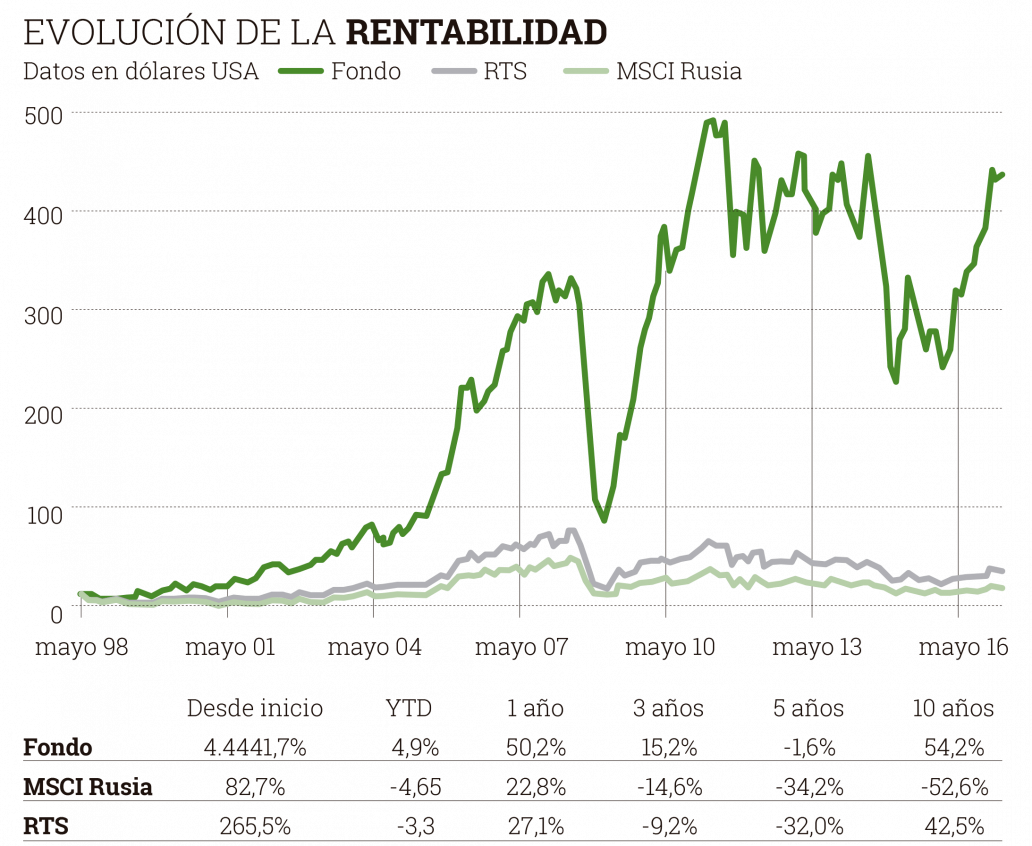
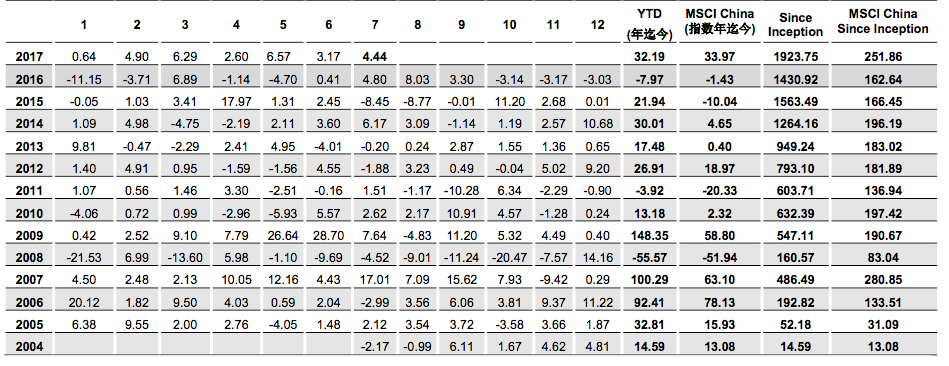
Para que los lectores tengan un ejemplo de la dimensión de lo que estamos comentando, una determinada gestora que tenemos en nuestras carteras, realizó el pasado año 2.200 visitas presenciales a distintas empresas (llamadas telefónicas aparte). Esto, como rutina habitual en su labor de prospección y estudio exhaustivo de los negocios de los que son o pueden ser socios a través de sus fondos de inversión. A continuación, podéis ver una muestra de rendimientos de fondos donde sus gestores “value” vienen consiguiento extraordinarios alphas, de manera consistentemente a lo largo de más de una década, en mercados extremos como Rusia o China (donde han venido encontrando lógicamente mayores ineficiencias y volatilidades aprovechables que en mercados completamente desarrollados):

.

.

Pero la dificultad de encontrar estos gestores en el mar de la gestión activa, que suele vender la banca privada, es lo que lleva a muchos inversores a arrojarse en brazos de la gestión pasiva, cansados de pagar comisiones de gestión para ni siquiera igualar el índice de referencia. Lamentablemente es muy difícil encontrar buenos selectores de fondos en el sector financiero, cuyos catálogos de ventas se limitan a los fondos registrados en la CNMV que les retribuyen jugosas comisiones, pero con escaso histórico y equipos de gestión tan cambiantes como anónimos.

.

Por suerte, los fondos de autor, con equipos estables con nombres y apellidos e históricos de más de 10 años, aún ponen foco en resultados, mejorando a los índices, ETFs y ETFs semi-pasivos o fundamentales, de manera consistente y sostenida.

.

El correcto análisis y valoración de empresas es, y debe ser, todo un arte. Y artistas, haberlos haylos, y son la razón de ser del buen selector de fondos.

Nota: La tabla con los rendimientos del fondo de China no aparecen en el artículo de la web de Cobas porque su visibilidad no era compatible con el sistema operativo para móviles.

.

You may also be interested in:

Adaptando nuestras inversiones a la Nueva Era económica.

The beginning of the end of the debt bubble... and its consequences.

Adapting our investments to the new economic era.

It should not escape anyone's notice that the world of finance and investment as we knew it before the debt crisis - a decade ago now - was very different. Back then it was enough to invest in good, well-priced listed companies (equities) for those looking for reasonable returns over the long term. And all the part of the capital that was not tolerant of high volatility could be «parked» in fixed income by sitting on bonds of developed issuers that paid a few percentage points above the price of money, although not always above real inflation. At that time, money had a reasonable price, and therefore everyone who borrowed it had to make very good use of it if they wanted to amortise that cost and not get their fingers caught in inefficient adventures.

.

About 7-8 years ago, after the bursting of the real estate and debt bubble, central banks started to muddle through by showering the world with new money. And free money not only generates its inefficient use, rewarding those who owe more and are less competitive, but also penalising those who have it. It is the jungle where the law of the strongest prevails, and with the debt bubble of 2007 that we are still dragging along, the law that has prevailed is that of the debtor.

.

Unfortunately, most investors - and therefore creditors of the debtor universe - have not realised the radical change in the rules of the game imposed by the central banks with the excuse of «saving the financial system». And they continue to invest their money under the old rules and guidelines of obsolete bankers and advisors: in the stock market the part that withstands volatility and in fixed income the part that does not.

.

As for the stock market, they are not aware that most listed companies have had access to free money for a decade, and that this allows the survival of inefficient companies that should be extinguished under normal money price conditions. This leads them to find an infinite number of companies in bad shape, in very bad shape and trading at high, very high prices. But the unconscious investor continues to buy mediocre equity investment funds (as he always did with acceptable results), mistakenly thinking that the managers of these funds will know how to discriminate the interesting companies from the uninteresting ones. Just as in a fishing contest when the lake is full of fish (good companies in an economic environment with money at a fair price), where both good and not so good fishermen get a decent haul. But what if the fishing contest takes place in a place where the waters are polluted and the fish are scarce? Then the mediocre fishermen will be left in the lurch, and if you want to dine on fish every night, you will have to trust only the best fishermen in the area and make do with more modest catches than in the old days, when the waters were crystal clear and teeming with life.

.

This is the current situation for stock market investors. They will only achieve acceptable returns if they rely on the best managers who know how to select the few good companies at good prices in the polluted waters of expensive stock markets and inefficient and unhealthy companies.

.

If this scenario depresses you, I regret to announce that what is happening with fixed income is even worse. Zero or negative interest rates and the intervention of the world's major central banks, with their quantitative easing as never before seen in human economic history, have turned fixed income into a debt dump from which one can only emerge stinking and wounded. Most of the debt in circulation is insolvent - a direct consequence of free money - and also trades at stratospheric prices, crushing its yield to ridiculously low or even negative levels if there is any solvency in its issuer. There is no way to invest in traditional fixed income without taking a risk of permanent losses, i.e. not recoverable in less than 5-7 years without the help of inflation. As we said in «The Silence of the Conservatives».» last year, investors have traditionally conservatives are taking risks they cannot even imagine. Many have followed the guidelines of managers and advisors who simply do not know of conservative alternatives beyond traditional fixed income. Others, however, knowing the risk of global insolvency, have continued to buy assets subsidised directly or indirectly by central banks for fear of going against the grain, of going against those who have the power to make money. All of them have taken, and are taking, a fundamental risk that combines insolvency with political (in)decisions. It is true that so far the gamble has worked out well for them, as the bonds of insolvent countries and companies have risen in price to aberrant levels. And this has brought them additional profits on top of the coupons, which the central banks have religiously ensured that they can pay. But this investor profile, drifting with the currents of central banks and the market in general, cannot be described as conservative simply because they do not invest in the volatile stock market and have done well so far. The lower volatility of traditional fixed income does not imply lower risk, proving once again that volatility and risk are very different concepts, although much of the financial sector confuses them.

.

It is true that we have been in this situation for several years now and that reckless traditional bond and expensive stock market investors have had reasonable returns and little unpleasantness to date. But we should not confuse bets, which may temporarily be winners, with investments. to grow our assets over the long term, without permanent losses along the way.

.

Adapting our investments to the new era of equities is not easy without the right advice. Investors need to refine more than ever the selection of international investment fund managers and embrace more exotic markets where economic growth still has a long way to go (which is easier said than done). There are some that are marketed in Spain, but not in the bank around the corner, unfortunately, and the range is very limited. On the other hand, adapting our investments in non-equity, i.e. the equivalent of traditional fixed income, is even more complicated: we have to dig into very diverse strategies and hedge funds that are not marketed in Spain, not even in UCITs format in most cases. You have to look for them in international banks and underwrite them from personal investment vehicles. which are only accessible to well-informed, medium-sized or institutional investors. (from 300.ooo or 400.000 eur).

.

This difficulty in adapting the investments of small savers to the new era is an injustice that condemns them to leave their 50 or 100 thousand euros in the bank around the corner, assuming enormous risks in the coming years. In other words, it condemns them to buy the products and funds sold to them by commercial banks, investing in expensive and inefficient companies through mediocre equity fund managers, and investing in bonds and fixed income funds full of expensive and insolvent wet paper such as has never been seen in the history of finance. Regrettable and unfair, but they are inevitable fodder for the permanent losses to come in the years ahead.

Prácticas desesperadas de la banca en apuros.

Como todo animal herido, un banco puede ser peligroso. Más peligroso de lo habitual, queremos decir. Y es que el ejército de empleados de banca suelen ejecutar las órdenes de sus mandos sin rechistar, bien sea por despreocupación ética; bien por la codicia de progresar en el organigrama del banco; bien por mero instinto de supervivencia como empleado que no puede permitirse el lujo de ser despedido; o bien por un tristísimo mix de las tres cosas.

.

Hoy os traemos un ejemplo real de lo que ha venido siendo capaz de hacer un banco español como el B. Popular, en los últimos meses de su existencia, antes de ser «vendido» por 1 EUR a casi el único que podía hacerse cargo de semejante agujero.

.

Los hechos que vamos a contar a continuación se perpetraron, como siempre, contra un pequeño cliente inexperto, que en este caso solicitó un crédito para iniciar su pequeño negocio. Estamos hablando de unos 100.000′- eur de crédito, para la aprobación del cual el banco solicitó al cliente todos los datos personales y financieros del negocio necesarios. Hasta aquí todo normal. El empleado del banco, amiguete suyo (cómo no), le dió muchas esperanzas de la aprobación del crédito puesto que su historial personal era bueno y el negocio viable, por lo que el cliente comenzó a poner en marcha su negocio a pesar de no tener la luz verde definitiva.

.

La sorpresa llegó al cabo de unas semanas, cuando el amiguete/director de la oficina le confirmó la mala noticia que los retrasos ya hacían sospechar: Su crédito no iba a ser aprobado a pesar de cumplir con los requisitos razonables habituales. «Órdenes de arriba…» En ese momento el problema para el cliente era enorme, ya que debería recurrir a toda prisa a otra entidad para financiarse y cumplir con los compromisos que había adquirido ya con su negocio incipiente. Además debía comenzar de cero todo el expediente bancario de solicitud de crédito con banqueros desconocidos (no amiguetes), y sin ninguna garantía de que en esa otra entidad el proceso no acabase también denegado. Los nervios y el insomnio se apoderaron del cliente y de su familia esa primera noche, como es lógico.

.

Al día siguiente el director-amiguete de la oficina les volvió a citar y les dijo que había una posibilidad de conseguir la aprobación bajo «ciertas condiciones que os contaré cuando vengáis». El cliente lo comentó con su pareja notablemente aliviado y coincidieron en que cabía esperar un endurecimiento de las condiciones del crédito en esa próxima cita con el banquero. Inmediatamente sacaron el portátil y junto con su pareja comenzaron a recalcular el business plan en previsión de un aumento del tipo de interés, una reducción del importe de préstamo hasta sólo 75.000 eur y también un menor plazo de devolución. Con los deberes hechos, y asumidas por la pareja y su negocio esas nuevas lineas rojas soportables se dirigieron esperanzados a la cita con el director.

.

La sopresa vino cuando su director-amiguete les dijo que para que su expediente pudiera ser aprobado, el préstamo no podría hacerse por un importe de 100.000, ni de 75.000 eur, sino que debería hacerse por el alucinante importe de 150.000 eur! -¿Cómo es posible? El banco nos quiere prestar más dinero del que necesitamos para nuestro negocio?- preguntó la pareja. Así es -respondió el director- pero con la condición de que ese excedente de 50.000 eur lo utilicéis para comprar acciones de nuestro banco. Si no aceptáis estas condiciones, desgraciadamente no habrá aprobación de ningún crédito.-

.

De todos es conocido que unos meses después el B. Santander tuvo que inyectar 13.000 millones de euros el mismo día en que «compró» el banco técnicamente por 1 euro, y que las acciones del Popular se fueron a valor cero ipso-facto. Pero la perversión y precariedad del sistema financiero español es tal, que la banca en apuros prefiere huír hacia adelante prestando de más a clientes, sabiendo positivamente que ese dinero va a ser tirado a un pozo sin fondo. Y sabiendo además que esa sobrefinanciación diabólica condena a un cliente solvente a la insolvencia y va a ser de casi imposible devolución.

.

Ya no estamos hablando de prestar descuidadamente a clientes financiando sus dudosos negocios, como ocurrió con los créditos a promotores/constructores durante la burbuja inmobiliaria, no. Esto es pura y llanamente coaccionar a clientes con dinero no solicitado para que financien a la propia entidad bancaria desahuciada, con el fin de mantenerla en pie unos meses, semanas o días más. ¿A quién le importa si en el camino se cometen delitos y se arruina la vida de emprendedores que sostienen el País con sus impuestos? Lamentablemente parece que a nadie, al menos a nadie próximo al poder y al sistema financiero le importa. Por cierto, los protagonistas de esta historia firmaron la operación mientras su amiguete banquero les decía que con un poco de suerte, las acciones subirían, ya que «están muy baratas», y podrían así devolver más cómodamente su crédito. Obviamente perdieron prácticamente 50.000 eur, que deberán devolver religiosamente, junto con los otros 100.000 eur, asfixiando lo indecible su incipiente negocio y sus vidas.

.

Algunos diréis que eso le ocurre a quien elige mal los bancos con los que trabajar. Es cierto que la mayor parte de la banca española tiene un riesgo mayor que la de otras latitudes más solventes. Y no sólo financiarse, sino sobre todo invertir a través bancos españoles se paga con la correspondiente prima de riesgo (la que hace que aquí aún se pague en positivo un depósito mientras los más solventes cobran por ello). Pero para el pequeño empresario/inversor resulta casi imposible conseguir créditos en bancos externos más solventes, y está condenado a financiarse e invertir en el banco herido de la esquina. El problema es que un animal peligroso, si herido, es doblemente letal.

Banco Popular: In extremis.

Once again, the disaster has come close to happening. And at the last minute, unspeakable pressure from the government has succeeded in getting Banco Santander to take over the huge hole in Banco Popular. Before it got this far, of course, capital was raised with money from unsuspecting new shareholders, bondholders and any other naïve people who believed in the image of security and solvency of characters such as those used by advertisers.

.

https://youtu.be/xD_4thIw1FQ

.

Most sports personalities, accustomed to selling their image for publicity, do so to the highest bidder without giving a damn whether they are selling more trainers or helping to wipe out the savings of humble families who believe that what Pau Gasol tells them can be trusted. It is difficult to apportion blame fairly: who is more to blame for small savers losing their money in these bank rescue operations: the bank manager, who is increasing capital or going public (Bankia) knowing full well that the investors he is deceiving are going to lose a large part of their savings? The regulator (BdE) who allows it, also knowing the critical situation of these balance sheets? The person who sells his image of credibility to convince those who without it would not trust that entity with their money? The bank employee who lies vilely to all the prey who sit at his table during the aggressive campaign to attract investment? The investor himself with his explosive cocktail of ignorance and greed? As the saying goes, between all of us the scammed and she alone is ruined...

.

In order not to be hypocritical, it is worth reflecting on another point. If the final destination of a failed bank is a bail-in, in other words, more debt that will have to be paid for with increases in our present and future taxes, every euro from a private investor that the bank captures - in collusion with the CEO, regulator, employee or publicist - will be one euro less that those of us who have not been duped by the whole gang will have to contribute. Therefore, leaving ethics aside, if other naive people plug the hole a little with their savings, the rest of us will have to pay less with our taxes. A vomitous political-financial jungle in every sense of the word, of course.

.

In the case of B. Popular, the disaster has been close to the crossbar and has only affected a priori the investors who trusted the institution as shareholders and the subordinated and preferred bondholders, while the depositors and the rest of taxpayers, for once, seem to have been spared another bank bail-in. But the million-dollar question is, in exchange for what? What has the government promised the Botín family to make them swallow such a toad? We will probably never know and it will remain, like the rest of the bail-outs and bank «reorganisations», indecipherably diluted in the tax returns that our children, grandchildren and great-grandchildren will pay for the rest of their lives.

.

The corporate rescue of Popular is nothing more than another symptom of the coming winter. This time the explosion has been controlled and concealed under the carpet at Santander, which today is at least 7 billion euros less solvent. But the persistent zero rates can already engrave another notch in its hilt of underground financial institutions. The problem is that when Germany can't take any more inflation and decides to raise rates, we in the south will need another central bank to keep them at zero. Then our banks and our prices will be able to lift their heads timidly, but our current accounts and assets in the south will be priced at a lower value than those in the north.