We look after your interests

(+34) 93 626 47 75

Torres Sarrià, Carrer de Can Ràbia, 3-5, 4ª Planta BCN 08017

(+34) 91 794 19 82

Pº de la Castellana, 93 2nd floor MADRID 28046

Cluster Family Office Blog

Draghi's NIRP, the Reverse Yankees and the DDO

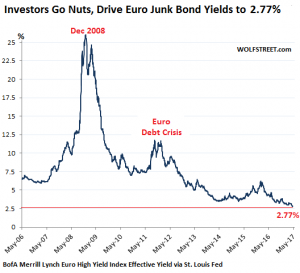
At the end of last week something unheard of happened, something absurd even among the absurdities of this New Normal that Central Banks have put us in: The average yield on junk bonds (the riskiest and most insolvent of corporate bonds) denominated in Euros fell to record lows of 2.77% per annum.

.

Already on 26 April, the absurdity of the ECB's negative yields policy hit a milestone, with yields on the most insolvent debt falling below 3% for the first time in history.

.

Comparatively, the most liquid and safe debt in the world, the 10-year US Treasury bond, yields 2.33% per annum, and the 30-year Treasury yields around 3%.

.

The following chart of the BofA Merrill Lynch Euro High Yield Index shows the madness in the Eurozone:
And it is not that these ridiculously low yields are the result of rampant deflation, despite the alarmism created in the last few months, no. The official annual inflation rate has been at 1.91 PPP3T and, as we can see in the following chart, it does not seem to be going away any time soon. Official annual inflation has been running at 1.9% and as we can see in the graph below, it does not look like it is going to disappear in the short term.
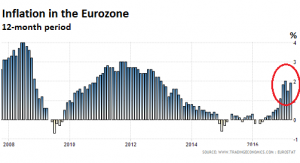
In other words, the real average yield on junk bonds, net of officially recognised inflation, as seen in the two indices above is now only 0.87% per annum! That is the return that bond buyers/investors get for lending their money to companies with junk ratings and manifest insolvencies for years, with risks of defaults (recognised by Fitch, Moody's and S&P) on the horizon more than considerable.

.

Against this backdrop, of course, it is not only European companies that want to raise fresh money. Like flies to honey, American companies are also flocking to the euro in search of euros from unsuspecting European investors in exchange for ridiculous interest rates. These are the so-called «Reverse Yankees», or issues by American companies in euros, eager for almost free credit. But why are European investors offering their money to insolvent debtors in exchange for so little? Have European investors gone mad? I'd better not answer you...

.

The answer lies in Draghi's efforts to implement his now reduced QE of 60 billion euros per year, which includes sovereign bonds, covered bonds, investment grade (IG) bonds and ABS. In addition, Draghi cut rates to negative -0.40%, thus intensifying the rise in debt prices and compressing yields on all debt, both sovereign and corporate (financial repression). What the ECB does not buy directly are junk bonds, but that does not mean that it does not end up with them in its cabinets (balance sheets), as it has bought and will buy paper that has become junk over time. And no one will be able to say that this was a misfortune that no one could have suspected, since much of this debt was already junk before it was bought and was given a rating upgrade by hammer and tongs to fit in with the politically correct requirements of the ECB.

.

As a result of this QE and NIRP (Negative Interest Rate Policy), many corporate bonds are now trading at yields below zero. For example the German 5-year bond is at -0.33%, which subjects investors to a very deep -2.23% after deducting official inflation! Obviously investors who want to achieve positive net (inflation-beating) returns, must either jump into the arms of much more insolvent and risky junk debt. Or they must fly into other currencies, such as USD debt. These are the NIRP Refugees, who «migrate» elsewhere to avoid the devastating effects of their indigenous debt.

.

The million-dollar question is why those affected by NIRP are risking so much for so little. Many are institutional investors who are obliged to buy euro bonds, such as insurance companies and euro fixed income funds. Moreover, with rising US rates, it is no longer even almost free to hedge EUR/USD currencies, as it was a couple of years ago. As a result, these institutional investors are condemned to buy wet paper at exorbitant prices and in exchange for ridiculous yields. Nor should we forget that these institutions are managing other people's money and not their own, what we will call DDO (Other People's Money), making it easier to take on bread for today and hunger for tomorrow, when this debt defaults or its price returns to more reasonable prices and generates huge losses for the unwary investors. The fact is that the managers of these institutions are paid to place these gigantic flows of DDOs, and they do so in line with the rest of the institutions. Because when collapse and losses, They will not be alone, as the rest of the institutions will suffer just like them. DDO that will blow up in everyone's face, in a very distributed and not very inculpatory way.

.

The more debt the ECB buys, the lower yields are in a perfect fish-bite, as well as other damage of incalculable consequences. Flooding the bond market with money is the perfect flight forward, satisfying the yields and capital gains needed by those who bought yesterday or last year. Play the game while the music is still playing, and no institution is going to stop before disaster strikes.

.

In addition to institutional investors, junk bonds are also sold at the price of gold to retail savers, unsuspecting investors who put their money in the «safe» and «guaranteed» funds sold to them by their corseted, sympathetic and trustworthy bankers (sic). And what has happened in the last few years, in which the music has continued to play non-stop, proves them right! Who hasn't made money buying this wet paper (sovereign or corporate) in the last 5 years? Why can't it continue to be like this for the next 5 years? Something like this thought the turkey the day before Christmas...

.

But the reality is that more and more issuers are turning to the European open bar. From runaway Spanish banks to the Mexican oil company Pemex, which placed 4.3 billion euros just a couple of months ago.

.

But bonds are not like shares. Bonds pay off (if you hold them long enough) at par. If you come to maturity, with these compressed rates, you can only make money if you have previously bought them at a discount. But in the current scenario, far from that, bonds are being bought in the secondary market above par! So what is the hope of all holders, traders and hedge funds of overpriced euro bonds? To get them out of the way early enough to gain a few pips before it is too late. But for institutional investors who have to hold them to maturity because their business model demands it, there will be no happy ending. Unless some clever institutionalist passes the hot potato in time to other, less experienced and more innocent hands, in the form of banking products that offer three times as much as a deposit, «with total security».

.

Via wolfstreet.com
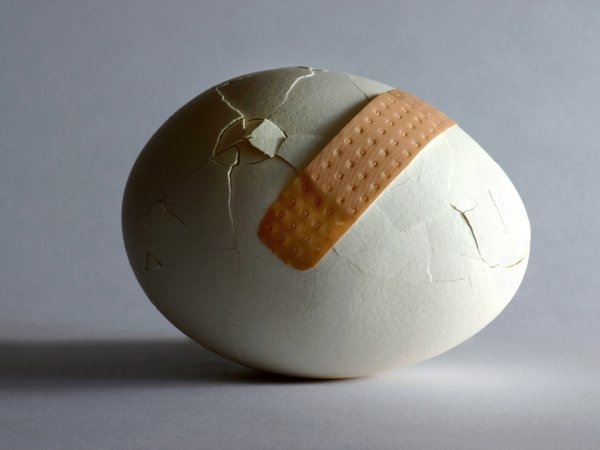
To make the 2-speed omelette, the Euro shell must be broken.

El Euro sube. Y lleva ya casi un 5% de recuperación desde sus mínimos por debajo del 1,04 respecto al dólar. Pareciera que puede más la fortaleza de la locomotora alemana que la debilidad del Sur y el Este de la UE. Como si por el hecho de haber reconocido que se avanzará a -al menos- dos velocidades, ello permitiera que la divisa única dejase atrás sus incertidumbres.

.

Es como si la cifra publicada por el IFO alemán (112,3) superior a la esperada (111), fuera capaz de reafirmar y acelerar la subida de tipos en Europa, al más puro estilo norteamericano. Es cierto que esa y otras cifras reafirman la recuperación económica germana, pero esos árboles de optimismo inequívoco no nos deben impedir ver el bosque en el que está sumido la moneda única. Y ese bosque no es otro que la inviabilidad precisamente de su cualidad de única. O sea, que aún se comparte el Euro entre muchos países que están lejísimos de ni tan siquiera imaginar una relajación de las facilidades cuantitativas con las que inunda el BCE las economías del Sur. Y ello hace imposible una subida de tipos que, paradójicamente está descontando el Mercado con la recuperación del Euro respecto al dólar.

.

¿A dónde nos lleva esta paradoja? Pues a que cuanto más descuente el Mercado una subida de tipos del Euro y una reducción de la relajación cuantitativa por parte del BCE, más próximos estaremos a la materialización de las dos velocidades de la Eurozona, y por tanto de la ruptura de la cotización única del Euro. Ya que, o bien el Euro pierde su condición de moneda única y empieza a cotizar de manera distinta en cada velocidad de la Eurozona, o bien la subida de tipos es imposible, en cuyo caso el precio del Euro respecto al dólar y resto de hard currencies debería volver a cotizar el riesgo de explosión de la propia Eurozona (según el adjetivo utilizado por los propios dirigentes de la UE para justificar esas dos o más velocidades) y caer de nuevo a mínimos.

.

Si se mantiene una única cotización del Euro, es imposible subir los tipos, puesto que en el Sur no nos lo podemos permitir. Aquí necesitamos tipos cero e inflación abundante que se coma la deuda poco a poco. Sin embargo, en el núcleo duro alemán, lo que no pueden ni van a permitir es no subir tipos y que su temidísima inflación les repunte más allá de lo deseable. Por lo tanto, ante tal dicotomía, o bien Mr. Market está caminando en dirección contraria, o bien las ya anunciadas dos velocidades están a la vuelta de la esquina.

.

Tampoco es baladí la ruda reacción de Dijsselbloem, que denota que muchos europeos del norte ya no se sienten obligados a tener ni siquiera corrección política con quienes consideran que de facto ya no forman parte de su core o núcleo duro europeo. Sus disculpas, forzadas, ligeras y tardías delatan ese sentimiento de desapego y desconexión que los habitantes e inversores del Sur parece que todavía no hemos comprendido. Lo curioso es que el inversor de a pie del Sur ha asumido lo de las dos velocidades sin percatarse de que ello implica dos cotizaciones de divisa y dos tipos de interés diferenciados. No en balde Guy Verhofstadt (sí, el mismo que está supervisando desde la UE la negociación del Brexit) ya dijo públicamente que debía crearse un segundo banco central en Bruselas. Dos velocidades, dos autoridades monetarias… Blanco y en botella, y hay que estar preparado para ese escenario.

.

Para hacer la tortilla de las dos velocidades hay que romper la cáscara del Euro. Hay que partir la moneda «única» en dos. Y aunque aunque lleven el mismo nombre y tengan prácticamente la misma cotización inicial para evitar pánicos, tendrán valoraciones distintas y tipos de interés distintos al cabo de poco tiempo. Serán diferencias de tipos y cotización acordes con las necesidades de las distintas economías, como no podría ser de otra manera. Y lo más curioso es que incluso algunos inversores institucionales, que sí llegan a imaginarse la materialización de esas dos velocidades y dos políticas monetarias, confían sorprendentemente en que España estará en la primera velocidad! ¿Por qué? Pues porque el gobierno español así lo ha dicho, enarbolando el mayor crecimiento de PIB de la Eurozona, pero obviando el déficit presupuestario, el endeudamiento y el paro estremecedor y endémico. Y ya se sabe, los gobiernos, especialmente los de la periferia europea, siempre aciertan en sus pronósticos ¿verdad?

Year 2007: An olive tree plus one...

It is almost 10 years since we left the age of financial innocence. That time when indebtedness was not, as it is today, a vital necessity to avoid bankruptcy, but an abused tool to grow and make money out of nothing recklessly. The mirage of bonanza began to fade as early as 2007, although for most mortals the collapse was not evident until the stock markets crashed in 2008. Thinking back to that pre-crash era, a real estate deal we came across in 2007, shortly before the systemic disaster, came to mind. Of course, when we look back at the transaction we are now recalling, we could not have ended up in any other way than plunging into the financial abyss:
.
The real estate transaction in question was a plot of land to be developed in Andalusia, of very considerable size and price: 58 million €. The negotiation was already focused on the mere interest to be paid for the 50% of the agreed 3-year deferred payment. Up to this point, everything was normal and the previous contacts between buyer and seller were made with the intermediary on duty, an expert professional, one of those who, if you are careless, sells you the Palacio de Versailles as chateau and with a discount for early payment. However, at a certain point in the negotiation, we were able to deal directly with the sole owner of the land, whom we did not yet know: A middle-aged man with a rustic and prudent appearance. But when we started to get down to business, he told us very seriously that the deferred €29 million had to be paid «...".«at the same interest rate as the bank, olive tree plus one«.
.
We must admit that although we have fought in many bullrings (I would say in almost all of them), it took us a few seconds to react. This was not irony or a joke, or even a metaphor. I was reluctant to believe that someone who confuses the Euro interbank offered rate (Euribor) with the oil yield plus a unit of something I don't even want to imagine, is going to become overnight the owner of 58 million euros: 29 million euros in cash and 29 million euros in 3 years with their corresponding e very interesting olive trees plus one. Comical as well as alarming and scandalous, although many of us envy him from our modest backgrounds.
.
What will have become of this man and his family after 10 years? Unfortunately we were not able to keep in touch, as his banker-friend (sic) took over, at least for a while. Based on our experiences as asset advisors, I don't think they were any happier than they had been up to the time of the sale. Especially now, after 10 years of covering the mistakes with money that was apparently never going to run out. During these years they will have been manipulated, robbed, swindled, flattered, and squandered in the broadest sense of the word. They will have been the fodder of all those around them, whether they are part of the family or not. Cross hatreds that, with their poor training, have possibly ended or will end tragically. The best thing that could have happened to them was to sell land worth no more than a few million euros. In this way they would have tasted the sweetness of abundance but with fewer enemies, and probably in a few years everything would have returned to «normal», at most some residual and usable property for their children. I hope they have been able to realise their dreams, at least temporarily. But paradoxically They will not have had an easy life after the sale, unless they were just robbed by an honest law firm that took pity on their limitations and cleverly insulated them from their fortune.
.
At that time (spring 2007) we wrote the following: «It is an aberration that a farming family's land, which has served to feed their ancestors with more than dignity, should overnight be turned into a fortune for which no one has ever prepared them. Perhaps this is an aberration comparable to that which the purchasers of the houses to be built on this land will have to suffer, with mortgages that their children will inherit if they are not repossessed. In the case of the farmer it seems to me to be a creation of wealth against all the laws of capitalist economics. And in the case of the buyers of these flats it is a creation of poverty, curiously enough at the same interest rate: olive tree plus one».
.
Unfortunately, the financial system could no longer withstand such aberrations, and the nouveau riche rural nouveau riche, the new owners of flats, the construction companies and the banks that financed that nonsense, were caught flat-footed. And the worst thing is that, seen in a decade's perspective, the jungle of the markets and the economy of that time seems like child's play compared to the scenario we face today. Because the collateral effects of dynamiting the price of money to save the unsalvageable have only just begun.

It is now official: Eurozone 1 and Eurozone 2

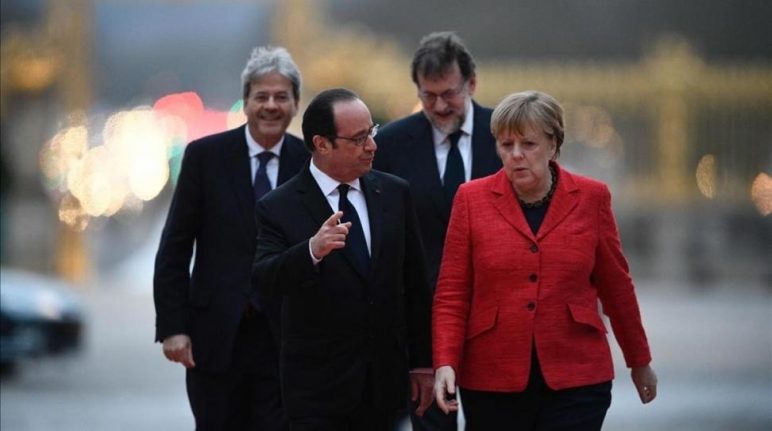
It is now official. In the covers The inevitable news of a death more than foretold by a few, who branded us as quasi-aliens for predicting the break-up of the Eurozone five years ago, has already been published all over Europe. Hollande and Merkel have chosen the pompous Palace of Versailles to announce that the EU of 27 has no future and that the Eurozone of 19 should at least go at two speeds. And so as not to panic the markets in the face of such an official statement, the announcement was staged with two guests of stone. The two guests with the largest - and therefore most dangerous - economies in the Eurozone: Italy and Spain.

.

In this way, the statement manages to give the desired image of North-South coordination. I mean coordination as such, not as an image of unity in any case. After all, it would be strange if the announcement of a two-speed Eurozone were staged exclusively with representatives of the first speed, wouldn't it? Moreover, as if the announcement were not already a hot enough potato in itself, it has been taken up by four presidents, three of whom are in precarious positions at the helm of their countries. Hence the precariousness also of the only apparent control of the situation.

.

Nor is the tone and vocabulary chosen by Hollande in the the interview a chorus of journalists from the media chosen ad hoc to cover the Versailles announcement (Le Monde, The Guardian, La Stampa and Süddeutsche Zeitung). When the journalists asked the French president why he was staging the announcement together with Merkel, Gentiloni and Rajoy, his answer was precisely scripted: «...the French president's answer to the question was: 'I am not a Frenchman, but a Frenchman.«Angela Merkel and I consult each other regularly. Before all European Councils and on all issues. It is in Europe's interest. But it is not an exclusive relationship. With the 60th anniversary of the treaty being celebrated in Rome on 25 March, it seemed logical to us to associate Italy and invite Spain«. In other words, Hollande and Merkel are managing the decisions, and for the staging (to be in the photo) willingly and graciously associate themselves with Italy (as a gesture of respect and recognition of a historical partner of the EU since its creation) and invite generously to Spain. Both as representatives of those of us who do not belong to the hard core of decision-making or to the high-speed economies. A gesture to reassure a periphery that might otherwise reject such a statement outright as totally alien to it if «someone of its own» is not included in the photo.

.

We are undoubtedly facing the official recognition of the opening of a melon that no one is even remotely sure how to handle. But whose staging, with representatives of the two speeds hand in hand and in apparent agreement (as it could not be otherwise), should open the eyes of all of us who seem condemned, due to our bad head/economy, to the 2nd speed. At this point we must insist once again on the warnings (here, here y here) that we have been making to investors in order to avoidance of asset depreciation (both financial and real estate) that such a broken Eurozone and 2nd speed inherently entail.

.

Now that it is no longer taboo or politically incorrect to talk openly about a two- or multi-speed Eurozone, political and financial analysts around the world have begun to publish its possible scenarios. Particularly surgical is the analysis of Wishart, Rojanasakul and Fraher from Bloomberg, in which they present 3 scenarios involving the break-up of the Euro. And 3 other scenarios that would allow maintaining a single Eurozone and a status quo as it is today for some time to come. In any case, we are already in a Europe that is somewhat more realistic and very different from the one that has been simulated for so many years. The 2017 ballot boxes will largely decide when the Eurozone breaks up and the future of today's Europe, which is much better than what happened in the old Europe whose destiny has historically been marked by wars. In the meantime, investors in the south should take safety measures and prepare to live in 2nd gear but enjoying 1st gear assets.


Abróchense los cinturones de seguridad…

Es obvio que la irrupción de Trump en el escenario mundial cambia las reglas de juego en las que bancos centrales y euroburócratas nos habían aletargado. Y su acceso a la presidencia coincide en el tiempo con otros puntos de inflexión que por sí sólos ya merecerían centrar nuestra atención como inversores. Así, Trump potencia y acelera procesos como el Brexit, la subida de tipos del USD y la consiguiente venta de deuda soberana norteamericana, con las consecuencias que ello implica para las reservas monetarias de las mayores potencias mundiales.

.

Y si por si fuera poco, detrás de Trump está Steve Bannon, que deja la vehemencia de Trump a la altura del betún. El cargo creado ad hoc para Bannon, Estratega en Jefe, le confiere un carácter de hombre fuerte, fortísimo en el entorno del Presidente. No en balde inicialmente debía ser nombrado Chief of Staff, el cargo más influyente de la Casa Blanca, pero por presiones del partido republicano se acabó descartando Bannon en favor de Priebus.

.

Pues bien, dicho Steve Bannon, contradiciendo la versión oficial del Vice-Presidente Pence, comentó con el embajador alemán en Washington la necesidad de potenciar la relación bilateral Alemania-USA obviando la interlocución europea. Fuentes de Reuters filtraron el contenido de estas conversaciones y aseguran que Bannon y el embajador alemán hablaron de la UE como una construcción fallida y con muy poco futuro. Huelga decir que esta visión coincide totalmente con la del Ministro de Finanzas alemán, Wolfgang Schauble.

.

Por otra parte, Trump y Bannon potenciarán el Brexit hasta puntos impensables hasta hoy. Y aprovechando la excelente relación del Presidente norteamericano con la familia Real británica, se está planteando incluso la posibilidad de que los USA se unan a la Commonwealth. Un espaldarazo jamás visto a esta unión de Estados que en su mayoría formaron parte del Imperio Británico en el pasado. Y por supuesto, una puntilla para la moribunda UE, que está llevando la pre-negociación del Brexit al terreno de la amenaza y la hostilidad, quizá de manera poco estratégica.

.

Y en medio de este panorama, las subidas de tipos usd en puertas ya están generando ventas masivas de Treasuries por parte de bancos centrales que hasta hoy habían acumulado cantidades ingentes de ellos. Un cambio de escenario radical respecto a la última década. Y de consecuencias imprevisibles, sobre todo si tenemos en cuenta que uno de los mayores tenedores de deuda soberana norteamericana es el China. Sí, el mismo gigante (entre otros muchos) al que Trump pretende declarar una guerra comercial más que temeraria. Sobre todo pensando en que los chinos tienen el poder de abrir o cerrar el grifo de sus masivas reservas de Treasuries según las necesidades estratégicas de tipos de cambio USD/RMB o las amenazas políticas que a buen seguro veremos en los próximos meses.

.

Además, en Mayo puede detonarse otra bomba política nuclear y Le Pen puede llegar al poder. Una probabilidad mucho mayor de la que parecen descontar los mercados más visibles (bolsa y bonos), al menos así lo vaticinan hoy mismo desde Bloomberg: «If tail risks are to be believed, the risk of Frexit is larger than what is currently assumed«. Y sin olvidar que Alemania también va a tener en los próximos meses elecciones imprevisibles. Abróchense los cinturones y tomen medidas de seguridad. Especialmente aquellos inversores que creen que la Eurozona seguirá siendo la Eurozona, y los que confían que los euros de su cuenta corriente seguirán teniendo el mismo valor que los de los alemanes.


Front National: The future monetary policy of France and the EU

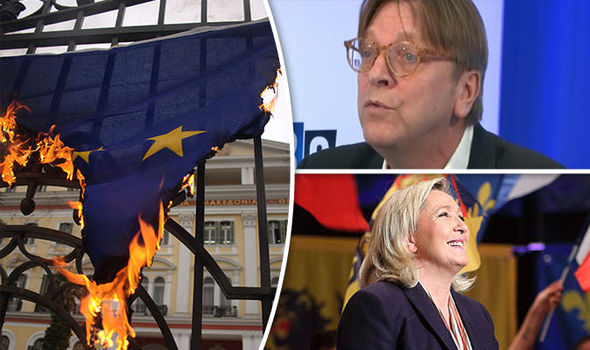
Yes, yes, we know that Marine Le Pen's proposals are often extreme and even dangerous, at least as far as the model of society advocated by her party, the Front National, is concerned. But any analyst with two fingers of economics in his or her forehead should recognise that the current EU, with its single monetary policy and its North/South divergences growing beyond the point of return, is a dead end. A real cul-de-sac, in spite of the Europeanist financial denialism suffered by Eurobureaucrats, who by the way increasingly defend the current EU with less and less conviction and monolithism. We would therefore do well to recognise that, as far as monetary policy proposals are concerned, Marine Le Pen seems to be handling the drift of the Eurozone more realistically. Her proposals are thus more transgressive but at the same time more courageous, and time will tell if they are also more beneficial for the French and other EU neighbours. Let's see what he proposes in this article of Bloomberg:

.

Essentially what Le Pen is promising is the takeover of French monetary policy. A return to monetary sovereignty by restoring the powers of the Bank of France and issuing new francs anchored, albeit to a basket of European currencies, as was done for a time with the ECU (European Currency Unit), Do you remember? This basket of currencies set the value of the ECU according to various parameters such as GDP or the weight of the respective countries in European trade. And from its creation in 1979 until the definitive freezing of its value in 1995, various adjustments were made according to the needs of the diverging economies of the member countries. Logical, isn't it? The problem came in 1995, when the intention was to fix this relationship between the ECU and the other currencies immovably (later the real currency, the EURO, was introduced as a 1:1 parity with the ECU). Obviously, since that freeze, the seams of the single currency have only cracked and have been stoned by seas of freshly printed money, suffering all the economic divergences that the North/South reality has shown over the years.

.

So Le Pen's proposal for a return to the Franc (new French Franc) semi-pegged to a basket of European currencies (new ECU) with a margin of fluctuation makes much more economic and financial sense than the current situation, and it is nothing that those of us of a certain age have not seen before. According to Le Pen, the French state would commit itself to maintaining this fluctuation within a band of +/- 20%. In other words, if the other countries were to do the same, the new Deutschmark would naturally appreciate in value against the currencies of other weaker economies. In other words, the currencies of the South would devalue against the stronger economies of the North. In fact, such a scenario would allow more recessionary and deflationary countries to devalue their respective currencies and revive their economies, generating growth and positive inflation. Et voilà!

.

The candidate has not yet proposed a timetable for the rest of the Eurozone countries to also adopt the anchoring of their new currencies to the basket/new ECU, but she does warn that if the rest want to continue with the Euro as we know it today, her government would allow the new Franc to fluctuate freely, without even this 20% limit. Warning to sailors north and south,,,,

.

The Bank of France could issue up to 5% of the money supply annually (similar to the increase that the ECB has been applying proportionally to France, according to Bernard Monot, Le Pen's main economic advisor). About 100 billion new Francs per year, equivalent (just for a start) to 100 billion Euros. This would finance the needs of the French economy and its debt commitments. A sovereign debt that would be redenominated in new French Francs, and which the state would buy back from foreign holders as far as possible.

.

Monot assures that the French risk premium with respect to the German one would increase but not disproportionately. He believes that the yield on the French 10-year bond would be around 2-3%. France would honour its commitments, as would any other eurozone country that followed in its footsteps. It goes without saying that the French candidate's proposal would make much more sense and reliability if it were applied by the entire eurozone in a coordinated, albeit not simultaneous, manner.

.

For all those who still think that Le Pen's proposal is yet another of her extremist follies and that the chances of such a future materialising are slim, I am sorry to contradict them, but in Germany there are more and more voices, and very authoritative ones at that, that are increasingly being heard that call for a break with monetary policy in unison with the French policy. And it is not only the «demonic» Franco-German front, but also the Belgian Guy Verhofstadt, The European Parliament's elected Brexit negotiating representative, no less, also calls for the financial break-up of the Eurozone., at least in two parts. Therefore, investors should not forget that, although today our Euro is worth exactly the same as the German Euro, the golden dream of those of us living in the highly indebted and recessionary periphery, i.e. to have the equivalent of Deutsche Marks in our current accounts, is not likely to last much longer. take appropriate measures to avoid such potential devaluations. of southern currencies and assets relative to those of the north.

Michael Burry, a manager as atypical as he is brilliant.

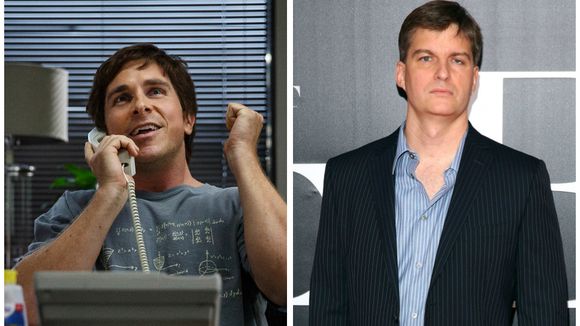
Our friend Marc Garrigasait, manager of Koala Capital SICAV y Panda Agriculture & Water Fund FI,has posted on his blog Investors Conundrum what is probably the most complete compendium of data and reflections compiled by Dr. Michael J. Burry, famous for his more than brilliant investments against the US mortgage market at the height of the bubble a decade ago. Many will remember him as the main character in the film «The Big Short», an essential film for both professionals and financial neophytes.

.

In his article, Garrigasait comments on very interesting aspects of the character, such as his origins far removed from the financial sector and the overwhelming world of Wall Street, since he abandoned his profession as a neurologist in California to devote himself to managing his own and other people's money. His deeply - not stubbornly - contrarian profile and his conviction that it is not only perfectly possible for the rest of the world to be wrong, but also very likely, make Dr Burry an exceptional manager in every sense of the word. As you will see in the next paragraph, his passion for being right in the long run, against the stupid market consensus, outweighs his eagerness to make money: I might even make an error. Hey, I admit it. But I don't let it kill my returns. I'm just not that stubborn. In the end, investing is neither science nor art - it is a scientific art. Over time, the road of empiric discovery toward interesting stock ideas will lead to rewards and profits that go beyond mere money-”.”

.

Among the notes and commentary in this compendium of Burry's thoughts, you will find reviews of real estate, technology and all types of stocks. Complex conclusions covering company analysis and market valuations. He talks about macroeconomic analysis, market timing, investor behaviour, mistakes, fundamentals and a very long etc. Always with his vehement vision and founded on the basis of value investing and the margin of safety. In short, a privileged mind that has permanently drunk from Graham's fountain, but who is also capable of recognising that value investing is not infallible, and that it only reduces the probabilities of failure in the jungle of the markets.

.

Here you have the complete document in pdf to learn from an exceptional master. It is not to be missed: Learning from Dr. Michael J. Burry's Investment philosophy 2016 10 18


The beginning of the end of the debt bubble... and its consequences.

It seems that Trump's victory, coinciding in time with the start of rate hikes by the US Federal Reserve, has - at last - given the starting signal for the bursting of the debt bubble we have experienced over the last decade - and this is paradoxical, given that Trump has always been the king of debt with his real estate and business empire - However, this bursting is only visible where the economy seems to be emerging from the hole of deflation and anaemic growth, namely in the US.What happens is that when the Treasury sneezes, long-term debt in Europe and Japan gets pneumonia. And that, the unwary fixed income investors of the last few years should have been well aware of.

.

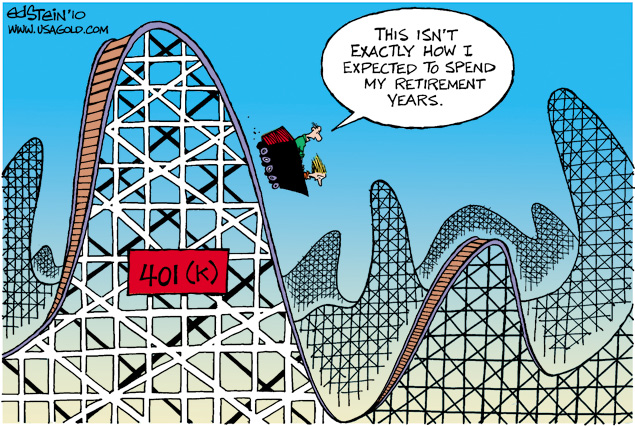
So we are already seeing how portfolios of pure fixed income (bonds) that had been promised so happily with the infinite debt rally served up on a plate by the central banks, are beginning to incur losses that surprise their long-suffering and poorly advised owners. The losses they are going to suffer are and will be directly proportional to the greed for yield they have sought, since the vast majority of advisors have preferred to increase maturities rather than reduce the rating of issuers. In other words, in order to obtain a meagre 2% yield, they have preferred to buy long-term bonds from issuers with investment grade ratings rather than to look at shorter-term issuers that are more solvent but less well regarded by the rating agencies (yes, they have been able to buy bonds with a higher rating than those with a lower rating), those same prostitutes who, obeying the voices of their political-financial masters, led us to collapse in 2007).

.

The consequence of buying debt durations at such an exorbitant price, now that the bubble is starting to lose air, is none other than the devaluation in the price of that debt. This buying frenzy has reached such an extreme that the holder of Belgian government bonds with a maturity of 100 years (yes, yes, a century) is today losing a whopping -30%! And this with a black-leg (AA) rating and only a sneeze from the US Treasury Bond, as the US 10-year bond is still only at 2.5% interest, and therefore still has a long way to go before it normalises at levels of 4-5%. A death trap if ever there was one, where the poor deceived investor will not live long enough to recover this blow to his wealth. It should also be remembered that we are talking about fixed income (sic), i.e. investments that are invested in this type of asset because their owners do not want/cannot/should not suffer huge losses without putting their physical and mental well-being at risk. Moreover, this death trap has become gigantic in the last 10 years, since it has doubled to 45 trillion (45 Tr) dollars! You can read this article of Gurusblog in which they talk about this disaster announced by few.

.

No one can say that we have not been warning about fixed income risk in recent years. Warnings to which many other advisors in the sector are now beginning to add their voices. SocGen: «The decade-long party in the debt markets is over (...) Prepare for a serious hangover». S&P: «Trump's unanticipated rise has let some of the air out of the bond market bubble». Bank of America Merrill Lynch: «It's a «stampede» out of bond funds», etc, etc... Needless to say that the fall in bond prices will force many to sell their portfolios, exacerbating the falls, which are no longer bleeding thanks to Draghi and company continuing to maintain a demand that is as astronomical as it is unrealistic.

.

Expectations of an economic revival in the US brought about by President-elect Donald Trump's idiosyncrasies are fuelling and accelerating economic growth and inflation expectations. For example wages have clearly rebounded in the US labour market. For all these reasons, the fall in debt prices around the world, dragged down by the price of the Treasury, seems to have only just begun. And the worrying thing about this new scenario is how far the seams of hyper-indebted countries with public deficits (i.e. with growing debt) such as Italy, Spain, Portugal, Greece... will hold up before winter arrives...

.

Against this backdrop, the trillion-dollar question is where to find income when the bond market bursts its bubble? There are some, but certainly far from the traditional fixed income fund circuit, as they have to be sought through alternative strategies that neither commercial nor private banks usually have in their sales catalogues. And of course, no one should confuse dividend stocks with fixed income, as let us not forget that stocks listed in developed markets are not cheap enough to take on such risk.

.

But let no one get depressed, for it would be a far worse scenario for everyone if the debt bubble burst were to be aborted. For that would signal the failure of the economic recovery and the now desperate pumping of central banks to postpone an inevitable collapse. In other words, we should pray that the debt bubble bursts to reasonable levels even if it brings significant losses to poor, ill-advised savers/investors.

.

Oh, by the way, Merry Christmas!

Front National: The future monetary policy of France and the EU

Yes, yes, we know that Marine Le Pen's proposals are often extreme and even dangerous, at least as far as the model of society advocated by her party, the Front National, is concerned. But any analyst with two fingers of economics in his or her forehead should recognise that the current EU, with its single monetary policy and its North/South divergences growing beyond the point of return, is a dead end. A real cul-de-sac, in spite of the Europeanist financial denialism suffered by Eurobureaucrats, who by the way increasingly defend the current EU with less and less conviction and monolithism. We would therefore do well to recognise that, as far as monetary policy proposals are concerned, Marine Le Pen seems to be handling the drift of the Eurozone more realistically. Her proposals are thus more transgressive but at the same time more courageous, and time will tell if they are also more beneficial for the French and other EU neighbours. Let's see what he proposes in this article of Bloomberg:

.

Essentially what Le Pen is promising is the takeover of French monetary policy. A return to monetary sovereignty by restoring the powers of the Bank of France and issuing new francs anchored, albeit to a basket of European currencies, as was done for a time with the ECU (European Currency Unit), Do you remember? This basket of currencies set the value of the ECU according to various parameters such as GDP or the weight of the respective countries in European trade. And from its creation in 1979 until the definitive freezing of its value in 1995, various adjustments were made according to the needs of the diverging economies of the member countries. Logical, isn't it? The problem came in 1995, when the intention was to fix this relationship between the ECU and the other currencies immovably (later the real currency, the EURO, was introduced as a 1:1 parity with the ECU). Obviously, since that freeze, the seams of the single currency have only cracked and have been stoned by seas of freshly printed money, suffering all the economic divergences that the North/South reality has shown over the years.

.

So Le Pen's proposal for a return to the Franc (new French Franc) semi-pegged to a basket of European currencies (new ECU) with a margin of fluctuation makes much more economic and financial sense than the current situation, and it is nothing that those of us of a certain age have not seen before. According to Le Pen, the French state would commit itself to maintaining this fluctuation within a band of +/- 20%. In other words, if the other countries were to do the same, the new Deutschmark would naturally appreciate in value against the currencies of other weaker economies. In other words, the currencies of the South would devalue against the stronger economies of the North. In fact, such a scenario would allow more recessionary and deflationary countries to devalue their respective currencies and revive their economies, generating growth and positive inflation. Et voilà!

.

The candidate has not yet proposed a timetable for the rest of the Eurozone countries to also adopt the anchoring of their new currencies to the basket/new ECU, but she does warn that if the rest want to continue with the Euro as we know it today, her government would allow the new Franc to fluctuate freely, without even this 20% limit. Warning to sailors north and south,,,,

.

The Bank of France could issue up to 5% of the money supply annually (similar to the increase that the ECB has been applying proportionally to France, according to Bernard Monot, Le Pen's main economic advisor). About 100 billion new Francs per year, equivalent (just for a start) to 100 billion Euros. This would finance the needs of the French economy and its debt commitments. A sovereign debt that would be redenominated in new French Francs, and which the state would buy back from foreign holders as far as possible.

.

Monot assures that the French risk premium with respect to the German one would increase but not disproportionately. He believes that the yield on the French 10-year bond would be around 2-3%. France would honour its commitments, as would any other eurozone country that followed in its footsteps. It goes without saying that the French candidate's proposal would make much more sense and reliability if it were applied by the entire eurozone in a coordinated, albeit not simultaneous, manner.

.

For all those who still think that Le Pen's proposal is yet another of her extremist follies and that the chances of such a future materialising are slim, I am sorry to contradict them, but in Germany there are more and more voices, and very authoritative ones at that, that are increasingly being heard that call for a break with monetary policy in unison with the French policy. And it is not only the «demonic» Franco-German front, but also the Belgian Guy Verhofstadt, The European Parliament's elected Brexit negotiating representative, no less, also calls for the financial break-up of the Eurozone., at least in two parts. Therefore, investors should not forget that, although today our Euro is worth exactly the same as the German Euro, the golden dream of those of us living in the highly indebted and recessionary periphery, i.e. to have the equivalent of Deutsche Marks in our current accounts, is not likely to last much longer. take appropriate measures to avoid such potential devaluations. of southern currencies and assets relative to those of the north.

Michael Burry, a manager as atypical as he is brilliant.

Our friend Marc Garrigasait, manager of Koala Capital SICAV y Panda Agriculture & Water Fund FI,has posted on his blog Investors Conundrum what is probably the most complete compendium of data and reflections compiled by Dr. Michael J. Burry, famous for his more than brilliant investments against the US mortgage market at the height of the bubble a decade ago. Many will remember him as the main character in the film «The Big Short», an essential film for both professionals and financial neophytes.

.

In his article, Garrigasait comments on very interesting aspects of the character, such as his origins far removed from the financial sector and the overwhelming world of Wall Street, since he abandoned his profession as a neurologist in California to devote himself to managing his own and other people's money. His deeply - not stubbornly - contrarian profile and his conviction that it is not only perfectly possible for the rest of the world to be wrong, but also very likely, make Dr Burry an exceptional manager in every sense of the word. As you will see in the next paragraph, his passion for being right in the long run, against the stupid market consensus, outweighs his eagerness to make money: I might even make an error. Hey, I admit it. But I don't let it kill my returns. I'm just not that stubborn. In the end, investing is neither science nor art - it is a scientific art. Over time, the road of empiric discovery toward interesting stock ideas will lead to rewards and profits that go beyond mere money-”.”

.

Among the notes and commentary in this compendium of Burry's thoughts, you will find reviews of real estate, technology and all types of stocks. Complex conclusions covering company analysis and market valuations. He talks about macroeconomic analysis, market timing, investor behaviour, mistakes, fundamentals and a very long etc. Always with his vehement vision and founded on the basis of value investing and the margin of safety. In short, a privileged mind that has permanently drunk from Graham's fountain, but who is also capable of recognising that value investing is not infallible, and that it only reduces the probabilities of failure in the jungle of the markets.

.

Here you have the complete document in pdf to learn from an exceptional master. It is not to be missed: Learning from Dr. Michael J. Burry's Investment philosophy 2016 10 18