
After more than a decade of monetary stimulus and financial repression where the tide of central banks around the world has flooded global debt with liquidity and demand, the music is beginning to stop playing. It is the chronicle of a death foretold but still astonishingly incredulous.
.
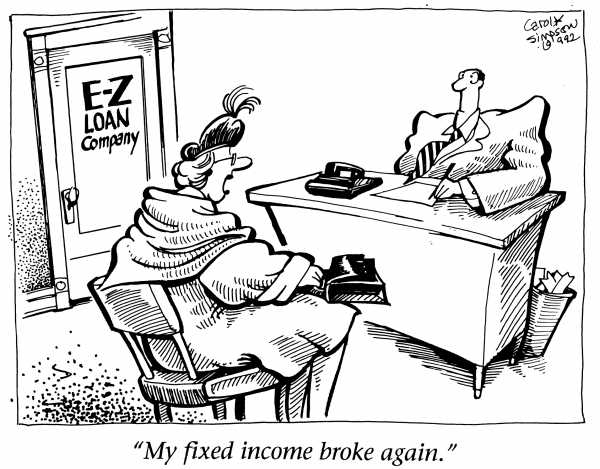
But despite the end of the road to QE, the vast majority of more conservative investors continue to complain about the poor performance of their fixed income portfolios, oblivious to the risk they have been taking for years and also to the scenario their assets will face in the new era of normalisation of rates and stimulus.
.
Paul Read, The co-manager of the Invesco Pan European High Income bond fund, Invesco Pan European High Income, warns in a surprisingly clear way, as his salary depends on investors continuing to trust the bonds he buys. «There is too much complacency in the bond market. Prices are rising steadily and yields are reaching ever lower lows. On the basis of clearly worsening yields, the euro high yield (or junk bond) market is currently yielding less than 2%. Circumstances are making it very difficult for us.»
.
And the most curious thing is that despite the fact that the shepherds themselves - at least the more honest ones - warn their sheep that the wolf is coming, the flock continues to demand that the shepherd offer them juicy pastures in which to continue frolicking, as they have done for as long as they have had the use of (no) reason. As Read rightly says, with the European QE tap being turned off: «...the European QE tap will be turned off.«Things become even more complicated considering how expensive fixed income markets are. With yields so low, the risk is much higher (...) Although neither bonds nor equities currently offer investors the best entry point, at current rates, equities have a very easy time beating bonds, both in terms of both appreciation and dividends.»
.
Indeed, the real disaster looming over conservative portfolios is not just that returns are low but that losses are beginning to take hold of assets that their owners, whether better or worse advised, bought precisely to avoid swings and negative returns. Because the fixed income funds that even today are still nonchalantly yielding precious points are doing so on the back of a wind of demand, trading and favourable interest rates whose days are numbered.
.
However, rates are not in a position to go up happily either, even in the US. dovish than was to be expected from his latest move at the helm of the Fed. Nor does it seem that economic growth is going to be the one that will pull the developed world out of the debt hole into which it has got itself - we have got ourselves - in exchange for postponing the hunger of insolvency and having hard bread for today.
.
In the following graphics from the presentation by Jeffrey Gundlach of DoubleLine Capital (via Gurusblog), you can see how the FED has already stopped increasing its balance sheet, the BoJ has softened its growth and the ECB has announced its brake for 2018.


If the forecasts come true, 2019 will not only see the end of money printing but also the beginning of the shrinking of central banks' balance sheets. And most of the developed world's fixed income portfolios are not prepared for that without suffering massive losses from write-downs, insolvencies and potential illiquidity. The relationship between the rise and fall of central bank asset purchases and their direct correlation with bond and equity prices can be clearly seen in the chart below. Imagine now this correlation with a closing of the taps that have watered with huge flows, the likes of which have never been seen before in all of history.

The million-dollar question is: Are there assets that are de-correlated from the end of the QE party and therefore «guarantee» positive returns in this tidal wave pullback scenario? The answer is yes. Unfortunately, however, these are alternative management strategies that are difficult to access for Spanish retail investors, who are condemned to buy the fish, fixed or variable, sold by Spanish banks. The reasons why it is so difficult to access good alternative multi-strategy funds from Spain, in addition to the lack of interest of Spanish banks in offering third-party products that do not share juicy commissions with their main trading platforms, are also regulatory. The liquidity of these multi-strategy funds is not usually daily or weekly, but monthly or even quarterly, which prevents them from being funds that qualify under the UCITS directive, which seems to be the only one that the CNMV considers suitable for Spanish retail investors. This, together with the fact that the transposition in Spain of the AIFMD (Alternative Investment Fund Managers Directive) is still conspicuous by its absence, condemns the poorly advised investor to an obsolete and reckless portfolio distribution based essentially on fixed income and equities.
.
Alternative management handles a wide range of investment strategies, from bonds linked to meteorological catastrophes, buying and selling mortgages, life insurance, etc., etc. And the right combination of these strategies ensures that the non-stock part of the portfolios gain a few points of return while remaining completely unaffected by the falls that stocks and bonds may suffer in the coming years.
.
But it is not enough to open an account abroad for an international bank to agree to buy good alternative funds from us and accept their relative illiquidity. It should be borne in mind that most multi-strategy alternative funds are designed for institutional investors and require minimum investment amounts prohibitive for retail investors, with figures of €500,000, €1,000,000 or even more. In addition, Spanish taxation penalises funds not marketed in Spain (purely for the protection of the sector and not the investor), while those registered with the CNMV are rewarded through the deferral of capital gains and the transferability that every investor would like to see. Here it is worth remembering the need to have a personal investment vehicle such as the Luxembourg, The investment is suitable for investors starting from as little as 250,000 or 300,000 euros, thanks to which we obtain the deferral and transferability of any fund in the world, whether or not it is alternative or not, and whether or not it is registered in Spain for marketing.
.
All this means that in many cases, even within the Luxembourg vehicle itself, we have to resort to funds of funds of alternative management, which in exchange for their corresponding commission fee allow us access to a diversified portfolio of strategies, truly decorrelated from the financial markets, with amounts of 125,000 euros. A real treasure in these current and future times.