We look after your interests

(+34) 93 626 47 75

Torres Sarrià, Carrer de Can Ràbia, 3-5, 4ª Planta BCN 08017

(+34) 91 794 19 82

Pº de la Castellana, 93 2nd floor MADRID 28046

Cluster Family Office Blog

El timo de los fondos perfilados

Esta es la última moda en las técnicas de abuso comisionista de la banca, y parece que llegó hace unos meses para quedarse entre los inversores más cándidos. Los fondos perfilados en definitiva son fondos de fondos cuyo criterio de selección es mantener una combinación de aproximadamente media docena de fondos que en su conjunto se adecuen al perfil inversor tipo: Agresivo, moderado, dinámico, conservador, etc. O sea, que en lugar de que el asesor de la entidad bancaria de turno recomiende a sus Clientes tener en cartera 4, 6 u 8 fondos determinados, sustituyendo unos por otros cuando lo considere necesario, le va a proponer comprar sólo uno, el perfilado. Y serán los gestores de éste quienes compran y vendan los que quieran en cada momento, sin que el inversor ni se entere. (more…)

Fixed Income 2.0

La renta fija tradicional, en forma de bonos emitidos por Estados y empresas, está pasando por momentos muy complicados. El abuso de endeudamiento por parte de los países desarrollados -y cada vez más también los emergentes-, junto con la fabricación de dinero por parte de los bancos centrales a niveles jamás vistos, hace que la renta fija sea cada vez menos fiable en general. Si fabricamos dinero de la nada sin anclarlo a nada, la deuda se convierte en meros dígitos cuya solvencia queda cada vez más en entredicho, ya que los ingresos y la capacidad de generar flujos de dinero para devolverla quedan cada vez más ridículos respecto a la cantidad debida. Y eso ocurre tanto a las empresas como a los Estados de los llamados países desarollados.

Si además añadimos a ello una política sostenida durante años de tipos de interés a prácticamente cero, y unas facilidades de recompra de activos por parte de bancos centrales demenciales, tenemos como resultado que la deuda más solvente (sic) como la alemana o la estadounidense está en tipos negativos. Y como consecuencia, el resto de deuda de países paradójicamente hiperendeudados, también goza de unas primas de riesgo mínimas, es decir que pagan extraordinariamente poco por recibir dinero prestado. (more…)

Accounting traps to inflate GDP.

Accounting creativity« is nothing more than a euphemism for falsehood, for cheating in accounting so that it reflects a distorted reality, to suit the interests of those in power. And today those in power are an EU that at all costs needs to simulate solvency and growth in the countries of its periphery, so that investors do not flee those economies. If they did, there would not be enough money - or will - in northern Europe to avoid bankruptcy and the collapse of Eurozone unity.

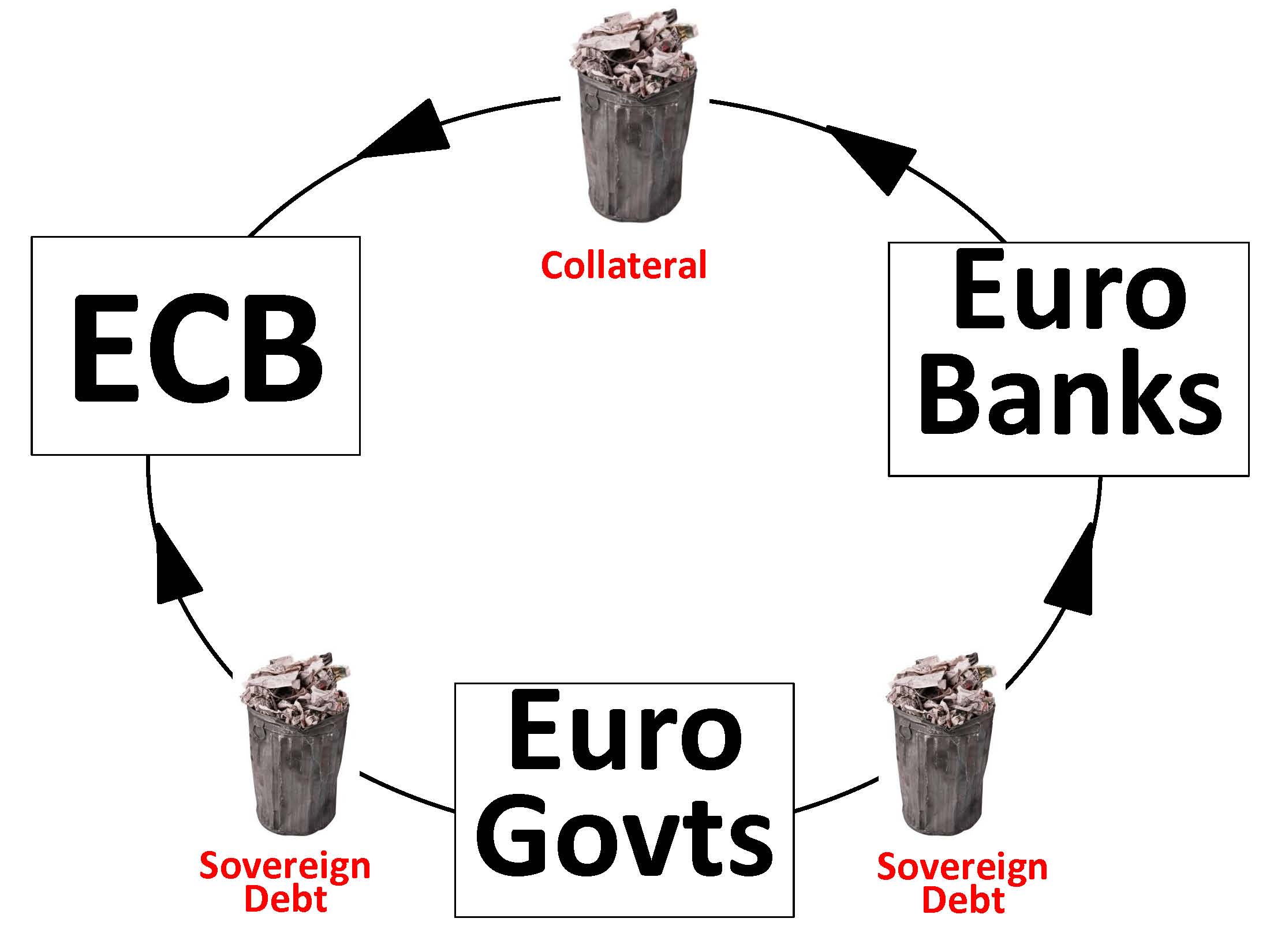
It seems, therefore, that it is in nobody's interest that the reality of the economic miseries of the PIGS (Portugal, Italy, Greece and Spain... and some others such as France...) becomes evident and scares away national and international investors. That is why the ECB keeps the risk premium at floor level through all kinds of quantitative and pseudo-covert facilities to banks and states. It is also in charge of keeping alive the profits of banks that have their warehouses full of rotting real estate on the basis of free liquidity bars. And European and Spanish regulators look the other way when financial institutions value these properties above their market price on their balance sheets to avoid obvious bankruptcy. Anything goes to feign stability, for the good of all (sic). Accounting engineering or creativity« is also being used in Spain. when it comes to handling unemployment and other macro figures, on the demand of electoral needs and balancing with the impositions overseen by the Troika. (more…)

The fund selector and the fund salesman are different animals.

Revealing and extensive data can be found at this report by Cerulli: European Fund Selector 2014, Decoding the buying process. It clearly shows the differences in fund selection criteria that exist between true fund selectors, who are looking for good long-term returns, and mere fund salesmen/distributors, who are only looking for material to place in exchange for juicy commissions.

FundsPeople extracts some interesting graphs such as the one below, in which we see a clear distinction in the difficulty encountered by the funds in being validated by different agents in the investment world. Investors' rigour and stringency was rated between 1 and 5, with 5 being the most demanding level to pass investor due diligence. Among the most demanding group when it comes to approving the investment of their money in a given fund are pension funds, investment accounts of insurance companies, consultants/advisors, investments linked to insurance (e.g. unit linked) and family offices. (more…)

Analysis of the turkey the day before Christmas.

The turkey paradox is the story in which one of these animals is fattened and cared for throughout its life by its owner, with the intention of eating it on Christmas Day. The paradox comes from the turkey's own subjective view of events, who is pampered, fed and cared for excellently throughout its existence. And nothing makes him think - if turkeys could think - on Christmas Eve that this magnificent owner is going to cut his throat and eat him the next day, after a lifetime of attention from the best friend. I say friend, the best father! Many of you are already familiar with this turkey paradox, but it will be interesting to think about the options for analysing the turkey's situation if we use it as a metaphor that can be extrapolated to any investor, with Christmas Day being the metaphor equivalent to the fall in share prices in the investor's portfolio. (more…)

Bienvenido Mr. Putin.

De la caída del muro de Berlín y de la extinción del telón de acero todos nos deberíamos acordar, puesto que hace apenas un cuarto de siglo de aquellos hechos que cambiaron por completo las influencias geopolíticas. Los países del Este se escindieron de la influencia soviética sin que Rusia pudiese hacer nada para evitarlo, porque su economía comunista se derrumbó como un castillo de naipes. El vacío de poder fue enorme, surrealista en la hasta entonces segunda potencia mundial. Y la órbita de países que estaban bajo su influencia política y económica, fueron recibidos con los brazos abiertos por el libre Mercado occidental, a pesar de su retraso económico evidente. El nuevo orden mundial tenía al fin vendedores y vencidos, y los vencedores eran «los buenos» y el derrotado el «comunismo diabólico». (more…)

What is really happening in Iraq?

Los noticieros se encargan de informarnos en estos últimos días de que el gobierno iraquí está luchando dentro de sus propias fronteras contra un enemigo que abraza el más sangriento yihadismo: El Estado Islámico de Irak y el Levante (ISIL). Es decir, la deriva violenta radical del salafismo que ampara el gobierno saudí, país que por su parte defiende la lectura más literal y puritana del Islam. ISIL, que conquista territorio día a día en Irak y que lucha también contra Bashar Al Asad en Siria (de ahí que añadieran a su acrónimo la palabra «Levante»), es tan sangriento que incluso su antaño aliado Al Qaeda dejó de apoyarlo, al menos directamente.

Sería pues pecar de simplista relacionar directamente el gobierno de Arabia Saudí con el yihadismo de ISIL, que está tratando de tomar el poder en todo el territorio iraquí. Pero si a esta ecuación le añadimos que étnicamente los dirigentes saudíes y los guerrilleros de ISIL son sunitas, y enemigos seculares de la etnia chiíta que gobierna Irak desde la evacuación de las tropas americanas, las piezas comienzan a encajar algo más. Resumiendo mucho, los chiítas de todo oriente medio vienen siendo el pueblo pobre que se extiende alrededor de los pozos petrolíferos que están bajo dominio sunita, es decir propiedad de los emiratos y países como Arabia Saudí, Bahraín, etc. Y ante la radicalización de los yihadistas suníes, occidente es ahora proclive a apoyar la etnia chiíta, que gobierna en Irak. (more…)

When bets pay better than investments... (temporarily)

Every day we see examples of exultant bettors who think they are seasoned investors, just because their bets have been winning for a few months, even a few years. They confuse investment criteria with the criterion of the winning bet. And they believe that making money in the short term on the stock market or in government bonds is synonymous with being a good investor. I regret to tell them that nothing could be further from the truth.

The fall will be hard, very hard. With permanent losses, meaning that they will not be able to recover until decades from now, when inflation has eaten away the lost value and therefore they will settle for a false recovery. But there are the bettors, buying Spanish bonds more expensive than the very same Norwegian bonds (you can see a quick and illustrative comparison of the fundamentals in this Gurusblog article); American stock markets trading at more than 20 times earnings, or the brand new holders of subordinated debt or mortgage bonds of pseudo-rescued banks on the brink of disaster. It seems that for these gamblers anything goes as long as the result is positive. It doesn't matter that they are buying assets at prices that only the aberrant manipulation of central banks can generate. It doesn't matter how far their price is from the real intrinsic value of the asset, be it profits and annual business growth in the case of the stock market, or the macroeconomic fundamentals of the state in the case of sovereign bonds. All for the sake of the winning bet. (more…)

How to invest when equities are highly variable and bonds are no longer fixed.

We are already seeing evidence of a new paradigm in the world of finance. The New Normal of which so much we have spoken at repeatedly It is here and it is here to stay. So we have a very uncertain outlook ahead of us. With an influence of central banks that has never been seen before and that distorts everything, but be careful: an intervention that tends to be reduced in the USA and increased in Europe.

Let's take it one step at a time. As far as equities are concerned, it should not escape anyone's notice that stock prices in the US and even in many Eurozone countries are expensive. It is true that the influence of exceptional measures by the respective central banks can keep company prices well above their fair value for a long time. And that this is a desire that every ruler usually embraces, as it improves, at least in appearance, the financial state of the population and its consequent consumption, optimism, voting, etc. But we should not forget that QE in the US is on its way to drying up and that rates are close to a rationalisation in the form of a rally. Therefore, the US stock market has anything but fundamental appeal. And the universal law of the market is implacable, so investments in expensive stocks relative to the fundamentals of these businesses will only lead to disappointment - permanent losses - in the medium to long term. (more…)

Losing as an investor what you have gained as an entrepreneur.

Being successful as an entrepreneur does not mean that you are also skilled at investing the money generated in the company. Neither in the management of surplus cash within the company itself, nor in the management of money already extracted outside the company. In fact, from our knowledge of many entrepreneurial families, we can assure you that usually the most brilliant entrepreneurs are terrible investors. (more…)