

The zero-interest-rate policies that have been maintained by central banks in the most developed parts of the world to prevent a debt crisis have completely distorted the financial system. The side effects of giving away the cost of borrowing and providing an open-ended lifeline to prevent the heavily indebted (the entire developed world) from going bankrupt are devastating for those who need to generate income. It is a scenario that is favourable to those who are insolvent but very hostile to investors, who find themselves forced to lend their money in exchange for the meagre returns offered by increasingly risky and insolvent issuers.
As investors’ money shifts towards the most insolvent debt in a desperate search for a few basis points of yield, the bubble in the prices of all debt – both developed and emerging, and across the entire yield curve – is swelling ever further. The most creditworthy issuers – or those with central banks willing to buy up everything – already have a large part of their yield curves in negative territory, meaning that investors have to pay to lend them their money. Similarly, less creditworthy issuers are basking in a sea of liquidity that allows them to take on more and more debt whilst paying interest rates as if they were large, creditworthy multinational corporations. (more…)
 Banco Madrid is the first bank that the state and its regulators have let fall in this galloping debt crisis. In fact, technically speaking, it has not been allowed to fall, i.e. it has not fallen due to the absence of a bailout with state funds, as other insolvent institutions have been rescued in recent years, but rather, forceful measures have been taken to liquidate it due to its -still- alleged money laundering. What is paradoxical is therefore that the reason for the intervention and the swift liquidation of the institution is not, at least originally, due to the feared insolvency but to criminal practices of great significance.
 Perhaps for those of us who are professionally engaged in it, the answer may seem obvious. Especially for those of us who have suffered for decades in our own flesh the miseries and shortcomings of private banking. It is no coincidence that, in addition to being advisors, we were, are and will continue to be essentially investors, and as such, our interests are still, unfortunately, at the antipodes of those of the banks and their misnamed advice. Having said that, let us now analyse the transcendental decisions that every investor should take to advise on the correct management of their assets.
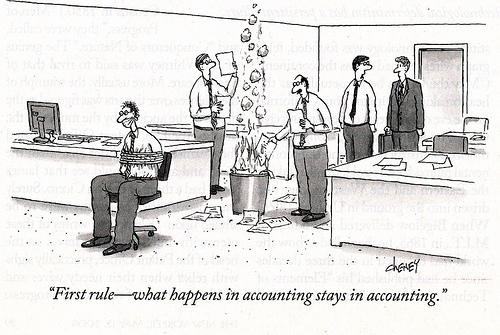 With central banks and their QE, the debt situation in the developed world has reached a surrealistic level worthy of study. Not only because of the unprecedented size of the balance sheets of the FED, ECB, BoE, BoJ, SNB, etc., but above all because of the manipulation of accounts, which has become a macabre and dangerous norm.