After the Chapter 1: Indebtedness, here is the second instalment of the insights, quotes and conclusions from the genius Warren Buffett, taken from the many Letters to Shareholders which Berkshire Hathaway has published over the decades, including lectures, university symposia, interviews in various media outlets, personal essays and comments made before the Commission of Inquiry into the Financial Crisis.
.
In this Chapter 2, we will examine Buffett’s view of the concept of investment and the way in which each person approaches this practice, which plays such a decisive role in life:
.
Investing wisely is not linked to a high IQ. With average intelligence, you can invest very successfully. All it takes is the discipline to control the irrational impulses that ruin even the most brilliant investors. To avoid such impulses, it’s a good idea to think long and hard about your investments. And the best way to do that is to sit alone in a room and think. If that doesn’t work, believe me, nothing else will.
.
When I was a teenager, I spent eight years analysing charts to make money on the stock market (as a chartist). Then someone told me that none of that was necessary, that all you needed to do was buy something below its intrinsic value. Having first-hand experience of chart analysis gives you a firmer footing when you finally move away from it to focus on fundamental value in your investments.
.
Contrary to what many people think, investing with a small amount of money actually improves your prospects of a return. With little money and few opportunities to invest it, we tend to make much better choices. However, most people attribute their failures to a lack of millions rather than to their own poor decisions (From our perspective as Multi-Family Office We can assure you that this is absolutely true: the greater the assets of a new client who comes to us, the more inefficient the management of those assets tends to be, paradoxically).
.
I want to own assets that generate income. It seems obvious, but it’s astonishing how many people agree with this statement and yet invest their money in non-income-generating assets, hoping that someone will pay more for them in the future – and that is the very essence of speculation.
.
Speculation is neither immoral, nor illegal, nor does it make you fat, nor is it a sin. But it is something completely different from investing in something that will generate income for you over time. From the moment I buy something – be it a farm or any other business – I stop worrying about its market price and focus on what it produces each year, and whether that output is satisfactory or not in relation to what I’ve paid for it.
.
I don’t think that even if the Chair of the Fed were to whisper in my ear the decisions he was going to make in the future, it would change my view of the businesses I’ve acquired. I’m simply going to hold on to them for many years, as long as those businesses remain viable. If you really understand business, you probably shouldn’t have more than six. If you can identify six good businesses, you don’t need any further diversification, because the chances of more than one or two going wrong are really low if you know them well and analyse them properly. If, on the other hand, you invest in a seventh and an eighth, rather than putting more money into your first and second, you’ll be making a mistake. Hardly anyone has become rich thanks to their seventh-best idea.
.
The level of concentration should be directly proportional to your knowledge of the assets in which you invest. Conversely, for the general public – who have neither an interest in nor the time to analyse businesses, and are therefore unfamiliar with them – diversification is the key to their success. The same can be said of investors in investment funds. If they do not devote themselves to analysing and selecting active investment funds – or hire someone to do so on their behalf – this will enable them to select a handful of funds that manage to outperform the markets, the best thing they can do is invest in passive investment funds, which will at least ensure they do no worse than the market. It is true that Berkshire Hathaway’s stock selection has delivered superior returns, but investing in US companies as a whole (through passive funds or ETFs) has not, to date, been a bad investment, and that is something anyone can do if they have enough patience.
.
Patience is another key factor for investors. In fact, the market is a system that redistributes money from the impatient to the patient. And it is the obsession with the price of things, rather than their value, that leads to that fatal impatience. I try to buy a dollar for 60 cents. And if I see a chance of getting it, I don’t mind how long I have to wait. But if I see something attractive today, I won’t let the opportunity pass me by in the hope that something even more attractive might turn up later on.
.
If you’re driving along a road and see a bridge with a maximum weight limit of 4,000, don’t try to cross it with a lorry weighing 3,950. Take a different road and cross a bridge that can support 7,000. That’s the same safety margin you should maintain when making an investment. You shouldn’t buy a business worth 100 for 95, but rather look for one worth 100 that you can buy for 60.
Unfortunately, ordinary investors are almost completely unaware of the world of institutional funds. We are referring to retail investors, of course, but also to those who have several million and are looked after by the most luxurious private banking departments in Spain. Both are condemned to invest in a universe of national and international funds that are authorised for marketing in Spain, which leaves out practically no less than 90% of existing funds worldwide, as we have already explained in articles such as «The Spanish fund of funds", "The Spanish fund of funds" and "The Spanish fund of funds".«Investment Funds: There are still classes«We recommend you to read it.
.
As we have explained on other occasions, the most economical and viable solution for small and medium-sized investors is to have a own Luxembourgish vehicle. But even so, it will be very difficult for investors who do not have several million euros at their disposal to play in the Champions League of funds: Institutional funds and hedge funds. How do they differ from other international funds? Well, they do not have classes suitable for smaller investors, which makes these funds a select club to which only well-informed investors with enough millions to exceed the minimum investment in these funds and to have a properly diversified portfolio have access.
.
The minimum investment in these funds ranges from USD 500,000 to USD 1, 5, 10 or even USD 25,000,000. Not to be confused with traditional funds that have, in addition to retail classes, institutional classes, as these would not be considered truly institutional, but rather retail funds with commission rebates for the volume contributed. Truly institutional funds are those that do NOT have accessible classes with amounts that are affordable for ordinary investors. Some of you may be wondering why a fund manager would want to skip a retail class, thus disregarding the inflow of money from small investors. The answer is very simple: they are usually successful funds that sooner or later will end up closing their doors, even to institutional clients, because they have already reached the limit of assets under management that allows the correct execution of their different investment strategies. These successful funds and hedge funds have no need at all for the «traffic» of small amounts in and out of their portfolios constantly, simply because they already make enough money with their large and loyal investors. The question that should be asked is the reverse, why does a fund need to create retail classes and accept inflows and outflows of small amounts, which consume time and resources and are a real administrative headache for the fund managers. Obviously the answer is that they would not earn enough from their institutional or large investors alone, which leads to the conclusion that they are not successful enough in meeting the return expectations of their investors.
.
There are, of course, honourable exceptions of excellent funds whose managers do not give up retail investors as a matter of principle. And despite their proven success over decades, they continue to accept small inflows and outflows. But it is undeniable that many other extremely successful funds do not show such deference and decide to do without retail investors. It is in this Champions League of institutional funds and hedge funds that access to small and medium-sized investors is unfortunately denied to them as a matter of size.
.
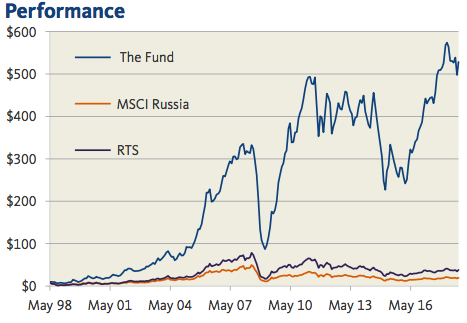
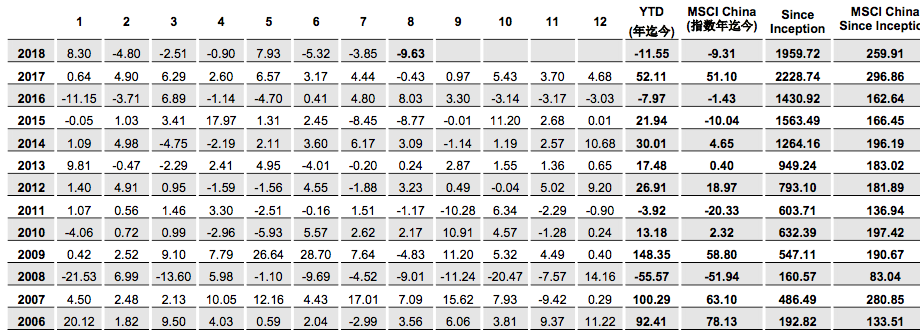
Fortunately, there are funds of funds that «slice and dice» these investment minimums required by institutional funds in exchange for a fee on top of the original fee. In other words, the small investor can invest in these funds of funds, which in turn invest in institutional funds with prohibitive minimums, with tickets as low as 125,000, which is the minimum regulatory amount to be considered a qualified or well-informed investor. Not in all, but in some cases the potential of the underlying funds is such that it is more than worth paying the double commission toll. Or is it not worth being able to invest from as little as 125,000 euros in such inaccessible funds as the heirs to the famous Medallion, Bridgewater or emerging funds with such spectacular alphas as the ones we see in the images published in this article?
For those of you who have not yet done so, we recommend that you read the first part of this article, in which we described a future that is much closer than some believe. In that near future, interest rates in the north of the EU could no longer be anchored to interest rates in the south. This break between the price of money in the rich countries and the price of money in the poor countries will inevitably lead to a different exchange rate for the other currencies. And as the old man said, if it walks like a duck, flies like a duck, swims like a duck and quacks like a duck, it is a duck. In other words, if it has different rates, it will have different exchange rates, and therefore the single currency will cease to be single, which means that we will have at least two Euros, if the nomenclature is maintained.
.
For the most sceptical we bring you today the articleprepared by Yves Longchamp's Director of Analysis Yves Longchamp from Ethenea Advisors. In this article Longchamp quantifies the interest rates that economies as disparate as Germany's or Italy's can bear. And it is not just that they can bear different rates but that they must be able to have them, thus adapting them to the needs of each of their economies. No reader should be unaware of the terrible consequences for economies when the price of money does not adjust to the cycle and the needs of the economic machine. And unfortunately, economic convergence ceased to be plausible for northern and southern Europeans years ago.
.
Thus, Ethenea says that while Germany could currently operate with a rate range of between EUR 1.5 and EUR 1.5 per cent, it would be possible for the EU to operate with a rate range of between EUR 1.5 and EUR 1.5 per cent. 4,8-6,1%, Italy would not be able to withstand rates - at least - higher than 0,6-1,5%. The difference between one economy and another is abysmal, and three quarters of the same could be said about the needs of rates between other countries in the North and the South. I recommend that you read the aforementioned study Longchamp because for more than one person it will be a slap in the face of reality that will, at the very least, give them pause for thought.
.
The inevitable consequences of such disparate interest rate requirements (and moreover increasing day by day) are the breakdown of the uniformity of the price of the Euro. Germany will not be able to withstand rising inflation for many more years, while in the south of the EU we are mired in debt for many decades, which requires a quasi-free price of money in order to be able to continue paying the interest. Remember that in the south we are still running budget deficits, i.e. we owe more and more money every day, despite having negative interest rates for years! The consequence of this is that in the south it is not materially possible to keep up with the rate hikes that the north of the EU will soon be demanding, following in the footsteps of the US Federal Reserve.
.
We have warned many times over the last 7 or 8 years. The single currency is doomed to cease to be unique. And investors would do well to prepare their money, their custodian banks, their investment vehicles and of course its investments for such a scenario of different rates and prices, even if the bureaucrats continue to dissemble and come up with a creative euphemism for the break-up of the Euro. Studies such as the one by Ethenea's Director of Analysis can say it louder, but not clearer. And since Cluster Family Office We will never tire of warning of the risk unwittingly taken by investors in the South who do not prepare for their investments to be priced and priced in the North and to be geographically and qualitatively safe. As Longchamp says in his article: «Ignoring a reality does not make it less real».»
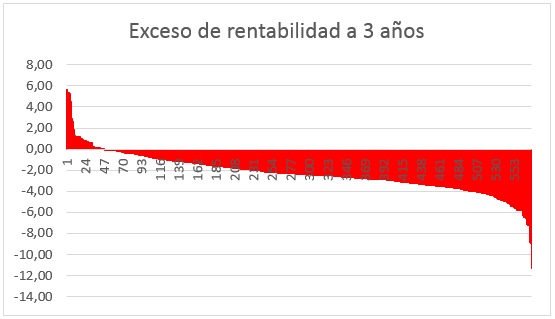
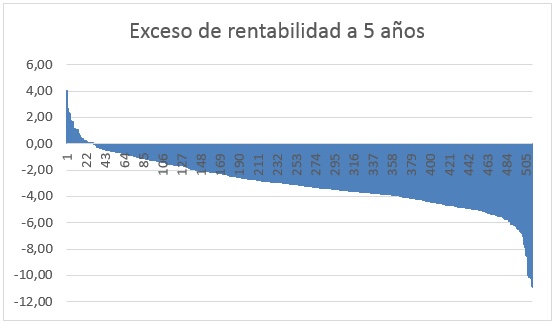
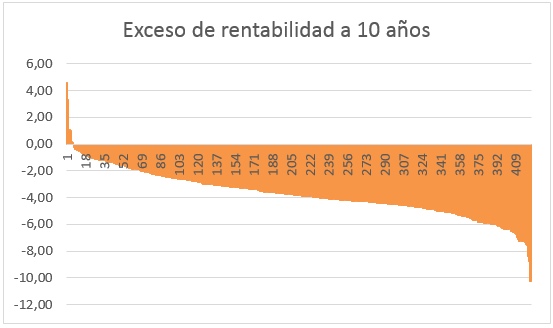
The answer is NO, unless you have the extremely rare ability to choose one of the very few pension plans that outperform their benchmark index over a 10-year period. And even then, 10 years is a very short time when we consider that the investment horizon is usually very long when we’re talking about pensions for old age. But the secondary question we must ask ourselves is: What realistic chances do we have of investing in a pension plan that won’t condemn us to mediocrity? That is when the answer starts to become more uncomfortable if we want to be objective and honest. The fact is that the percentage of investment funds that do not outperform their respective benchmark indices is very low – let’s say between 1% and the 12%, depending on the source, the time frame and the sectors under consideration. But if we look at the performance of pension schemes relative to their benchmark indices, the proportion of funds that justify their fees is even lower.
.
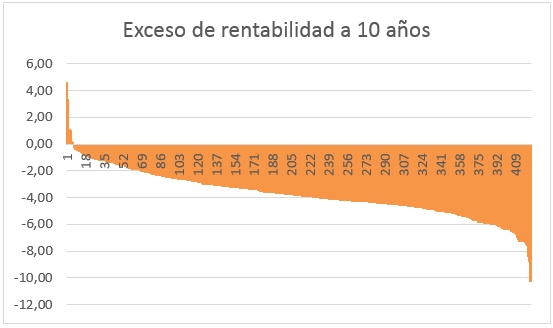
Let’s take a look at the latest charts report produced by Morningstar of pension schemes that outperform their respective three-, five- and ten-year benchmarks. Devastating:
Naturally, the longer the time horizon, the more the Monte Carlo effect—which we’ve already discussed—is minimised a decade ago. Just look: if we focus on a 10-year period – which is by no means unreasonable, especially when we’re talking about pension plans that we’re not supposed to touch until retirement age – the percentage of funds that outperform their benchmark is less than 11%! But the fact is that many people are still more than 20 or 30 years away from retirement, meaning the probability of outperforming the index through a pension plan is approaching zero at a dangerous and alarming rate.
.
What conclusion should we draw from this stark set of figures? Well, if it is already difficult to find a «normal» investment fund within the universe of funds available in Spain that outperforms its benchmark over the long term, finding a pension plan that manages to do so over a 10-year horizon is almost mission impossible for most of us. And how do banks and other salespeople manage to place so many billions into pension plans if they are so mediocre? Well, that’s what the free cookware sets, the smart TVs, the bonus cash deposited into accounts and… the tax breaks are for. Yes, those very tax breaks that many tout as the panacea for saving on tax whilst we prepare for retirement.
.
The fundamental problem is that those who argue that it is more tax-efficient to invest in a pension scheme than in a standard investment fund, despite the hefty tax bill when the moment of truth arrives, fail to take into account that the level of mediocrity in the management of pension plans is substantially higher than that of investment funds in general. Therefore, the main reason to steer clear of pension plans is NOT that we will pay tax on the income tomorrow on the savings we make today through contribution exemptions (we could debate whether or not such a tax break is worth it), but rather that The teams that manage pension schemes perform even worse than the average for standard investment funds sold in Spain.
.
For all these reasons, if an investor is able to find funds whose managers consistently outperform their benchmark over the long term (and such funds do exist; we refer you to this article we published in COBAS (a few months ago), you should never trade in that gem for a pension scheme that is poorly managed, no matter how many tax benefits or freebies its salespeople offer you. Tax breaks and cash or in-kind gifts, however tempting they may be, are nothing more than a short-term fix that condemns us to mediocre returns for the rest of our investment lives. Another issue is how to invest in funds that consistently outperform their indices and belong to that 90% universe of funds that are NOT investable from Spain. But we have already explained this repeatedly in articles such as «The advantages of investing from Luxembourg«.
At last someone is speaking clearly and openly on the subject. And, of course, the information had to come from COBAS AM. Here is a summary of some of the paragraphs we consider most interesting from the article signed by Gema Martín Espinosa, which you will find below in this link to the Cobas blog. A bolg that you should certainly follow closely, and in which we have had the opportunity to publish some articles in which we talked about the differences between passive and active management (yes, now that ETFs are so fashionable).
.
So let's look at the real reasons why many Spanish independent fund managers, all international fund managers and most investors shy away from the Spanish fund format for their investment vehicles:
.
«The essential thing for the investor to know is that when a fund manager offers both Luxembourg law funds and Spanish law funds, it is in fact the same product. In other words, the same management team, the same philosophy, the same investment process and the same portfolio.
.
The differences come from the other actors that a collective investment vehicle must necessarily have. In both cases a custodian bank is necessary, and some investors, faced with political uncertainty or instability in their country, choose to invest in a fund whose assets are deposited in a bank in Luxembourg rather than in a local bank (...)
.
With the European passport, it is true that you can choose to incorporate funds in Ireland, Malta or other EU countries, but over the years the Luxembourg brand has led the biggest flow of funds for cross-border distribution, not only in Europe, but also in Latin America and Asia.»
.
Here it should be noted that Spanish and Luxembourg funds are governed by the same directives, either the well-known UCIT (for plain vanilla vehicles) or the lesser known AIFM (for alternative or professional investor vehicles). The crux of the matter is that investors from outside Spain cannot invest in Spanish funds through omnibus accounts., The use of the new technologies, which are widely used in the rest of the world.
.
«What are omnibus accounts and why are they so relevant?
.
The holder of the omnibus account is the trading entity and not the final customer of the account. It allows the total of customer subscription and redemption orders to be transacted in a single transaction, without the customer's details being known or shared (...).
.
The financial institution issues a global order for each fund manager. Likewise, end customers do not open an account with other fund managers, but can access third-party funds through their marketing entity and from their own account.
.
Since Spanish funds are not marketed through omnibus accounts, the international investor must necessarily open an account with a marketing entity in Spain or with the fund manager itself in order to invest.
.
This operational barrier makes the Spanish fund very unattractive to international and institutional investors outside Spain, which is why several fund managers choose to manage the same fund in Luxembourg in order to give access to foreign clients.
.
These accesses are usually provided by international platforms, the vast majority of which do not contemplate operations with funds under Spanish law because they cannot comply with the requirements of transferring the details of the end investor in the operation. In addition to the platforms, European central depositories and custodians provide direct access to institutional clients by operating directly with the transfer agents or fund managers.
.
The lack of omnibus accounts in Spain also has a negative impact on Spanish fund managers when marketing their funds through other entities in Spain. And this is fundamentally for two reasons.
.
The first, and most powerful, is that the largest Spanish fund managers are part of banking groups with distribution networks (branches) where it would be impossible to think of them offering a competing product.
.
Secondly, even if the barrier of selling competing products were overcome, the fact that the marketing of a Spanish fund would necessarily involve transferring key data on unit-holders to the fund manager would come into play.
.
Although it is the fund manager who would receive this data and would be subject to the strictest confidentiality and non-use of the data, in general the fear of transferring client data tends to block definitively the marketing of Spanish funds by third parties in Spain.
.
For this reason, some Spanish independent fund managers choose to manage only Luxembourg funds, which are then marketed in Spain through third parties and cross-border through marketing agreements with platforms and distributors, thus resembling an international fund manager which, curiously, Spanish distribution networks do not perceive as “competitors”.
.
It is also important to dispel legends and myths. A Spanish fund is no better or worse than its Luxembourg brother.. Both are options that asset managers offer to respond to their clients as a whole, and have nothing to do with tax havens, high net worth or the “glamour” that is sometimes implied by their English names (...)».»
.
The advantages of investing from Luxembourg personal vehicles and banks is clear about doing it from traditional Spanish banks, with or without a sicav, but we have already discussed this at length in the article: «...".«The advantages of investing from Luxembourg«.
.
We hope that this post will finally help to clarify the issue. By the way, to differentiate at a glance between a Spanish fund and a Luxembourg fund, it is enough to look at the first two letters of its ISIN code: ES (Spain), LU (Luxembourg), IE (Ireland), FR (France), HK (Hong Kong), US (United States), etc.
Despite the regulatory efforts under MiFID II, retail investors – that is, ordinary investors trying to protect their savings from the greed of the banking and financial sector – remain condemned to mediocrity in their investments. The new regulations will essentially serve two purposes: Firstly, to make the work of independent financial advisers even more difficult, stifling their growth and thereby benefiting the sector’s major players – namely the banks; and secondly, to shield these major players from potential legal action by long-suffering investors. The only positive aspect of the regulations will be greater transparency regarding the fees charged to clients; however, knowing the banking sector and the regulator’s endemic collusion, where there’s a law, there’s a loophole.
.
The fact is that retail investors – whether dealing with high street banks or even private banks – remain forced to invest their money in investment funds of a lower quality than those available to qualified or institutional investors. This may still come as a surprise to many investors, but the reality is that the universe of fund managers and investment funds is by no means limited to UCITS or AIFMD funds registered in Spain for distribution through financial institutions and platforms. What’s more, the percentage of funds registered with the CNMV – and which are therefore theoretically investable by any retail or private banking investor in Spain – is only approximately 10,000 investment funds, representing 10% of the total of over 100,000 funds existing worldwide. And we say they are «theoretically» investable because, in practice, Spanish financial institutions do not even offer that 10% of funds to their clients; instead, they sell a catalogue of three or four thousand funds at most. Why? Well, obviously because they only sell the funds with which they have commercial agreements in place. Is this going to change with the new regulations and the so-called clean classes? We’ll have to wait and see. But in any case, if part of the banks’ profits comes from management mandates (or other creative means…) rather than from the fees they charge on funds, will only potentially increase the options available to the average Spanish investor up to a maximum of that 10% of funds worldwide that are registered in Spain for distribution. In other words, even in the best-case scenario, investors will still be unable to access approximately 90% of the funds available worldwide.
.
The blame does not lie solely with the financial institutions that limit their product range, as the CNMV is also restrictive when it comes to authorising the products that can be marketed, and above all because it imposes tax penalties on those funds that are not marketed by Spanish banks and have previously passed the Spanish regulatory screening process:
.
Protectionism + Arbitrariness = Harm to investors.
.
And how do qualified or institutional investors gain access to the 100% range of existing funds, whilst deferring capital gains tax in the same way as if they were investing solely in the 10% range of funds registered in Spain? Well, mainly through their own foreign investment vehicles held with international banks. There’s something to suit every taste, but unfortunately not every budget… or almost none. Let’s take a look. For example, there are investors who hold Luxembourg SICAVs or SIFs, whose annual costs are around 100,000 euros, which makes these vehicles unviable unless the investor has at least 8 or 10 million euros. However, there are also investment vehicles such as Luxembourg savings insurance policies, also known as unit-linked policies, whose moderate costs make them perfectly viable options for portfolios as small as 250–300 thousand euros. These are undoubtedly the cheapest vehicles available today that will allow small investors (>€250k) to gain access to the world’s 100% investment funds whilst deferring their tax liability, just as with any fund sold by your local bank. You can read more about them in «The advantages of investing from Luxembourg»
.
Unfortunately, however, the difficulties faced by ordinary investors are not entirely resolved by the creation of a Luxembourg savings insurance scheme. Most of the world’s top investment funds are aimed at qualified and institutional clients, and the minimum investment amounts required by these fund managers are prohibitive for small and medium-sized savers. In many cases, the minimum investment amounts to $500,000, $1,000,000 or even more. And if we take into account reasonable portfolio diversification, in practice we may find that we have an investment vehicle accessible to those with modest assets, such as a unit-linked policy, but within which we cannot invest in the world’s best funds because their minimum investment thresholds are beyond our reach. At this point, non-institutional or non-qualified investors holding a unit-linked policy may choose to invest only in funds that offer retail classes – naturally paying higher fees – or to use the increasingly numerous institutional funds of funds which, in exchange for a fee on top of the fee, provide access to a diversified portfolio of funds with prohibitive minimum investment thresholds starting from as little as 125,000 euros. It goes without saying that these institutional funds of funds do not, either, fall within the 10% category of funds accessible to retail investors without their own investment vehicle.
.
The million-dollar question is whether it is worth paying that ‘fee on a fee’ charged by institutional funds of funds. And the answer is that, naturally, it will depend on the amount of that additional fee and on the quality of the institutional funds held in the portfolio (As we explained in our article on the COBAS blog: Passive management, active management). As with any fund, institutional funds of funds also include some that are poor, some that are mediocre and some that are outstanding.
.
In any case, having a personal investment vehicle such as a Luxembourg-based unit-linked fund, within which we can invest in the vast array of funds available worldwide, whilst transparently deferring taxation, is vital to ensuring that the money of small and medium-sized investors is managed by the best fund managers on the planet, just as they manage the money of the wealthiest and most powerful. Because the list of the world’s top fund managers does not end with Paramés, McLennan, Guzmán, Mobius, Martín, Lanternier, Kirrage, etc. The world is a vast place, and within that 90% of inaccessible funds there is, logically, a very significant proportion of star fund managers who, unfortunately, will never manage the money of Spanish retail and private banking investors.
Here is the newsletter sent out this week by Louis V. Gavel, from the prestigious research team at Gavekal, in which he talks about the effect of ETFs and the shift of the centre of the world from traditionally developed to emerging countries. A translated version of this article is proof of this:
.
«Another clear symptom that the investment world environment has changed is that the underperformance of emerging markets, which prevailed between 2011 and 2016 (when oil fell, the USD rose and yields remained low), is now clearly history. We are now living in a world where bond yields will tend to rise, the USD will tend to fall, and oil prices could show upward pressure. In such a world, exposure to emerging markets is once again rewarding. Indeed, an interesting feature of the recent falls is to see how volatility in US equity markets has actually been much higher than in most emerging markets. Even after this week's fall, Asian markets are significantly outperforming global equities.»
.
It is curious to see how, little by little, the centre of the investment world is shifting from the US and Europe to Asia, and with it, volatility is taking the opposite path. In other words, while development reaches the emerging countries, volatility travels to countries where development is weighed down by over-indebtedness. And the unfortunate thing is that for most advisors and private banking managers, investment proposals towards countries where there is economic and demographic growth with decreasing volatility (emerging countries), are of greater «risk» than traditional European and American funds, where anaemia and volatility take over their growth. The difficulty of finding good emerging funds that can be marketed in Spain, without having a suitable investment vehicle (where any fund, hedge fund or private equity in the world can fit, deferring taxation as if it were any fund sold to you by the bank on the corner) helps portfolios to continue to be filled with the usual funds. But reality is stubborn and the centre of the world is inexorably shifting towards Asia, where there are impressive managers who achieve spectacular alphas.
.
Here is the newsletter of Louis-Vincent Gave The complete, which is virtually unmissable:
In Agatha Christie's Murder on the Orient Express, the victim is stabbed by twelve different individuals.
The same is often true of bull markets; when they die, one finds many a finger-print on the murder weapon.
With that in mind, one could pin the death of the bond bull market on accelerating inflation, or on the globally synchronized global growth surge, or on the lack of investments in new capacity over the past decade (see A Brave New New World, attached), or even on the demographic shift unfolding in the Western World (see The Savings Glut's Long Life and Slow Death), or simply on the realisation that fiscal policies all around the world are bound to stay extraordinarily loose for far too long (see US Budget Deficits, attached)... But whichever reason one wants to hang one's hat on, the bond bear market is likely here to stay. After all, if bonds can't even rally by a few basis points as equity markets meltdown, then we must have a structural bond bear market on our hands.
And at the risk of stating the obvious, this structural bond bear market is now clearly a headwind for equities.
It also marks a profound shift in the investment environment.
In a piece written close to the market top (see A Once in a Generation Shift - attached), we highlighted that OECD bonds had been the perfect counterweight to equity positions for decades. However, it wasn't always so. In periods when inflation picks up, OECD bonds do not protect portfolios against downside risk. Instead, they add to the downside risk. We also showed that one way to know whether we were in an ‘inflationary’ environment or a ‘deflationary’ environment was to look at the relative performance of long dated US Treasuries to Gold as both had asset classes tend to ‘trend’ over long periods of time. And when the ratio ‘gold to bonds’ moves ABOVE its 4 year moving average, that is typically a confirmation that we are moving into an inflationary environment. As the chart below highlights, following this week's rise in yields, such a move has now just occurred:
So if OECD bonds are no longer a sound hedge for equity risk, what is an investor looking to reduce the overall volatility of his portfolio, to do?
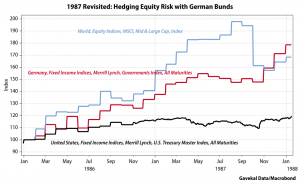
In the 1970s, and again in the 1987 crash, one of the best hedges (aside from gold), were German (and Swiss) bunds. Back then, the DM was slowly but surely establishing itself as Europe's trading and reserve currency; a genuine alternative to a US$ weighed down by too many years of US ‘guns and butter’ policies. Take 1987 as an example: US interest rates rose until they broke the back of the (then) roaring equity bull market. But as equities cracked and the fed slashed rates, investors sought out the safe haven of the inflation-fighting Bundesbank. So much so that, by the end of 1987, for an investor looking back at January 1986, German bunds had actually outperformed not only US Treasuries (that wasn't even close), but global equities as well:
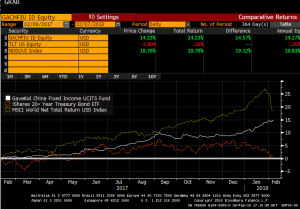
So, as Yogi Berra once said, is it ‘deja-vu all over again’? After all, in the US today, we not only have guns and butter; we should also soon have bridges, and tunnels, and hip replacements and student loan write-offs etc... (see The US Budget Deficits, attached). At the same time, we have China making a concerted push to turn the RMB into Asia's DeutscheMark, a currency that will increasingly fund Asia's trade and Asia's capital spending. And sure enough, just as global equities (World MSCI in the chart below) and US Treasuries (TLT US in the chart below) have started to roll over, Chinese bonds (represented below by the Gavekal China Fixed Income UCITS fun) have held their own. In fact, like German bunds in the fall of 1987, the Gavekal China Fixed Income UCITS fund has returned over 14% in US$ terms which handily beats the flat return of long dated US Treasuries, and could approach the return of global equities should global equities repeat the past week in the near future!
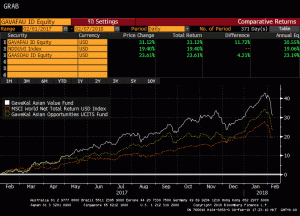
Another clear sign that the investment environment has changed is that the underperformance of emerging markets, which prevailed between 2011 and 2016 (as oil fell, the US$ rose and bond yields stayed low) is now clearly over. We are now living in a world where bond yields will trend higher, the US$ is trending lower, and oil prices could show upside pressures. In such a world, exposure to emerging markets once again becomes rewarding. In fact, one of the interesting feature of the current pullback is how volatility on US equities has actually been much worse than that of most emerging markets. Even after this week's pullback, Asian markets are significantly outperforming global equities. For example, our Asian Value UCITS fund (which focuses on developing Asia) is up +31.12% over the past 12 months, while our Asian Opportunities (which includes Japan, Australia and Asian bonds) is up +23.61% over the past 12 months. This compares favourably to the +19.4% gain in the World MSCI for the past year.
Still, the question at hand is whether we are now confronting a correction? The start of a crash? Or the unfolding of a genuine bear market?
ARGUMENTS FOR A CORRECTION:
We were due: record RSI indicators, record stretch without a 5% correction, first year without a down month etc...
As mentioned above, the investment environment is changing. Deflation should no longer be a concern. Central banks will no longer be as supportive of asset prices. The US$ is done rising. Oil is done adding liquidity to the system. Interest rates are moving higher... Any one of these forces would be a lot for the market to digest. But all together, they may be like Diderot's proverbial apricot, or Monty Python's wafer-thin mint: a little too much to chew on.
However, fundamentally, interest rates remain low, global growth is solid and so investors are likely to keep chasing returns?
“It's not a crash, it's a correction”.”
ARGUMENTS FOR A CRASH
Old card-sharks will always say that “if you sit down at a poker table and after 30 minutes, you have not figured out who the fish is, then you are the fish”.
Of course, in recent years, there have been no fish. Everyone won as all asset prices rose: equities, bonds, corporate bonds, real estate... It was just a question of relative performance with equities doing best of all. Still, as the equity bull market matured, it also evolved. Widening its reach and grasping the savings of an ever wider percentage of the population. So much so that, to a large extent, the bull market of recent years could be described as the ETF bull market. Indeed, according to data from research firm ETFGI, the ETF industry's assets under management (AUM) stood at $4.569 trillion in November 2017, compared to $3.396 trillion at the end of 2016. Assets under management of ETFs have grown by more than a trillion dollars in less than a year. Over 2016, in comparison, ETF assets grew by a relatively paltry $522 billion. Still, over the past two years, more than US$1.5 trillion of assets have flooded into ETFs. To put things in perspective, in 2017, the US mutual fund industry recorded a growth in assets of US$91bn. In short, last year, the growth of AUM in the ETF industry was basically ten times that of the mutual fund industry.
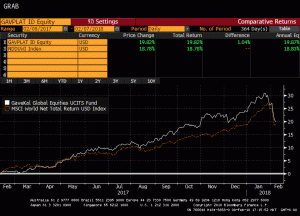
Now I manage money for a living. In fact, I took over the management of the Gavekal Global Equities Strategies almost exactly one year ago... and while the past three weeks have been tough (our overweight energy positioning did us no favors), we are still ahead of the World MSCI for the past 12 months (net of all fees):
The reason I highlight this is that I am sometimes called upon by our sales team to go pitch the fund. And invariably, a question that always comes up amongst smarter investors is “who are your other investors?”. And the reason smart potential investors ask this question is obvious enough: they don't care much for owning a fund with ‘Nervous Nellie’ investors who will panic at the first sign of trouble, hereby forcing the management of the fund (i.e.: my team and I) into liquidating assets at the trough of a cycle, when we should instead be focusing on picking up bargains.
The premise behind the (often-asked) question is that owning assets with a bunch of ‘weak hands’ is not an attractive long-term proposition.
This obvious enough common-sense brings me back to the massive inflows into ETFs that we witnessed in the past two years. Are the ETF inflows “sticky money” that will stay invested through the market's turmoils? Apparently, we witnessed US$30bn in ETF outflows last week (the first outflows in quite a while) and that was enough to create the dislocation we witnessed. What would happen to markets if those outflows reached 10% of the increase of the past two years, or US$150bn? What if the ETF outflows over the coming weeks reached 20%, or US$300bn? Who will take the other side of such large, incremental, marginal, trades?
To be clear: we have no way to know how sticky the ETF money will prove to be; if only because the inflows we have witnessed in the past two years are simply unprecedented. Meanwhile, the past few years have been so steady on financial markets that we have no real data to model how stable the ETF industry's AUM could prove to be in periods of stress. The only thing we know for sure is that the ETF industry is today a much larger beast than it was in 2008. And it is by and large an untested, and unknowable beast. And then, we also know that:
Historically, in periods of market stress, money tends to stay into mutual funds because mutual funds often charge upfront fees (the sunk cost fallacy), or because investors trust the managers they chose more than they trust themselves to navigate the market's choppy waters (the expert fallacy), or because they have done a fair amount of due diligence and thus want to validate their hard work (the sunk cost fallacy, again...) etc... Meanwhile, the whole point of ETFs is that they cost next to nothing to trade, that they do not require large amounts of due diligence, nor a relationship with a manager, etc... Thus, if we assume that the reason some of the ETF investors like ETFs is that they are easy to get into, and just as importantly easy to get out of, then should we not worry that some of the investors who chose ETF for the ‘easy liquidity’ will likely wish to exercise that very ‘easy liquidity’ now that the markets have started to head south?
Aside from higher liquidity, the other main reason investors like ETFs is the (perceived) low fees. And this is where the potential for disappointment could set in because of the difference in how ETFs and mutual funds trade. Let me use my own fund as an example. If tomorrow, an investor (Nellie Nervous), decides that she doesn't like the look of markets and no longer wants exposure to a global equity strategy, Nellie puts in her redemption form (before the agreed cut-off time) for, let's say, US$500k. I am then notified that by closing time tomorrow, US$500k will be leaving the fund. It is then up to me to decide whether I wish to reduce holdings across my 40 names proportionately, sell some of my exposure in US oil producers (in order to reduce the pain from my overweight energy stance), reduce some of my cash buffer etc... But whatever decision I have taken, by the next closing day, the money leaves the fund , Nellie Nervous receives her cash, which she can then deposit in short term UST, bitcoins, modern art, gold bars, etc...
Meanwhile, if Nellie owned US$500k of the QQQ (or SPX, or EWJ etc...), and decided to sell her ETF, what actually happens is that she places her sell-order with a broker, who (through the exchange) then turns to one of the “market-making” firms for that ETF. Assuming that, at this precise time, no-one is coming in to buy Nellie's ETF (hereby allowing for the shares to simply move from one investor's hands into another), then the market-maker (maybe Deutsche Bank, or Credit Suisse, or Morgan Stanley etc....) will give the exchange the price at which the market maker feels comfortable that it can unwind the position in the Nasdaq 100, or S&P 500, or MSCI Japan etc... And as we saw during the flash crash of May 2010, when markets unravel quickly, it can be hard for market-makers to keep up. At such times, the market-makers may well quote prices with greater and great discounts to NAV; which is how, back in May 2010, we saw a number of ETFs lose up to a third of their value, and sometimes more, while their underlying benchmarks were down just a few percent.
That was then. When the ETF market was much smaller, quainter, and less the plaything of the retail investment public than it is today. And so, with retail investors now in a full-on love affair with ETFs, let us imagine that, like a bad first husband coming out of prison, all of a sudden a liquidity squeeze like the 1987 crash or the 1998 LTCM meltdown re-appears. Not the start of a recession (a la 2001), nor a massive banking crisis (a la 2008), for neither looks likely today. But simply a good old fashioned liquidity squeeze, as investors realise that the investment portfolios they have constructed are now inadequate for the world in which we are moving (see A Once in a Generation Shift). With that, less us imagine US$150bn (or 10% of the past two year's rise in AUM) of outflows from ETFs (To be clear: this is pure speculation, for who is to know what the retail investors will decide to do tomorrow? For all we know, he/she may decide that the recent 10% dip is a terrific buying opportunity and buy more ETFs!). If this were to occur, then the questions that will rapidly appear will be:
Will the market-makers have the balance sheets to take on these transactions? If so, then
Will the market-makers have the appetite to take on these transactions? And if so, then
At what cost to the investment public, and profits to themselves (through higher spreads and discounts to NAVs) will the market markers decide to take on these transactions? If History is any indication, most likely a fairly large one. After all, what put the gold in “Goldman Sachs” and the more in “Morgan Stanley” has historically been the ability of investment banks to provide liquidity, at a high cost, to clients in the middle of a crisis. And if so, then
Will the general investment public conclude that both the ‘liquidity’ and ‘low fees’ attributes of ETFs turned out to be “bull market mirages”? And if so then
Will that realisation encourage yet more ETF selling, bringing us back to square one, above? Wash, rinse, repeat...
In other words, was May 6th 2010 the dress-rehearsal for what could soon happen in the ETF world?
Back then, a number of investors found out the hard way that the ETF's low fees hardly made up for the massive discounts to NAV that they suffered in the midst of a panic. With the experience of May 2010 in our rear-view mirror, and with a broader market sell-off now in the front and centre of any investors’ concerns, will investors once again be forced to confront the question of what is the point of saving 0.2% per annum in management fees if, when one wishes to sell in a panic, one ends up selling one's ETF at a 20% or more discount to NAV? Are ETF investors who think they can liquidate in a downturn going to have proven themselves to be “penny wise and pound foolish”? Will they be the fish to the card-shark investment banks?
ARGUMENTS FOR SOMETHING WORSE?
In the Spring of 2008, the global economy was humming along. In fact, for those of us sitting in Asia, it was hard not to feel very enthusiastic about the future: the Asian Crisis was falling off of our ten year rear-view mirror, China was delivering the greatest rise in purchasing power, over the greatest number of people in one generation, ever recorded in the history of Mankind (that's humankind for our Canadian friends). India looked set to join the global economy. Indonesia and Malaysia were developing fast, partly thanks to rising commodity prices, and partly thanks to attractive demographic profile. Even Brazil, of whom it was once said that “it is the next emerging market, and always will be’, was thriving.
Things were good. And then things turned bad very quickly.
Things were bad because the financial regulators, especially in the US but also to some extent in Europe, fell asleep on the job. They allowed banks to expand their leverage from the time-tested 10x, up to 40x and beyond. They rubber-stamped the creation of financial products that made little sense, (such as squared CDOs, PIK loans etc...) except that they allowed yield starved investors to gorge themselves - but without realising the risks they were taking as they did.
Could History repeat itself?
Probably not, if only because banks are nowhere near as levered as they were in 2008.
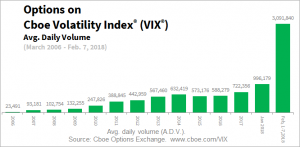
Still, one nagging concern is that, for the past five years, investors of all size and stripes (even small retail investors) came into the market day-in/day-out to sell volatility (daily volume on VIX options has risen from 23k in 2006 to 3m today!). This constant selling of volatility was just another way to ‘reach for yield’. And needless to say, the consequent downward pressure on volatility was very bullish for risk assets.
Projecting ourselves forward however, we can probably assume that the number of investors rushing to sell volatility forward will now be constrained to a smaller group of traders who actually understand what they are doing? Logically, this should mean that volatility should settle back closer to its long term mean of roughly 17%. If so, then that would mean that we would now confront an environment of higher interest rates and higher volatility.… And if we have higher interest rates and higher volatility baked into the cake, doesn't that almost guarantee lower PEs?
Following up on the above idea, we have seen in recent years, especially in the US, a rapid growth in quant funds, CTAs and risk parity strategies (witness the steady rise in SPX options trading). However, a number of these strategies were, in essence, levered longs on bonds and equities simultaneously, on the premise that bonds and equities are negatively correlated. However, as we surmised in our most recently Monthly, what happens if bonds and equities stop being negatively correlated? Well, obviously we now know the answer: the risk-parity, quants and algo traders have to start deleveraging their balance sheets aggressively in a market where the marginal buyer has, all of a sudden, disappeared. And the reason the marginal buyer has disappeared is that in recent years’ (as the picture below makes clear), the marginal buyer has started to look very different from the marginal buyer of past bull markets:
Which brings us back to the “yield-chasers” mentioned above. In my careers, every bear market has started with the ‘yield-chasing’ investors getting burnt. It is almost as if “the bear” enters a room and decides ‘First, I will eat the yield chasers. They are the easy preys. Then, if I am still hungry, I will eat the momentum guys. And if I am still hungry after that, I will have the value investors for desert’.
The fact that the yield chasers just got destroyed doesn't mean that, de facto, the momentum and value guys are next. Maybe the bear has had its fill, and goes back to sleep (after all, it is hibernating season)? But still, when the yield chasers get eaten, we momentum and value guys have to realise that we are potentially next on the menu...
And all this brings me to perhaps the single most important reason to be cautious given recent developments: namely the fact that this is now the second crisis in a decade where US regulators have shown themselves to the world to be completely hapless.
After all, if the current sell-off really is the direct consequence in the implosion in the XIV.US, and other such products, then the first question we should ask ourselves is why these products even existed in the first place? I mean, what economic interest was served by allowing retail investors to pile their hard-earned cash into a product that, through its very conception, had an extremely high probability of being worth zero at least once, if not twice, a decade?
Are we back to where we were ten years ago, when all of a sudden, we all had to figure out what a CDO-squared was and how they could implode the global financial system?
It is it just that, this time around, it's just a different bunch of letter but the core principle stays the same: let's create products that allow the average punter to reach for extra yield, even at the cost of getting blown up once a decade! The ultimate “eat like a bird and sh.t like a cow” trade?
Honestly: why would US regulators even allow things like 3x levered Brazil ETFs, or worse yet, inverted VIX ETFs who, by design, are destined to go to zero in a time of market stress? What economic benefit is there to have such products offered to the general public? Or more appropriately, what point is there to have a financial regulator is the regulator allows for things like a reverse VIX ETF, or futures on Bitcoins?
Unfortunately however, if the past is any indication, regulators will respond to this latest market hic-cup by telling money managers how they can pay for research, or by clamping down further on offshore tax havens, or by dictating firm's compensation policies... More regulations, of things that had nothing to do with the crisis in the first place! Thus, if the end result of all this is more lawsuits (one can bet one's bottom dollar that a number of the investors wiped out in the Volageddon will not take their losses lying down), more regulations, higher interest rates and higher volatility... then it is hard to walk away from the past week with a strong “risk on” mentality?
Or at the very least, a strong “buy the dip” mentality. For there are still risks that offer attractive returns across a number of equity markets around the world. It may however, be very different markets, and different segments of the markets, from those who have done so well for investors over the past five years.
As always, please do not hesitate to reach out if you have any comments or questions.
Yours truly,
Louis-Vincent Gave
PS: PLEASE NOTE THAT THE ABOVE REPRESENTS MY PERSONAL VIEWS AND IS IN NO WAY AN OFFER TO BUY/SELL ANY SECURITIES.
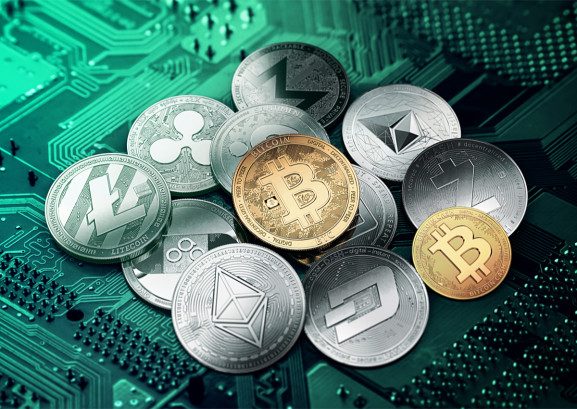
After the rally and subsequent fall in the price of cryptocurrencies in the last 2 or 3 months, at Cluster Family Office we have received several potential clients who have generated very considerable sudden fortunes thanks to holding and/or trading all kinds of tokens: Bitcoin (BTC), Bitcoin Cash (BCH), Litecoin (LTC), Ether (ETH), Ripple (XRP), Cardano (ADA), NEO, Dash and many others that most of us mortals did not even know about. And most of them started from a modest financial situation, so they are facing totally new situations for themselves and their families.
.
The needs faced by these new millionaires are delicate, since the way to declare these enormous realised and potential profits to the tax authorities is still confusing even for Montoro himself. The fact is that the scarce information generated by most foreign online platforms through which transactions are carried out, together with the large number of operations and cryptocurrency crosses included in each movement, make the figures that must be presented to the Treasury a maze of spreadsheets that are difficult to defend against the voracity of a future requirement or inspection. In addition, it should be borne in mind that the holding of currency accounts (not cryptocurrencies, for the moment...) exceeding 50,000 euros must be included in the famous form 720.
.
Thank goodness that the profile of most of the cryptocurrencies« nouveau riche come from the tech world, and our tax professionals get this profile of Clients to provide them with this puzzle of necessary information quite thoroughly and diligently. However, there are many crypto-millionaires out there who are being much more careless and chaotic when it comes to compiling their trading trail. And their carelessness will cause them to incur serious tax problems in the near future, i.e. less than 4 years, before the statute of limitations expires in the tax year where they concentrate a large part of the crypto »buck".
.
But it is not just taxation they face that is difficult to defend. The million-dollar question these new cryptocurrency millionaires must ask themselves is, obviously, what to do with their fortune and how it will inevitably change their lives. Most of them want to keep a portion of their tokens or cryptocurrencies invested in anticipation of new highs and thus higher profits, but they have already made sales worth millions with which they must make decisions they have never had to face before. Not only that, but they are beginning to experience the harassment that banks, real estate companies and other predators are subjecting them to as soon as they smell fresh blood.
.
Our recommendation is similar to that of any profile of sudden fortune (tech entrepreneur who sells his company, lucky prize winners, etc.). lottery or chance, athletes elite or artists, heirs, etc.), i.e. they should postpone hasty decisions and design and implement, together with professionals, a balanced and tax-efficient distribution of their wealth. To this end, we propose a final picture of what their personal fortune should look like in a couple of years' time. For their part, they express their preferences in terms of the goals or dreams that they will now be able to realise. And they will do so with the help of a team that, above all, we are there to prevent them from making mistakes that they would regret in the future, costing them money and displeasure. The world is full of examples of sudden fortunes that have shattered the lives and happiness of their protagonists - and their descendants. And the envy-stricken circles of these crypto-millionaires may be eager to see how they squander their fortunes, and thus not feel so bad about not having been able to participate in the technological boom.
.
Some of the new millionaires may wonder when is the right time to sell Bitcoins or whatever crypto. The question is unfortunately not an easy one to answer as it will depend on the degree of greed, the volume achieved and the previous and present family and asset situation. But a good starting point to find that answer would be to «set aside» and conveniently diversify enough money to ensure a comfortable life for their families for the rest of their lives through sound financial and real estate income. Thereafter, any substantial increase or loss of cryptocurrencies still held in their wallets or purses will be seen in a different light.
.
There is no fortune more ephemeral and problematic than sudden fortune without proper advice. And as an anonymous sage once said:
«We don't learn to be sons until we are parents. We don't learn to be parents until we are grandparents. It seems that we don't learn to live until life is gone... So, obviously, we don't learn to be wealthy until we have lost most of our money.»
After more than a decade of monetary stimulus and financial repression where the tide of central banks around the world has flooded global debt with liquidity and demand, the music is beginning to stop playing. It is the chronicle of a death foretold but still astonishingly incredulous.
.
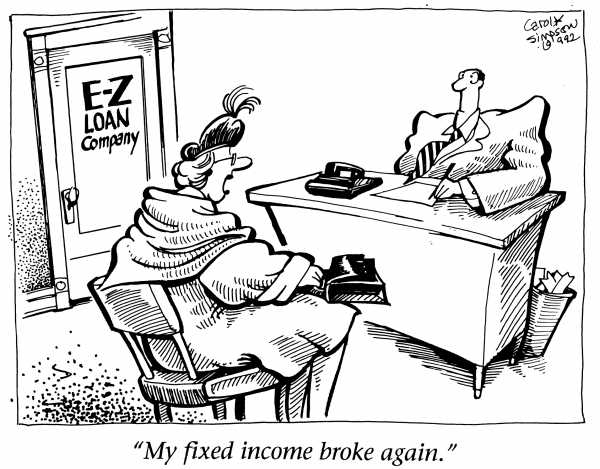
But despite the end of the road to QE, the vast majority of more conservative investors continue to complain about the poor performance of their fixed income portfolios, oblivious to the risk they have been taking for years and also to the scenario their assets will face in the new era of normalisation of rates and stimulus.
.
Paul Read, The co-manager of the Invesco Pan European High Income bond fund, Invesco Pan European High Income, warns in a surprisingly clear way, as his salary depends on investors continuing to trust the bonds he buys. «There is too much complacency in the bond market. Prices are rising steadily and yields are reaching ever lower lows. On the basis of clearly worsening yields, the euro high yield (or junk bond) market is currently yielding less than 2%. Circumstances are making it very difficult for us.»
.
And the most curious thing is that despite the fact that the shepherds themselves - at least the more honest ones - warn their sheep that the wolf is coming, the flock continues to demand that the shepherd offer them juicy pastures in which to continue frolicking, as they have done for as long as they have had the use of (no) reason. As Read rightly says, with the European QE tap being turned off: «...the European QE tap will be turned off.«Things become even more complicated considering how expensive fixed income markets are. With yields so low, the risk is much higher (...) Although neither bonds nor equities currently offer investors the best entry point, at current rates, equities have a very easy time beating bonds, both in terms of both appreciation and dividends.»
.
Indeed, the real disaster looming over conservative portfolios is not just that returns are low but that losses are beginning to take hold of assets that their owners, whether better or worse advised, bought precisely to avoid swings and negative returns. Because the fixed income funds that even today are still nonchalantly yielding precious points are doing so on the back of a wind of demand, trading and favourable interest rates whose days are numbered.
.
However, rates are not in a position to go up happily either, even in the US. dovish than was to be expected from his latest move at the helm of the Fed. Nor does it seem that economic growth is going to be the one that will pull the developed world out of the debt hole into which it has got itself - we have got ourselves - in exchange for postponing the hunger of insolvency and having hard bread for today.
.
In the following graphics from the presentation by Jeffrey Gundlach of DoubleLine Capital (via Gurusblog), you can see how the FED has already stopped increasing its balance sheet, the BoJ has softened its growth and the ECB has announced its brake for 2018.
If the forecasts come true, 2019 will not only see the end of money printing but also the beginning of the shrinking of central banks' balance sheets. And most of the developed world's fixed income portfolios are not prepared for that without suffering massive losses from write-downs, insolvencies and potential illiquidity. The relationship between the rise and fall of central bank asset purchases and their direct correlation with bond and equity prices can be clearly seen in the chart below. Imagine now this correlation with a closing of the taps that have watered with huge flows, the likes of which have never been seen before in all of history.
The million-dollar question is: Are there assets that are de-correlated from the end of the QE party and therefore «guarantee» positive returns in this tidal wave pullback scenario? The answer is yes. Unfortunately, however, these are alternative management strategies that are difficult to access for Spanish retail investors, who are condemned to buy the fish, fixed or variable, sold by Spanish banks. The reasons why it is so difficult to access good alternative multi-strategy funds from Spain, in addition to the lack of interest of Spanish banks in offering third-party products that do not share juicy commissions with their main trading platforms, are also regulatory. The liquidity of these multi-strategy funds is not usually daily or weekly, but monthly or even quarterly, which prevents them from being funds that qualify under the UCITS directive, which seems to be the only one that the CNMV considers suitable for Spanish retail investors. This, together with the fact that the transposition in Spain of the AIFMD (Alternative Investment Fund Managers Directive) is still conspicuous by its absence, condemns the poorly advised investor to an obsolete and reckless portfolio distribution based essentially on fixed income and equities.
.
Alternative management handles a wide range of investment strategies, from bonds linked to meteorological catastrophes, buying and selling mortgages, life insurance, etc., etc. And the right combination of these strategies ensures that the non-stock part of the portfolios gain a few points of return while remaining completely unaffected by the falls that stocks and bonds may suffer in the coming years.
.
But it is not enough to open an account abroad for an international bank to agree to buy good alternative funds from us and accept their relative illiquidity. It should be borne in mind that most multi-strategy alternative funds are designed for institutional investors and require minimum investment amounts prohibitive for retail investors, with figures of €500,000, €1,000,000 or even more. In addition, Spanish taxation penalises funds not marketed in Spain (purely for the protection of the sector and not the investor), while those registered with the CNMV are rewarded through the deferral of capital gains and the transferability that every investor would like to see. Here it is worth remembering the need to have a personal investment vehicle such as the Luxembourg, The investment is suitable for investors starting from as little as 250,000 or 300,000 euros, thanks to which we obtain the deferral and transferability of any fund in the world, whether or not it is alternative or not, and whether or not it is registered in Spain for marketing.
.
All this means that in many cases, even within the Luxembourg vehicle itself, we have to resort to funds of funds of alternative management, which in exchange for their corresponding commission fee allow us access to a diversified portfolio of strategies, truly decorrelated from the financial markets, with amounts of 125,000 euros. A real treasure in these current and future times.
Although we have been writing about it for many years now, it may be worth updating for those who do not know about it, some of the advantages of having our investment portfolios deposited in banks in Luxembourg. For most, the most obvious advantage would be to be able to hold the money while avoiding country risk or the risk of insolvency of Spanish banks, with Luxembourg being the EU Wall Street par excellence, once London ceases to be so due to Brexit. However, there is a much more powerful reason to manage most of our financial wealth from Luxembourg. And that reason is access to any investment fund, private equity, real estate fund, etc. in the world, even if it is not registered for marketing in Spain.
.
This freedom of access is no trifle when one realises that only 10% of the existing funds worldwide have this registration with the CNMV in order to be marketed in Spain. Therefore, investors who do not have adequate advice will never be able to access a 90% of funds, which logically include some of the best managed funds in the world. Furthermore, no bank in Spain, not even to its private banking clients, offers just that 10% registered with the CNMV in its entirety, as the sales catalogues are usually limited to 2, 3 or 5 thousand funds, with the excuse that they belong to different trading platforms, etc. Therefore, the opportunity cost of magnificent investment options that the local investor cannot access is enormous. In fact, this condemnation of mediocre investment is one of the main reasons for the the causes of brick abuse in Spain, although we have already discussed it extensively in other articles.
.
The question many of you will ask is why most funds are not registered in Spain for marketing, or at least why the star funds managed by some of the world's leading managers do not do so. There are several reasons: among them are funds that do not consider marketing in Spain because it is expensive for the small volume they would achieve in our country. We must not forget that marketing in Spain, through the network of financial institutions and platforms that operate here, in many cases involves a cut of more than 50% of the commissions charged by the fund manager. In fact, some fund managers, such as Carmignac, decided at the time to create an ad hoc class in their funds for marketing in Spain, with higher fees than those applied to the rest of their classes, in order to satisfy the voracity of local financial institutions. At Carmignac, these classes were shamefully labelled with the «E» for Spain.
.
However, the marketers' bites are not the only reason that many international fund managers have for not registering their funds for sale in Spain. Another important reason is that the only doors that registration in Spain would open for them is to access Spanish retail clients, since larger or institutional clients can access funds that are not registered in Spain without great difficulty. Investors with a few million and who are well advised already have their own investment vehicles in banks abroad that allow them to access all types of funds beyond the CNMV's list of marketable funds. In other words, fund managers not registered in Spain do not need to register or pay any bribes to attract these Spanish millionaires.
.
There are also other reasons for some managers to disdain the Spanish retail investor market, such as specialisation in institutional clients or geographical remoteness. It is common that some managers from China, Thailand, India, etc., whose investors are essentially Asian, Middle Eastern or North American, do not prioritise attracting Spanish retail clients at all. And they usually focus on marketing in Europe through the British or German market, either for retail or institutional investors, but with higher volumes and lower bites than in Spain.
.
The consequence of all this is that the Spanish retail investor is condemned to a very limited portfolio of funds that have previously agreed to pay juicy commissions to the financial institutions that market them in Spain. And for these investors who do not have tens of millions, the fact of being able to invest much more modest amounts from Luxembourg, with exclusive personal vehicles that open the doors to any fund in the world, means the difference between mediocrity and brilliance of investments in terms of quality and results.
.
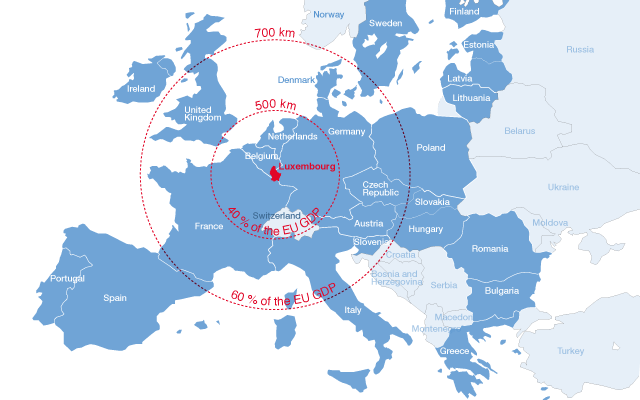
Luxembourg, as a good «EU friendly» financial centre, has various types of investment vehicles that adapt to the needs of each size and type of investor. But for the smaller investor, who is the most disadvantaged by the restricted range of funds to which he has access in Spain, there is a a personal and exclusive Luxembourg vehicle from which you can invest your portfolio with complete flexibility,from as little as 250,000 euros. Obviously not all retail investors have a minimum of 250,000 euros, but it is a huge step for the average investor to be able to put their investments on a par with those of any institutional investor with 10 or 20 million from as little as 1/4 million. And these vehicles not only allow access to any fund in the world, but also to any fund in the world. also allow for the deferral of capital gains generated within these vehicles indefinitely., The tax is only levied on the proportional part of the capital gain when it is decided to redeem part or all of the investment. In other words, once we have this minimum of 250,000 euros in our own investment vehicle, we will be able to buy and sell any fund, share or whatever we want, without paying tax on the capital gains until we need to withdraw all or part of our money. Taxation is exactly the same as when we buy any fund registered in Spain that is sold to us by the bank on the corner, but without the need to jump from one transferable fund to another within the limited list of funds registered with the CNMV, but with total and absolute freedom in the world universe of UCITS, non-UCITS, AIFMD, Private Equity, Real Estate Funds, shares and other financial products. This is why we chose a Luxembourg vehicle, totally «friendly» with the taxation and transparency of EU countries.
.
These vehicles are logically deposited in banks in Luxembourg, although as mere depositaries, it matters little that they are more solvent than Spanish banks, since we will only use them for the safekeeping of the vehicles and the portfolios with the fund units or shares that we are going to buy and sell in them.
.
As for costs, we have been able to fine-tune them over the years due to the growing volume of clients. And currently the total cost of a Luxembourg unit-linked vehicle for a small investor (minimum 250,000 eur) can be around 0,6-0,7%annual, The volume of vehicles in the market is significantly reduced as the volume increases. Furthermore, in certain circumstances, these vehicles also avoid the payment of Wealth Tax, which in some Autonomous Communities does not have a rebate.
.
Obviously, as Luxembourg is the financial centre of choice for the EU - replacing the City of London - any capital to be invested in such vehicles must have a justified origin, be fully declared and transparent, as Luxembourg's tax haven connotation is now completely behind us and definitively buried by the EU's own imperative.
.
In short, in 250,000 can access vehicles that cost less than 0.6-0.7%, that efficiently defer Capital Gains, that can save Wealth Tax, that allow access to investing in the best investment fund managers on the planet rather than just 10% of them, and with the banking and legal security of a world-class financial centre in the heart of the Eurozone. That is nothing, in these times of uncertainty, insolvency and disguised risks.
.
For those who see the remoteness of having their money in Europe as a handicap, I would like to remind you that, in addition to being able to manage it conveniently, swiftly and closely through Spanish advisors and professionals, having a Luxembourg investment vehicle is not exclusive. In other words, most investors combine a (more or less majority) part of their assets in Luxembourg with a part held in banks in Spain, as a temporarily invested treasury, which will be consumed or used over the coming quarters, semesters or even years.
We have been made aware of phishing and spoofing attempts involving fraudulent email addresses and domains that closely resemble our official company communications. These unauthorized communications are not sent by our company and may falsely impersonate our employees or representatives.
Our company is not responsible for communications, requests, or transactions originating from fraudulent or unauthorized email addresses or domains. Please verify that all communications originate from our official email domain before responding or sharing any information.
If you receive a suspicious email claiming to be from our company, please do not respond, click any links, or provide any information. Contact us directly using the contact information published on this website to verify its authenticity.









 Luxembourg, as a good «EU friendly» financial centre, has various types of investment vehicles that adapt to the needs of each size and type of investor. But for the smaller investor, who is the most disadvantaged by the restricted range of funds to which he has access in Spain, there is a a personal and exclusive Luxembourg vehicle from which you can invest your portfolio with complete flexibility, from as little as 250,000 euros. Obviously not all retail investors have a minimum of 250,000 euros, but it is a huge step for the average investor to be able to put their investments on a par with those of any institutional investor with 10 or 20 million from as little as 1/4 million. And these vehicles not only allow access to any fund in the world, but also to any fund in the world. also allow for the deferral of capital gains generated within these vehicles indefinitely., The tax is only levied on the proportional part of the capital gain when it is decided to redeem part or all of the investment. In other words, once we have this minimum of 250,000 euros in our own investment vehicle, we will be able to buy and sell any fund, share or whatever we want, without paying tax on the capital gains until we need to withdraw all or part of our money. Taxation is exactly the same as when we buy any fund registered in Spain that is sold to us by the bank on the corner, but without the need to jump from one transferable fund to another within the limited list of funds registered with the CNMV, but with total and absolute freedom in the world universe of UCITS, non-UCITS, AIFMD, Private Equity, Real Estate Funds, shares and other financial products. This is why we chose a Luxembourg vehicle, totally «friendly» with the taxation and transparency of EU countries.