
We look after your interests

(+34) 93 626 47 75

Torres Sarrià, Carrer de Can Ràbia, 3-5, 4ª Planta BCN 08017

(+34) 91 794 19 82

Pº de la Castellana, 93 2nd floor MADRID 28046

Category: Finance

The Roaring Twenties and the Great Depression, a century later.

Financial analyst and writer John Mauldin has christened the beginning of 2020 as the decade in which we will live dangerously. In this article we will translate and comment on the arguments and analyses published by this author under the same title. Readers will be able to see the coincidence in some aspects with respect to what we have been saying in the past. publishing on this blog for more than 4 years.

.

Hyman Minsky taught us that stability, perhaps because of the abuse we tend to make of it, sooner or later leads to instability. But that abuse is as unconscious as it is harmful, and we humans like to dabble in concepts like «reasonable», «manageable», «conservative» or «prudent». That's why we feel safe seeking more and more performance until we go too far to avoid disaster.

.

To think that somehow central banks are capable of eliminating recessions and risk is crazy, despite the fact that most investors fall into this trap time and again. Yes, it is true that, as we have said many times before, with infinite liquidity no one is insolvent and therefore their debt is virtually devoid of default risk. But at some point gravity will do its work again and the insolvent will collapse as God -or the elementary fundamentals of economics- commands.

.

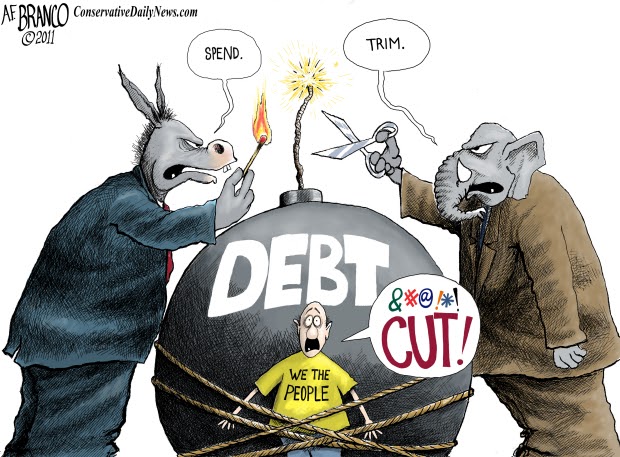
Debt seems harmless at first. And with sufficient cash flow, capital repayments are not a problem, let alone ridiculous interest rates. Besides, debt will be used wisely and profitably to increase growth, won't it? Well, it won't, because human nature always leads us to denaturalise goodness, and lenders will insist ad nauseam that we get into debt far beyond what is necessary for economic growth, and we start getting into debt simply to consume today what we should be consuming tomorrow. So the goodness of indebtedness is corrupted along the way.

.

Personal debt, though often excessive, is not the most serious problem. Corporate and public debt are the main challenge for which Mauldin predicts a dangerous decade ahead. And let us not forget that all this public and corporate debt ends up as personal debt, since most of us are after all taxpayers, shareholders or both.

.

The calm on the markets, however, may last a few more years (2020, 2021, 2022, 2023...). But beneath the surface of the central banks' cheerful free bar, the pressure is increasing every year. Slowly, almost imperceptibly, but at some point it will explode.

Ben Hunt, a personal friend of Mauldin's, has developed the concept of the «The Long Now«. Something like an endless today that swallows up the income of the future. Or as Hunt defines it: «Everything we bring to the present of our future and that of our children».». The Long Now is the realisation of the stark reality of Fiat money or fiat money, without anchorage to any tangible and finite value. In other words, trust in an abused and uncontrolled system is what makes us choose bread for today. And that system is the one that tells us that inflation is virtually zero, that wealth inequality, low productivity and negative savings rates are just a circumstantial fact of life. We are also told that we must vote for ridiculous candidates to be a good and politically moderate citizen, that we must buy ridiculous funds and stocks to be a good investor, or that we must take ridiculously unpayable loans to be a good parent or child.

.

Debt is future consumption brought into the present. But to pay that money back we or our heirs will have to consume less in the future, unless our economy grows sufficiently. And that is the problem, that today's debt is not being used to gain growth but we live in a world where the economy is driven by consumption. Furthermore, Ben Hunt observes that society tends to procrastinate in solving problems. We tend, with surprising skill, to postpone the inevitable (rather than avoid it indefinitely). And when it comes to over-indebtedness, it is also a three-way game, as neither debtors, creditors nor regulators are in the mood to end the game. It is in the interest of none of them to recognise that the debt is a dead letter and unpayable and to write off the losses on their balance sheets. The traumatic consequences of recognising insolvency and the resulting bankruptcies.

.

A game of Monopoly would never end if the bank refinances the debts of the players infinitely.. The million-dollar question is, as a spectator of this distorted game of Monopoly, to which player should we lend our money in exchange for reasonable returns? To the players who owe astronomical amounts to the banks, but who nevertheless continue to play and play? Or to the few players who owe nothing and are meritoriously sustaining themselves in the game by their own means? An infinite game would make no sense at all and would call into question the very market system we have known since the beginning of civilisations. Therefore, at some point not necessarily far away, the game will end and there will have to be losers. Many of them.

.

That said, Mauldin predicts that we will be comfortable and relatively safe along the way. That at any given moment, analysts will look at the data and think we have avoided the worst. We will have some passing recessions and some financial crises, but they will seem «manageable» when we get into them. And we will indeed come out of them. But what we will not see is the magnitude of the expansion that the system will need to continue to finance our debt, which will continue to grow and grow throughout this Long Now. So the debt burden will become heavier, and there will come a time when it will be unsustainable even for this trust-based system of infinite money.. Then the fan will blow more than just air in everyone's face.

.

Mauldin defined the inevitable process in 3 phases: An initial seemingly manageable instability, perhaps initially caused by high yield debt, but easily contagious to other parts of the system that are also unstable. Secondly, a drying up of liquidity that will force banks to reduce lending, thereby reducing the capital available to productive businesses and thus reducing economic growth, leading to recession. This second episode may be recurrent, with drying up of funding and intermittent renewed flows based on emergency measures by central banks, but increasingly unmanageable. And finally, a third phase of global political instability, where artificial intelligence - among other factors - will make a lot of intermediate jobs redundant. The shrinking voter will vote for governments that promise to maintain a welfare state that provides for his or her needs and comfort as in past decades, and those governments will of course raise taxes (remember that infinite liquidity dried up in phase two) to the point of economic suffocation, deepening the recession. Mauldin does not expect to see the start of this process until the second half of the new 20s.

.

Perhaps the whim of fate is leading us into another decade of the Roaring Twenties like 100 years ago. But a new Great Depression will hardly be mitigated by central banks with depleted ammunition.
Institutional funds and hedge funds, the league in which retail investors cannot play.

Unfortunately, ordinary investors are almost completely unaware of the world of institutional funds. We are referring to retail investors, of course, but also to those who have several million and are looked after by the most luxurious private banking departments in Spain. Both are condemned to invest in a universe of national and international funds that are authorised for marketing in Spain, which leaves out practically no less than 90% of existing funds worldwide, as we have already explained in articles such as «The Spanish fund of funds", "The Spanish fund of funds" and "The Spanish fund of funds".«Investment Funds: There are still classes«We recommend you to read it.

.

As we have explained on other occasions, the most economical and viable solution for small and medium-sized investors is to have a own Luxembourgish vehicle. But even so, it will be very difficult for investors who do not have several million euros at their disposal to play in the Champions League of funds: Institutional funds and hedge funds. How do they differ from other international funds? Well, they do not have classes suitable for smaller investors, which makes these funds a select club to which only well-informed investors with enough millions to exceed the minimum investment in these funds and to have a properly diversified portfolio have access.

.

The minimum investment in these funds ranges from USD 500,000 to USD 1, 5, 10 or even USD 25,000,000. Not to be confused with traditional funds that have, in addition to retail classes, institutional classes, as these would not be considered truly institutional, but rather retail funds with commission rebates for the volume contributed. Truly institutional funds are those that do NOT have accessible classes with amounts that are affordable for ordinary investors. Some of you may be wondering why a fund manager would want to skip a retail class, thus disregarding the inflow of money from small investors. The answer is very simple: they are usually successful funds that sooner or later will end up closing their doors, even to institutional clients, because they have already reached the limit of assets under management that allows the correct execution of their different investment strategies. These successful funds and hedge funds have no need at all for the «traffic» of small amounts in and out of their portfolios constantly, simply because they already make enough money with their large and loyal investors. The question that should be asked is the reverse, why does a fund need to create retail classes and accept inflows and outflows of small amounts, which consume time and resources and are a real administrative headache for the fund managers. Obviously the answer is that they would not earn enough from their institutional or large investors alone, which leads to the conclusion that they are not successful enough in meeting the return expectations of their investors.

.

There are, of course, honourable exceptions of excellent funds whose managers do not give up retail investors as a matter of principle. And despite their proven success over decades, they continue to accept small inflows and outflows. But it is undeniable that many other extremely successful funds do not show such deference and decide to do without retail investors. It is in this Champions League of institutional funds and hedge funds that access to small and medium-sized investors is unfortunately denied to them as a matter of size.

.

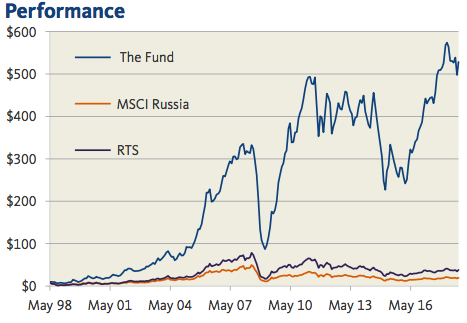
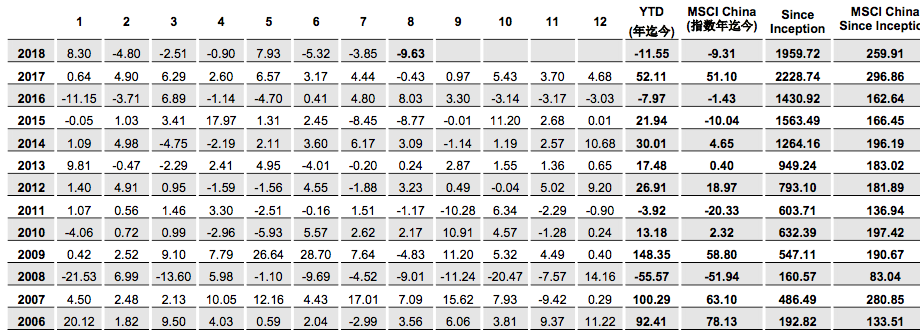
Fortunately, there are funds of funds that «slice and dice» these investment minimums required by institutional funds in exchange for a fee on top of the original fee. In other words, the small investor can invest in these funds of funds, which in turn invest in institutional funds with prohibitive minimums, with tickets as low as 125,000, which is the minimum regulatory amount to be considered a qualified or well-informed investor. Not in all, but in some cases the potential of the underlying funds is such that it is more than worth paying the double commission toll. Or is it not worth being able to invest from as little as 125,000 euros in such inaccessible funds as the heirs to the famous Medallion, Bridgewater or emerging funds with such spectacular alphas as the ones we see in the images published in this article?


Which is preferable, a Spanish or a Luxembourg Investment Fund?

At last someone is speaking clearly and openly on the subject. And, of course, the information had to come from COBAS AM. Here is a summary of some of the paragraphs we consider most interesting from the article signed by Gema Martín Espinosa, which you will find below in this link to the Cobas blog. A bolg that you should certainly follow closely, and in which we have had the opportunity to publish some articles in which we talked about the differences between passive and active management (yes, now that ETFs are so fashionable).

.

So let's look at the real reasons why many Spanish independent fund managers, all international fund managers and most investors shy away from the Spanish fund format for their investment vehicles:

.

«The essential thing for the investor to know is that when a fund manager offers both Luxembourg law funds and Spanish law funds, it is in fact the same product. In other words, the same management team, the same philosophy, the same investment process and the same portfolio.

.

The differences come from the other actors that a collective investment vehicle must necessarily have. In both cases a custodian bank is necessary, and some investors, faced with political uncertainty or instability in their country, choose to invest in a fund whose assets are deposited in a bank in Luxembourg rather than in a local bank (...)

.

With the European passport, it is true that you can choose to incorporate funds in Ireland, Malta or other EU countries, but over the years the Luxembourg brand has led the biggest flow of funds for cross-border distribution, not only in Europe, but also in Latin America and Asia.»

.

Here it should be noted that Spanish and Luxembourg funds are governed by the same directives, either the well-known UCIT (for plain vanilla vehicles) or the lesser known AIFM (for alternative or professional investor vehicles). The crux of the matter is that investors from outside Spain cannot invest in Spanish funds through omnibus accounts., The use of the new technologies, which are widely used in the rest of the world.

.

«What are omnibus accounts and why are they so relevant?

.

The holder of the omnibus account is the trading entity and not the final customer of the account. It allows the total of customer subscription and redemption orders to be transacted in a single transaction, without the customer's details being known or shared (...).

.

The financial institution issues a global order for each fund manager. Likewise, end customers do not open an account with other fund managers, but can access third-party funds through their marketing entity and from their own account.

.

Since Spanish funds are not marketed through omnibus accounts, the international investor must necessarily open an account with a marketing entity in Spain or with the fund manager itself in order to invest.

.

This operational barrier makes the Spanish fund very unattractive to international and institutional investors outside Spain, which is why several fund managers choose to manage the same fund in Luxembourg in order to give access to foreign clients.

.

These accesses are usually provided by international platforms, the vast majority of which do not contemplate operations with funds under Spanish law because they cannot comply with the requirements of transferring the details of the end investor in the operation. In addition to the platforms, European central depositories and custodians provide direct access to institutional clients by operating directly with the transfer agents or fund managers.

.

The lack of omnibus accounts in Spain also has a negative impact on Spanish fund managers when marketing their funds through other entities in Spain. And this is fundamentally for two reasons.

.

The first, and most powerful, is that the largest Spanish fund managers are part of banking groups with distribution networks (branches) where it would be impossible to think of them offering a competing product.

.

Secondly, even if the barrier of selling competing products were overcome, the fact that the marketing of a Spanish fund would necessarily involve transferring key data on unit-holders to the fund manager would come into play.

.

Although it is the fund manager who would receive this data and would be subject to the strictest confidentiality and non-use of the data, in general the fear of transferring client data tends to block definitively the marketing of Spanish funds by third parties in Spain.

.

For this reason, some Spanish independent fund managers choose to manage only Luxembourg funds, which are then marketed in Spain through third parties and cross-border through marketing agreements with platforms and distributors, thus resembling an international fund manager which, curiously, Spanish distribution networks do not perceive as “competitors”.

.

It is also important to dispel legends and myths. A Spanish fund is no better or worse than its Luxembourg brother.. Both are options that asset managers offer to respond to their clients as a whole, and have nothing to do with tax havens, high net worth or the “glamour” that is sometimes implied by their English names (...)».»

.

The advantages of investing from Luxembourg personal vehicles and banks is clear about doing it from traditional Spanish banks, with or without a sicav, but we have already discussed this at length in the article: «...".«The advantages of investing from Luxembourg«.

.

We hope that this post will finally help to clarify the issue. By the way, to differentiate at a glance between a Spanish fund and a Luxembourg fund, it is enough to look at the first two letters of its ISIN code: ES (Spain), LU (Luxembourg), IE (Ireland), FR (France), HK (Hong Kong), US (United States), etc.

The beginning of the end of the debt bubble... and its consequences.

It seems that Trump's victory, coinciding in time with the start of rate hikes by the US Federal Reserve, has - at last - given the starting signal for the bursting of the debt bubble we have experienced over the last decade - and this is paradoxical, given that Trump has always been the king of debt with his real estate and business empire - However, this bursting is only visible where the economy seems to be emerging from the hole of deflation and anaemic growth, namely in the US.What happens is that when the Treasury sneezes, long-term debt in Europe and Japan gets pneumonia. And that, the unwary fixed income investors of the last few years should have been well aware of.

.

So we are already seeing how portfolios of pure fixed income (bonds) that had been promised so happily with the infinite debt rally served up on a plate by the central banks, are beginning to incur losses that surprise their long-suffering and poorly advised owners. The losses they are going to suffer are and will be directly proportional to the greed for yield they have sought, since the vast majority of advisors have preferred to increase maturities rather than reduce the rating of issuers. In other words, in order to obtain a meagre 2% yield, they have preferred to buy long-term bonds from issuers with investment grade ratings rather than to look at shorter-term issuers that are more solvent but less well regarded by the rating agencies (yes, they have been able to buy bonds with a higher rating than those with a lower rating), those same prostitutes who, obeying the voices of their political-financial masters, led us to collapse in 2007).

.

The consequence of buying debt durations at such an exorbitant price, now that the bubble is starting to lose air, is none other than the devaluation in the price of that debt. This buying frenzy has reached such an extreme that the holder of Belgian government bonds with a maturity of 100 years (yes, yes, a century) is today losing a whopping -30%! And this with a black-leg (AA) rating and only a sneeze from the US Treasury Bond, as the US 10-year bond is still only at 2.5% interest, and therefore still has a long way to go before it normalises at levels of 4-5%. A death trap if ever there was one, where the poor deceived investor will not live long enough to recover this blow to his wealth. It should also be remembered that we are talking about fixed income (sic), i.e. investments that are invested in this type of asset because their owners do not want/cannot/should not suffer huge losses without putting their physical and mental well-being at risk. Moreover, this death trap has become gigantic in the last 10 years, since it has doubled to 45 trillion (45 Tr) dollars! You can read this article of Gurusblog in which they talk about this disaster announced by few.

.

No one can say that we have not been warning about fixed income risk in recent years. Warnings to which many other advisors in the sector are now beginning to add their voices. SocGen: «The decade-long party in the debt markets is over (...) Prepare for a serious hangover». S&P: «Trump's unanticipated rise has let some of the air out of the bond market bubble». Bank of America Merrill Lynch: «It's a «stampede» out of bond funds», etc, etc... Needless to say that the fall in bond prices will force many to sell their portfolios, exacerbating the falls, which are no longer bleeding thanks to Draghi and company continuing to maintain a demand that is as astronomical as it is unrealistic.

.

Expectations of an economic revival in the US brought about by President-elect Donald Trump's idiosyncrasies are fuelling and accelerating economic growth and inflation expectations. For example wages have clearly rebounded in the US labour market. For all these reasons, the fall in debt prices around the world, dragged down by the price of the Treasury, seems to have only just begun. And the worrying thing about this new scenario is how far the seams of hyper-indebted countries with public deficits (i.e. with growing debt) such as Italy, Spain, Portugal, Greece... will hold up before winter arrives...

.

Against this backdrop, the trillion-dollar question is where to find income when the bond market bursts its bubble? There are some, but certainly far from the traditional fixed income fund circuit, as they have to be sought through alternative strategies that neither commercial nor private banks usually have in their sales catalogues. And of course, no one should confuse dividend stocks with fixed income, as let us not forget that stocks listed in developed markets are not cheap enough to take on such risk.

.

But let no one get depressed, for it would be a far worse scenario for everyone if the debt bubble burst were to be aborted. For that would signal the failure of the economic recovery and the now desperate pumping of central banks to postpone an inevitable collapse. In other words, we should pray that the debt bubble bursts to reasonable levels even if it brings significant losses to poor, ill-advised savers/investors.

.

Oh, by the way, Merry Christmas!

Shall we help you search?

Cluster Family Office

We care about transparency both in management and in our own way of working. Leading wealth management and family offices company

Do you need help in capital and wealth management?

How can I avoid the negative effects that my fortune may have on my children?

How and when should I talk to my children about family wealth, and what relationship should they have with money throughout their adolescence?

How can I measure the real risks of my investments and protect my assets adequately?

Do I have sufficient liquidity and stable income to cover my needs on a permanent basis?