
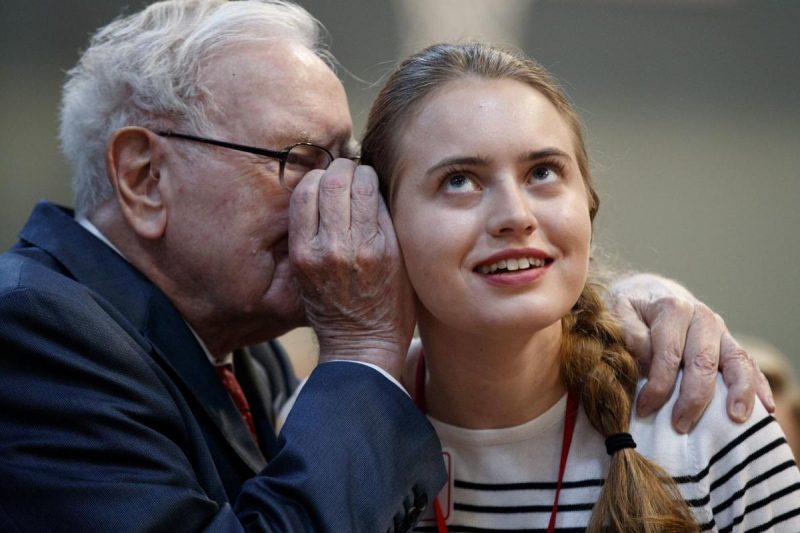
After the Chapter 1: Indebtedness, here is the second instalment of the insights, quotes and conclusions from the genius Warren Buffett, taken from the many Letters to Shareholders which Berkshire Hathaway has published over the decades, including lectures, university symposia, interviews in various media outlets, personal essays and comments made before the Commission of Inquiry into the Financial Crisis.
.
In this Chapter 2, we will examine Buffett’s view of the concept of investment and the way in which each person approaches this practice, which plays such a decisive role in life:
.
Investing wisely is not linked to a high IQ. With average intelligence, you can invest very successfully. All it takes is the discipline to control the irrational impulses that ruin even the most brilliant investors. To avoid such impulses, it’s a good idea to think long and hard about your investments. And the best way to do that is to sit alone in a room and think. If that doesn’t work, believe me, nothing else will.
.
When I was a teenager, I spent eight years analysing charts to make money on the stock market (as a chartist). Then someone told me that none of that was necessary, that all you needed to do was buy something below its intrinsic value. Having first-hand experience of chart analysis gives you a firmer footing when you finally move away from it to focus on fundamental value in your investments.
.
Contrary to what many people think, investing with a small amount of money actually improves your prospects of a return. With little money and few opportunities to invest it, we tend to make much better choices. However, most people attribute their failures to a lack of millions rather than to their own poor decisions (From our perspective as Multi-Family Office We can assure you that this is absolutely true: the greater the assets of a new client who comes to us, the more inefficient the management of those assets tends to be, paradoxically).
.
I want to own assets that generate income. It seems obvious, but it’s astonishing how many people agree with this statement and yet invest their money in non-income-generating assets, hoping that someone will pay more for them in the future – and that is the very essence of speculation.
.
Speculation is neither immoral, nor illegal, nor does it make you fat, nor is it a sin. But it is something completely different from investing in something that will generate income for you over time. From the moment I buy something – be it a farm or any other business – I stop worrying about its market price and focus on what it produces each year, and whether that output is satisfactory or not in relation to what I’ve paid for it.
.
I don’t think that even if the Chair of the Fed were to whisper in my ear the decisions he was going to make in the future, it would change my view of the businesses I’ve acquired. I’m simply going to hold on to them for many years, as long as those businesses remain viable. If you really understand business, you probably shouldn’t have more than six. If you can identify six good businesses, you don’t need any further diversification, because the chances of more than one or two going wrong are really low if you know them well and analyse them properly. If, on the other hand, you invest in a seventh and an eighth, rather than putting more money into your first and second, you’ll be making a mistake. Hardly anyone has become rich thanks to their seventh-best idea.
.
The level of concentration should be directly proportional to your knowledge of the assets in which you invest. Conversely, for the general public – who have neither an interest in nor the time to analyse businesses, and are therefore unfamiliar with them – diversification is the key to their success. The same can be said of investors in investment funds. If they do not devote themselves to analysing and selecting active investment funds – or hire someone to do so on their behalf – this will enable them to select a handful of funds that manage to outperform the markets, the best thing they can do is invest in passive investment funds, which will at least ensure they do no worse than the market. It is true that Berkshire Hathaway’s stock selection has delivered superior returns, but investing in US companies as a whole (through passive funds or ETFs) has not, to date, been a bad investment, and that is something anyone can do if they have enough patience.
.
Patience is another key factor for investors. In fact, the market is a system that redistributes money from the impatient to the patient. And it is the obsession with the price of things, rather than their value, that leads to that fatal impatience. I try to buy a dollar for 60 cents. And if I see a chance of getting it, I don’t mind how long I have to wait. But if I see something attractive today, I won’t let the opportunity pass me by in the hope that something even more attractive might turn up later on.
.
If you’re driving along a road and see a bridge with a maximum weight limit of 4,000, don’t try to cross it with a lorry weighing 3,950. Take a different road and cross a bridge that can support 7,000. That’s the same safety margin you should maintain when making an investment. You shouldn’t buy a business worth 100 for 95, but rather look for one worth 100 that you can buy for 60.
.
You might be interested in the article published on the COBAS blog: «Active management, passive management«