
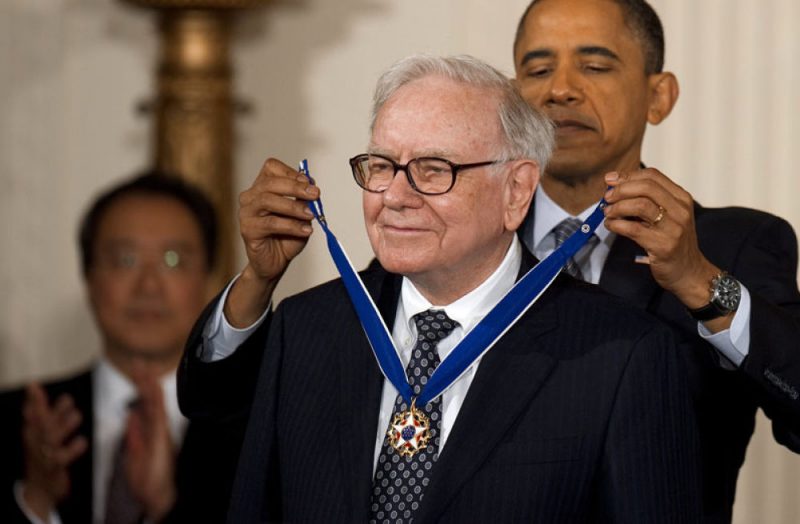
Buffett has been, and will remain, one of the geniuses of the investment world for generations to come. He is a figure who, like other luminaries such as Einstein, Gandhi and Adam Smith, leaves an intellectual legacy that helps those keen to draw on his knowledge to progress and evolve. It is therefore well worth dedicating a few articles to recalling some of his most interesting quotes and reflections that he has shared publicly throughout his long life. The arguments, quotes and conclusions we will include in this series of articles are drawn from the many Letters to Shareholders which Berkshire Hathaway has published over the decades, including lectures, university symposia, interviews in various media outlets, personal essays and comments made before the Commission of Inquiry into the Financial Crisis.
.
In this Chapter 1, we will explore some ideas relating to debt that any investor will find fascinating:
.
Essentially, there are two types of debt: public debt, or government debt, and private debt, or debt held by the general public (we will focus on private debt, as it is common knowledge that public debt is often used in a harmful and abusive manner to the extent that such colossal levels of debt (such as those currently seen in developed countries). Within private debt, it is also essential to distinguish between two types: consumer debt and investment/savings debt.
.
.
However (or even with it), the advice on how to avoid getting into serious debt is crystal clear: if you’re smart, you don’t need credit, and if you’re not, you shouldn’t use it. Debt is the only way to ruin an intelligent person. If you’re debt-free, you avoid getting into trouble when things don’t go as planned – which is what happens most of the time.
.
Buying a company by taking on a large amount of debt, or assuming a large amount of existing debt in that company, it usually gives a negative result. It’s like driving with a dagger on the steering wheel, pointing at your heart. You’d better be an excellent driver and be extremely cautious; that will spare you many accidents, but when you do have one, it will be fatal. That is the perverse effect of debt, which offsets the many benefits it can bring if everything goes surprisingly well. It’s like alcohol: one drink is satisfying, but ten drinks bring plenty of problems and can easily ruin your life.
.
Moreover, getting into debt is addictive. When things go well, you think you’re the cleverest in the class, and your friends, neighbours and those around you seem to confirm this with their admiration and applause. When that happens, our human nature prevents us from stopping and getting off the train. The same thing happens when Mr Market keeps rising and rising without stopping; greedy investors see only their own commendable ability to make money on the stock market. It doesn’t matter what the companies they’re buying are worth; all that matters are the profits they rake in day after day. Until something goes wrong. At that moment, the steering wheel’s blade pierces, swiftly and irrevocably, the heart of the euphoric, debt-ridden driver.