
 «What would happen if credit rating agencies ceased to exist? It is a question that few of us ask ourselves today, but one that leads to some fascinating reflections.»That’s how it began" the article que publicamos hace más de 2 años. Lamentablemente hoy es un debate que ocupa las portadas de los medios por motivos muy tristes, ya que se cuestiona el rol de las calificadoras única y exclusivamente porque han rebajado masivamente los ratings europeos. Esta misma reacción (la de la opinión pública e institucional) ya ocurrió con el downgrade del rating de Portugal, aunque en menor medida. Manda huevos que las corruptas e incompetentes calificadoras sean las más lúcidas en este mundo de locos endeudados. Os dejamos releer aquel breve artículo del 16 de Diciembre de 2009, parece que fue ayer, y después haremos varias reflexiones al respecto, algunas de las cuales ya comentamos en la segunda parte del artículo el pasado verano. Reflexiones que lamentablemente son tan vigentes como hace 4 años.
«Firstly, it must be said that if credit rating agencies had not existed, it would have been far more difficult to abuse the issuance of all kinds of debt securities on a global scale. And that is something that would have largely prevented the widespread proliferation of toxic assets that have infected the entire financial system, as well as the pockets of countless investors and «investor-addicts’ (it’s interesting to re-read the article ‘Financos and Inversópatas: An explosive mix»written two and a half years ago – now more than four – just before the financial collapse began).
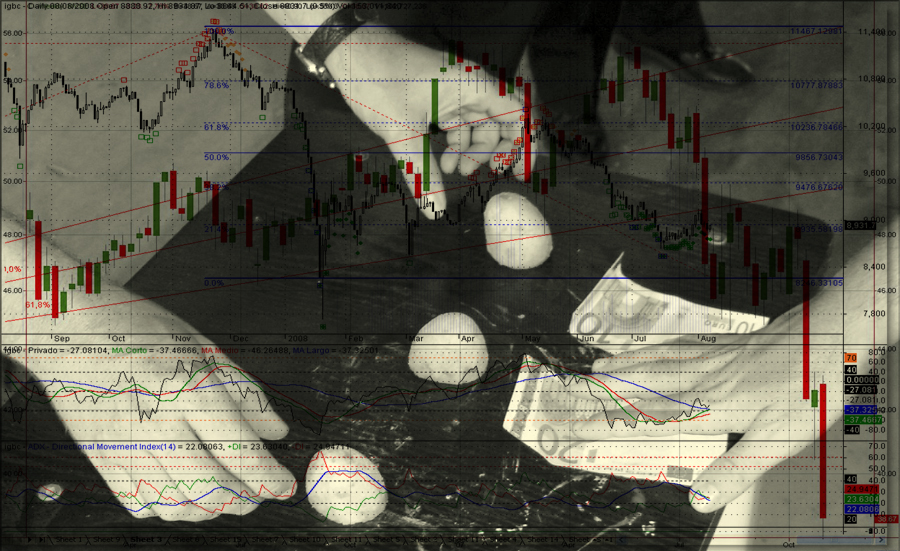
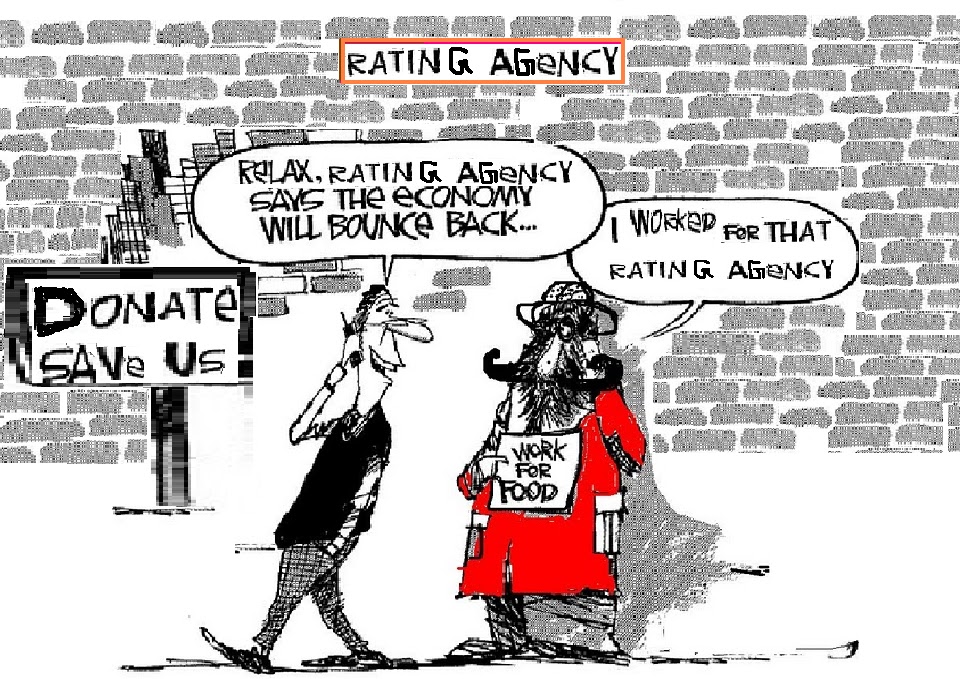 De rabiosa y lamentable actualidad este artículo escrito a finales de 2009, desde luego. Hoy el debate sobre la inconveniencia de las calificaciones crediticias está sobre la mesa debido al escozor que la Eurozona siente con el downgrade de diversos países europeos. Nada más. Desgraciadamente no se está cuestionando la conveniencia de tener o no unas empresas privadas que nos cuantifiquen algo tan complejo y subjetivo como el riesgo, no. Tan sólo se plantea crear otra calificadora, esta vez europea o no norteamericana, que sea más benévola con la crítica situación de quiebra periférica europea. Se reclama políticamente desde Europa la creación de más calificaciones tan fraudulentas, corruptas y prostituídas como las americanas, pero esta vez de un color que nos favorezca. Se esgrimen razonamientos nacionalistas, de estabilidad financiera, de falta de diversificación, de estabilización del Sistema, etc. Pero en ningún caso, lamentablemente, se cuestiona la validez ni la existencia de las calificadoras como tal.
Let us remember that, at present, credit rating agencies are not registered as such, nor even as auditors. Their ratings, que sirven de guía ciega y demente para todo el Sistema financiero global, legally speaking, they are nothing more than journalistic opinions. In other words, they carry no greater legal weight than any opinion expressed by an ordinary columnist. Consequently, their legal liability for such incompetent and/or corrupt characterisations as those endured over the past four years is nil. The absurdity is so profound that the foundations of the system are laid in a carefree and reckless manner merely «journalistic opinions» from a legal point of view, which have been shown to be complete con artists since the sub-prime crisis. And I am certainly not one to advocate elevating credit ratings to the status of universal laws – which is how they are perceived and treated by the majority of the global financial system – no, I would not even elevate them to the level of mere audits. The path we must follow is quite a different one.
 Does it really seem logical to us that something as complex as risk quantification could be reduced, across the board, to a simplistic and rudimentary code of A, B or C? Risk measurement in the financial world is, and must be, an extremely complex art. And yet the rating agencies, in a display of sophistication, merely add to the basic A, B and C ratings other secondary ones such as a, b and c, or numbers like 1, 2 or 3, and other such symbols that do nothing more than refine the aberration of mediocrity. It is madness that this code, derived from «journalistic opinions», should govern the concept and the art of measuring risk across the system as a whole. And the worst thing is that we don’t realise what a surreal world we live in.
The question one must ask is, as the ‘universal Portuguese’ would say (and I’m not referring to Durao Barroso), ‘why?’. How is it possible that the System with a capital ‘S’ relies on risk ratings that seek to reduce the complexity of life itself, of risk, and of predicting nothing less than future events to a handful of letters and numbers? The answer is that it is cheaper and infinitely more convenient to have others with prestige measure the risk for us. It saves on analysis costs (a priori), simplifies the work and, most importantly if that’s possible, disclaims liability. And we must all acknowledge that these three arguments I have just mentioned are far too tempting for the majority of humankind, particularly in the financial world, which includes advisers, fund managers, investors, and so on. And if something then goes wrong, Blame it on the boogie! Because human beings, by nature, always tend (barring a few honourable exceptions who end up shining far brighter than the rest) to absolve themselves of all responsibility, blaming others for their misfortunes. For this reason, and also because of their malleability (the noun form of the verb to tamper with…) of the credit rating agencies: these have been elevated to the status of saints by governments and powerful figures, with the approval of the rest of us mere mortals involved in the financial system, including investors and savers.
Hace muchos años que los ratings dejaron de tener sentido en nuestros análisis en Cluster Family Office. Es cierto que nadamos a contracorriente y que a menudo chocamos contra limitaciones y coeficientes que están basados en esas opiniones periodísticas elevadas a categoría de dogmas de fe por todas las entidades financieras. Es una lucha desesperante y permanente contra muros de mediocridad. Pero como dijo Warren Buffett, cuando se retira la marea es cuando se ve quien nadaba desnudo. Y la marea se comenzó a retirar ya en el verano de 2007. Es más, It is possible that, in this ‘New Normal’, we will no longer have tides lo suficientemente importantes como para que cubran nuestras vergüenzas.
Many seem to prefer to take the blue pill y reclamar la creación de una agencia europea -éramos pocos y parió la abuela- que califique a martillazos aquello que nos convenga. Y quizá así sus alucinaciones les hagan creer que, como venía sucediendo en el Old Normal, la marea sube y les cubre sus miserias. Quizá cuando les llegue el agua al cuello se den cuenta de que debieron tomar la píldora roja, y que jamás debieron permitir que otros cuantificasen el riesgo asumido por ellos, a nivel personal y lo que es aún peor, para Clientes.
Finally, I leave you with the advertising slogan of Standard & Poors, which is not to be missed, pay attention to the words in bold:
 “Standard & Poor’s is the world’s foremost provider of independent credit ratings, indices, risk evaluation, investment research and data. We supply investors with the independent benchmarks they need to feel more confident about their investment and financial decisions.”
Standard & Poor's.
Al final va a ser que tenemos lo que merecemos.