 Today we’re bringing you a real gem in the form of an interview. It is none other than the one given by the best fund manager of the first decade of the 21st century, Bruce Berkowitz, to the prestigious financial journalist Consuelo Mack just seven days ago. It is fascinating to read Berkowitz’s arguments and convictions today, right in the midst of the financial storm, when his flagship fund, Fairholme, has lost almost a third of its value since the start of the year. A slump that many see as a sign of his decline as a fund manager, but which some view as a huge opportunity. His interviewer, Mack, is regarded by *Money Magazine* as «the best money TV host», and her programmes attract a huge audience. Enjoy Berkowitz’s reflections whilst the financial world crumbles around us (we’ll be posting the full Spanish translation shortly): (more…)

 Yes, but no. This seems to be the direction the EU is taking with its existential doubts. An uncertain course with the pretence of treading water, buying time, hoping that the Eurozone will still be able to breathe, when the sun wants to rise over a horizon that today is still black, very black.
 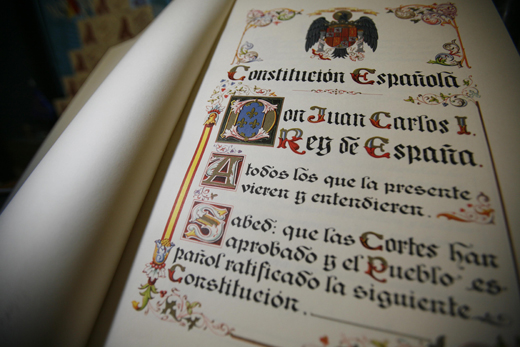 Much is being written about the constitutional reform that is supposedly intended to limit Spain’s public deficit in the coming years. We are all seeing daily statements denouncing that we have been sold out to the markets, that the Constitution has been amended under cover of darkness and with malicious intent, that it is unacceptable for the welfare state to be subordinated to the dictates of the markets, and so on. I would like to draw particular attention to the article published on 1 September in
  Just a few days ago, we received an email via our website from a private banking employee who shared some heartening and sincere reflections with us. In it, he explains his experiences and concerns, which have led him to share our view of the world of financial advice provided by banks. Naturally, he has asked us to protect his identity to spare him any professional difficulties. Our sincerest congratulations to this honest and far-sighted professional, and we wish him all the best in his financial and personal career. Here is his letter in full:
  On 7 August we published the first part of this article «The future of the European Union".«
 It appeared a few days ago
  Haven’t you ever wondered why sovereign debt in the European periphery is under greater strain and why its risk premium is rising faster than that of countries that are just as indebted – or even more so – such as Japan or the US? Why is there so much speculation surrounding the sovereign debt of the PIIGS? Why are these PIIGS economies hurtling towards default or inevitable restructuring, whilst other heavily indebted countries manage to keep the risk premium demanded by the markets at bay?
 In mid-2010, some well-known Spanish banks were sending us investment proposals in Greek sovereign debt. The reports and analyses we kept receiving insistently said that it was foolish not to take advantage of the yield differential between the bonds of Eurozone countries. They argued vehemently that we should not forget that, after all, this was an EU country, and that the Greeks would never be allowed to default, not even if their bonds depreciated by much more than they did at the time, with yields still hovering around 6%. In other words, little more than the yield on Spanish debt today. The arguments put forward were reasonable and reasoned, except for one small detail: They forgot that two and two are four.