We look after your interests

(+34) 93 626 47 75

Torres Sarrià, Carrer de Can Ràbia, 3-5, 4ª Planta BCN 08017

(+34) 91 794 19 82

Pº de la Castellana, 93 2nd floor MADRID 28046

Category: Economia y finanzas

Fixed Income 2.0

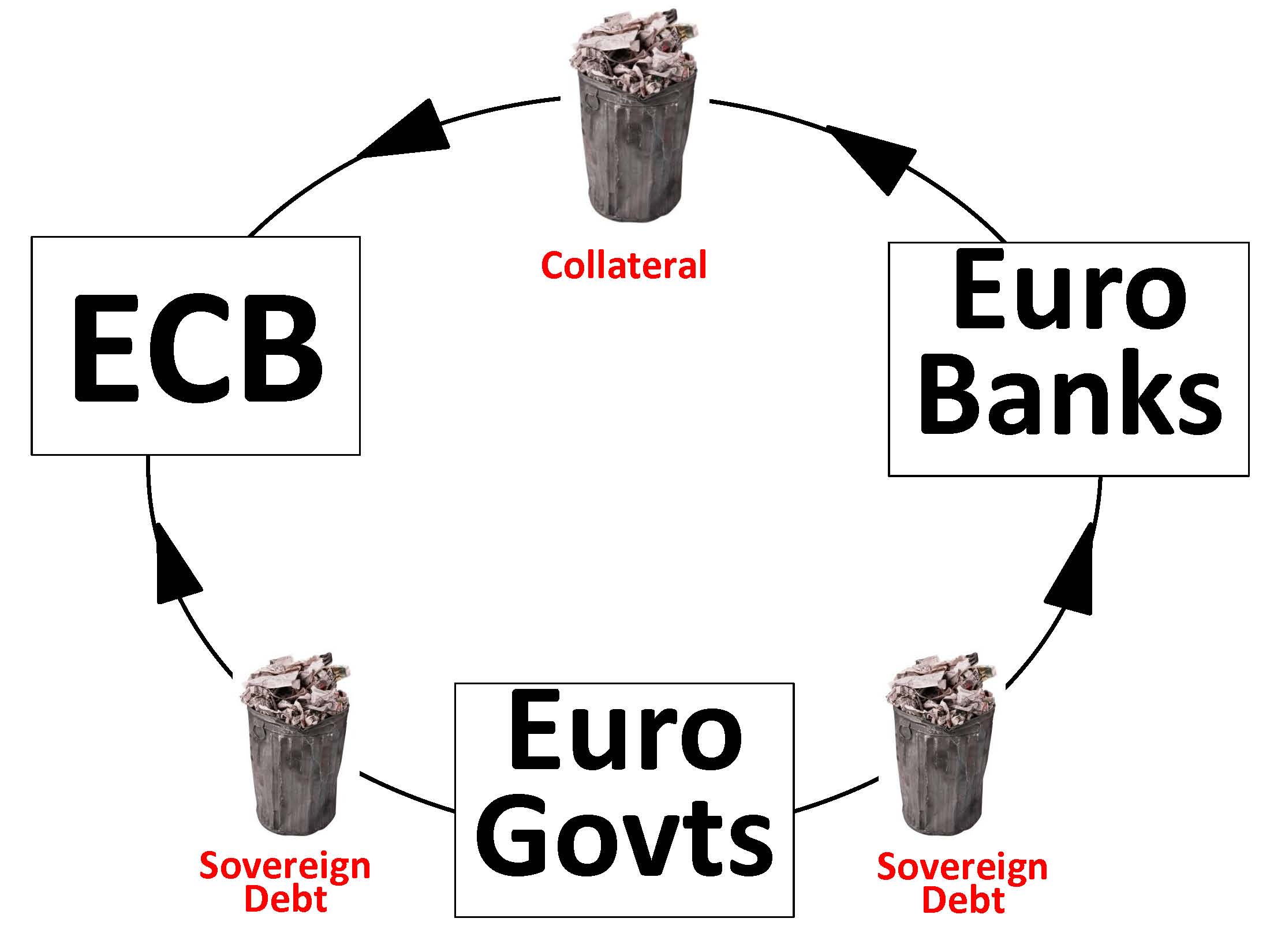
La renta fija tradicional, en forma de bonos emitidos por Estados y empresas, está pasando por momentos muy complicados. El abuso de endeudamiento por parte de los países desarrollados -y cada vez más también los emergentes-, junto con la fabricación de dinero por parte de los bancos centrales a niveles jamás vistos, hace que la renta fija sea cada vez menos fiable en general. Si fabricamos dinero de la nada sin anclarlo a nada, la deuda se convierte en meros dígitos cuya solvencia queda cada vez más en entredicho, ya que los ingresos y la capacidad de generar flujos de dinero para devolverla quedan cada vez más ridículos respecto a la cantidad debida. Y eso ocurre tanto a las empresas como a los Estados de los llamados países desarollados.

Si además añadimos a ello una política sostenida durante años de tipos de interés a prácticamente cero, y unas facilidades de recompra de activos por parte de bancos centrales demenciales, tenemos como resultado que la deuda más solvente (sic) como la alemana o la estadounidense está en tipos negativos. Y como consecuencia, el resto de deuda de países paradójicamente hiperendeudados, también goza de unas primas de riesgo mínimas, es decir que pagan extraordinariamente poco por recibir dinero prestado. (more…)

Accounting traps to inflate GDP.

Accounting creativity« is nothing more than a euphemism for falsehood, for cheating in accounting so that it reflects a distorted reality, to suit the interests of those in power. And today those in power are an EU that at all costs needs to simulate solvency and growth in the countries of its periphery, so that investors do not flee those economies. If they did, there would not be enough money - or will - in northern Europe to avoid bankruptcy and the collapse of Eurozone unity.

It seems, therefore, that it is in nobody's interest that the reality of the economic miseries of the PIGS (Portugal, Italy, Greece and Spain... and some others such as France...) becomes evident and scares away national and international investors. That is why the ECB keeps the risk premium at floor level through all kinds of quantitative and pseudo-covert facilities to banks and states. It is also in charge of keeping alive the profits of banks that have their warehouses full of rotting real estate on the basis of free liquidity bars. And European and Spanish regulators look the other way when financial institutions value these properties above their market price on their balance sheets to avoid obvious bankruptcy. Anything goes to feign stability, for the good of all (sic). Accounting engineering or creativity« is also being used in Spain. when it comes to handling unemployment and other macro figures, on the demand of electoral needs and balancing with the impositions overseen by the Troika. (more…)

Analysis of the turkey the day before Christmas.

The turkey paradox is the story in which one of these animals is fattened and cared for throughout its life by its owner, with the intention of eating it on Christmas Day. The paradox comes from the turkey's own subjective view of events, who is pampered, fed and cared for excellently throughout its existence. And nothing makes him think - if turkeys could think - on Christmas Eve that this magnificent owner is going to cut his throat and eat him the next day, after a lifetime of attention from the best friend. I say friend, the best father! Many of you are already familiar with this turkey paradox, but it will be interesting to think about the options for analysing the turkey's situation if we use it as a metaphor that can be extrapolated to any investor, with Christmas Day being the metaphor equivalent to the fall in share prices in the investor's portfolio. (more…)

Bienvenido Mr. Putin.

De la caída del muro de Berlín y de la extinción del telón de acero todos nos deberíamos acordar, puesto que hace apenas un cuarto de siglo de aquellos hechos que cambiaron por completo las influencias geopolíticas. Los países del Este se escindieron de la influencia soviética sin que Rusia pudiese hacer nada para evitarlo, porque su economía comunista se derrumbó como un castillo de naipes. El vacío de poder fue enorme, surrealista en la hasta entonces segunda potencia mundial. Y la órbita de países que estaban bajo su influencia política y económica, fueron recibidos con los brazos abiertos por el libre Mercado occidental, a pesar de su retraso económico evidente. El nuevo orden mundial tenía al fin vendedores y vencidos, y los vencedores eran «los buenos» y el derrotado el «comunismo diabólico». (more…)

When bets pay better than investments... (temporarily)

Every day we see examples of exultant bettors who think they are seasoned investors, just because their bets have been winning for a few months, even a few years. They confuse investment criteria with the criterion of the winning bet. And they believe that making money in the short term on the stock market or in government bonds is synonymous with being a good investor. I regret to tell them that nothing could be further from the truth.

The fall will be hard, very hard. With permanent losses, meaning that they will not be able to recover until decades from now, when inflation has eaten away the lost value and therefore they will settle for a false recovery. But there are the bettors, buying Spanish bonds more expensive than the very same Norwegian bonds (you can see a quick and illustrative comparison of the fundamentals in this Gurusblog article); American stock markets trading at more than 20 times earnings, or the brand new holders of subordinated debt or mortgage bonds of pseudo-rescued banks on the brink of disaster. It seems that for these gamblers anything goes as long as the result is positive. It doesn't matter that they are buying assets at prices that only the aberrant manipulation of central banks can generate. It doesn't matter how far their price is from the real intrinsic value of the asset, be it profits and annual business growth in the case of the stock market, or the macroeconomic fundamentals of the state in the case of sovereign bonds. All for the sake of the winning bet. (more…)

Losing as an investor what you have gained as an entrepreneur.

Being successful as an entrepreneur does not mean that you are also skilled at investing the money generated in the company. Neither in the management of surplus cash within the company itself, nor in the management of money already extracted outside the company. In fact, from our knowledge of many entrepreneurial families, we can assure you that usually the most brilliant entrepreneurs are terrible investors. (more…)

Peripheral bubble: The perfect storm.

Philippe Legrain is the author of several books, such as «Open World: The truth about globalisation«He has also been and is a very influential person in EU economic policy. Not for nothing has he been a senior advisor and head of the analyst team of the Bureau of European Policy Advisers for the President of the European Commission José Manuel Durao Barroso. And as such, has led the team that has directly advised the EU's strategic economic policy.

Well, from his privileged perspective, Legrain has recently published an article in the Financial Times entitled «.«Investors are ignoring eurozone risks«This is in line with our opinion, which we have reiterated in several articles about the mirage of bonanza that the markets are quoting with respect to the European peripheral economies: «...the European Union's peripheral economies are in a state of crisis.«Mátrix and the green shoots«, «The double standards of bubbles«and many others.

Below is a free translation and commentary of Legrain's article:

Peripheral bond yields are reaching bubble proportions. Markets awash with liquidity both camouflage and exacerbate long-term economic problems and insolvency. Investors and policymakers should have learned that lesson in the pre-crisis bubble years. Yet they have gone from hysterical panic to short-sighted complacency in less than two years. (more…)

The double standards of bubbles

We all shudder (or should shudder) when we contemplate the possibility that our money is invested in assets whose prices are at what is known as a «bubble», i.e. at levels far higher than their real intrinsic value, the result of unfounded speculation. Investing in bubbles is the mistake we all want to avoid at all costs, because if they burst, the losses will be irrecoverable or, at best, it will take decades to recover the value lost. Because, if the capacity of those assets to generate Value does not increase considerably, those prices at which we buy wildly will not occur again without the help of a new bubble on that same asset, which may never happen or take more years than our own investment life. Therefore, the losses we risk are permanent and not temporary. And the time it takes for our investments to recover from temporary price declines (which can occur in virtually any asset). is inversely proportional to the intrinsic value of those assets. Y is the big difference between investing well and investing badly.

(more…)

Mátrix and the green shoots.

Some will say that the recovery of the Spanish economy is a fact, and that to say the opposite is to be prophetic, unpatriotic or worse. Moreover, the markets momentarily endorse the solvency of the Spanish economy. Yes, those same schizophrenic, inefficient and bipolar markets that good investors know how to take advantage of in the long term. And the fact is that the Mátrix in which we live is pricing assets such as Spanish debt at the prices of when Cayenne Porsches and Audis flooded Spanish cities, in the days when there was plenty of work and credit, and a shortage of workers. The news is nothing less than that the Spanish 10-year bond is trading at a paltry 3.39%, breaking records from 2006! (more…)

Confiscación única sobre la riqueza.

Hace casi un año que ya advertíamos que el consejo de sabios alemanes, que asesoran a la Cancillera Merkel, recomendaba a los gobernantes del sur de Europa confiscar una parte del valor de los inmuebles a los propietarios de la periferia de la UE para evitar la quiebra del Sistema financiero periférico. En aquel momento, ese organismo conocido como los «cinco sabios» argumentaba que cuando fuera necesario un rescate de los bancos o Estados del sur, se realizase de manera interna (bail-in), o sea con dinero de los propios ciudadanos residentes en los países en apuros. Y que confiscar una proporción del valor de los inmuebles era la manera más fácil, práctica y sencilla de obtener el dinero necesario para evitar la quiebra de Estados y sistema financiero periférico. Porque hacerlo al estilo chipriota, confiscando una parte de las cuentas bancarias, generaba una mayor alarma social, y además era más fácil para «las presas» evitar la confiscación transfiriendo el dinero fuera del país (com hicieron los chipriotas mejor asesorados). En cambio los inmuebles están cautivos, no se pueden transferir de la noche a la mañana a Luxemburgo, Suiza o Alemania, y a la vez está mejor visto robar confiscar a los propietarios de inmuebles -a los que se les supone un mayor patrimonio- que a los ahorradores/inversores que viven de alquiler. (more…)

Shall we help you search?

Cluster Family Office

We care about transparency both in management and in our own way of working. Leading wealth management and family offices company

Do you need help in capital and wealth management?

How can I avoid the negative effects that my fortune may have on my children?

How and when should I talk to my children about family wealth, and what relationship should they have with money throughout their adolescence?

How can I measure the real risks of my investments and protect my assets adequately?

Do I have sufficient liquidity and stable income to cover my needs on a permanent basis?