 We have already pointed this out in previous articles this year's , by all means y passively, and also in 2010, Solvency – that precious and increasingly scarce treasure that will preserve our wealth over time – has deserted the fixed-income markets of developed countries and companies. The big question is: if we can no longer trust the creditworthiness of European bonds or of companies on this side of the globe with debts as colossal as those of the very states to which they belong, then where on earth has creditworthiness gone? (more…)

 «Some central banks in Europe are beginning to assess contingency plans for the possibility that some countries may leave the euro area or that the monetary union may collapse completely».» This is the headline of the
 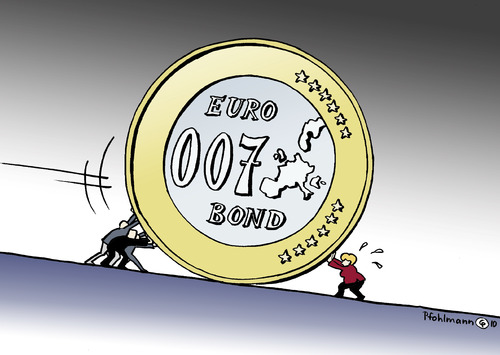 The secret will not be revealed until Monday 12 December. But given what we have seen in terms of the cowardice, mediocrity and financial incompetence of the EU’s politicians and bureaucrats, coupled with the conflicting interests of the Merkozy duo, it cannot be ruled out that the eagerly awaited announcement on 9 or 12 December will amount to yet another ineffective stopgap measure. Nevertheless, hopes are pinned more than ever on these statements, which will do nothing more than make public the agreements that have been secretly being hatched since the finance ministers of Germany, the Netherlands and Finland met discreetly last week.
  These days we are seeing how the moment of truth is slapping Eurozone politicians in the face. The risk premium, i.e. the market's disdain for Italian debt is throwing the country, and therefore the rest of the Eurozone, into bankruptcy. Watching the Italian giant teetering on debt feet worth more than 120% of its vast GDP, Greece's bankruptcy may seem like child's play.
  Some predict that this is a crucial week for the future of the Eurozone. These are the days when it will be decided how and in what way the
 ‘Preserving in turbulent times’ is not the title of this summer’s soap opera, but rather the pressing need for all those who manage their own wealth. It is also one of the guiding principles for some wealth managers working on behalf of others, though unfortunately the latter tend to be more concerned with retaining their long-suffering clients commercially by reducing their volatility, rather than preserving their assets and ensuring their sound long-term growth. Unfortunately, many managers of other people’s money are more interested in today’s bread (their own) and, in their short-sightedness, ignore tomorrow’s hunger (that of their clients and also their own). This brings us back to the old debate as to whether one should only entrust one’s money to advisers who have built up their own wealth and who co-invest with their clients, or whether any independent broker with sufficient technical training would suffice. But that is a discussion worthy of another article.
  Yes, but no. This seems to be the direction the EU is taking with its existential doubts. An uncertain course with the pretence of treading water, buying time, hoping that the Eurozone will still be able to breathe, when the sun wants to rise over a horizon that today is still black, very black.