 In mid-2010, some well-known Spanish banks were sending us investment proposals in Greek sovereign debt. The reports and analyses we kept receiving insistently said that it was foolish not to take advantage of the yield differential between the bonds of Eurozone countries. They argued vehemently that we should not forget that, after all, this was an EU country, and that the Greeks would never be allowed to default, not even if their bonds depreciated by much more than they did at the time, with yields still hovering around 6%. In other words, little more than the yield on Spanish debt today. The arguments put forward were reasonable and reasoned, except for one small detail: They forgot that two and two are four. (more…)

 «What would happen if credit rating agencies ceased to exist? It is a question that few of us ask ourselves today, but one that leads to some fascinating reflections.»That’s how it began"

 A couple of weeks ago, Alberto Artero from Cotizalia wrote
 As ever, under cover of darkness and with malicious intent – that is to say, at the weekend whilst the markets are closed – the European finance ministers are meeting yesterday and today to try to square the Greek circle. The aim is to «persuade» private and public holders of Greek IOUs not to demand payment of their bonds upon maturity, but rather to «voluntarily» accept an extension of the maturity date that is as uncertain as the Greek state’s creditworthiness.

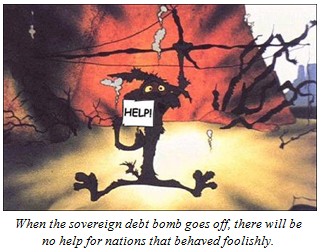 The concept of risk, as it relates to long-term wealth preservation, has undergone a widespread and extremely dangerous shift since the bursting of the credit bubble. And our duty as a family office is to warn and protect our clients and followers from the risk that is taking hold of assets which, until recently, were considered (and are still considered by most) to be «safe».