We look after your interests

(+34) 93 626 47 75

Torres Sarrià, Carrer de Can Ràbia, 3-5, 4ª Planta BCN 08017

(+34) 91 794 19 82

Pº de la Castellana, 93 2nd floor MADRID 28046

Category: Sin categorizar

Psychological differences between small, medium and large investors.

Vaya por delante que vamos a analizar algunos comportamientos y opiniones que hemos contrastado desde nuestras propias experiencias con clientes y conocidos. El lector no tiene porqué sentirse identificado con ninguno de estos perfiles ni maneras de pensar. Simplemente hacemos unas reflexiones que, desde nuestra perspectiva, nos resultan muy reveladoras.
Como ya sabrán nuestros seguidores asiduos, desde hace unos pocos meses estamos dedicando una área de nuestro multi family office a aplicar nuestros protocolos de actuación a capitales también medios e incluso bajos. Pues bien, en este sector absolutamente mayoritario de la población nos hemos encontrado con diversas sorpresas en cuanto a su concepto del riesgo e inversión para sus patrimonios respecto a los propietarios de las grandes fortunas. Durante años nos hemos acostumbrado a los feedback que los clientes de alto nivel patrimonial nos proporcionan respecto a su visión de la economía, inversiones y el dinero en general, y las comparaciones con los pequeños y medios inversores nos han evidenciado algunas diferencias de criterios muy significativas. Ahí van algunas de ellas:
Los grandes inversores mayoritariamente son receptivos a contrastar opciones innovadoras y a la creatividad financiera. Quizás su interés por seguir las últimas tendencias en inversión les hace tener esa predisposición a analizar cualquier nueva propuesta de aplicación para sus activos. Eso sí, lo harán escrupulosamente, contrastarán, se asesorarán y escanearán exhaustivamente dichas opciones como es lógico, hasta que al fin decidirán. Los de perfil más atrevido se aventurarán más y los de perfil ultra-conservador casi siempre declinarán la propuesta; pero en general jamás descartarán una opción de inversión antes de analizarla.
Pero analicemos nuestra experiencia reciente con los perfiles de menor patrimonio: En primer lugar podemos destacar que tanto el pequeño como el inversor medio tienden a un mayor conformismo con las bajas rentabilidades y las altas fiscalidades. Es decir, en general renuncian a propuestas que podrían optimizar estas dos variables básicamente por dos razones: Los pequeños inversores porque nadie jamás les ha tenido en cuenta para que puedan utilizar las herramientas que normalmente sólo están al alcance de capitales mayores. Por eso dichas propuestas adaptadas a su perfil les sorprenden, confunden y no se ven capaces de realizar los trámites necesarios para beneficiarse de ellas. Suelen conformarse con la sencillez de invertir en bolsa como alternativa única al ostracismo financiero de sus modestos activos. Estas inversiones las pueden realizar a través de cualquier gestor de su propio banco o broker de entidad financiera, incluso a través de the internet, como quien hace un depósito a plazo fijo en la oficina bancaria del barrio o una apuesta en bwin.com, sin ir más lejos. En cambio, el motivo por el que los inversores medios tienden a dicho conformismo, quizás se fundamenta más en el hábito a tributar de manera ascendente durante los años de crecimiento y madurez de su economía. Por supuesto, otro factor determinante es el desconocimiento generalizado y la falta de interés por las posibilidades financieras diseñadas para clientes de mayor nivel, pero que son aplicables en su mayoría al resto de perfiles menores.
A menudo a mayor cantidad de activos, menos riesgos debería estar dispuesto a correr su propietario. Y aquí chocamos siempre con el mismo planteamiento equivocado: «Los rendimientos de renta fija después de impuestos apenas superan el IPC«. Esta visión distorsionada de la renta fija les lleva a asumir riesgos de forma generalizada.
Los capitales mayores ya conocen las maneras de invertir en renta fija en niveles de rendimiento y crecimiento muy interesantes, a la vez que desfiscalizan eficientemente sus patrimonios de muy diversas maneras. Por lo tanto distinguen muy bien la diferencia entre riesgo y seguridad en sus activos. Pero los medios y pequeños siguen resignándose a la que creen única alternativa rentable a la inversión inmobiliaria, aunque sea peligrosamente variable, es decir las bolsas puras y duras o en algún caso productos derivados de ésta.
Como ya hemos explicado en otras ocasiones existen alternativas seguras para todo tipo de cliente. Por este motivo es muy importante que sobre todo los inversores medios (y por supuesto los grandes) comprendan que no deben arriesgar en renta variable la mayor parte de su patrimonio para crecer. El Riesgo no se debe asumir como implícito en cualquier inversión. Obviamente siempre existe un mínimo riesgo de que todo nuestro sistema económico se vaya al garete si sobreviene una guerra o una crisis fulminante a nivel global, y en ese escenario probablemente no resistiría ni siquiera la renta fija, y por supuesto tampoco nadie pagaría por nuestros inmuebles. Pero exceptuando una situación así, nuestras inversiones se deben blindar y distinguir muy bien los activos que se pueden poner en riesgo de los que no.
Como decíamos esta confusión provoca que muchos inversores nos hayan sorprendido con reflexiones como: «La renta fija me la dan los alquileres de los inmuebles y su constante apreciación inmobiliaria. Por lo tanto el efectivo lo debo invertir en bolsa para obtener un buen rendimiento». ¡Por favor! Ni los alquileres son fijos ni los inmuebles se aprecian in eternum, se lo aseguro. Lógicamente, a medida que estos inversores medios empiezan a saborear la renta fija de alta seguridad y rentabilidad, sus reflexiones se van iluminando y empiezan a dejar de arriesgar tanto. Pero confieso que nos cuesta mucho más trabajo convencerles de que se descarguen de inmuebles en favor del efectivo, porque siguen confiando ciegamente en que sus propiedades cada día valdrán más y más y más y más… Qué poca memoria. Y no me cansaré de repetirlo: Son tiempos de efectivo.
Debo decir también que para patrimonios realmente pequeños y sobre todo cuando sus propietarios son jóvenes, las inversiones en renta variable, no sólo son recomendables sino que incluso diría obligatorias. Crecer al 8% en renta fija con unos pocos miles de euros y teniendo toda la vida por delante, es poco menos que una condena. Mientras que para alguien de mediana edad y con centenares de miles de euros, crecer a dicho ritmo se convierte en casi una necesidad. Y en todos los casos mencionados hay que contemplar otra variable: La capacidad de generar ahorros procedentes de nuestra actividad laboral, pero de eso hablaremos en otra entrada.
Resumiendo, lo que me parece significativo es el menosprecio al riesgo de los mercados de renta variable que abunda entre los inversores de nivel medio, y la equiparación de la inversión inmobiliaria a la renta fija. No vamos bien.


Stock Market Plans. «When you see the eggs, it’s bound to be a bull.».

Cada día se crean más y más planes de pensiones basados en la renta variable. Es muy común encontrar asesores financieros que aconsejan invertir en bolsa para asegurar nuestra vejez (sic). Incluso algunos afirman alto y claro que «sólo los parqués son capaces de superar sistemáticamente la inflación», frase perpetrada por el mismísimo socio director de Abante Asesores o artículos como el de la pasada semana en Cinco Días. Poco importa el riesgo implícito o el hecho de que la variable tribute un 18%, ¡más madera, es la guerra!
Parece de cajón que debamos arriesgar nuestra futura supervivencia senil en bolsa para mantener así nuestro poder adquisitivo y alimentar al Estado durante nuestro trayecto vital. Pero parémonos a analizar un poco esta situación. Estamos acumulando un capital con un esfuerzo ahorrativo durante décadas, para asegurarnos una vejez y decadencia digna, prescindiendo de la improbable ayuda estatal en forma de pensión. Hasta aquí razonable. Pero resulta que la mayoría de los «expertos» nos aconsejan invertirlo en bolsa porque ésta es la única manera de superar la inflación a largo después de impuestos. Es decir: Riesgo y mayor imposición sobre beneficios. ¡Curiosa manera de superar el poder adquisitivo y las ventajas fiscales aplicadas a los planes de pensiones! Ah, olvidaba que también pagaremos sustanciosas comisiones para nuestros asesores durante el trayecto. Si pactamos un success fee, sólo pagaremos en caso de final feliz, es cierto, pero si la historia termina mal poco nos importará habernos ahorrado unos puntos de comisión. ¿Será por incrementar sus comisiones que la mayoría de asesores proponen vincular el ahorro para la vejez a la renta variable? En algunos casos, sí. Pero en otros puede ser pura incompetencia.
Es cierto que siempre nos quedará el recurso de vender la nuda propiedad de nuestro hogar, como bien explica nuestro amigo Echevarri, aunque sea en detrimento de los posibles herederos. Pero no tardarían los «asesores expertos financieros» en proponer otra inversión en RV para optimizar nuestros recursos en la tercera edad, metiendo mano a esta nueva y suculenta entrada de dinero en nuestros (sus) bolsillos.En definitiva, arriesgando nuestro futuro en los mercados, podemos llegar a viejos, posiblemente enfermos y pobres, aunque con un impecable currículum como fieles contribuyentes a las arcas del estado y de nuestros asesores financieros. Claro que algún día alguien podrá decir que optó acertadamente al invertir su futuro en bolsa si los mercados le han respetado hasta el fin de sus días. Pero, si me permiten la expresión: «A huevos vistos, seguro que es toro».
Un plan de pensiones, en esencia debe ser una acumulación de capital asegurada en renta fija, pero que supere claramente la pérdida de poder adquisitivo. Una opción que considero poco conveniente es la de fondos de renta fija High Yield o deudas emergentes, porque conllevan un riesgo nada despreciable. Aún así, con una selección rigurosa sería una opción a largo alternativa al risk de bolsa. Mi opción preferida desde hace ya un par de años es la de la renta fija sofisticada: Es decir fondo de bonos, obligaciones y acciones preferentes, de distribución y con apalancamientos de hasta el 300% y ratings aproximados tipo A. En otras entradas ya os he hablado de ellos.
Por favor, no confundir los apalancamientos en renta fija con los de renta variable. Fernando Calatayud nos da, como siempre una lección magistral de los riesgos de dichos apalancamientos en variable.
Os adjunto el drama original de la carta de despedida a que hace referencia Fernando. Sobrecogedora, pero no os perdáis el resto de comentarios. Y también ahí va una visión desenfadada del mundo de la variable por parte de el interesante Company Blog.
Aún me parece más indigno que asesores financieros de renombre aconsejen invertir en planes de bolsa los ahorros para la vejez. Bien sea por avidez de comisiones o por ineptitud y desconocimiento de formas más imaginativas de renta fija de bajo riesgo y alta rentabilidad. Da igual, en cualquier caso juegan con el futuro de muchas familias que a diferencia de los casos comentados en dicha carta anónima, pueden verse en la ruina cuando su edad ya no les permita ninguna reacción. Pero preferirán las comisiones y felicitaciones de los que saben que es toro después de…

«One more olive tree». What’s wrong with our financial system?

As part of our day-to-day work, last week we negotiated the possible purchase of a plot of land for development (let’s say between Seville y Albacete…) a very substantial sum: €58 million. The negotiations centred on the interest payable on the 50% for the payment deferred over three years. So far, so normal, and the preliminary contacts were made through the intermediary on duty – an old acquaintance of ours and an expert professional who, if you’re not careful, will sell you the Palace of Versailles as chateau for the summer, with a discount for early payment. But we insisted on dealing directly with the sole owner, whom we had not yet met: a middle-aged man with a rustic, prudent air about him. However, when we got down to business, he told us very seriously that the deferred payment of 29 million € had to be paid with «»the same interest rate as the bank, plus one olivo’. I must admit that although I have fought bulls in many arenas (I’d say almost all of them), it took me a few seconds to react. It wasn’t irony or a joke, nor even a metaphor. I found it hard to believe that someone who confuses the Euro interbank offered rate With the oil-related profits, plus one unit of something I don’t even want to imagine, he’s set to become the owner of €58 million any day now: €29 million of that in cash and the rest over three years with the corresponding interest… very interesting Olivos plus one. Both comical and alarming, although many of us envy him from our modest background.
What will become of this man and his family in a few years« time? Based on our experience as wealth advisers, I do not believe they will be any happier than they are today. They will be manipulated, robbed, swindled, flattered and squandered in the broadest sense of the word. They will be at the mercy of everyone around them, whether they are part of the family or not. Mutual animosities, fuelled by their limited education, may well end tragically. The best thing that could have happened to them would have been to sell land worth no more than a couple of million euros. That way, they would have savoured the sweet taste of abundance, but within a few years everything would have returned to »normal’ – at most, leaving a few residual properties that their children could make use of.
I wish you all the best for the future, but paradoxically Life isn’t going to be easy for them from now on, unless I just steal a honest a law firm that sympathises with their limitations and cuts them off from their fortune in exchange for the «business» of their lives. To end up in a family office, even if it were the worst in Spain, it would be like winning the ‘Primitiva’ jackpot for a second time, but unfortunately the chances of that are virtually nil (unless we bring it on ourselves…).
As for our economic system, I have to say that I consider it an aberration that, overnight, a farming family should find their land – which has been used to feed comfortably to their ancestors, in the face of such a turn of events for which no one has ever prepared them. Perhaps it is an aberration comparable to that which the buyers of the homes to be built on this land will have to endure, with mortgages that their children will inherit if the properties are not repossessed.
In the case of the farmer, it seems to me to be a wealth creation contrary to every law of the capitalist economy. And amongst the buyers of those flats, a the creation of poverty, interestingly enough, the same interest: Olivo plus one.

Formula 1 and Global Counselling: Who's afraid to teach their know-how?

On one occasion, a well-known F1 driver (who was still a test driver at the time) told me that it was utterly stupid to go to such lengths to protect the teams’ technical advances, as by the time they were officially implemented, the competition would have copied them in less than a week. In other words, the result of months of extremely costly research was within the competitors’ reach in a matter of days. I asked him whether it was worth all that financial and technical effort for such a small advantage over the rest, and how frustrating it must be for the whole team to see the team next door catch up simply by copying them. But his reply was It was a real lesson that we have applied ever since in our work as financial advisers:

«If you are the innovator rather than the imitator, your real advantage is far greater than the time it takes for others to copy your advances.»

A pithy statement if ever there was one. Indeed, when others apply something we have created, they are still a long way from catching up with us, since our know-how will be far beyond that. Or at least that is how it should be. Furthermore, the implementation of any protocol or advancement in a system will always be far more efficient and refined when carried out by its creator than by trained third parties.
At that moment, as family office We came to the conclusion that we could offer our entire range without any hesitation know-how to manage people’s wealth in the broadest sense. And that is what we did. As pioneers in many aspects of asset analysis, planning and management, we decided to to liberate our source code. Inevitably, some of our competitors copied some of our services; others even improved on them in certain respects (¡well (thanks to them!), but without a doubt those who benefit most were and are Customers. And that is what truly This should be a priority for any business. A business organisation with customers who are happy and grateful that they have been taught how to manage their wealth – by offering them our «source code» in an educational manner tailored to their profile – is sure to reap business benefits.
At first glance, it might seem that a client who is taught how to be self-sufficient and manage their financial affairs, they will soon no longer be subject to our invoicing. The answer is: Probably yes. But that does not mean they will cease to be a revenue-generating customercrucial for the company. When we talk about the economic sector and, above all, about counselling and comprehensive advice, the synergies between the client and family office are, and should be, almost infinite. Therefore, by gradually blurring the line between client and friend over time, we undoubtedly generate financial benefits for our company that are often far greater than the reduced or lost turnover itself. What is more, even in the worst-case scenario, where, having helped a client to become self-sufficient As far as wealth management expertise is concerned, even if we lose their business and it doesn’t generate any synergy with our company, we’ll still gain a grateful friend. If that’s the worst-case scenario, at this stage of the game, so be it.
This reminds me of the difference between a senior executive who simply gives orders and a leader. A comprehensive wealth management firm may «lead the way» in terms of assets under management and clients advised, but another with a lower volume will lead the sector. That is a qualitative difference that is impossible to replicate, given that this elite The role of businesses is to innovate, create and constantly improve. To quote one of my Gurus favourites: «A business can get better or worse, but it can never just stay the same.» So the choice is clear; if, on top of that, you are the creator or founder of the venture, all that’s left to do is «get out into the field and enjoy it», as he said Johan Cruyff.
Getting back to my conversation with the F1 driver, he also made a confession to me that gave What to think: «We even try out techniques and technical solutions that are prohibited by the FIA«. My naivety got the better of me, and he then replied: «In case they are authorised at some point, so that they can be implemented immediately… or in case it is decided, on an ad hoc basis, to take the risk of using them sooner.» A statement that is not quite so categorical, but which is also perfectly applicable to our work as Family Office. That’s right.

Insiders of the new era. The Apple effect and Archimedes.

In the old days, i.e. a few, very few years ago, it was necessary to have information from insider to get rich with back and forth movements in a price. Nowadays it only takes a powerful blog to create a more than profitable market move. What used to be unfounded rumours that moved prices for hours or even whole trading days, until someone officially denied them and the waters returned to their course; today they are more violent oscillations and above all much faster. Just like the information itself. For example, what happened yesterday with Apple's share price and a rumour created to suit the needs of a few clever people outsider. And I say outsider because the fact that he was someone who worked in the company does not qualify him as an insider, he was just a smart ass, or maybe we should call him a great investor who could teach us a lot of things. Just 6 minutes were enough for the stock to lose 4 billion dollars because of a supposed postponement of the Leopard and iPhone launches, this is the original internal post:

«This one doesn't bode well for Mac fans and the iPhone-hopeful: we have it on authority that as of today, the iPhone launch is being pushed back from June to... October (!), and Leopard is again seeing a delay, this time being pushed all the way back to January. Of 2008. The latest WWDC Leopard beta will still be handed out, but it looks like Apple-quality takes time, and we're sure Jobs would remind everyone that it's not always about “writing a check”, but just how much time are these two products really going to take?»

Et voilà! 4,15% down between 11:56 and 12:02, closing the session down just 1,29%. The legal battle will now be whether the release was actually leaked from Apple's internal system or falsified externally. In either case someone who has no idea whether or not there are really problems and delays with these products, cleverly made a mockery of the system and the market itself. He must still be laughing as he counts his profits.
So it is no longer necessary to have inside information before others; what is really important today is the extent to which we can disseminate any information and how credible it is. Market efficiency will do the rest. Global markets where it seems impossible to be smarter and faster than others (being riskier is easy). But someone always surprises and proves that it is more than possible, I would even say usual. Who said that the efficiency of markets could not be mocked?
Ultimately it is the difference between the one who hopes for the good fortune of getting insider information one day, and the one who create the luck being an outsider.
Archimedes said: «Give me a sufficiently long lever and a fulcrum and I will move the world». Today we could also move the world with a sufficiently efficient market and a point of intelligence.

Second Life: Investment for Real Life?.

The trend in all the figures relating to the phenomenon Second Life (SL) has exceeded even the most optimistic forecasts, to the extent that it seems Of course, we are now in the second generation of the Internet. But the interrelationship between SL and the real world (real life o RL) is beyond my imagination. In this virtual world, we can all live together in the form of humanoids (avatars) in search of all sorts of things: young people looking for simple games, fun and leisure, making friends, sex, forums, prostitution, politics, drugs, the economy, art, ghettos, religion, training and education, sectarianism, purchases and rentals of all kinds, finance, etc., etc., etc., etc… in short, life itself. What’s more, all of this is complemented by its own currency, the L$ (Linden dollar) which makes it a Monopoly o Cash flow fascinating and universal. But Let’s explore this further a little more on that last point: The L$. The current share price fluctuates around 275 L$/US$. There are already banks in SL which pay interest at a rate of 0.10% per day, loans—both usurious and non-usurious—with obvious risks. Also, stock markets in SL which fluctuate, with varying degrees of rigour, between supply and demand, with risks that are also evident. But amidst this apparent financial farce, banks emerge that RL with spectacular venues in various parts of the unfathomable SL. At present, they do not carry out banking transactions in RL, but I suspect that as soon as a way is found to verify the identity of both parties, a whole new world will open up for online banking and, above all, for L$. In exactly the same way that certificates secure transactions in the internet in today’s retail sector online.
This opens our minds to endless investment opportunities. Opportunities that will become common practice before most of us realise it, and which legislators will regulate by the time some have become millionaires and many have ruined. At the moment, banks and multinational companies in the retail sector have established themselves in SL without a clear purpose as yet. It seems as though the employees who have been assigned exclusively to act as avatars to assist other avatars who visit their virtual and extremely creative head offices, are unaware of exactly what their assigned duties are. It is as if these companies were swarming about and dealing with inforautomatically to those interested in their financial services in a light hoping that their authorities will take the first step towards the financial maelstrom that lies ahead. It reminds me of the feeling we might have when we see huge, state-of-the-art facilities that have just been completed, with all the staff in their posts and sporting brand-new uniforms, waiting for the official opening and the ensuing flood of customers. But this time we’re talking about SL, where anything is possible, where the date and time of the opening are yet to be decided, where the market laws established in RL Are they not applicable, or are they? If so, why not?
Here and there we’ll see a island financial, a a virtual and tax haven where banks, tax advisers, investment advisers, loan sharks, philanthropists, estate agents, casinos, NGOs, venture capital firms, family offices, gurus financial institutions, stock exchanges, options markets, futures, commodities, land managers, construction companies, notaries, solicitors, trusts, insurance companies, etc., etc. And all of this – absolutely all of it – is available at SL y RL.

The truth is, it’s all a bit beyond me. It makes my head spin, yet I’m fascinated by it. Perhaps the progression we sense will soon be subject to a controlling and moderating factor that will expose my shortcomings. Legislate SL from RL It will be very difficult, and so far humanity has shown that the internet is essentially about freedom, particularly in its early days. But here we are talking about freedom and L$, a currency that could become the world’s leading currency, although I don’t think the central banks of the Western world will allow that to happen.What I find exciting and inevitable is that, at least for a while, SL can make many people’s financial dreams come true at the expense of the taxation and current legislation. Although, on the other hand, I find it regrettable that it is also becoming an economic nightmare for others, who will fall prey to scams, abuse and deception that go unpunished and are free from any legislation (just as in real life). But despite all the dire predictions about the internet in its early days, «e pure if moves«, and our reality can no longer be imagined without its virtual counterpart.”.

Whatever may lie ahead, we too will be there, side by side with other financial institutions, watching one another, eagerly awaiting the imminent day of inaugural madness when we can show the whole of humanity what we are capable of doing with their assets of RL, including their L$.

Urban legends and financial myths

An excellent adaptation of a folk tale for real life. Under the title «The game of Greatest Fool »We can read an informative article by Fernando Calatayud where we see that, as is the case often, reality is stranger than fiction. I recommend you read it because it’s well worth it, just like «Astroc in hindsight«.
For our part, we might add that all this is accompanied by a series of financial myths which, just like urban myths, some people actually believe! I’ll give you an almost real-life example so as not to offend anyone, Astroc at levels of 67-odd, 2 February:

Call from Mr Pardillo very nervous: «He told me So-and-so that Astroc is about to really take off (sic)».
So-and-so
is a private banking manager at the bank Tax Haven, and therefore its credibility in a tie and personified.
So-and-so: «Go for it upside down because a senior accountant from Astroc »He has an account with this bank and has just bought 6 million euros.'.
Pardillo: «I don't know, let me ask my advisers…»
So-and-so: «I've bought everything I could, and so has my family – don't worry, as soon as I see the order the accountant’s sales, before »If they sell theirs, we’ll sell ours. Don’t worry.".

My goodness, the opportunity everyone dreams of: to faithfully follow in the footsteps of a insider It was coming true! And from none other than Astroc, what a sweet treat… The fact is that we were unable to prevent Mr. Pardillo buy half of half of what he would have wanted. So-and-so I couldn't believe that Mr Pardillo If they didn’t give it their all, it would be the opportunity of a lifetime! They almost ended up falling out, even though they were two old friends. The story ended «fortunately»On 5 March, it was trading at 47 and a half.". So-and-so, his tie and his family have been badly affected, although he remains a highly respected bank manager. In fact, the grey hairs caused by the distress will make him seem even more credible and venerable. But the worst thing is that Mr Pardillo is now moderately positioned in Avanzit, although, as he puts it, «having learnt his lesson».

I don’t know if any accountant at Astroc whether or not he has a secret account through which he invests millions of euros in even more unsavoury dealings, At this stage of the game, I don’t even care. But I regard it as a financial myth on a par with the urban myths we’ve all heard at some point, although this time it’s come rather close to the mark. In fact, the closer it seems to home, the more devastating its effects can be – like a bomb. But that’s the way the world is: horses will continue to be sold as long as there are suckers, just as there will always be TV-rubbish as long as it has an audience… Come to think of it, will there ever come a day when we’ll also have finance blog-rubbish? I’m afraid that someone will also benefit media-savvy of financial legends, or perhaps it already is are doing.

Economic Fiction for the Poor or Strategies for the Rich?

I’m sure we can all agree that it’s very important to start building up assets as early as possible so that the power of compound interest can work in our favour for as long as possible. Countless calculations have been published showing the huge difference it will make to our financial situation in later life if we start saving a few years earlier than usual.
But what would happen if, as well as saving small amounts from an early age, we did so in a low-interest environment? taxation? The result would be radically different from what we achieve by paying our taxes conscientiously and regularly. Not only would the total value of our wealth be much greater, but a whole host of new investment strategies would also become available to us. Let me explain:
If we imagine our finances in an environment of low or zero taxation, we could treat the returns on equities as net, thereby multiplying the effects of compound interest over the years. So far, it all seems quite obvious. But let’s see what happens with investment products offering moderate returns of around 5 or 7%. These products would then be returns worth considering, as they would more than offset the loss in the purchasing power of our money. Logically, such instruments are safer than those generating higher returns, and would therefore allow us to PGR very tight, with very solid foundations and objectives that are virtually guaranteed over time. This is a sound and common strategy amongst major international fortunes. We are not suggesting that large fortunes do not pay tax, but rather that they do so in a manner and through legal structures which, although costly, alleviate to a greater or lesser extent the tax burden that would otherwise apply.

In accordance with the law, we must remember our obligation to declare to the tax authorities any money or investment made in countries where there are no double taxation agreements with Spain.

In cases where a client’s asset structure allows for the lowest possible tax liability – and thus makes it feasible to strategically utilise the safest products, albeit those offering lower returns – long-term planning is a piece of cake. At this point, other factors come into play that must be taken into account when making the decisions that will steer these fortunes in one direction or another: family and business planning, life and generational goals, and a extremely long etc. – matters to be discussed in detail with the owners, who will determine the guidelines to be followed over the coming years. This comprehensive wealth management advice will be provided by a family office .
But let’s get back to «real life». An upper-middle-class family fortune of, say, €600,000 – including the value of property (their home), business assets (if they are self-employed) and liquid assets (savings, investments in securities, etc.) – has been paying tax since the very beginning and has no choice but to continue doing so in the future, because their wealth and tax liabilities have grown in tandem and can no longer be separated. We’ve all heard the saying that ‘I’ve got a partner who takes the xx% of my profits… In fact, almost everyone works well into May to pay their taxes. But once you’ve reached this level of wealth, it’s already too late, because it would be difficult to justify paying less tax on assets that the State knows you possess – not to mention that it would be illegal.
And I wonder: what would happen if, whilst there’s still time, we could dissociate legally our fledgling wealth growth over the financial year? As well as being a gradual and imperceptible shift, we could obviously make use of the investment products with moderate returns that we referred to earlier. And that would allow us to base the initial growth of our wealth on something other than pure, unadulterated risk. To our wealth-building strategy—which is based on the well-known speculative property investments, the stock market, high-risk financial products and non-speculative property investments aimed at generating passive income—we could add a growth in fixed-income investments low-risk investments that would underpin our long-term growth. This would broaden the strategic possibilities we are all familiar with, much like those available to many large international fortunes. But the reality is often quite different, particularly for those with modest capital. Fixed-income investments barely beat inflation after tax, forcing us to take excessive risks if we want to grow, because We must achieve growth that outpaces inflation and exceeds fiscal targets.
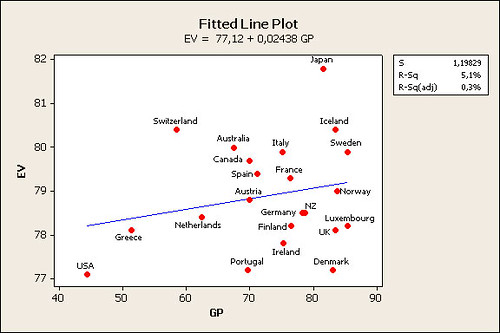
On the other hand, we must look at the positive and supportive side of this effort: The more tax we pay, the more and better public services we will have – healthcare, education, infrastructure, etc. To give an example, I honestly believe that the precarious state of the US public health system is very dangerous and unfair. The graph shows the relationship between life expectancy and public spending per per capita in terms of health, although, naturally, other factors such as diet and healthy habits also play a part in longevity. I therefore believe that the taxation It is necessary to maintain a certain standard of living, but this must not prevent the middle class from achieving financial independence. A policy that curbs compulsive consumerism and provides tax incentives for saving and passive income as a whole would help to achieve that independence. This would, for one thing, partially relieve the state of its responsibility for supporting pensioners. Unfortunately, it seems that pensions for the elderly are already evicted when they reach our generation, and of course for those who come after us as well. Anyway, we always have the option of making tax deductions for a pension scheme so that we «only» lose the purchasing power of our money. But we’ll talk about that another day.
In short, it is just as bad for our long-term financial well-being to start too late in seeking our independence financially, just as it is to do so in a stifling tax environment. And what for the rich is a strategy for structuring their assets within the legal framework is, for the poor, economic fiction. But what will happen to the poor who are young and potentially wealthy?

Citisoluciones: Networking at the service of Citibank. May Kiyosaki’s financial independence rest in peace.

Para los que no hayan oído hablar de esta promoción podemos explicar que se trata en definitiva de la venta agresiva e inteligente de productos propios de CitiGroup. Para ello han conjugado tres herramientas potentísimas: Un mercado objetivo masivo, una red de ventas basada en el Networking; y por último una estrategia y argumentación del servicio engañosa. Bueno quizás alguien la llamaría ambigua, pero los eufemismos sobran cuando se trata del dinero de personas de clase media que realizan verdaderos esfuerzos y malabarismos para mantener a sus familias en los tiempos que corren. Efectivamente, pretenden hacer creer que sus «asesores» velan por los intereses de sus potenciales clientes, en lo que llaman ANF (Análisis de sus Necesidades Financieras). En primer lugar estos «pseudo-asesores» no son más que personas de calle normales y corrientes que reciben un cursillo acelerado de productos que deberán vender para obtener unas comisiones determinadas. Cualquiera de nosotros puede obtener fácilmente esta formación y salir a la caza despiadada de carne fresca para venderle productos CitiGroup al vecino del tercero, al compañero de trabajo facilón o a los viejecitos jubilados del piso de abajo. Por supuesto es un trabajo como otro cualquiera, pero con un componente poco ético ya que nos están intentando vender seguros y productos bancarios con una piel de cordero. Así es, nos proponen como panacea: «plan de ahorro-inversión convenientemente cubierto por un seguro temporal» y aliñado con su flamante CitiFin o «distribuidor legal del préstamo de refinanciación» ¡Prestamos de refinanciación for re-exprimir nuestros endeudamientos saturados en favor de seguros, planes de ahorro que no superan la inflación e inversiones en bolsa!. Todo ello sin olvidar el resto de sus productos financieros e hipotecarios que promueven el consumo exhaustivo hasta la extenuación de sus clientes y, por supuesto inculcándonos su bondad filantrópica con frases como «Nuestra misión es ayudar a las familias españolas a conseguir la independencia financiera.» Y otras extraídas textualmente de la bibliografía de Kiyosaki. Básicamente nos publicitan tres tipos de productos políticamente correctos: Seguros de vida, fondos de inversión y planes de ahorro. Por supuestísimo todos ellos deben ser productos pertenecientes a CitiGroup. Pero atención, sin descuidar el resto de su abanico de ofertas: Cuentas bancarias, tarjetas de crédito, hipotecas, seguros de hogar, seguros de automóvil y, cómo no, créditos al consumo (¡Presentes en el mismo brochure o mejor dicho panfleto!). Como veis todos ellos diseñados para asegurar nuestro futuro y hacernos ricos en la vejez…
Además todos los ejemplos que utiliza dicha publicidad, manipuladora de los deseos y temores de la clase media, are basados en proyecciones de interés compuesto del 10% sostenido y sin fiscalización. Los resultados son, lógicamente espectaculares. Tan sólo falla un pequeño detalle sin importancia: Los productos que ofrecen los bancos en general y en los que se basa concretamente esta oferta masiva de servicios jamás cumplen dichas constantes ni por asomo. La letra pequeña ya se encarga de advertirlo «legalmente».
El mensaje es bueno, lástima que el mensajero sea el mismísimo diablo que se alimenta de nuestro consumismo y endeudamiento desmesurado. Es como si el lobo feroz quisiera ayudar a los cerditos a construir sus casitas de paja y además lo hiciese a través de una horda de ayudantes con sus estómagos notablemente más vacíos que el suyo, si cabe. Ellos los llaman Comisionistas Independientes. Si caer en manos de banqueros que intentan exprimir el rendimiento que genera para el banco cada uno de sus clientes, ya supone una sangría constante para nuestro potencial financiero; imaginaros lo que pueden llegar a hacer unos comisionistas mucho más hambrientos e incompetentes y cuyo único beneficio pasa por la venta agresiva del mayor número de productos posible. ¿Cuántos clientes jóvenes, de mediana y tercera edad comprarán, suscribirán e invertirán en productos que no les convienen y que deberán reconducir en breve? ¿Cuántas comisiones de compra y venta, de cancelaciones anticipadas y penalizaciones diversas se generarán a favor del banco por culpa de una maniobra de márketing sin escrúpulos?
Es evidente que todos debemos realizar un «ANF» o lo que nosotros llamamos un Global Wealth Plan que nos clarifique mucho más que la necesidad de hacernos un plan de pensiones, un seguro de vida o de invertir en un fondo de renta variable. Pero los argumentos de Citisoluciones sufren algunas lagunas de libro: Por ejemplo, ¿qué sentido tiene suprimir el seguro de vida cuando llegamos a una edad avanzada como propone este banco? La Teoría de la Responsabilidad Decreciente que proclaman no contempla la voluntad de poder beneficiar a los sucesores cuando el asegurado ha alcanzado el fin de su edad laboral. En la etapa en que mayores activos hemos acumulado, cuando menos esfuerzo supondría para nosotros el mantenimiento de dichos seguros y cuando más probabilidades tenemos de fallecer, nos recomiendan abandonar el seguro. ¿Quizás para optimizar las estadísticas de su entidad aseguradora CitiLife?
Por supuesto que un PGR debe incluir unas coberturas de seguros bien adaptadas a cada caso, sobre todo vida y sanitario (como Family Office lo sabemos bien), pero velando por el cliente y sus herederos, y no por la entidad aseguradora. También debemos planificar nuestro ahorro, pero los rendimientos de un plan de pensiones de renta fija apenas superan la inflación y los que invierten en variable son en esencia peor gestionados que un buen fondo de inversión especializado. Por lo tanto estos productos sólo los recomendamos para aquellos patrimonios holgados que ya tengan cubiertas las necesidades de inversión y ahorro en renta fija de alto rendimiento y con un crecimiento rigurosamente mantenido. Es decir, un plan de ahorro debe ser un complemento a utilizar si nuestros activos ya están cubriendo las necesidades de crecimiento básicas y no debemos condenar nuestro esfuerzo ahorrativo a un producto a largo plazo que ni siquiera va a mantener su poder adquisitivo. Existen maneras mucho más rentables de desfiscalizar nuestros activos que la simple desgravación en productos de ahorro.
Ignoro si el Mr. Kiyosaki ha cobrado unos royalties suficientes para permitir que Citigroup utilice la popularidad y la claridad didáctica del Cuadrante del Flujo del Dinero. Dicha compensación económica será legalmente suficiente, pero sospecho que el autor de Rich Dad no debe estar muy contento con la utilización que esta entidad está dando a sus teorías. CitiGroup, bajo la piel de cordero autodenominada Citisoluciones proclama que su misión es ayudar a las familias españolas a conseguir la independencia financiera; y acto seguido contrata a comisionistas independientes para que vendan despiadadamente cualquiera de sus productos, sobre todo los que generan mayor beneficio para la entidad y para el propio comisionista. Lamentablemente lo único que consiguen es que los clientes consuman y se endeuden aún más a través de los préstamos de refinanciación from CitiFin, haciéndoles cada día más dependientes de sus ingresos laborales y por supuesto fidelizados hipotecariamente a CitiBank. Lejos, muy lejos y cada día más, de conseguir la independencia a la que se refiere R. Kiyosaki.
Es probable que estemos especialmente dolidos porque desde nuestra actividad de Family Office conocemos exhaustivamente las necesidades de los clientes incluso más allá de la independencia financiera. Y por lo tanto, nuestro know-how define diáfanamente los peligros y los vicios en los que no deben incurrir los que deseen progresar patrimonialmente de forma adecuada a lo largo de las décadas e incluso las generaciones. Además sabemos que el sector de clase media al que va dirigido este ataque con armas de destrucción masiva, es especialmente vulnerable y sensible a desviaciones que resultaran fatales a largo plazo. Por ello y por otras motivaciones éticas venimos realizando asesoramiento desinteresado a todos aquellos que nos lo solicitan, y estas sucias estrategias de márketing nos reafirman en nuestra vocación.
La teoría de Citisoluciones es positiva, tan positiva como la filosofía RichDad puesto que hace uso de su licencia para utilizarla, pero la desvirtúa totalmente al transformarla en servicios bancarios; y la aplicación del Network márketing, además la pervierte tristemente.
Quizás nuestro amigo Robert Kiyosaki debería tomar cartas en el asunto, porque me resisto a creer que el pago de unos royalties, por abultados que sean, compensen su complicidad.
Descanse en paz la búsqueda de la Independencia Financiera si hay que encontrarla a través de nuestros bancos.
P.D. Ahí va un link con opiniones de todo tipo respecto a trabajar como comisionista de Citisoluciones. A algunos les beneficia como comisionistas independientes, a la mayoría ni siquiera eso, pero ninguno de ellos se preocupa por el daño económico que se está generando a sus presas, ya que sus adiestradores o Mentores (sic) se han ocupado eficientemente de que así sea durante los cursillos impartidos, que por cierto son de pago y de obligada suscripción.

Prêt à Porter Investment Guide. Or Aladdin’s Lamp.

Financial products are not inherently good or bad, but which depend on the current international economic climate and, above all, on each individual’s personal circumstances. These personal circumstances go far beyond simply the state of our finances. We must take into account such important factors as our plans for the future, our family situation, the things that keep us awake at night, what we trust and what we do not, and so on. In short, we need to carry out what we call a PGR (Comprehensive Wealth Planning), which includes, amongst other things, the preparation of a Vital Balance:
If we cannot conceive of a company’s existence without rigorous financial statements that provide us with all the necessary information about it, how can we plan our personal finances for the present and the future without applying this accounting principle to our own lives? Moreover, when we do so, we will have a much clearer idea of clarifying and provides insight into our current financial situation; and, most importantly, we will reflect on what we want our lives to be like in the future – both the near and the distant future.
We can assure you that all our customers have gone through this process of creating their own PGR, with passion and enthusiasm. For all of them, it has meant a radical change in their outlook on the present and future of their own lives and those of their families. And once completed Through this process, we will be able to start clearly identifying the financial products that best suit our life plan, taking into account obviously the quality and quantity of our assets. With our ideas clarified and no doubts as to how, where, for how long and in return for what we make our investments, we will set out on our rigorous journey, in which time will work in our favour.
As you may have read in other posts on this blog, we have implemented what we call Fresh Family Office. In other words, we apply these protocols for analysing medium-sized and large clients to young investors with nascent assets or savings:
In doing so, it becomes clear that this whole process of analysing one’s life (PGR) would require time and effort on our part, which an estate worth less than half a million euros could not afford, even if, as always, we include all its assets in this figure: property, savings, businesses, etc. Therefore, we have no choice but to simplify this PGR so that, using the information provided by the data subject and summarised to the bare essentials, we can obtain the data we need to plan the early years savings/investment for future potential customer. We are able to do this and are keen to do so on a voluntary basis. Furthermore, depending on the level of involvement each person wishes to have in their own finances and the time we have available, we will continue to improve and refine their investments until our customers grow in terms of both scale and expertise. Until they are capable of making decisions independently, whilst also having sufficient resources to afford ongoing or ad hoc high-level external advice. In this way, we create an initial Effect Cluster in its financial assets.

Learning how to create effects cluster in any aspect of life is the factor distinguishing feature between success and mediocrity, both personally and financially.

To sum up, for all those who were hoping to read this post as a guide to investing in products that would simply make them rich, independent and wise… I’m afraid I’ll have to disappoint you. Your only option is to find a lamp that Aladdin, so that when you rub it, a «genie» – perhaps an executive, a bank manager or a financial adviser – appears and grants you a wish temporarily. For example, a Astroc at 74.99, which «is about to take off, for sure, I’ve got it on good authority…», and which will leave them feeling utterly dejected, having lost their savings and all the effort they’ve put in over months or years.
But for those of you who expect a little more from this blog, I’d like to say that the better you know yourselves – and the more we know about you, your circumstances and your plans for the future – the better we’ll be able to work together to achieve a comprehensive plan for your present and future wealth. The next step is time and Rigour will do the rest. The former is inexorable; the latter must be to earn it day by day.

Shall we help you search?

Cluster Family Office

We care about transparency both in management and in our own way of working. Leading wealth management and family offices company

Do you need help in capital and wealth management?

How can I avoid the negative effects that my fortune may have on my children?

How and when should I talk to my children about family wealth, and what relationship should they have with money throughout their adolescence?

How can I measure the real risks of my investments and protect my assets adequately?

Do I have sufficient liquidity and stable income to cover my needs on a permanent basis?

Security Notice

We have been made aware of phishing and spoofing attempts involving fraudulent email addresses and domains that closely resemble our official company communications. These unauthorized communications are not sent by our company and may falsely impersonate our employees or representatives.

Our company is not responsible for communications, requests, or transactions originating from fraudulent or unauthorized email addresses or domains. Please verify that all communications originate from our official email domain before responding or sharing any information.

If you receive a suspicious email claiming to be from our company, please do not respond, click any links, or provide any information. Contact us directly using the contact information published on this website to verify its authenticity.