It has been 5 days since our final analysis of the situation. And the reactions of the entire financial system seem to be in line with our expectations. In recent days we have seen how even Russia has collaborated to provide liquidity to the interbank market. And today the EDF has decided to cut discount rates on loans to banks by half a point, from 6.25% to 5.75%. The effectiveness of this move will be tested in the coming days, but it seems technically very appropriate.
Personally, I believe that the soothing effect that has been produced by the this decision The US Federal Reserve's decision will only be temporary. Widespread volatility seems assured and we may continue to see significant falls in stock market indices around the world, as well as significant falls in institutions and investment funds that are in real trouble. But there is no doubt that the scenario at 5.75 is better than at 6.25, and we believe that the way forward has been shown.
What is truly vital in the current historical moment of absolute uncertainty is to make our way day by day by resisting the total chaos in which all markets and sectors could fall. In other words, for almost a week now it has been globally accepted that we are in a critical situation in the System. And yet ministers, central banks and the top managers of the world's largest financial institutions seem to be working together towards a common goal: to avoid the chaos that would ensue if the crisis that began in the US mortgage sector were to spread to the rest of the economic system, bringing it crashing down like a house of cards. By this I do not mean that the world economy has no solid foundation to stand on, but that widespread panic would accentuate the destructive effects of the collapse of some investments that are made of ethereal and contagious products. We talked about this type of investment based on financial engineering that is too far removed from economic reality in a previous post. Curiously, we already warned then, exactly on 20 June, We were also aware of the sense of danger or uncertainty that we were already detecting at that time. Although we did not say that the trigger was the US mortgage risk, we did mention a scenario like that of the 1929 crash or a globalised crisis.
In spite of everything, it seems to us very positive that the tools of the global financial system itself continue to be applied to alleviate as far as possible the crisis that the entire economy is going through. More importantly, the first voices are beginning to be heard in favour of greater control of high-risk financial operations. This is positive in itself, although obviously no one has any idea yet who and how this should be done.
Let's continue to live history with serenity and intelligence, and let's clean up only what is necessary without spoiling the rest of the Economic System. To be continued...
It has taken a period of stock market turmoil for some investors to realise that we are living through historic times for the global financial system. Put like that, it sounds apocalyptic, and indeed it may well be; but we are also facing an opportunity for financial authorities around the world to continue demonstrating their responsibility, competence and ability to view the global economic landscape from a global perspective.
But before we delve into reflections that might at first glance seem exaggerated, let’s briefly summarise what has happened and the situation we have reached, even though many people are still unaware of it.
The stock market volatility of recent days is nothing more than the visible manifestation of the underlying turbulence caused by the US mortgage crisis.
Mortgage abuse, falling house prices and rising interest rates have led to a high proportion (14%) of mortgages going into default in the US. It is worth noting that a similar scenario could easily apply to Spain and parts of the EU.
This default has led to a fall in the value of funds and assets based on this type of debt, as many of these non-performing loans had subtitled and recklessly leveraged. A Bear Stearns two of his funds were written off: High-Grade Structured Credit Strategies Enhanced Leverage Fund y High-Grade Structured Credit Strategies Fund (the latter having some residual value given its lower leverage). Other major banks such as BNP are also facing their own problems.
The public outcry This also makes investors reluctant to buy corporate debt. This jeopardises corporate transactions that have nothing to do with an American failing to pay their mortgage, but it hinders global business growth whilst increasing risk aversion among investors.
These problems are amplify due to various factors, including: a) Securitisation or securitisation of these mortgage debts of doubtful recoverability by packaging them as assets attached to more secure mortgage debts. This apparently dilutes the risk to make them more marketable, but in reality it is creating a route of transmission from the crisis to products that should not be affected by defaults. b) The leverage that financial institutions generate in order to capitalise more fully on the substantial returns from these products. The debt incurred through these funds will become another route of transmission for the rest of the economy.
The timing of the contagion It is unfolding gradually: the securitisation of subprime mortgages, corporate debt, a reluctance to engage in frivolous interbank lending, and nervousness in the equity markets, although the latter is of little consequence given the gravity of the underlying problem.
A coordinated, sustained and long-standing effort by the world’s major central banks to prevent drythe cash flow of the system.
Outlook: Unpredictable, although we do not believe the situation will be catastrophic for a number of reasons, which we will explain below.
People today tend to react to problems in a narrow-minded way, whether for the sake of the nation, a corporation, a race, a religion, and so on… But when faced with exceptional problems, humanity must—we must—be capable of responding on a global scale. Why? Quite simply, because the stakes are too high: the financial system – in other words, everything. One example of which we should be proud is the intervention widespread, concerted and proactive by central banks to breathe new life into our economic system. The EU, the US, Japan, Australia, Canada, Switzerland and Norway have already done far more than just make a symbolic gesture for the financial well-being of us all. South Korea and Indonesia, amongst others, have also committed themselves, and this is only the beginning. I am fully convinced that the response, based on solidarity, will be historic, even from China and some Islamic countries. We are all in the same boat. If our economic system fails, it fails all our modeVivendi, and our planet would be set back by many generations. Such global solidarity can only arise in the face of catastrophes that we have only ever seen in science-fiction films, or in situations such as the current one, where the stakes are even higher than climate change or a bird flu pandemic.
For all these reasons, it seems logical to me to think that this event, which brings us closer than ever to the 1929 crash, will serve to strengthen our financial system and make it more resilient in the future. I believe, and I want to believe, that the measures we will see taken by all The world’s economic authorities over the coming months will feature in future economics textbooks. We are probably laying the theoretical foundations for the protocols global which must be implemented by all countries worldwide in the event of future crises and major financial instability.
Having said all that, I want to make it absolutely clear that my personal view is an optimistic and positive one. And that the success or failure of our financial system depends largely on our collective willingness to keep a cool head and our investments active. As I say in the title of this post, if we can turn this scenario into a historic opportunity instead of a hysterical breakdown, we’ll come out on top, with the system even stronger than before. But if that doesn’t happen, we’ll all end up doing ourselves a great deal of harm.
Faced with this scenario—whether one of normality or collapse, which we ourselves will bring about—the question we must ask ourselves is: Where are we going to put our money if we no longer lend it through the financial system to keep things running smoothly? Do we really think that creating a macro-corralito Will a global approach spare us any harm in terms of the risk of continuing to rely on the system? Common sense will save us, whereas panic would be the greatest act of self-destruction in history.
Tomorrow, Monday, we will see how the world reacts to this unprecedented situation. Nervousness and volatility are guaranteed, but above all, we must have confidence in ourselves. We may see sharp corrections in the credit spread, stock market volatility with ‘Black Fridays’, ‘Black Mondays’ and ‘Black Days’ on any day of the week, sharp adjustments and corrections in macroeconomic figures, etc. We might even, why not, see a certain normality from now on and tiptoe past all the dangers mentioned as if it had all been nothing more than a nightmare. In any case, it will be a positive step. The one option we cannot afford is a global economic collapse. As far as we are concerned, it is very clear what we are going to do and what advice we will give our clients: we will continue to have faith in the system and try to make the most of the opportunities that arise in any crisis. What else can we do that won’t lead to our own downfall?
Keep a close eye on developments over the coming days and weeks. Are we as clever as we think we are?
The link between the fall in equity markets and the subprime crisis strikes me as exaggerated, but that does not mean it is any less of a dangerous scenario. As Kretan quite rightly points out in his latest post with regard to the RV, we are currently experiencing a period of high volatility and sharp swings, making it difficult to decide whether to stay in or get out.
As for the crisis in RFsubprime It must be said that this is a sector that should have little impact on ordinary investors, as they tend to invest their assets in debt investment grade and, to a much lesser extent, in debt speculative. The thing is, with the uncertainty surrounding low-rated mortgage debt, also the credit spread of the debt prime It is being hit hard and in an alarmingly widespread manner. The pendulum effect is driving money towards absolute safety, right at the opposite end of the subprime spectrum, which has also had a negative impact on the performance of debt with very reliable ratings. That is why practically only US Treasury bonds have rebounded, causing their yield is significantly affected. However, the risk of investment grade remains virtually unchanged both before and after the US mortgage crisis. Therefore, this fall in the credit spread In our view, this presents an opportunity to acquire prime corporate debt at very attractive prices.
It is true that volatility is very high and that we can see corporate debt prime fall slightly further, or even considerably further if the subprime crisis worsens, with the resulting public outcry on the Russian markets. But perhaps it won’t. And even if we accept that prices may continue to fall, we consider current prices to be very attractive for building a position as a medium- and, above all, long-term investment, even in a scenario where there is a possibility ofFurther interest rate rises in Europe. We therefore believe this is a very interesting time to take positions in US fixed income as well, given that volatility is higher but the upward rally in interest rates is more limited. And what is most important to us: the outlook for US businesses is far more promising, given the current weakness of the dollar, than the corporate outlook in Europe. I repeat, this is always with a view to analysing these investments at least in the medium term.
Not all investors should be prepared to lose a significant proportion of their assets in the equity markets. Some should even be content with returns of almost double-digit figures for a substantial portion of their assets. However, for stock market investors who are only willing to take risks in exchange for short-term returns (whether good or bad), fixed income is unlikely to meet their expectations for speculation, nor will it even provide them with the adrenaline (ast) they want.
Many small and medium-sized investors may feel that fixed-income investments are not an option likely to yield returns that exceed post-tax inflation. But as I have said on other occasions, There’s life beyond fixed-term savings accounts. Especially when you have the ability and courage to see the crisis as opportunities.
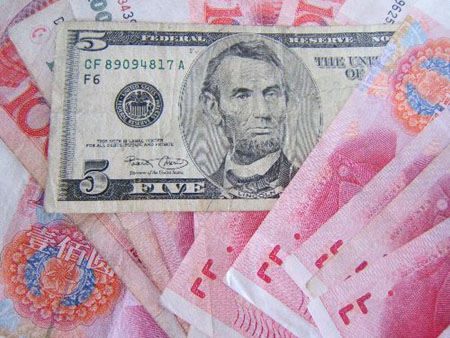
It seems that the real new world order is being shaped by the currencies of the two giants, US.US. and China. Let’s recall what we said in the first part of the post with the same title a couple of months ago:
It seems clear to us that this empire of in fact (China) is not prepared to throw away the hand it has been playing for the past few years, even though it continues to cheat. It may well end up accepting the other players’ rules in a few years’ time, but there is no denying that it wants to keep playing. And it wants to keep playing because it is winning, and with every passing day it gets closer to the level of the gamblers with whom he shares a table and whose faces poker watches it fade as the game progresses. Everyone knows that when China is forced to stop cheating and continues to grow faster and more effectively than the rest of the world, it will already be leading the global economy.
Every day, the strategy of US.US. to keep your heart rate up poker-like with the cheater sitting opposite him. It seems he couldn’t care less about kicking the other players out of the game. Perhaps that’s how it has to be if we want someone to stand up to the Chinese giant that refuses to allow its currency to float freely.
In the evolution of the yuan with regard to euro and to the dollar In recent years, we have seen these strategic differences clearly. And therefore, if these trends continue for a yuan, which is getting weaker and weaker against the euro and other Asian currencies, will undoubtedly cause a great deal of damage. That is why we are saying that it seems as though the departure of poker It's now just a matter of two. China continues with its tricks, US.US. is striving to weaken the dollar as much as possible in order to mitigate the dire effects of the current account deficit (which now stands at 857,000,000,000 – 1Q4Q). It is no surprise, then, that the dollar is currently trading at 7.565 yuan, whilst the euro stands at 10.435. Whether for different reasons or not, the yen It seems to be following in the dollar’s footsteps, but I repeat: it will be a two-horse race.
As our much-admired [name] once put it Rebuzner: «If, ten minutes into the match, poker, if you don’t know who the sucker is, then it’s you.» Even if he benefits from the carrytrade, ... it seems clear that Japan hasn't ended up playing the fool. By this I mean that the EU should take action in light of the direction the global gambling industry is taking. As you can see from the charts linked from the yuan, only the trade balance of US.US. you can plant something facing the GDP China's GDP grew by 11.9% year-on-year in the second quarter, although in the West provide forsettings.
All in all, it seems that currency fluctuations will play a significant role in the new world order, even though some people still mentally stuck in the €/$ exchange rate or in the US dollar as a strong reference currency against the rest. But as I have said on previous occasions, currency speculation is the mother of all speculation, and in the markets one must be very humble when seeking clues. I believe in the weakness of the $ whilst the yuan remains artificially pegged to that mysterious basket of currencies, but I believe this to be the case, in all humility.
Let me start by saying that the observations I am about to make refer to an average investor with average capabilities and little preparation for the financial world – in other words, the majority of the population who have sufficient purchasing power to consider investing beyond simply making ends meet. Naturally, many readers will stand out from this average profile and should not feel that this applies to them. However, based on our experience with consultations of all kinds, we can confirm that what happens to the investors we are about to discuss is, unfortunately, all too common. We believe that by helping to identify the problems, we are taking steps towards resolving them or avoiding them in some way. Just as there is companies specialising in helping other companies become more resilient, it is also vital from the point of view of Counsellors that we can make the investor more resilient.
Many investors’ assets are subject to the sectoral cycles that their own salaries help to offset. These investors have a more or less fixed income from their employment, and on that economic basis take their first tentative steps into equities, investments in alternative energy, property, mixed financial products recommended by their fund managers, and so on. Most of them compulsively switch from one type of investment to another, depending on how things have gone for them. It is common to find people who, after a a year of misfortune After getting burned in the stock market, they spend a few years vehemently denouncing the vagaries of the markets. They usually swing from one extreme to the other, investing excessively in property or even in fixed-income products with an annual 3% yield. But everything passes, and the temptation to see how their friends have made a fortune five years later, in any equity fund, eventually erases from their memory the bitter words uttered by their financial advisor: «The correction is proving more severe than expected, but very good opportunities are now beginning to emerge; you should inject more capital to average down and capitalise on the falls…». Inevitably, just as they decided to cut their losses and change strategy, the stock markets began their spectacular recovery. Shortly afterwards, the bewildered but proud average investor (none of us likes to admit our faults and failures) will try to offload a pile of properties accumulated to the point of obsession and now overvalued, right in the midst of the sector’s slump. And not just for the sake of switching strategy towards the stock market and «stop messing about at 3%«, but because the mortgage commitments already entered into are becoming dangerously burdensome when property prices stop rising by 25% a year between the off-plan purchase and the handover of the keys.
The same applies to other investment strategies involving various financial products: when you lose out on oil, you move on to precious metals, preference shares, currency speculation, and so on. Even if we pick the right products and enjoy months of prosperity, our own fund managers and advisers (little angels…) will see to it that we switch from one to another depending on «the deal of the day» they need to sell. Investments in other people’s businesses can end up putting them «keep your leg on top so they can't get up«.
The result of these «strategies» investment strategy over the decades: a whimsical, disjointed, haphazard and, of course, expensive mishmash. A series of sharp turns in their investment strategy that will have nothing to do with their families« life goals. That «I've put my foot in it; I'm off there to make amends«...it won’t end in tragedy if they at least have some paid-off property left over from their time in the property market.”.
Some of you might think we’re over-dramatising things, since if, come our old age, we still have a property or two and a few other assets, it will mean we haven’t done too badly after all, despite our erratic path. Here I must disagree, because we must bear in mind what we said at the start of this post: the ability to generate income from our work throughout our lives. The income we are able to generate throughout our working lives, the passage of time and compound interest work wonders. If we take all this income – obviously after deducting our family’s expenses – the surplus generated by even very moderate compound interest would surprise more than a few people. Many families would probably have even more assets than they have accumulated after cyclically risking, gaining and losing their surpluses in various investments and businesses.
What we mean by this is simply that many adventures For the majority of investors, their investments would end in disaster if they did not have a surplus from their employment to help them, from time to time, mitigate the losses they suffer on the stock market, in business, with financial products and—though some may still not believe it—in property ventures too. If we were to strictly separate our earned income from our investment portfolio, we would see that only those investments made with a certain degree of judgement and rigour are self-sustaining. The rest, at one point or another in our lives, usually require an injection of funds from our salaries or inheritances. This false resilience (in the psychological sense of the term) stems from the regenerative capacity of the income derived from the investors’ own work. If we separate this earned income from our investment portfolio, it will likely become clear that our ability to bounce back after an investment setback is not what it seems. Many investors are not truly resilient without the support of their salaries; therefore, they need independent financial advice or a radical change of strategy, for the sake of their families’ future. In many cases, one’s earning capacity must bear the brunt of an individual’s investment errors and failures, minimising them to the point of distorting our view of our own wealth-creation capabilities outside of our work.
If we maintain this strict separation between our two economies, our investment ventures should be financed through loans. Thus, «inevitably»The investment itself should be able to pay for itself, clearly demonstrating our ability to make sound investments throughout our lives. An old friend used to say: «If a business can't even cover the interest on its bank loan, what a rubbish business.»We could then set aside the surplus from our professional income and reinvest it in fixed income, as we would already be assuming the risks associated with other types of investment independently. In this way, we would create genuine, fully protected savings plans for our later years, whilst remaining aware of our limitations and capabilities when it comes to investing.
As for the ability to create wealth, I would add:
«We’re all capable of making sound investments; we just need to seek advice from someone who can help us avoid making a lot of bad ones’.»
If we manage to do that, we will have achieved the status of Resilient Investor, in one of its meanings referring to the ability to thrive in an unhealthy environment. An interesting concept, don’t you think?
The globalisation, the internet, the speed of information, the widespread availability of higher education, the instant exchange of knowledge and experiences across the globe, and investment opportunities globalised, etc. We could link all these concepts to the crowdsourcing and the love-hate relationship between retail investors and the equity market.
Just a few years ago, only a handful of investors dared to put their money into the stock market by making their own decisions. And those who did so had to be part of a elite from businessmen which operated with average volumes through brokers employed in large specialist firms which, paternally, they were responsible for recommending as many portfolio changes as possible with vampiric intentions. Small investors had to either sit on the sidelines or settle for whatever their bank could do with their savings – in other words, mediocrity or even inaction.
Nowadays, any small-scale saver with an interest in the stock market trades via the internet paying much lower commissions and with no one trying to sell them the catch of the day. This might lead us to think that it is detrimental to anyone who isn’t an expert in the field, but there are more benefits than drawbacks. Anyone looking for advice, information and opinions can find them in a host of traditional publications, but above all in websites and financial blogs. I should point out here that seeking advice from CincoDías o Expansion For example, it does not necessarily offer a better chance of success than reading a variety of other blogs. Both traditional financial channels and those that are more diverse but have a smaller readership can provide guidance excellent and also aberrant. In short, just like real life.
This form self-taught and free to learn, gather information and get misled wherever you like, so you can invest through whatever channel you choose in whatever you please is a crowdsourcingfascinating. The same potential investor who receives information, education and misinformation from any source or channel soon becomes a source of their own experience. They, in turn, disseminate information, education and misinformation just like everyone else, thereby expanding the range of options available at their fingertips click any other potential investor, who will be emboldened by reading about the experiences of inexperienced investors with whom they feel a sense of identification and support, encouraging them to enter the market.
Some might say it’s dangerous and reckless. That one shouldn’t try to be self-taught and that you should always go through an «expert» when investing in the stock market. Someone who knows a lot and tells you where you’ll make money and where you’ll lose it, in exchange for a share of your profits and losses, of course. Although, come to think of it, if they knew where you’d make money and where you’d lose it, they wouldn’t waste their time advising others in exchange for a measly commission.
As I’ve already said, I personally believe that the benefits outweigh the drawbacks. The crowdsourcing It can work very well for some stock market investors, and I think it’s a growing trend of which we should all be proud. The internet has done more for global freedom than many significant historical events.
Tools such as ETFs help to promote the independence of crowdsourcing and free small investors from the shackles of expensive financial products that rely on fund managers. This is similar to what happens with Savings.com o Selftrade For example. In short, there is a proliferation of tools enabling small investors to access stock market knowledge and invest their money however they wish, with ease.
The ethical aspect of all this, or the effects it has crowdsourcing Global investment in equity markets is a much more complex matter to analyse. Some may consider that the gambling addiction in the manner of my bid.com, others might call it finance for the masses. Like everything else in this world, it’s a matter of opinion. Perhaps it’s down to my almost pathological philanthropy, but I see it as a positive thing that small investors are gaining greater freedom, even if many of them lose money.
Strategic and wealth planning is a completely different matter. A PGR is a haute couture garment that must be crafted in collaboration with Counsellors honest and highly knowledgeable in their field. Dressed so elegantly and under their watchful gaze, let’s enjoy the best Crowdsourcing.
Vaya por delante que este post no pretende ser más que un apunte para hacer un par de reflexiones acerca de un tema tan complejo como la inmigración y sus efectos sobre nuestra economía. Este flujo descontrolado es un hecho y además las cifras de crecimiento son tan sorprendentemente crecientes como las mismísimas cifras económicas chinas. A mi entender, la inmigración es una forma más del reparto mundial de la riqueza que se realiza de forma involuntaria, nos guste o no a los habitantes del primer mundo. Tampoco pretendemos juzgar la conveniencia o inconveniencia del actual flujo migratorio que, por otra parte, es inevitable.
Los pobres huyen de sus países para beneficiarse del bienestar existente en otros lugares del planeta. Hasta aquí comprensible y además de difícil control dada la globalisation existente también en lo referente a demografía. Si además la recepción de dicha población beneficiase a la economía desarrollada se cerraría un efecto cluster de sinergias positivas. Es decir, no sólo se tendería a igualar las diferencias económicas entre países, mediante los cashflows que siempre van de país rico a país pobre en forma de sueldos enviados a las familias que quedaron en origen, sino que también hay quien sostiene la teoría de que la incorporación de mano de obra barata ayuda al crecimiento del primer mundo. Efectivamente muchos economistas políticamente correctos nos quieren convencer de que gracias a esta masa de población procedente del tercer mundo nuestro sistema de cotización a la Seguridad Social puede ingresar lo suficiente, se cubren puestos de trabajo de baja remuneración que los nativos no querrían cubrir, etc.
Personalmente veo las cosas de distinta manera y estoy, modestamente, más en la linea del Doctor en Economía por la Universidad de HarvardXavier Sala i Martín. Según este eminente sabio de nuestro tiempo la incorporación masiva de mano de obra barata al primer mundo provoca diversas problemáticas estrictamente económicas, entre ellas el freno en el avance tecnológico. Sin ir más lejos, muchos municipios españoles prefieren volver a contratar brigadas de inmigrantes para barrer las calles que seguir adquiriendo vehículos especiales que realizan esta labor de barrido y limpieza de cunetas, bordillos y aceras metropolitanas. Es significativamente más barato contratar equipos humanos de barrenderos a los que tan sólo hay que pagarles una primitiva escoba y un sueldo miserable, que financiar vehículos ultramodernos que realicen el mismo trabajo con un sólo operario cualificado. Sin duda estamos ante una regresión tecnológica peligrosa que disminuye, a su vez, la facturación de empresas como la del ejemplo que comercializa dichos vehículos y por lo tanto frena su I+D. Encontraríamos multitud de casos y sectores diversos de regresión en el avance tecnológico para volver a la contratación humana con sueldos que sólo permiten malvivir hacinados en pisos patera. No obstante lo que a nuestros ojos es inaceptable, supone una mejora de las condiciones de vida de las que huyeron en origen y que les permite enviar ayudas vitales a sus familias.
Hay quien alega que los puestos de trabajo con baja remuneración no los querría cubrir la población autóctona y quedarían desiertos, con la consiguiente precariedad en algunos servicios comunitarios. Craso error. Simplemente los empresarios o el Estado se verían obligados a aumentar dichas remuneraciones hasta hacer atractivos para los nativos dichos puestos de trabajo. Como siempre la eficiencia del mercado de oferta y demanda regularía nuestra realidad cotidiana. Lo que está claro es que los puestos de trabajo no quedarían vacantes, simplemente la remuneración se ajustaría de forma adecuada al nivel de vida de nuestra sociedad.
En cuanto al beneficio para las arcas de nuestra Seguridad Social mediante las cotizaciones de los inmigrantes, es muy probable que a medio plazo resulte deficitario respecto al gasto sanitario que dicho sector de población genera.
Podríamos hacer otras consideraciones no económicas como el drástico descenso del nivel académico medio de nuestras escuelas públicas debido a la incorporación de niños y niñas con serias dificultades de lenguaje y/o que jamás habían sido escolarizados. O que la precariedad económica en la que se ve inmersa una parte de dicha población inmigrante los conduce inevitablemente a delinquir, con el consiguiente aumento de la inseguridad ciudadana en los países receptores de más inmigración. Pero esos serían perjuicios sociales y no estrictamente económicos.
No quisiera de ningún modo que este post diese una imagen xenófoba o racista, ni siquiera clasista, ya que nada está más lejos de mi idiosincrasia. De hecho considero que si analizamos la problemática de la pobreza desde un punto de vista global, no sólo es justo que los países ricos frenen su crecimiento en beneficio de los países del tercer mundo, sino que también es solidario y éticamente necesario. Un sensible empobrecimiento de occidente en forma de reparto de riqueza hacia el tercer mundo sería, cuando menos, algo justo, aunque intuyo que quizás sería peligroso para el crecimiento global. Pero si hacemos un análisis desde un punto de vista egoísta y mirando tan sólo por los intereses del mundo occidental, la inmigración masiva es claramente perjudicial para el mantenimiento del bienestar y crecimiento económico existente.
Estamos hablando de hechos que la corrección política pretende distorsionar maquillando los efectos negativos de la inmigración en el sistema económico de los países desarrollados. Quizás sea porque los inmigrantes son votos potenciales o porque simplemente intentar ir contra esta tendencia es como poner puertas al campo.
Pero los hechos y cifras económicas dan la razón a las tesis del eminente Xavier Sala i Martín. El autor de EconomicGrowth no sólo es una autoridad económica en la Universidad de Columbia, en el mismísimo Manhattan, donde imparte algunas de sus clases sino que también conoce perfectamente la problemática del tercer mundo. No en balde es el fundador y director de la Foundation Umbele, con una ejemplar estructura administrativa. Vaya desde aquí mi admiración por su trayectoria profesional y filantrópica.
Si somos capaces de tener una visión más global y solidaria de la economía del planeta no nos sentiremos tan agredidos por el ascenso masivo de inmigración ni por los daños colaterales que causa. Pero reconozco que no es tarea fácil y confieso que mis hijos de primaria van a una escuela privada.
Warren Buffett, un ejemplo para muchos en casi todo, comentó en su último Berkshire Hathaway Annual Meeting lo que yo llamaría el estado de la nación. Este meeting convertido en show donde los haya, congregó a más de 27.000 personas, y en él se trataron gran cantidad de temas como por ejemplo: Resultados del primer cuarto 2007, comentarios sobre Berkshire Hathaway en general, comentarios sobre compañías financieras y riesgos del sistema financiero, comentarios en materia económica y de negocios, consejos de inversión y consejos sobre la vida y otros. En cada uno de estos apartados se trataron temas tan interesantes como diversos, con la profundidad que permite un evento de estas dimensiones y con el buen humor que sus protagonistas le imprimen para que un meeting corporativo sea interrumpido por carcajadas del público de forma regular a lo largo de todo el show. ¿Qué mejor manera de tratar anualmente la marcha de un imperio ejemplar que disfrutando de lo que en otros lares sería una soporífera sesión de cifras, corbatas y gominas impersonales?
Me gustaría hacer incapié en lo que comentó el Sr. Buffett respecto a su macro-donación del 85% de su fortuna:
Buffett: I always felt I would compound money at a rate higher than average and it would have been foolish to give away a significant portion of my capital, which would have been spent within months. I thought my wife would be doing it [giving my fortune away], but that didn’t work out.
When my wife and I had a baby, we hired an obstetrician – I didn’t try to do it myself. When my tooth hurts, I don’t turn to Charlie. Similarly, when it comes to giving money away sensibly, I let people who are smart, energetic and passionate do it. I want to give the claim checks to someone who can follow generally what I would do myself if I were to do it myself.
For the smaller grant requests, I send them to my sister Doris, who likes to handle them.
As far as I’m concerned, I haven’t given up anything. Someone who gives up an evening out or a lot of time or a trip to Disneyland because they donated to a church or whatever, they have given away something. I haven’t changed my life. I can’t eat any better or sleep any better, so I haven’t really given up anything.
Como comentaba al principio, ejemplar. Un hombre todopoderoso que delega en especialistas de todo tipo para que gestionen su voluntad de la forma más porfesionalizada. No olvidemos que estamos hablando de un personaje self-made de una generación de businessmen que crecieron sin pasar por los conductos académicos por los que pasan las presentes generaciones: MBA, postgrados de todo tipo, etc. Aún más meritoria su capacidad de delegación.
Munger: We have no system for estimating the correct value of all businesses. We put almost all in the “too hard” pile and sift through a few easy ones.
Buffett: We know how to recognize and step over one-foot bars and recognize and avoid seven-foot bars.
Es envidiable la humildad de uno de los hombres más poderoso del planeta. Su capacidad de reconocer los riesgos asumibles le ha hecho grande.
Munger: When you’re trying to determine intrinsic value and margin of safety, there’s no one easy method that can simply be mechanically applied by a computer that will make someone who pushes the buttons rich. You have to apply a lot of models. I don’t think you can become a great investor rapidly, no more than you can become a bone-tumor pathologist quickly.
Buffett: Let’s say you decide you want to buy a farm and you make calculations that you can make $70/acre as the owner. How much will you pay [per acre for that farm]? Do you assume agriculture will get better so you can increase yields? Do you assume prices will go up? You might decide you wanted a 7% return, so you’d pay $1,000/acre. If it’s for sale at $800, you buy, but if it’s at $1,200, you don’t.
Buffett: If you’re going to buy a farm, you’d say, “I bought it to earn $X growing soybeans.” It wouldn’t be based on what you saw on TV or what a friend said. It’s the same with stocks. Take out a yellow pad and say, “If I’m going to buy GM at $30, it has 600 million shares, so I’m paying $18 billion,” and answer the question, why? If you can’t answer that, you’re not subjecting it to business tests.
La simplicidad de análisis es clara, lo verdaderamente difícil es su aplicación rigurosa cuando se trata de poner en riesgo nuestro dinero y de gestionar nuestras ilusiones y aversiones por una determinada inversión. Cuando realizamos pruebas sobre el papel, sin arriesgar verdaderamente nuestros activos, las cosas cambian, todo se vuelve más diáfano y fácil. Pero como dijo en este mismo meeting el maestro Buffett:
I think you should read everything you can. In my case, by the age of 10, I’d read every book in the Omaha public library about investing, some twice. You need to fill your mind with various competing thoughts and decide which make sense. Then you have to jump in the water – take a small amount of money and do it yourself. Investing on paper is like reading a romance novel vs. doing something else (risas). You’ll soon find out whether you like it. The earlier you start, the better.
En este punto debo decir que considero temerario para la capacidad de la mayoría de la población estos consejos. Principalmente porque hay muy pocos Warren en este mundo, pero también porque cuando se tiró a la piscina con su pequeña cantidad de dinero, el escenario de los mercados era muy diferente e infinitamente menos especulativo. Pero es lógico que él siga explicando cuál fue el sistema que le condujo al éxito, aunque no por ello debe ser susceptible de aplicación a nuestro presente ni a nosotros mismos.
Buffett es ejemplar en el método que ha creado escuela, en el mantenimiento y constante crecimiento de su fortuna y, para mi lo que le hace realmente Grande, en la donación de 37.400 millones de $. De estos, 31.000 millones de $ han ido a parar a la Bill & Melinda Gates Foundation y 6.400 millones de $ a diversas organizaciones. Además hace constantes referencias a que espera que su donación inspire a otras grandes fortunas a hacer lo mismo, entre ellas menciona explícitamente a John D. Rockefeller Senior. Si se extendiera su ejemplo entre las grandes riquezas genracionales del planeta, estaríamos ante el más eficiente reparto de riqueza mundial. Lo dicho, un ejemplo de cómo hacerse rico, pero sobre todo un ejemplo de cómo dar sentido a la vida de los ricos.
It is inherent in the human race to constantly strive to to foresee and take control of the future, and even more so when it comes to anticipating economic trends that could benefit our pockets homoerectus.
In today’s globally interconnected financial system, where efficiency is a constant guaranteed by the system itself globalisation, countless studies, theories, methods and complex mathematical formulas have emerged to systematise investment strategies designed to make us rich. This phenomenon also goes increscendo, as well as their widespread adoption. These days, any reasonably experienced retail investor is keen to learn a few techniques that will enable them to outperform the average investor, in the belief that their returns will grow proportionally. Furthermore, the professionals who sell them access to these investments have adapted their approach to meet this demand from their clients. The «spend it on thatYou. »the same« or the »guide to making money in finance’, and it seems to be universally accepted that a better-prepared investor will achieve better returns than one who is not. Apparently, learning the necessary investment techniques is the path to wealth. But apart from most honourable major cases gurus in finance, that is not the case. And in those rare exceptions, investment technique is not everything; I would add that it does not even constitute a significant part of the tools used by those successful investors gurus.
It is not enough simply to have a good understanding of technical analysis or to be a fundamentalist expert. Nor are mathematical models capable of predicting market movements with sufficient certainty of success, not even Fibonacci or fractals. That would be far too easy. Geopolitical crises, international relations, the fundamentalismsReligious factors, technical advances in energy, genetic engineering, nationalist strategies, endless speculation of all kinds and, ultimately, a myriad of variables influence the evolution of the global economic and financial system. Some would say that the secret lies in combining all these tools to weigh up every possible variable. Undoubtedly, when used in exactly the right measure and with the timing If done correctly, they can form a relatively successful team, but we must not forget that we are talking about a system with infinite variables, where, moreover, the initial analysis can only ever be an approximation. Furthermore, the number of variables is constantly increasing; for example, speculation in today’s markets exceeds overwhelmingly that which existed during the ‘golden years’ of growth, when many of those who are now regarded as gurus laid the foundations for their personal financial growth. Consequently, their methods are no longer as useful as they were for their creators, as the current landscape involves very different variables. Constant change in the landscape, a variable unpredictable more.
It is much easier to forecast the weather for the next 48 or 72 hours. Although perhaps the system economic-The global financial system is indeed comparable to a weather forecasting system when we try to predict the weather more than 10 days in advance. In short, we could describe it as a chaotic system – that is to say, neither stable nor unstable.
If we conclude that our global financial system is affected by the notorious butterfly effect Inherent in human activity itself – precisely because it is a chaotic system – can we deduce the underlying order concealed by seemingly random phenomena? In theory, yes. The laws governing human behaviour mean that this system is deterministic, sensitive to initial conditions and with attractors (market laws). I do not know whether anyone has ever rigorously applied the precise mathematical formulas used to study chaos to the prediction of markets within the global economic system. Obviously, attempts have been made, but I fear they are nothing more than shots in the dark. Perhaps the leading exponent of Hurst, the eldest of Lyapunov or the relative complexity of Lempel-Ziv and the entropy Computer science, used to gauge the degree of disorder in data, might shed some light on the outlook for the global economy. Or perhaps not. But even if that were the case, perhaps this light shed on our financial chaos would not help us become rich either, since, unfortunately, our wealth is meaningless in an environment of widespread global opulence – at least, I cannot conceive of it being so. I am convinced that if, one day, a method of analysis were developed that was powerful enough to to foresee economic trends; market efficiency would continue to struggle against the predictable chaos. I can’t help but smile when I see investors who have blind faith in their trusted «specialists», with whom they forge bonds of reverence that extend even to their most private assets, and who have no hesitation in recommending them to their friends as the philosopher’s stone of their finances. It is true that during periods when the markets behave in accordance with a limited number of variables eligible because of these experts, they make profits in excess of benchmarks, but all it takes is for chaos to sneeze for pneumonia to take hold of the assets of those managers’ clients. It is only a matter of time before the damage caused by variables not factored in by the investor becomes apparent, as the assets we have available for investment are more than finite. To give you an idea, something similar to what causes the popular martingale Like roulette, but with far more variables.
Even so, we can still aim to make financial progress with our investments throughout our lives, although there are, of course, no guarantees of success: a strategy tailored to our personal needs, all the technical tools at our disposal, taking into account as many variables as possible, and exemplary risk management (I recommend reading Rebuzner), prudence and a great deal of humility. If, moreover, we are able to adapt all of the above to the current global situation at every turn, we will simply be at the mercy of the imponderables, Chaos, or what is also known as chance. Or perhaps we call ‘chance’ that which we are not yet able to foresee, but which is intrinsically foreseeable?
Unfortunately, the average investor will continue to place their trust in fund managers men in suits and ties which they operate indecipherabletools that will make them rich (sic), but who remain in their jobs, trying to minimise their failures as much as possible, even at the expense of their own personal assets. Sometimes they even succeed, and merely go bankrupt periodically alongside their clients. Success will be achieved by those whose life cycle is not long enough for a crisis to, crack or some unforeseeable factor fatally undermines his winning strategy within the System. Despite everything, who said anything about fear? The dollar-euro exchange rate at 1.65, bearish stock market cycles as soon as these levels are reached, rallies generalised interest rates, yuan through the roof…. rienne va plus. We’ll always have Chaos to cling to.
Un buen número de habitantes de este país, me atrevería a decir que la mayoría, pasan sus mejores años de productividad esperando la oportunidad para realizar el pelotazo de sus vidas. Algunos incluso aspiran a realizar más de uno. ¿Por qué iba a ser difícil si a su alrededor pueden ver a diario casos de todo tipo? Así que optan por vegetar en sus puestos de trabajo a la busca y captura de alguna inversión puntual y definitivamente espectacular que les saque de la mediocridad y los coloque directamente en la opulencia. O lo que es peor, esperan varias inversiones de menor rango repetidas lo suficiente como para obtener el mismo resultado. ¿Para qué romperse los cuernos en crear una empresa propia o intentar progresar en sus puestos de trabajo por un simple ascenso que, además de generarles mayor responsabilidad, tan sólo les permitirá, a corto plazo, ir de vacaciones a unos minutos de avión más allá con todo incluido?
Sin embargo, aunque a muchos les parezca extraño, en otros lugares del planeta la clase media aspira a ser media-alta a lo largo de varias décadas. Pretenden ser propietarios de negocio estable o trabajar duro y productivamente como asalariados para ir escalando puestos de trabajo en diversas empresas (o la misma) con condiciones ligeramente mejores. Así, con merecida suerte, es probable que lleguen a la cuarentena con una capacidad de ahorro suficiente para alcanzar el fin de mes sin sobresaltos y una planificación del retiro privado coherente con su trayectoria laboral a lo largo de sus vidas. Por supuesto esto exige una cierta capacidad y un notable sacrificio que disminuye si uno logra disfrutar con lo que hace. Una independencia financiera digna a la edad del retiro es la finalidad de la progresión a lo largo de sus vidas laborales. Por ejemplo en EE.UU. existen grandes empresas especializadas en la organización del mejor retiro de ejecutivos y trabajadores de cierta edad y nivel.
Quizás a algunos pocos les parezca un escenario inalcanzable, pero no lo es para una mayoría de clase media con capacidades medias. A otros muchos tal vez les resulte un horizonte vital triste, mediocre o poco ambicioso, pero recordemos que nos estamos refiriendo a las perspectivas de futuro de la mayoría de nuestra clase trabajadora media con aspiraciones a media-alta. Pienso sinceramente que, para todos ellos, aspirar al bienestar financiero en la jubilación no es ni triste ni poco ambicioso, sino un éxito por el que hay que trabajar duro durante toda la vida. Sin olvidar que hay que disfrutar el camino, por supuesto, pero lamentablemente la vida es así de difícil para la mayoría de nosotros, aunque para algunos lo es todavía mucho más, obviamente.
Curiosamente, en España hay muchas personas jóvenes que tienen otros planes para su futuro financiero: Hacerse ricos antes de los 35 o 40. ¿Es posible? Claro que sí, pero también improbable. Por eso, si dedicamos nuestros años de juventud con mayor capacidad productiva, digamos entre los 25 y los 40, sólo a buscar la oportunidad de hacernos ricos y descuidamos nuestra progresión paulatina, estamos dejando nuestro futuro en manos de una oportunidad que probablemente jamás llegue. Y aunque así sea, probablemente no seamos capaces de reconocerla. Mientras vivamos esperando ese windfall nuestra progresión será plana en el mejor de los casos, ya que nuestras esperanzas y energías no se centrarán en nuestra labor diaria o profesión. Progresar paulatinamente en nuestra actividad laboral no significa ignorar las oportunidades que puedan presentarse, sino preparar el futuro a largo plazo por si esa oportunidad dorada jamás se realiza, tal y como mandan las leyes de la probabilidad.Pero hay quien prefiere pasar su juventud y primeros años de madurez a medio gas, soñando en cuentos de hadas y despreciando las oportunidades de progresar en el trabajo, aunque sea mínimamente. Esperando tan sólo el fin de la jornada laboral, la llegada de las vacaciones y un puesto de trabajo menos duro y con menos responsabilidad, y en consecuencia probablemente menos productivo. Con más tiempo libre para gastar el dinero que no se tiene y lamentarse de ello constantemente. Esto no sólo les lleva a la ruina sistemática sino también a la infelicidad crónica. Lamentarse de la injusticia suele ser poco práctico. Quizás este comportamiento alarmantemente generalizado en nuestra sociedad también guarde cierta relación con el sindrome de Peter Pan, aunque agravado por una incitación al consumo constante.
Sin embargo soñar en cuentos de hadas como los de Disneyland es muy positivo si se tienen claras las posibilidades de éxito y en qué consisten cada uno de los ingredientes de la fórmula mágica del Sr. Walter Disney para hacer realidad los sueños: «Faith, Trust & Pixie Dust». La fe en nuestras posibilidades y creer en lo que estamos haciendo son premisas lógicas que a nadie se le deben escapar. Pero para tener alguna posibilidad de hacer nuestros sueños financieros o laborales realidad, el pixie dust no nos caerá del cielo ni de la mano de Campanilla, lo debemos aportar nosotros en forma de dedicación, trabajo duro, inteligencia, capacidad y en definitiva todas las virtudes necesarias aunque no suficientes para el éxito. A diferencia de lo que sucede en los cuentos, el pixie dust de Peter Pan y su fiel amiga Campanilla, habrá que crearlo con esfuerzo. Sólo entonces la fórmula tiene posibilidades, que no garantías, de éxito. Por todo ello, y sobre todo por la incertidumbre del final, lo vital será disfrutar el camino, es decir las paulatinas mejoras laborales que conseguiremos con el paso de las décadas. La felicidad de los nuestros la podemos encontrar de diversas maneras, pero quizás la más coherente con la realidad económica que vivimos sea encontrarla en el bienestar y seguridad conseguida a través del tiempo. Si desvinculamos nuestra felicidad del trabajo, va a ser muy difícil alcanzarla. Lamentablemente nuestra sociedad está basada en el trabajo y la producción, por lo tanto ser felices al margen de ello es una tarea casi imposible de lograr. Además la infelicidad en el trabajo nos hace más difícil la progresión económica, creándose así un efecto cluster negativo.
La búsqueda del pelotazo no sólo nos aparta del camino de la progresión sino que pone en grave peligro nuestra precaria estabilidad presente, ya que habitualmente para apostar por un pelotazo hay que invertir lo que no se tiene, asumiendo riesgos temerarios. Si sale bien la primera vez, será cuestión de tiempo ya que la gestión incorrecta del riesgo acaba poniendo las cosas en su sitio a medio plazo. En un escenario en que con toda probabilidad jamás conseguiremos el pelotazo soñado, y en que el Estado no podrá mantener nuestras pensiones. ¿Qué alternativas nos quedan si no queremos vivir al margen del sistema? Imaginación al poder, espero vuestros comentarios.
We have been made aware of phishing and spoofing attempts involving fraudulent email addresses and domains that closely resemble our official company communications. These unauthorized communications are not sent by our company and may falsely impersonate our employees or representatives.
Our company is not responsible for communications, requests, or transactions originating from fraudulent or unauthorized email addresses or domains. Please verify that all communications originate from our official email domain before responding or sharing any information.
If you receive a suspicious email claiming to be from our company, please do not respond, click any links, or provide any information. Contact us directly using the contact information published on this website to verify its authenticity.