
We look after your interests

(+34) 93 626 47 75

Torres Sarrià, Carrer de Can Ràbia, 3-5, 4ª Planta BCN 08017

(+34) 91 794 19 82

Pº de la Castellana, 93 2nd floor MADRID 28046

Cluster Family Office Blog

Heritage Preservation in the New Normal (2)

Following on from our previous article «Heritage Preservation in the New Normal (1)« We will emphasise the fact that this New Normal has changed the world, and with it, the concepts of capital preservation and wealth management in general have also changed. We have long been warning of the over-reliance on and saturation of fixed-income investments over the last five years. And that, today more than ever and despite the volatility this entails, we must seek to preserve wealth in assets closely linked to the real economy. In selecting companies with excellent, global businesses, with their feet firmly on the ground, a strong ability to generate cash flow and virtually no debt.
Today we will compare that strategy with the supposed preservation of property assets: News has recently emerged that many investors have long been hoping for: the reopening of the fund Banif Real Estate. But not because of the possibility of being able to access the fund, but rather to address the withheld leave requests since March 2009, when they were forced to close their doors because they were left with nothing but bricks and no money. I don’t need to remind you of the scene that this entailed for the participants, Banco Santander and their respective lawyers. It’s not as if we didn’t warn you nearly four years ago.
It is certainly curious and paradoxical that the property fund closed just as the stock markets began to rebound sharply. Since then, certain prestigious and consistent managers of international equity investment funds have achieved stratospheric returns of over +50%, +100%, +150% and more… However (or perhaps because of this), the property returns of funds as popular as the one mentioned above and Banif Inmobiliario Award Winner has posted a negative return of -22% to date from its all-time highs. This means that investors who invested after 2004 are still losing money today, according to reports Expansion. But if we look at purchasing power or official inflation figures, the losses extend even to investors who came on board after 1999. More than a decade on, and it’s still going on…
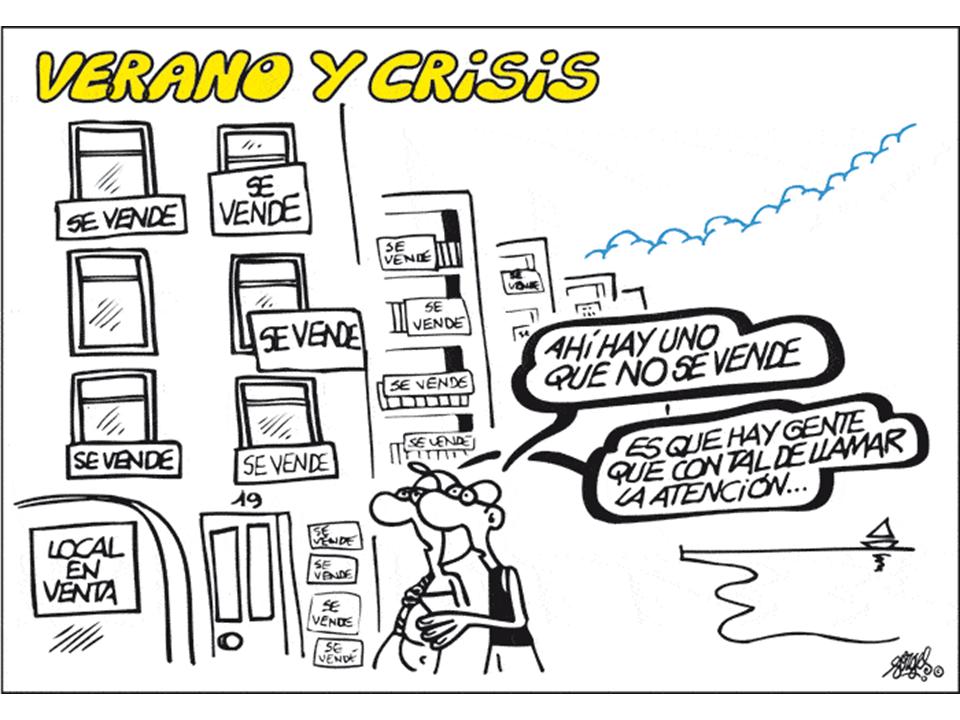
It is also worth noting that if, instead of looking at official inflation figures, we were to base our calculations on real inflation (which, let us remember, was severe in the years following the introduction of the euro), the losses would date back even further. This means that investors who entered Banif Inmobiliario (or other similar or even worse property funds) seeking a conservative safe haven and the preservation of their wealth made a grave mistake regarding the future of their assets. The prices paid by the property fund managers, supposedly specialists in property acquisition, were so inflated that they are unlikely to be repeated for many years to come. And it has now been more than 5 or 10 years (or even longer) if we take into account the loss of official purchasing power. But we do not mean to suggest that they were fraudulently inflated by the management team, but rather inflated by the insane market price itself, which many justified with surreal arguments.
We cannot stress enough that the best way to preserve wealth in the long term, given the current situation of overvaluation in developed-country fixed-income markets and the Spanish property bubble, is to invest in assets closely linked to the real economy, purchased at prices below their true value. Historically, and today more than ever, excellent businesses from excellent, debt-free global companies, purchased at low prices, are the best way to preserve wealth in the long term. The only consistent one, I would venture to say, in the current New Normal.
We have produced this simple chart showing how the returns of various relatively well-known investment funds with a proven track record have fared over the last decade, compared with the returns of what is probably the most popular property fund:
As you can see from the chart, all the funds in our selection surpassed their pre-2008 crash highs months ago. Attempting to preserve wealth by investing in property in a bubble-prone market such as Spain’s has proved to be a terribly damaging decision, as is clearly evident from the chart above. The opportunity cost over the past 11 years or so of having invested in property in Spain rather than in sound global companies at a good price, even after a stock market crash like the one in 2008 is huge. But it would have been the case even if the Banif property fund had continued its linear and unsustainable upward trend!
Something that most investors seem to forget or overlook is that, by buying shares in good companies, they also become co-owners of the corresponding share of the property held by those multinationals. And therefore they also benefit from increases in the value of those properties in their respective international property markets, as this will be reflected in their balance sheets and, sooner or later, in their share prices too. Comparisons, whichever way you look at them, are odious, and we won’t even get into the liquidity (and headaches) of one option or the other. Just ask the shareholders of Banif Inmobiliario or any property owner in Spain.
If we also compare it (in the chart below) with the results of top-performing hedge funds, the scale used makes the huge differences in the chart above between those equity/mixed funds and Banif Real Estate virtually imperceptible, reducing them to an indistinguishable line at the bottom. S-p-e-c-t-a-c-u-l-a-r, isn’t it?
Ultimately, preserving wealth in the long term under the New Normal almost inevitably involves investing in high-quality assets whose value far exceeds their price. The versatility, liquidity, global reach and diversity offered by the equity investments made by the world’s best fund managers are impossible to achieve through more specific investments that are removed from the real economy, such as saturated sovereign (and corporate) debt or property investment in expensive markets. And we could say something similar about trying to preserve long-term investment in equities by buying shares in indebted, sub-par, non-global and overpriced companies. But beware: investing in company shares under the guidance of mediocre managers is suicidal, because the longer the time horizon, the more losses we stand to accumulate. Only by being able to invest and consistently outperform the market (indices) over the long term will we adequately preserve our wealth in this new and exciting normality that we began to experience four years ago. Achieving this is the key to our future and that of our heirs.

Reality always beats fiction

Cuando apenas se han cumplido 10 años desde que 2 aviones repletos de pasajeros derribaron los mayores rascacielos de Nueva York, la realidad está volviendo a superar la ficción. Es cierto que lo que está ocurriendo en Japón tiene, a priori, un menor alcance global que la amenaza de terrorismo internacional que supuso aquel atentado del 9/11, pero la secuencia de los hechos acontecidos desde que la tierra temblo el pasado viernes, van más allá de lo que nuestra imaginación podía prever.

El cúmulo de circunstancias está haciendo que la tercera potencia mundial se colapse y se arrodille ante la catástrofe. No sólo tembló la tierra con grado de intensidad 9 en la escala de Richter (y aún sigue con réplicas que arrasarían cualquier otro país), sino que lo hizo con el epicentro sumergido a escasos kilómetros de la costa japonesa. Justo en frente de diversas centrales nucleares, las cuales han perdido su capacidad para enfriar la bestia ridiactiva que tienen en sus entrañas. Las desgracias se acumulan de forma siniestra, puesto que el temblor ha provocado la erupción violenta de un volcán cercano. El tsunami ha sido mucho peor que el generado por el terremoto de Sumatra, y ha arrasado poblaciones enteras penetrando hasta 20 kilómetros tierra adentro. Los muertos y desaparecidos (en su mayoría también muertos) se cuentan ya por decenas de miles, y el mar devuelve constantemente algunos cadáveres a las playas, por llamar de algún modo a la costa actual. Pero lo más estremecedor de todo es que lo peor está aún por llegar.
Si un milagro no confina la radiación de los generadores afectados, la contaminación matará a millones y millones de personas en los próximos años. Porque las muertes provocadas por el desastre de Chernóbil fueron relativamente reducidas, dada la escasa concentración de población en aquel lugar. Pero ahora estamos hablando de riesgo inminente de radiación descontrolada en uno de los países con mayor concentración de población por km2 del planeta.
La bolsa japonesa se desploma, y las asiáticas y europeas se contagian. No obstante, esta lamentable catástrofe, no es global sino local. Y en términos económicos, la afectación hacia otros mercados debería ser relativa, a pesar del pánico y contagio inicial.
Sin la admirable disciplina, espiritualidad, modernidad y eficiencia de la sociedad japonesa, el caos se habría apoderado ya del país, agravando muy mucho las consecuencias del desastre. Vaya desde aquí nuestra solidaridad con un país que amamos especialmente por muchos motivos.
Os recomiendo algunos twitters para seguir la actualidad y las vivencias del desastre al segundo: @Kirai (de nuestro amigo Héctor García); @Takeshi_Tngch; @V7VOA, @YonhapNews. También os dejamos permanente en nuestro blog el stream del canal NHK World (en inglés) para que sigáis en directo lo que sucede en Japón.

Chloroform + croissant €2

Here’s another post from our Argentine friend Jorge, and this time he’s included a video of a famous comedian from his country. Personally, I much prefer a coffee or a cup of tea to go with my croissant:

Chloroform + Croissant: €2

Believe it or not, this is the new Mediterranean breakfast. Yes, ladies and gentlemen, this is what people are eating right now all across the country. If not, let someone prove me wrong. We’re numb, dazed; we don’t react to absolutely anything. They limit our speed, and we accept it; they ban us from smoking, and we accept it; they vaccinate us against swine flu, and we accept it; they tell us that unemployment will fall in March, and we accept it… And so on with an endless array of restrictions and bans that they’re gradually rolling out, to distract us, to keep giving us our daily dose of anaesthesia. It’s time to say ‘enough is enough’ – we need a plan, and we need it now. No more decaf – the more caffeine, the better, unless you’ve got high blood pressure. It’s time for the day to have 25 hours, and for us to work all of them to shake off the lethargy we’re currently in.

We all need to change our attitude. Let’s stop waiting for the famous, debt-ridden STATE. It no longer exists; it is just a loathsome monster on the verge of death. Let’s stop lamenting and get down to work. Let’s create our own opportunities and take responsibility for ourselves. We must revive the culture of hard work. Let’s be frugal; the feast is over – that’s now part of history. And history is written only by the winners; the losers have no place in it – they cannot write it. Our history is personal – or do any of us want our children to reproach us for what we are leaving them?

We must force politicians to get their act together, not because they can solve our problems, but so that they stop putting further obstacles in our way on this difficult journey. Enough is enough; we must say so loud and clear. Let’s set off down the tunnel right now; let’s stop digging downwards and start moving forwards. Our present and our future depend entirely on us. No one is going to come and rescue us – absolutely no one. According to them, we aren’t important enough for them to take action.

We are the architects of our own destiny; let’s start shaping it now. And anyone who doesn’t believe in all this should do as Fernandito...

Heritage Preservation in the New Normal (1)

La preservación de los activos a largo plazo es la gran preocupación de todos los tenedores de fortunas, especialmente de las fortunas medias y moderadas. En este primer artículo vamos a hablar del papel que puede ejercer hoy en día determinada inversión en renta variable respecto a otros tipos de activos financieros. (more…)

The preservation of heritage and the real economy

http://www.gurusblog.com/archives/fondo-pensiones-japon/01/03/2011/
(more…)

The crisis is over.

Many of you will remember Jorge, our great Argentine friend, who has been contributing from time to time to our blog. Always with his sharp insight, he makes us reflect on what is happening in this world with a rare clarity. Today he brings us an article with a thought-provoking title… I’ll say no more. Enjoy it: (more…)

WE’RE MOVING…

We’re moving. From today, you can follow us on:

www.freshfamilyoffice.org


We hope you like our new site and that you find it even more useful and interesting. Followers can subscribe to the new blog right here.

We will also continue to publish a variety of content on our blog on a regular basis Family Office on Rankia.

See you there!

Here we go...

Todavía no ha comenzado lo peor. Aún hay dinero para extender los subsidios de desempleo para algunos de los parados. La inercia del Estado del bienestar virtual del que venimos es afortunadamente grande, pero se va a coregir a bofetones. Parece que el futuro próximo asoma por la puerta y las orejas del lobo son realmente tan peludas como nos temíamos. El malestar social comienza a hacerse notar en forma de manifestaciones para patalear por despidos y EREs, colapso del consumo, economía sumergida y contrataciones callejeras, secuestros expréss, botellones violentos, etc. Y pronto será evidente un aumento significativo de la violencia y la inseguridad ciudadana.

A principios de este 2009 escribimos un artículo titulado Do Not «Disturbios», que odio decir que cobra más y más sentido con el paso de los meses. El año 2010 y quizá el 2011 va a ser el brutal bofetón de realidad para una generación que nació y vivió en la abundancia virtual. No conocieron la pobreza más que en la marginalidad y exclusión social minoritaria. Pero cada vez va a haber menos clase media y una mayoritaria clase baja. Una clase baja que nada tendrá que ver con la exclusión social ni la marginalidad, sino de caras conocidas, ex-compañeros de trabajo y vecindarios enteros de miseria debida.

Mientras la estabilización o incluso la recuperación económica se empezará a producir en países como los EE.UU., Alemania o Francia a partir del 2010, en España se nos acabará el oxígeno. Y me refiero a la capacidad estatal, ya que los bolsillos particulares de la mayoría de clase media ya quedaron secos en este 2009. La fórmula del agujero español es una ecuación muy simple: Sin un crecimiento elevadísimo y sostenido el futuro es negro, a no ser que nos den una chistera de la que asomen un par de orejas. Además somos el paradigma de la improductividad: En el último trimestre perdimos un millón de asalariados, pero en el útlimo año creamos más de 100.000 funcionarios nuevos. Y ya tenemos 1 funcionario por cada 5 trabajadores como dice GurusBlog en este ilustrativo artículo.

La productividad es un concepto ajeno a algunos sindicatos miopes que todavía creen que los males del trabajador son causados por los excesivos beneficios de los empresarios. Esta vez no. Y es que algunos trabajadores y sindicalistas todavía buscan desesperadamente que el Estado les suministre su dosis habitual de píldora azul en este 2009. Pero en 2010 se habrán acabado en España y sólo tendremos píldoras rojas. Bienaventurados los que se habituaron antes a ellas, porque de ellos será el futuro.

Quizá sea una mera casualidad, pero hace poco recibí un correo, a modo de spam, con este contenido:

HOME and Global Dimming.

Today we are not going to talk about economics but about our planet. You may have already seen the link below, but it is a documentary entitled «The world's economy".«Home»The project is a reflection on the sustainability of humanity's management of resources since the Industrial Revolution.

I recommend that you watch it in full screen because it has some absolutely spectacular images. For those of you who do not speak English, the subtitles are activated. The insertion of the video is not authorised and therefore I copy the link:

«HOME«

You will also find it interesting to watch the report on «Global Dimming» which I have attached below in 6 parts:

Why does this magnificent scientific technology, which saves work and makes our lives easier, bring us so little happiness? Simply because we have not yet learned to use it wisely.

Alber Einstein (1879-1975)

Year 1 A.D. (after Lehman)

El año en que vivimos peligrosamente (The Year of Living Dangerously). Ese podría ser el título de lo acontecido desde la caída de Lehman Brothers el 15 de Septiembre de 2008, aunque en realidad vivimos peligrosamente desde que empezó el siglo. Pero la consciencia de descalabro la empezamos a intuír tan sólo a partir del mes de Agosto de 2007, cuando los engranajes crediticios del sistema financiero empezaron a desencajarse. A partir de ahí, todo se precipita como un castillo de naipes con inercias de petrolero: Lenta pero inexorablemente.

Hace un año el risgo sistémico tocó fondo, al menos aparentemente. Pero la deflación, las cifras macroeconómicas negativas y la destrucción de riqueza siguen. Parece que ya algunos indicadores de algunos países abandonan la caída al vacío y gozarán de mejores perspectivas. Sólo el tiempo dirá si serán efímeras o se afianzará la recuperación de algunos. En los vagones de cola de las economías, los brotes verdes son opiáceos. Meros delirios que distraen la atención, impidiendo así la clarividencia necesaria para remar en la dirección correcta.

Investorsconundrum ha linkado este mosaico interactivo de Reuters (view the timeline) en el que podemos ver día a día, desde el 9 de Agosto de 2007, el peor periodo económico global de la Historia. Es muy instructivo hoy en día echar la vista atrás y repasar en titulares e imágenes el año que cambió el mundo. Algunas de las imágenes de dicho mosaico no tienen desperdicio. Lejos quedan las imágenes de Bush intentando comprender lo que le ocurría al ultraliberalismo, cuando el terrorismo islámico era la principal preocupación mundial. Que Dios reparta suerte en esta nueva Era: The Año 1 d.L.

Security Notice

We have been made aware of phishing and spoofing attempts involving fraudulent email addresses and domains that closely resemble our official company communications. These unauthorized communications are not sent by our company and may falsely impersonate our employees or representatives.

Our company is not responsible for communications, requests, or transactions originating from fraudulent or unauthorized email addresses or domains. Please verify that all communications originate from our official email domain before responding or sharing any information.

If you receive a suspicious email claiming to be from our company, please do not respond, click any links, or provide any information. Contact us directly using the contact information published on this website to verify its authenticity.