Today we are going to refer to an article published by Bloomberg where a panel of 5 experts give their opinion on which assets they think are the best to invest in at the moment. One of these experts is Mark Mobius, founder of Mobius Capital Partners and former executive chairman of Templeton. His recommendations have particularly caught our attention because they coincide with our strategy, which we have been implementing for some time now. Cluster Family Office. We will therefore summarise and comment on Mark Mobius' arguments and proposals to Bloomberg readers, to which we fully subscribe.
.
In the late 1980s, emerging economies accounted for only 51Tbp3T of the global market, but now they account for more than 401Tbp3T and rising. In those years investors could not invest in more than half a dozen stock exchanges, yet now we have more than 70 markets open to growing foreign investment. This now allows for enormous diversification, and points the way forward: Now is the time to invest in certain economies emerging - or already emerging where tremendous economic recovery and growth is taking place.
.
For example, Brazil's stock market has risen 40% from its lows. And it still has a long way to go, as every sector is set to benefit from the reform being implemented by the new Bolsonaro government (political-ethical discrepancies aside). The country's entire political environment is being radically changed as a result of the relentless pursuit of corruption that is taking place. Take Petrobras, one of the largest oil companies, which is changing its entire organisational structure from top to bottom to make sure that no more corruption cases take place in order to be in tune with the new government. All the companies have been getting their act together on corporate governance issues, along the lines of stamping out corruption so that the state does not take a fatal look at them. This is very positive for international investors, since with more rigour and order, the Brazilian consumer sector will benefit and will do particularly well in the coming years.
.

.
Moving on to the fundamentals, we like India's domestic consumption oriented companies, whose economy is already practically growing at 8% per annum. India's software sector is very large (like everything else there) and we like the medium-sized companies that are embracing new technologies to, for example, start/increase their online sales. India's byzantine distribution system is being modernised radically by technology, tax reforms and the elimination of taxation between the different regions of this sub-continent. This will be vital and will greatly boost the movement of goods and trade. Despite the intrinsic difficulties that still exist in India, Amazon and Walmart are getting local businesses into their game.
.
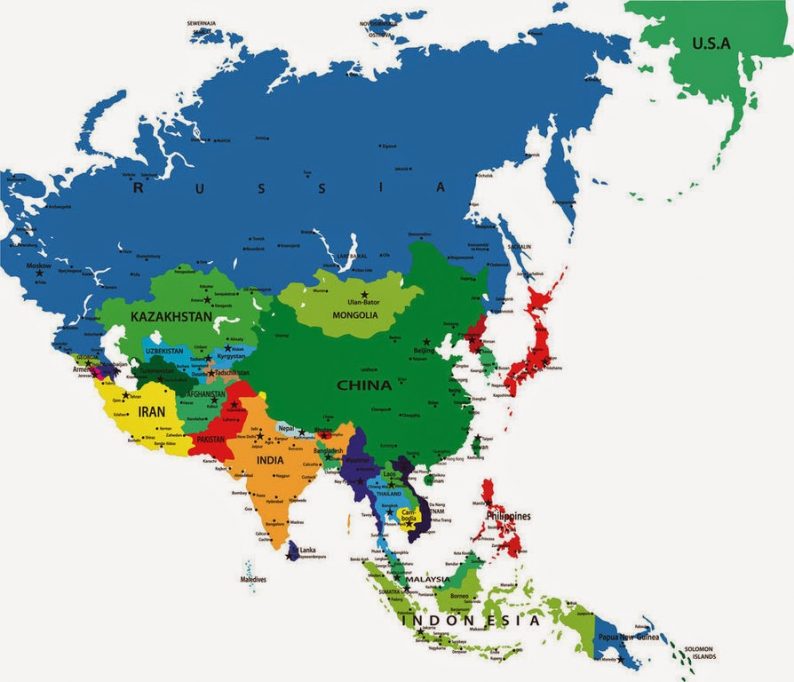
And what about China. Its potential is enormous, both for Cantonese companies listed in Hong Kong and A-shares listed in Shanghai. And its market economy, perfectly planned by the Jinping government, is an oasis of prosperity for Western investors in the growth desert of Western developed markets. It is also more than interesting to look for companies that are particular winners in a trade war with the US that has more political than real economic overtones. One of the clear winners to look out for, although we were already looking at it on the merits of its own growing economy, is Vietnam, which is welcoming southern Chinese companies to relocate or simply expand. In fact, and as a significant anecdote, the failed summit between Trump and North Korean President Jong Un was held in Vietnam because the US government wanted to show Jong Un the Vietnamese model as an example for North Korea to follow. The model evolution, from an iron communist economy like Vietnam's, to a growing and prosperous market economy, without loss of government control. And all this praised by the US president, live to see.
.
And the same is true for the rest of Southeast Asia, where everything is still to be done and the middle class has a tremendous future ahead of it. Mexico is also benefiting from its recent agreement with the USA and Canada. World trade is like a big balloon: if you push on one side, it inflates on the other.
.
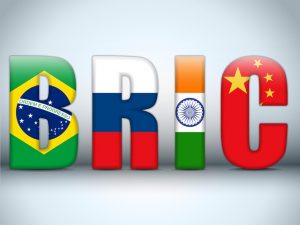
In short, Mobius is fully in line with our positioning in Russia, Vietnam, China, India and Brazil. And this positioning is materialised through the management companies of local institutional funds who know the political, legal, accounting and economic characteristics of their respective countries inside out. The result is in the form of alphas spectacular and consistent. And fortunately options are beginning to emerge fund of funds so that smaller investors (with a minimum of $125,000) can access these large institutional funds. emerging who do not even have retail classes.
.
The reasoning, then, is clear: traditional markets belonging to developed economies must be abandoned because they have and will have the wind against them for at least a generation. Their economic growth is and will be anaemic, and their ageing and unproductive demographics are and will be an insurmountable drag on their companies' future share prices. It is true that some Western companies are desperately and painstakingly turning to Asia in their search for revenue. But it should not escape anyone's notice that it is far more productive to invest directly in Asian companies that concentrate all their turnover and growth in domestic economies with overwhelming GDP growth and demographics.