
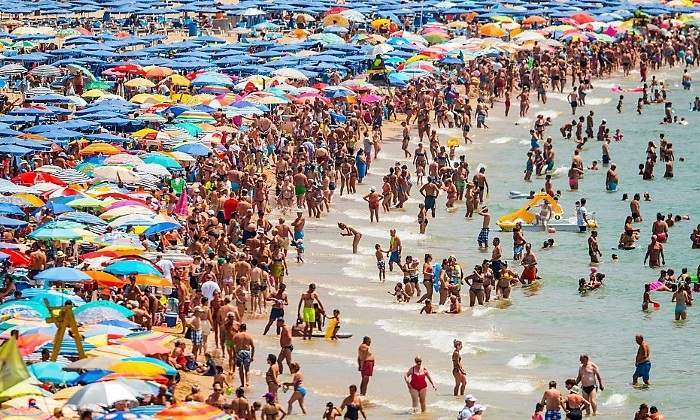
Interesting reflections in this article from ValueWalk on how tourism-dependent economies are affected by this pandemic. Below we summarise and comment on the dark prospects that the author explains in this article.
.
Before the pandemic, the global tourism industry was a major contributor to the world economy, accounting for 10% of global GDP and more than 320 million jobs worldwide. But the pandemic has put at least 100 million jobs at risk, most of which are in micro, small and medium-sized tourism enterprises. That is 1 in 3 tourism-related jobs.
.
How have countries that are particularly dependent on tourism been affected by the pandemic?
These countries are likely to be affected by the pandemic for much longer than others that are not solely dependent on their tourist economy. The reason is simple and obvious. Contact-intensive services are part of the internal fabric of the tourism and travel sector, which unfortunately for tourism-dependent countries, had to be suspended due to the nature of the pandemic and will most likely continue until people feel safe to travel en masse again. There is no way to do tourism without personal, physical contact. And the virtual tourism that has emerged, via visits with professional guides who live-stream their tours via zoom and the like, is not and will not be a meaningful substitute or palliative for economic disaster.
.
In the first half of 2020, global travel and tourism fell by almost 80% and lost US$1.2 billion in revenue. The consequences for tourism-dependent countries, including several African countries, countries in the Caribbean, the Mediterranean and some Pacific Island nations, are severe, as their economies and GDP continue to shrink as the pandemic unfolds.
.

A number of tourism-dependent countries are trying to finance various policy measures to mitigate the effects of plummeting tourism revenues on households and businesses. Cash transfers, subsidies, tax breaks and loan guarantees have been part of these government policy measures. However, in countries such as Spain, which is used to receiving 84 million foreigners each year, such measures are clearly proving insufficient and ineffective.
.
Other tourism-dependent countries have opted for very specific approaches. The Seychelles, for example, benefited from an increase in tuna exports during the pandemic to compensate for tourism losses, while in Barbados the government is seeking to reduce social spending and reprioritise capital spending to create jobs in non-tourism sectors. Small economies, if their rulers are nimble and imaginative, can make decisions that have a substantial offsetting effect.
.
With the slow lifting of global travel restrictions, many tourism-dependent countries have also begun to reopen their borders. Some have drafted and approved very specific travel admission programmes that would admit tourists from low-risk countries with special quarantine requirements or allow admission on condition that tourists can provide proof of a negative COVID-19 test. However, others such as Spain cannot do so because their levels of contagion and ICU bed occupancy and daily deaths do not allow it.
.
What will happen to hidden tourist destinations?
While many tourism-dependent countries are implementing recovery strategies to boost travel and tourism, there are many tourist destinations, with somewhat more diversified economies due to their larger size such as Spain, that need tourism to survive the pandemic.
.
There are hidden parts of Europe where tourism is also key and represents between 10% and 15% of their GDP, for example Spain or Croatia. Or even more, such as in the Fiji Islands or others in the Asia-Pacific region.
.
Destinations such as Fiji for example are isolated tourist destinations that did not experience an influx of tourists on a regular basis even before the pandemic. However, now, given people's hesitancy to travel to popular holiday destinations, these destinations may be the perfect places for people to go now that countries are lifting travel restrictions.
.
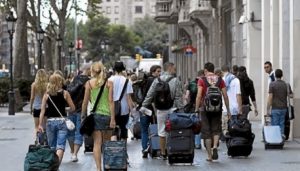
It is very difficult to predict the future of the tourism industry and how tourism-dependent countries will fare during and after the pandemic. But slowly, with countries lifting travel restrictions and opening their borders, tourism-dependent countries may recover after the pandemic, but with so many people still hesitant about mass travel, such as flying, it is likely that global tourism will not return to pre-pandemic levels in the near future. And when it does return, the Hunger Games will decide which countries get the biggest slice of the sector's comeback, since tourism distribution need not return to the same countries - far from it. The key question is whether or not the economic damage caused in countries such as Spain will be reversible before the next generation is spoiled. And the macro data we explain in «We must plan for misery»The «tourism crisis" does not bode well for the optimism of our children. Our governments, present and future, will have much to say in the potential recovery and exploitation of tourism. But, as we warned in "The sinister future of our children in Spain»Parents must also make it easier for our children to make a living in less hostile economic environments.