
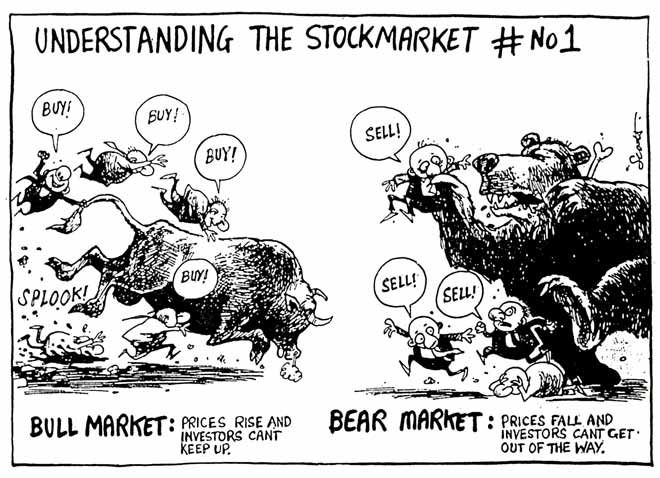
The Wall Street Journal's special senior columnist, Justin Baer, published this article last week in WSJ which gives a perfect account of what happened behind the scenes of the financial markets the week of 16 March, in the midst of the Coronavirus Crash. The summary account of what happened is as follows, certainly worthy of the best scriptwriter of Hollywood Netflix.
.
Ronald O'Hanley, chief executive of State Street Corp, received an urgent call as soon as he sat down at his desk in his downtown Boston office. It was 8 a.m. on Monday, March 16, 2020. One of his senior managers told him that pension fund managers and treasurers at major companies, panicking about the economic damage that the Covid19 pandemic could have beyond the obvious, were withdrawing billions of dollars from money funds. This was forcing those funds to sell some of the bonds they held in their portfolios. But there were hardly any buyers. Everyone was suddenly desperate to cash in.
.
He and senior executive manager Cyrus Taraporevala had been talking the night before, trying to get a sense of how investors would react to the new deal. emergency rate cut by the Federal Reserve. Now they had the answer. In his 34 years of experience in the world of finance, Mr. O'Hanley had survived many battles in the markets, but none like this one. «The market is fearing the worst,» Mr. O'Hanley told Taraporevala.
.
16 March was the day when a microscopic virus brought the financial system to the edge of the abyss. Few realised how close we had come to plunging into the abyss.
.
The Dow Jones Industrial Average plummeted by almost 13% that day, the second biggest fall in history. Stock market volatility also soared to record levels. Investors had trouble even getting rid of «safe» bonds such as Treasuries.. Businesses and the government itself were losing access to credit markets, which they relied on to pay salaries and build schools.
.
The major money funds, where large institutional investors stash their money and buy huge amounts of short-term corporate debt - normally safe and boring - had outflows of $60 billion in that week, according to the money data agency Refinitiv. One of the biggest bleed-offs in history.
.
Interest rates on short-term corporate debt soared, surpassing the federal funds rate by 2.43 percentage points. Its highest level since October 2008, according to the Federal Reserve Bank of St. Louis.
.
The financial system has endured numerous credit crunches -or events in which liquidity disappears - and there have also been numerous crashes stock market. But seasoned investors and those who have Wall Street as their modus vivendi say that what they experienced in mid-March was most severe and withering. The stress on the financial system was greater than many had ever seen.
.
«The 2008 financial crisis was a slow-motion car crash compared with this,» said Adam Lollos, head of short-term credit at Citigroup Inc. «This has been like, ‘Boom!'».
.
The emergency levees of state programmes have long been preventing collapse. And what happened on one of the worst days ever experienced by financial markets shows that all efforts were more than justified and urgent.
.
The Fed set the stage on Sunday 15 March. Investors expected the central bank to announce its response to the crisis the following Wednesday. Instead, the FED announced at 5pm on Sunday afternoon that it was plunging interest rates and planned to buy $700 billion in bonds to unclog the markets. Perhaps the latest change of Fed chair, with Jerome Powella at the helm, did not help to provide reassurance either.
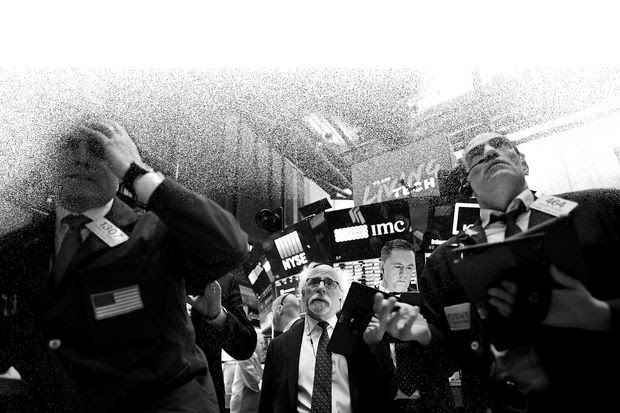
Traders monitor the opening at the New York Stock Exchange on Monday morning, March 16.
Instead of reassuring them, companies, governments, bankers and investors saw this decision as a signal to prepare for the worst-case scenario of the coronavirus pandemic. The drop in bond prices turned into a stampede.
.
Mr O'Hanley was in a good position all the same. His entity is an essential provider of administrative and accounting services to most of the major investors, and has its own giant asset management company.
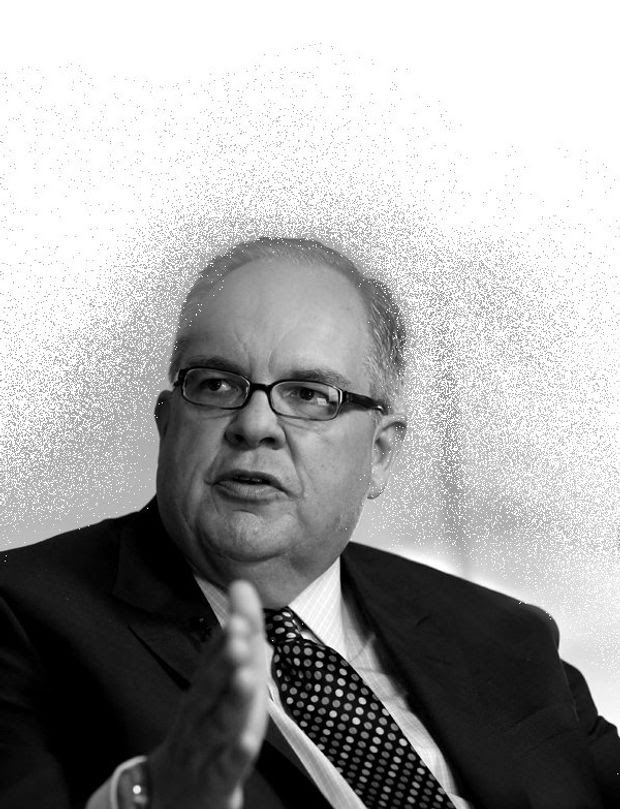
Ronald O'Hanley, chief executive of State Street Corp.
Companies and pension fund managers have relied on money market funds that invest in short-term corporate debt and municipal debt holdings, which are considered safe enough to be classified as «...".«cash equivalents«. They function almost like a current account, helping businesses to manage their payments and finance their daily cash requirements.
.
But on that Monday, investors no longer considered certain money market funds to be equivalent to cash at all. As soon as everyone who was able to get their money out of it had done so, managers were no longer able to sell bonds to meet the outflows.
.
In theory, the system was supposed to be more fluid in these situations, as US regulators reworked the rules after the 2008 financial crisis. But those new rules could not stop such a panic assault. Rumours circulated that some of State Street's rivals had been forced to inject money into their funds. Within days, both Goldman Sachs and Bank of New York Mellon began buying assets from their own money funds. Both banks have declined to comment.
.
That was bad news not only for those funds and their investors, but also for the thousands of businesses and communities dependent on short-term debt markets to pay their employees. «If junk bonds collapse, people can understand and assume that,» Mr. O'Hanley said. «But there is no way to rationalise collapsing money funds and cash equivalents.».
.
A debt investment unit of Prudential Financial Inc., one of the world's largest insurers, also had serious difficulties with typically safe assets.
.
When PGIM Fixed Income traders tried to sell a batch of short-term bonds issued by highly rated companies that Monday, they found very few buyers. And banks were suddenly refusing to act as intermediaries as well.
A Bank of New York Mellon Corp. office building in New York.
«The community broker-dealer had frozen,» said Michael Collins, a senior fixed income manager at PGIM. «The situation was as bad as it was at the worst of the financial crisis.
.
In southern California, the head of debt trading at investment firm Capital Group Cos, Vikram Rao, was trying to find an explanation for the dysfunction. Mr Rao, who was teleworking that Monday, descended the 20 steps to his home office at 4:30 a.m. and discovered that the debt markets were off the rails. He started calling all the senior Wall Street managers he knew who worked in key positions in big banking.
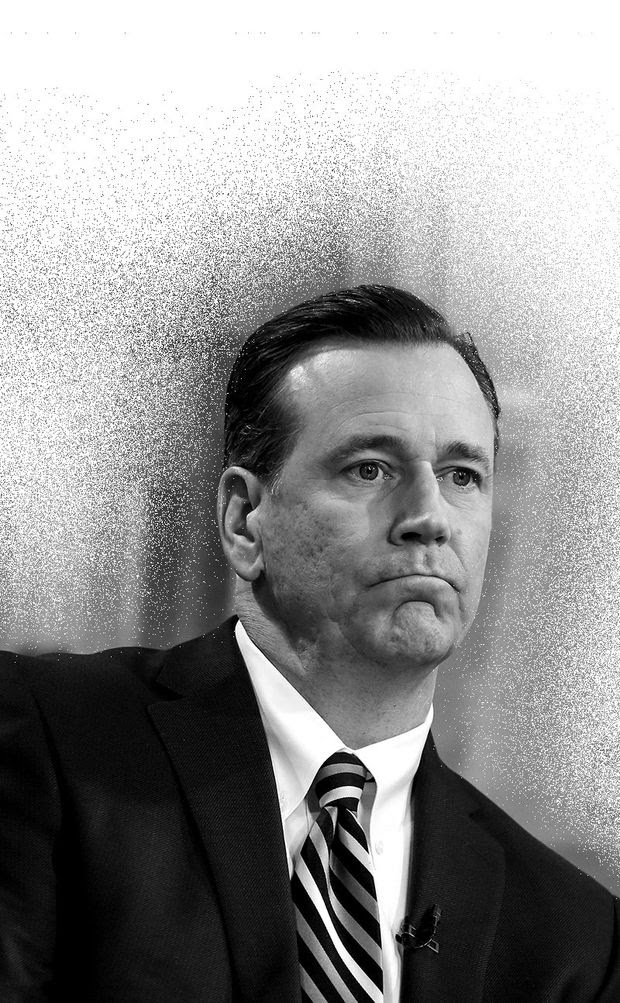
Michael Collins, a senior investment officer at PGIM Fixed Income.
Executives told him that the massive rate cut the Fed had announced just hours earlier had blown up interest rate swaps in favour of banks. Companies had anchored themselves to pre-crash rates for the past year to lock in future debt. But when rates fell that Monday, companies suddenly owed banks additional collateral that they could not afford.
.
On that very Monday, banks were to book these new collaterals as assets on their books, with no room for manoeuvre.
.
So when Mr Rao called management to explain why they were unwilling to accept his operations, the answer was always the same. There was no capacity to buy bonds and other assets and still comply with the new directives imposed by regulators after the 2008 financial crisis. In other words, the capital rules that regulators imposed more than a decade ago to make the financial system more robust were, at least this time, further limiting the liquidity of the Markets. One of the managers put it bluntly: «We cannot make an offer for any assets that are added to our balance sheet at this time».
.
At the same time, increased stock market volatility, together with plummeting mortgage debt prices, forced the margin calls of many investment funds. This additional collateral owed to the banks was also added as assets to their balance sheets, thus adding more and more billions.
.
The Fed's bond-buying programme, made public that Sunday, spoke of 200 billion in mortgage bond purchases. But already on Monday managers discovered that, despite the good intentions, the Fed's figure was far too low.
.
«On that first day, the market already totally ran roughshod over the Fed,» said Dan Ivascyn, who manages one of the largest bond funds as chief investment officer at Pacific Investment Management Co (PIMCO). «This is where REITs and other leveraged mortgage products started to get into serious trouble.
.
On Tuesday, UBS Group AG closed two exchange-traded notes (ETNs) linked to real estate mortgage investment trusts. By Friday, a mortgage trust managed by hedge fund Angelo Gordon & Co. had already warned its creditors that it would not be able to meet its futures margin calls.
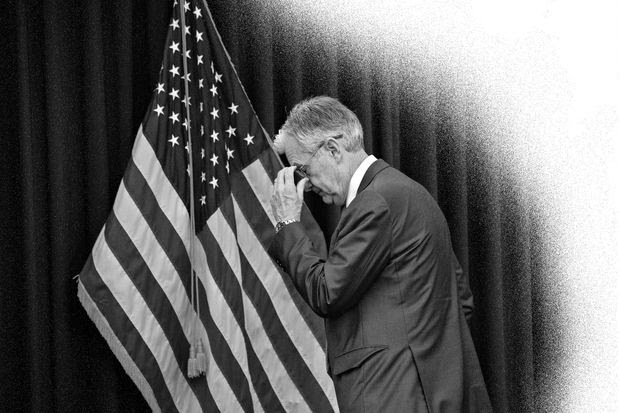
Jerome Powell, chairman of the U.S. Federal Reserve, at a news conference in Washington, D.C.
Panicked investors threw municipal debt into the market at any price, dealers cancelled billions of dollars of deals and new lending came to a screeching halt. There was less bond issuance in the week of 16 March than at any time during the 2008 financial crisis, the terrorist attack on the twin towers in 2001 or the black week of the 1987 crash and its Black Monday, according to Refinitiv's inflation-adjusted data.
.
In those few days in March, investors lost all faith in American public infrastructure. As schools and universities closed and airports and public transport systems emptied, the market began to question what had hitherto been safe bets on the major institutions that weave the fabric of American community life.
.
The peak of the market collapse was clearly in the early hours of 16 March.
.
Cities and states often rely on short-term debt that they issue through bond dealers, who in turn resell the asset to investors. Billions of dollars of such paper were floated the next day. Interest rates, which had been around 1.28%, could reach levels of 6%.
.
At the same time, trading in long-term municipal bonds disappeared from the market. During the week, Citigroup Inc, the second largest dealer in the municipal bond market, did not issue a single bond.
.
Staff in Citigroup's municipal debt market division worked from various locations that day, some from their homes, some from the bank's Manhattan headquarters and a few from the replacement office in Rurherford, NJ. Throughout the day, Citi representatives called state and local government finance officials to tell them the bad news: Their short-term borrowing costs had skyrocketed, and long-term operations had ground to a complete halt.
.
Patrick Brett, head of the firm's municipal debt capital markets, was making his calls from a rustic-style house in a Catskills forest. He had booked that Airbnb in March, just days after the head of the Port Authority of New York and New Jersey, one of the largest issuers of municipal debt, publicly confirmed he had tested positive for the coronavirus.
.
That weekend Mr. Brett and his family left Brooklyn in his grey Chevy Suburban, which was so heavily loaded that even his father-in-law carried packages of toilet paper rolls on his lap.
.
From a makeshift office, he spent all day Monday hanging on the phone. That night he thought what was happening was worse than in 2008. «I don't think anyone alive has ever experienced anything so violent in the financial markets,» he said in an email to the Wall Street Journal.
.
Citi bankers contacted Larry Hammel, chief financial officer of the Forsyth County school district, as the municipal debt market had dried up in the previous weeks. The district was scheduled to place $150 million in bonds on 17 March in order to continue construction of four new must-build schools.
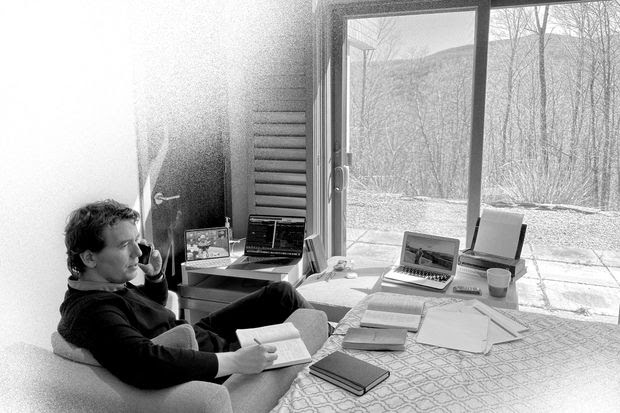
Patrick Brett, head of municipal debt capital markets at Citigroup, works the phones in his makeshift office in the Catskills.
When Citi recommended postponing the operation for a while, Mr Hammel gathered his assistants and crunched the numbers. Without the cash injection, which was to be financed by public debt, construction would stop in July.
.
«It's one of those days when you don't know whether to throw yourself at the train or the engineer,» Mr Hammel said.
.
He started negotiating with a local bank to see if they could guarantee a bridge loan that would allow them to finance the work. Finally, on 30 March, the bonds found buyers, mainly thanks to government programmes that rescued markets from disaster.
.
Panic over the lack of liquidity quickly spread to the stock markets. Thomas Peterffy, president of Interactive Brokers group, an online brokerage platform popular with traders, found it hard to sleep on Sunday night. Early on Monday a call confirmed that futures had fallen by 5%, the maximum allowed in a single session.
.
As Mr. Peterffy began his day Monday morning from his home in Palm Beach, Fla., many investors had already been forced to sell their positions because they did not have enough liquidity to keep them open.
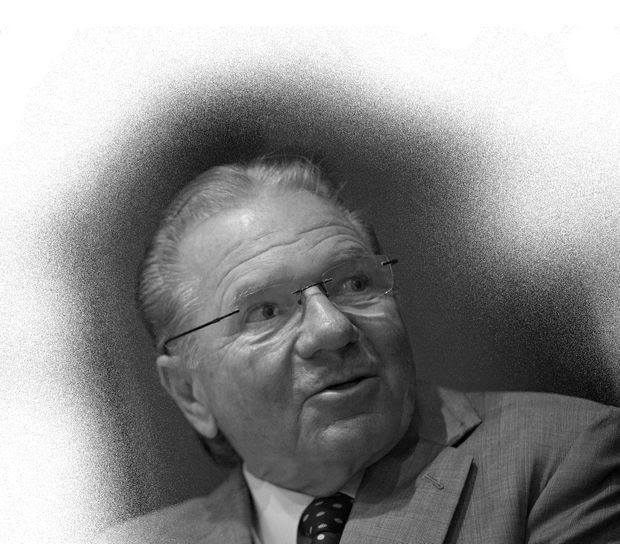
Interactive Brokers Group Chairman Thomas Peterffy.
Time and again Petterfy asked his team how much their clients' accounts were losing, and how much that might affect Ineractive Brokers if the disaster continued.
.
«The more the day goes on, the more and more positions are liquidated,» the team confessed to Mr Peterffy. In addition to the carnage, Mr Peterffy said, there were many options betting against volatility.
.
For more than a decade, the markets have been generally calm. And the conventional wisdom among traders large and small was that they would remain so. But volatility had been rising since the end of February.. On 16 March it was triggered.
.
The Cboe Volatility Index, known on Wall Street as the Fear Index, catapulted during the day, closing at an all-time high of 82.69.
.
Nor did it help that earlier that morning the Chicago trading floor, where most options are bought and sold, had to close. Fewer and fewer trading floors full of human brokers shouting and waving at the world, but the corridors of Cboe Global Markets maintain that frenetic daily grind.
.
Cboe took the decision to close the trading floor on Thursday as a precautionary measure, and executives spent all day Saturday working with brokers to check that the electronic market to be launched on Monday would work properly. The tests went well, but Sunday's massive sell-off in the futures markets complicated matters, said Chris Isaacson, head of trading at Cboe. After S&P 500 futures made their biggest drop ever, the Cboe opted to delay pre-market trading.
.
While the Cboe had sent most of its employees to work from home that week, Mr Isaacson went to the Kansas City offices that Monday to monitor the market along with operations and IT staff.
.
The massive sell-off in futures left no respite, and so correlated options remained locked all day Monday morning, waiting for the 9:30am opening. By then, Mr Isaacson and his team knew what awaited them: «The market is going to have a very tough opening,» he said.
.
Some options opened promptly only to be blocked a second later, when massive selling triggered their suspension mechanism. «It was one of the most intense mornings of my career,» Mr Isaacson said.
.
Malachite Capital Management, a New York fund, did not make it past Tuesday. On 17 March, the company announced its closure, due to «extremely adverse market conditions in recent weeks». Losses were also extreme for others who had traded on volatility. At JD Capital Management LLC, a manager run by Goldman Sachs veteran J. David Rogers, its Tempo Volatility Fund lost more than 75% in March.
.
On the same Monday, traders at Allianz Global Investors, a management company owned by the German insurance giant, were struggling to restructure their own collection of disastrous options.
.
The Allianz Structured Alpha funds have been great sellers of insurance against market sell-offs in the short term, as well as buyers in the long term. The strategy has been generating steady income, as the fund earned premiums from investors who wanted to hedge against potential downturns. The funds could lose money for a month on the back of a sell-off while restructuring their portfolio in the short term, but in the long term they would gain, fund manager Greg Tournant said during a video advertisement in May 2016.
.
«We are acting like an insurance company, collecting premiums,» Mr Tournant said. «When there is a catastrophic event, we may have to pay a lot, just like any insurance company. But we take positions to protect ourselves from those catastrophic shocks, sort of like reinsurance.».
.
When the hurricane hit last March, their strategy did not work.
.
Allianz management confirmed to investors that one of the funds had fallen by 97% since the start of the year. Even after the 25 March conference call with investors, some investors still did not understand what had gone wrong.
.
Allianz did not say how much money investors would get back, or when they would get it back. They are still waiting.
.
Perhaps the moral of this story is that stocks do better in the face of exceptional events. Because even though their fluctuations may be larger, if they are of quality, their contributions will be recovered much better than other assets insurance when the market breaks them into a thousand pieces.
.
Be very careful about possible contagions, continue to protect your health and take advantage of the investment opportunities.