
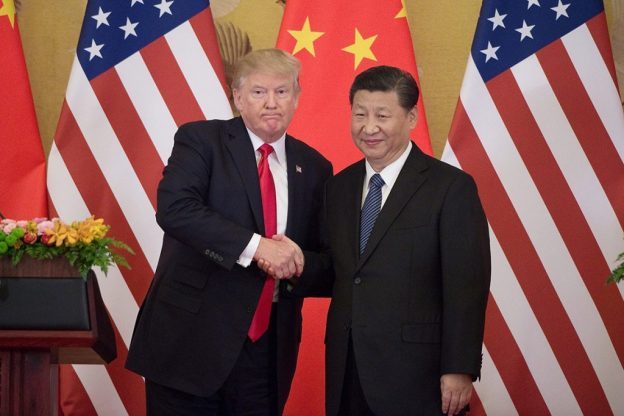
We’re going to summarise the study carried out by three renowned researchers and professors from Princeton and Columbia who are affiliated with the research team at the Federal Reserve Bank of New York, Mary Amiti, Stephen Redding and David Weinstein. In this study, they highlight the unsustainable costs that Trump’s tariff hikes would impose on the average American household if they were to be prolonged. For this reason, the likelihood of these tariffs bringing down the two most powerful economies on the planet is virtually nil. And they should be viewed as mutual posturing between a headless chicken and one with a head, which presents us with a very good opportunity to position ourselves in the stock markets (particularly Asian ones, as Mark Mobius also suggests in this article). Let’s look at the figures:
.
The current tariffs imposed on Chinese goods stand at 10%, and were recently increased to 25%, albeit with a 90-day moratorium to allow room for negotiation (an old tactic). To determine the impact of that additional 15% in tariffs, which Trump is threatening to impose if no agreement is reached before the end of that period, the calculation is based on the preliminary study on the impact of the current 10% taxes applied in 2018. It concludes that the impact amounts to an annual cost of $414 per family, comprising the extra expenditure that average families will have to incur to pay the additional taxes, and what they call loss of efficiency o deadweight. It is worth remembering here that a huge proportion of goods come from China, and that the rest contain Chinese components and/or are manufactured using Chinese processes; therefore, a temporary blockade by Xi Jinping would lead to an unimaginable global collapse. In short, the Chinese have the trade ‘nuclear button’ and the Americans do not. But let’s get back to the figures.
.
The extent of these costs depends on how customs tariffs affect the mark-ups importers add to their products, as well as on the demand for goods imported from China. Various studies, including the one mentioned, have concluded that the tariff increases imposed by the US imposed in 2018 have directly led to higher import prices, meaning that Chinese exporters did not reduce their prices at all to offset the increase in the final price for their US customers. The ratio of the increase in the final price to that of the customs duty was therefore practically 1 to 1. What that initial imposition of 10% on Chinese products did produce was, logically, a 43% drop in demand for Chinese imports, as the first logical move for importers is to postpone purchases and subsequently seek alternative suppliers and routes.
.
US buyers of Chinese goods now pay an additional 10% tariff on top of the usual base price; in other words, an item that used to cost a US consumer or importer $140 now costs $150. This adds $10 to their individual cost but not the US economy as a whole, as the government collects that additional $10 in the form of tax. The government, in turn, should – or could potentially – reinvest that same $10 and use it for the benefit of its citizens (including those who do not buy or import Chinese products).
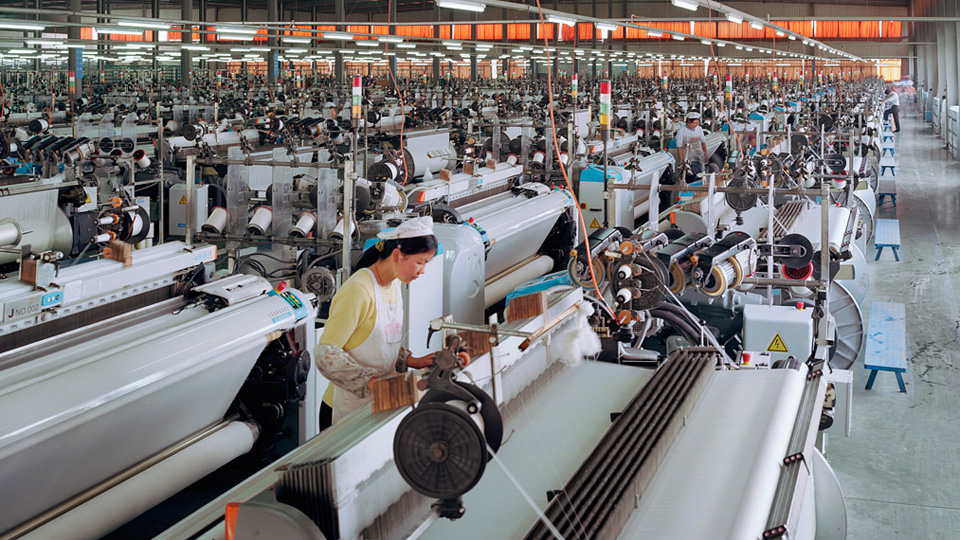
It is worth noting here that demand naturally shifts between those who continue to buy more expensive Chinese products and those who switch to less expensive alternatives. Consequently, some importers or consumers will reorganise their trade arrangements or purchasing preferences, so that they buy substitute goods at a price lower than the $110 that Chinese products currently cost them. For example, a Vietnamese or Malaysian substitute item costing $105. In this case, the importer’s/buyer’s cost has increased by only $5, rather than the 10$ it would cost to continue buying the Chinese product. But beware, in this case The US economy as a whole also loses out, as there is no return on those $5 in the form of taxes that can be redistributed to the population. Furthermore, it has been amply demonstrated that importers will end up importing substitute products at a price only slightly below that of the Chinese product. In other words, imports will be at $108 or $109 and not at $101 or $105, as the comparison prior to the purchasing decision will be based on the current price of the Chinese product, i.e. $110. This principle will also hold true because suppliers will use the Chinese price of $110 as a benchmark to set their prices for the North American market. This increase in production chain costs, caused by the rise in import tariffs, is known as loss of efficiency or dead weight.
.
Economic theory tells us that this deadweight tends to rise more than proportionally as tariffs increase, as importers and consumers are forced to accept ever higher prices when taxes rise. Furthermore, very high customs tariffs lead to a fall in tax revenue, as buyers stop importing products from a country affected by those tariffs/sanctions and seek other suppliers/items from other countries, which are cheaper in terms of final price but less efficient. Let us consider that, up until that point, their suppliers and goods were Chinese because they had chosen that option as the most efficient of all the options that importers and consumers had considered. Therefore, these second and third options, beyond $100, which they are now forced to trade in, are by definition less efficient (worse value for money, worse logistics efficiency, poorer build quality, poorer after-sales service, worse marketing, worse packaging, poorer reliability, worse returns policy, repairs, etc.) than the Chinese products they had been buying at $100.
.
We can see how these two variables play out by comparing the estimated costs of the 2018 tariffs with the increase recently announced by Trump of an additional $200 billion on Chinese goods. As can be seen in the table below, in November 2018, with the 10% of current tariffs already in place, US importers were paying $3 billion a month in additional duties and suffering an additional $1.4 billion in efficiency losses or deadweight losses.
.
The total cost to US importers was therefore 1.44 billion per month. If we annualise these figures, we arrive at 52.8 billion, or 414 per household per year. Of this cost, $282 per household corresponds to money that goes into the US government’s coffers, and is therefore relatively recoverable by US society as a whole. However, efficiency losses or deadweight losses amount to $132 per household per year, and represent the net loss to the US economy beyond additional tax payments.

Based on these figures, we can calculate the cost of the additional tariff increase announced by Trump for the coming quarter, rising from the current 10% to 25%. The table shows how tax revenue for the government will fall from $282 to $211 per household per year, as the tax increase on Chinese products will be so costly that American consumers will begin to buy substitute goods that are not subject to these tariffs, such as products from Vietnam or other emerging countries, as we mentioned earlier. Let us remember that these second and third imported options are less efficient (more expensive than the cost of the Chinese product before the tariffs), and furthermore, the government no longer collects those taxes. Some of you may argue that the American consumer/importer can substitute Chinese products with other local American ones and thus avoid the loss of efficiency or deadweight. But the reality demonstrated by the studies The reality of the situation is that it is other emerging economies that are coming out on top, as products from developed countries such as the US have much higher production costs. And not only are their costs much higher, but they also have very limited production capacity (adapted to current demand and market share), which would take years and years to meet demand, even if they were to achieve the unachievable, namely the value-for-money efficiency of emerging countries. Furthermore, the deadweight loss from reduced efficiency increases whether consumers switch to more expensive foreign goods or to more expensive domestic ones.
.
As a result of this change, which importers and consumers are currently facing and will continue to face for the time being (until Trump blows his top or the lobbies force him to back down, as we will explain below), it is estimated that an increase in efficiency losses per household from 1Q132 to 1Q620 on an annual basis, bringing the total burden to be borne by the average American family up to $831 per year, if the threat of additional customs duties under Section 15% is carried out. Consequently, this increase in tariffs on Chinese imports will lead to enormous economic distortions in American society, as well as a substantial reduction in government revenue. But it is not only ordinary citizens who will be seriously affected. Just imagine the losses that giant American tech (and non-tech) companies could suffer as a result of the trade war and software boycotts targeting giants such as Huawei. Remember that Jinping has absolute control over a market of more than 1.3 billion potential consumers, and an enormous and growing influence over the rest of the Asian and African countries. All of this is already generating tit-for-tat retaliation that is causing, and will continue to cause, endless collateral damage which, no doubt, Trump and his team of ultra-nationalist Republicans have never calculated.
.
.
Ultimately, the trade war between the US and China is so damaging – particularly to the US economy – that it has an expiry date. And Trump knows it. In this game of chicken, whoever has a Congress that keeps them in check, whoever depends on votes and corporate lobbies – in short, whoever lives in a democracy – knows they have lost the game. The winner can be none other than China, whose president implements plans spanning decades without caring about the opinion of voters (sic) or his corporations, which are at the service of the government and, of course, without any lobbying. Neither Trump nor anyone else in the US democracy will ever be able to politically or commercially subdue the Chinese dictatorship and its planned economy. Therefore, although Trump will need to bring his adventure to a dignified close, selling it to the Western media with headlines such as «we have secured the best trade deal in history, blah, blah…», the trade war cannot last more than a few quarters. The big US corporations will not allow it, via lobbies and a qualified majority in Congress. Even this «trade war» may effectively be defused whilst people are still publicly talking about it, due to Trump’s electoral political interests. But the reality can be no other than that of not causing significant or irreversible damage to the US corporate giants, since they have more than enough money to convince enough members of Congress, who in turn will force the US government to back down, even if this is not publicly acknowledged and the perception of a trade conflict continues to be fuelled. After all, Every US president has needed and provoked a war of some sort – one that is low-intensity in reality but generates a media frenzy, during their terms in office, for electoral gain. Trump has opted for a trade war, which will also attract intense media attention but is bound to be of low economic intensity.
.
For all these reasons, investors would do well to take advantage of the media skirmishes that trigger price falls to position themselves appropriately. In other words, they should go shopping for emerging companies whose figures will continue to grow beyond this fleeting, politically motivated trade war. For all the reasons set out in this article, The gloomier the outlook for the Asian markets becomes in the coming months, the closer their recovery will be. A golden opportunity to buy businesses, with the economic and demographic winds in their favour, at very attractive valuations. Remember that Volatility is a good investor’s friend and the enemy of bankers and other fearmongers, which strive to keep their customers trapped in schemes where the meagre returns are barely enough to cover the fees that are skimmed off along the way.
.
We simply need to be aware that the more heated the trade war appears in the media, the more we should invest in the best emerging-market-focused funds on the planet. Comparisons of the ‘fear funds’ peddled by the banks, with the best institutional fund managers on international stock markets are a pain. Volatility always goes hand in hand with double-digit annual returns over the medium and long term. And the best news is that There are funds of funds that provide access to these institutional funds, as we explained earlier in «Funds that make inaccessible funds accessible.»
.
The Chinese are well aware of the significance of the crisis Trump is creating with his trade war. It is no coincidence that there they define the word «crisis» as a synonym for «opportunity». And any self-respecting Western investor would do well to be less influenced by the Western media and more by the value criteria of the world’s best fund managers. This time is no different.